Backbone Sugars and Nucleobases
Found 1001 products of "Backbone Sugars and Nucleobases"
Adenine sulfate dihydrate
CAS:Adenine sulfate dihydrate is an important component of the energy-producing process in mitochondria. Adenine sulfate dihydrate is a necessary cofactor for many metabolic reactions, including those that produce ATP and NADH. It has been shown to promote growth factor activity and stimulate cell proliferation. Adenine sulfate dihydrate can be used as a nutrient solution in recombinant protein production, where it is required for the expression of recombinant proteins in E. coli or mammalian cells. This compound also plays an important role in the glycosylation of proteins during their synthesis on ribosomes and may have implications for protein folding and stability.Formula:(C5H5N5)2•(H2O)2•H2SO4Purity:Min. 95%Color and Shape:PowderMolecular weight:404.36 g/mol4-Thiouracil
CAS:4-Thiouracil is a uridine analog and has been shown to inhibit transcriptional regulation by hydrogen bonding with the dna template. 4-Thiouracil is a prodrug that is converted to its active form, thiouracil, which inhibits DNA synthesis and cell proliferation by inhibiting the enzyme topoisomerase II. This results in the formation of abnormal DNA molecules that are not replicated properly. Thiouracil also has photochemical properties due to its ability to absorb light at wavelengths below 400 nm. The photochemical properties of 4-thiouracil have been studied extensively as models for human tissue culture and the study of cancer cells.Formula:C4H4N2OSPurity:Min. 97 Area-%Color and Shape:Slightly Yellow PowderMolecular weight:128.15 g/molCytosine
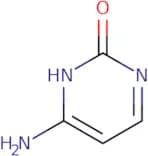
CAS:Pyrimidine nucleobase; component of nucleic acidsFormula:C4H5N3OPurity:(Hplc) Min. 99%Color and Shape:White PowderMolecular weight:111.1 g/mol3'-[2- Cyanoethyl N, N- bis(1- methylethyl) phosphoramidite]-5'- O- [bis(4- methoxyphenyl) phenylmethyl] - 2'- O- methyl- N- [2- [4- (1- methylethyl) phenoxy] acetyl] -guanosine
CAS:Please enquire for more information about 3'-[2- Cyanoethyl N, N- bis(1- methylethyl) phosphoramidite]-5'- O- [bis(4- methoxyphenyl) phenylmethyl] - 2'- O- methyl- N- [2- [4- (1- methylethyl) phenoxy] acetyl] -guanosine including the price, delivery time and more detailed product information at the technical inquiry form on this pageFormula:C52H62N7O10PPurity:Min. 95%Molecular weight:976.06 g/mol3'-O-Benzyl-2'-Deoxy-5-Trifluoromethyluridine
CAS:3'-O-Benzyl-2'-Deoxy-5-Trifluoromethyluridine (BDBMU) is a pyrimidine derivative that can be used as an antiviral drug. It inhibits the synthesis of DNA and RNA by inhibiting viral polymerase. BDBMU is a prodrug of uracil, which is converted to the active compound in tissues. The benzoylation reaction produces a fluorine atom at C5, which increases its potency. This drug has been shown to have minimal toxicity in tumor cells and has been used for the treatment of leukemia and other cancers.Formula:C17H17F3N2O5Purity:Min. 95%Molecular weight:386.32 g/mol(S)-HPMPA
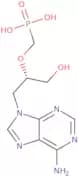
CAS:(S)-HPMPA is a nucleotide analogue, which is a chemically synthesized compound designed to mimic nucleotides. It acts as both an antiviral and an antitumor agent, sourced primarily through synthetic chemistry involving the modification of naturally occurring nucleotide structures. The mode of action of (S)-HPMPA involves mimicking natural substrates of various viral polymerases and cellular enzymes, thereby inhibiting viral DNA synthesis and disrupting the replication cycle of DNA viruses. Additionally, it can interfere with certain cellular pathways contributing to its antitumor effects.Formula:C9H14N5O5PPurity:Min. 95%Molecular weight:303.21 g/molIsobutyryl Chloride
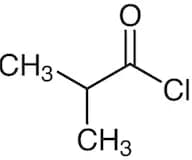
CAS:Formula:C4H7ClOPurity:>98.0%(GC)(T)Color and Shape:Colorless to Light yellow clear liquidMolecular weight:106.554-Amino-6-hydroxypyrazolo[3,4-d]pyrimidine
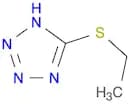
CAS:Formula:C5H5N5OPurity:>93.0%(HPLC)Color and Shape:White to Light yellow to Light orange powder to crystallineMolecular weight:151.135-(Ethylthio)-1H-tetrazole
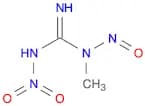
CAS:Formula:C3H6N4SPurity:98%Color and Shape:SolidMolecular weight:130.17151-Methyl-3-nitro-1-nitrosoguanidine
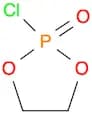
CAS:Formula:C2H5N5O3Purity:95%Color and Shape:LiquidMolecular weight:147.09282-Chloro-1,3,2-dioxaphospholane-2-oxide
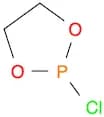
CAS:Formula:C2H4ClO3PPurity:95%Color and Shape:LiquidMolecular weight:142.47812-Chloro-1,3,2-dioxaphospholane
CAS:Formula:C2H4ClO2PPurity:97%Color and Shape:LiquidMolecular weight:126.4787Ref: 4Z-G-2434
Discontinued productRef: 4Z-G-2447
Discontinued productSYBR GREEN II
CAS:1) Non-toxicity: belong to flower-stem dye, easy to biodegrade, no carcinogenic toxicity.
Formula:C28H28IN3OSPurity:98%Color and Shape:SolidMolecular weight:581.515,6-Diaminouracil sulfate
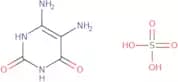
CAS:5,6-Diaminouracil sulfate is an amine that is used as a precursor in the production of the anti-cancer drug 5-fluorouracil. It can be synthesized from diaminopyrimidine and uracil. This compound has two amino groups, which are both substituted with hydrogens. The aminouracile group is substituted with a hydrogen and an amino group. 5,6-Diaminouracil sulfate has pyrimidone rings that are fused together to form a six-membered ring.
Formula:C4H6N4O2·xH2SO4Purity:Min. 95%Color and Shape:PowderMolecular weight:142.12 g/molRef: 3D-FD15981
Discontinued productUracil
CAS:Pyrimidine nucleobase; allosteric regulator and coenzyme for reactions
Formula:C4H4N2O2Purity:Min. 98 Area-%Color and Shape:White Off-White PowderMolecular weight:112.09 g/mol5-Methylcytosine hydrochloride salt
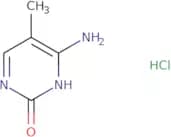
CAS:5-Methylcytosine hydrochloride salt is a metabolite of cytosine that occurs naturally in the body. It is used as an inhibitor of DNA methylation to study the effect of this process on gene expression. 5-Methylcytosine hydrochloride salt has been shown to inhibit the production of growth factors, such as insulin-like growth factor 1, and radiation energy. It also causes oxidative damage to DNA and inhibits the oxidation of urea nitrogen in lettuce. The matrix effect may interfere with the analysis of 5-methylcytosine hydrochloride salt by spectrometry.
Formula:C5H7N3O·HClPurity:Min. 95%Color and Shape:PowderMolecular weight:161.59 g/mol5-Methylcytosine
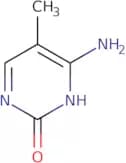
CAS:5-Methylcytosine is a nucleic acid that is found in the DNA and RNA of the cell. It is an important component of methylation, which is the process by which a methyl group is added to a molecule. This process can lead to cellular transformation, a process that can cause cancer. 5-Methylcytosine has also been shown as a molecular pathogenesis factor in infectious diseases such as HIV and herpes simplex virus type 1. The presence of 5-methylcytosine in nuclear DNA has been detected by analytical techniques such as gas chromatography/mass spectrometry (GC/MS). There are many analytical methods, including GC/MS, that can be used to detect 5-methylcytosine in cellular nuclei.
Formula:C5H7N3OPurity:Min. 95%Color and Shape:PowderMolecular weight:125.13 g/molRef: 3D-FM63889
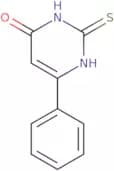
Discontinued product6-Phenyl-2-thiouracil
CAS:6-Phenyl-2-thiouracil (6PTU) is an alkylthio group that inhibits the growth of microorganisms by binding to DNA. 6PTU binds to the oxygen nucleophiles in DNA and prevents transcription and replication. It also has a positive effect on the synthesis of proteins, which may be due to its ability to regulate gene transcription. 6PTU has been shown to inhibit cell growth in culture by blocking protein synthesis. This drug is used as an analytical method for determining urinary glucose levels in animals because it reacts with glucose in urine samples. The reaction produces a chromatographic peak that can be quantified using an electrochemical detector.
Formula:C10H8N2OSPurity:Min. 95%Color and Shape:PowderMolecular weight:204.25 g/mol


![3'-[2- Cyanoethyl N, N- bis(1- methylethyl) phosphoramidite]-5'- O- [bis(4- methoxyphenyl) phenylm…](/_next/image/?url=https%3A%2Fstatic.cymitquimica.com%2Fproducts%2F3D%2Fthumb-webp%2FFC165570.webp&w=3840&q=75)


![4-Amino-6-hydroxypyrazolo[3,4-d]pyrimidine](/_next/image/?url=https%3A%2Fstatic.cymitquimica.com%2Fproducts%2F3B%2Fthumb-webp%2FA2699.webp&w=3840&q=75)