


Backbone Sugars and Nucleobases
Found 1002 products of "Backbone Sugars and Nucleobases"
λ DNA
Lambda DNA is a double stranded linear DNA of 48,502 base pairs in length. It is isolated from bacteriophage Lambda. The Lambda Phage is a bacterial virus (bacteriophage), that infects the bacterial species E. coli. The phage is isolated from the heat inducible lysogen E. coli strain.Color and Shape:Liquid, Colourless, ClearDH5a Competent Cells for Subcloning
DH5α Competent Cells are ideal cells that are made efficient chemically for transformation techniques. They are recommended for routine subcloning into plasmid vectors giving a transformation efficiency of ≥1 × 10â¶cfu/μg. Subcloning efficiency cells are not suitable for the generation of cDNA libraries. The φ80dlacZΔM15 marker provides α-complementation of the β-galactosidase gene from pUC or similar vectors to allow blue/white colony screening on bacterial agar plates containing X-Gal and similar chemicals.7-Hydroxy-4-methyl-2(1H)-quinolone
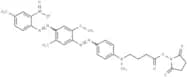
CAS:Fluorescent 7-Hydroxy-4-methylquinolone detects DNA hydroxyl radicals; store in dark.Formula:C10H9NO2Color and Shape:SolidMolecular weight:175.184BHQ-1 NHS
CAS:BHQ-1 NHS is a compound that is directly labeled with fluorescently labeled nucleotide.Formula:C30H31N7O7Color and Shape:SolidMolecular weight:601.61N6-Isopentenyladenine-9-glucoside
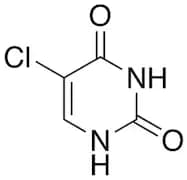
CAS:Please enquire for more information about N6-Isopentenyladenine-9-glucoside including the price, delivery time and more detailed product information at the technical inquiry form on this pageFormula:C16H23N5O5Purity:Min. 95%Color and Shape:PowderMolecular weight:365.38 g/mol5-Chlorouracil
CAS:Controlled ProductImpurity Fluorouracil EP Impurity E
Applications Used for the experimental and clinical treatment of neoplastic and viral diseases. Fluorouracil EP Impurity E.
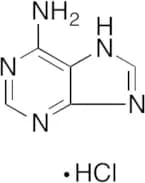
References Yu, H., et al.: J. Biol. Chem., 268, 15935 (1993), Staleva, L., et al.: Mutat. Res., 370, 81(1996), Harris, V., et al.: J. Mol. Biol., 326, 1389 (2003)Formula:C4H3ClN2O2Color and Shape:NeatMolecular weight:146.53Adenine Hydrochloride
CAS:Controlled ProductApplications Adenine Hydrochloride can be utilized in uses for enhanced detection of hydrogen peroxide with platinized microelectrode arrays for analyses of mitochondria activities. It can also be used for biological use in method for producing Cordyceps sinesis by fermentation.
References Ben-Amor, S., et al.: Electrochim. Acta., 126, 171-178 (2014); Jia, J., et al.: Faming Zhuanli Shenqing, CN 101407767 A 20081117 (2008);Formula:C5H5N5·HClColor and Shape:NeatMolecular weight:171.595-Carboxy-2-thiouracil
CAS:Controlled ProductApplications 5-Carboxy-2-thiouracil is a possible anti-tumor agent when part of a metal complex.
Formula:C5H4N2O3SColor and Shape:NeatMolecular weight:172.1622-O-Ethylthymidine
CAS:Controlled ProductFormula:C12H18N2O5Color and Shape:NeatMolecular weight:270.285-Bromodihydrouracil
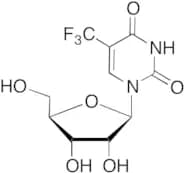
CAS:Controlled ProductFormula:C4H5BrN2O2Color and Shape:NeatMolecular weight:192.9995-(Trifluoromethyl)uridine
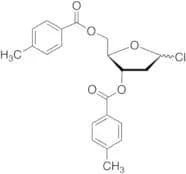
CAS:Controlled ProductFormula:C10H11F3N2O6Color and Shape:NeatMolecular weight:312.1992-Deoxy-3,5-di-O-p-toluoyl-D-ribofuranosyl Chloride
CAS:Controlled ProductFormula:C21H21ClO5Color and Shape:NeatMolecular weight:388.84(E)-5-(2-Carboxvinyl)uracil
CAS:Controlled ProductApplications (E)-5-(2-Carboxvinyl)uracil (cas# 57412-59-6) is a compound useful in organic synthesis.
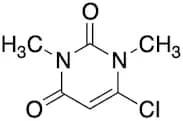
Formula:C7H6N2O4Color and Shape:NeatMolecular weight:182.136-Chloro-1,3-dimethyluracil
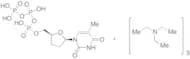
CAS:Controlled ProductFormula:C6H7ClN2O2Color and Shape:NeatMolecular weight:174.583'-Deoxy-thymidine 5'-(Tetrahydrogen Triphosphate) Triethylammonium Salt
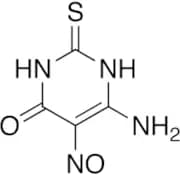
CAS:Controlled ProductFormula:C10H17N2O13P3•3(C6H15N)Color and Shape:NeatMolecular weight:567.11486-Amino-5-nitroso-2-thiouracil
CAS:Controlled ProductApplications Pyrimidine with the ability to form complexes with heavy metal ions.
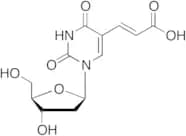
References Iltzsch, M., et al.: Biochem. Pharmacol., 48, 781 (1994),Formula:C4H4N4O2SColor and Shape:NeatMolecular weight:172.17(E)-5-(2-Carboxyvinyl)-2’-deoxyuridine
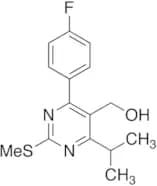
CAS:Controlled ProductFormula:C12H14N2O7Color and Shape:NeatMolecular weight:298.2494-(4-Fluorophenyl)-5-hydroxymethyl-6-isopropyl-2-methylthiopyrimidine
CAS:Controlled ProductApplications 4-(4-Fluorophenyl)-5-hydroxymethyl-6-isopropyl-2-methylthiopyrimidine (cas# 895129-11-0) is a compound useful in organic synthesis.
Formula:C15H17FN2OSColor and Shape:NeatMolecular weight:292.375-Azauridine
CAS:Controlled ProductApplications 5-Azauridine (cas# 1476-82-0) is a useful research chemical.
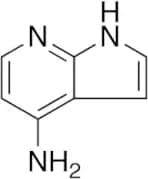
Formula:C8H11N3O6Color and Shape:NeatMolecular weight:245.1891,7-Dideazaadenine
CAS:Controlled ProductApplications Used in the preparation of pyrrolotriazines.
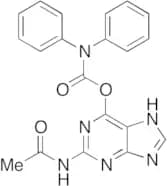
Formula:C7H7N3Color and Shape:NeatMolecular weight:133.15N2-Acetyl-O6-diphenylcarbamoylguanine
CAS:Controlled ProductApplications N2-Acetyl-O6-diphenylcarbamoylguanine is a reactant in the synthesis of 1',2'-oxetane-nucleosides bearing 2'-C-Me substituents with anti-HCV activity.
References Komsta, Z., et. al.: Tetrahedron Lett., 55, 6216 (2014)Formula:C20H16N6O3Color and Shape:NeatMolecular weight:388.386-Chloro-7-deazaguanine
CAS:Controlled ProductApplications 6-Chloro-7-deazaguanine (cas# 84955-31-7) is a compound useful in organic synthesis.
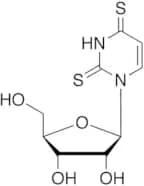
Formula:C6H5ClN4Color and Shape:NeatMolecular weight:168.582,4-Dithiouridine
CAS:Controlled ProductStability Hygroscopic
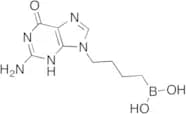
Applications 2,4-Dithiouridine (cas# 13239-96-8) is a compound useful in organic synthesis.Formula:C9H12N2O4S2Color and Shape:NeatMolecular weight:276.339-(4-Dihydroxyborylbutyl)guanine
CAS:Controlled ProductFormula:C9H14BN5O3Color and Shape:NeatMolecular weight:251.054-Amino-1,3-dimethyl-5-nitrosouracil x-H2O
CAS:Controlled ProductApplications 4-Amino-1,3-dimethyl-5-nitrosouracil is a useful building block for organic synthesis.
Formula:C6H8N4O3Color and Shape:NeatMolecular weight:184.156-Chloro-1,3-dimethyl-5-nitrouracil
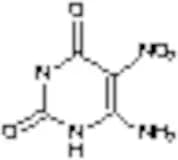
CAS:Controlled ProductFormula:C6H6ClN3O4Color and Shape:NeatMolecular weight:219.5836-Amino-5-nitrouracil
CAS:Controlled ProductApplications 6-Amino-5-nitrouracil (cas# 3346-22-3) is a compound useful in organic synthesis.
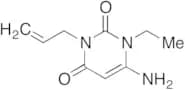
References Graves, A., et al.: J. Mol. Biol., 377, 914 (2008),Formula:C4H4N4O4Color and Shape:NeatMolecular weight:172.13-Allyl-6-amino-1-ethyluracil
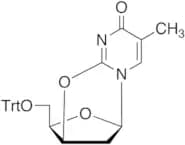
CAS:Controlled ProductFormula:C9H13N3O2Color and Shape:NeatMolecular weight:195.2185-O-Trityl-2,3'-anhydrothymidine
CAS:Applications 5-O-Trityl-2,3’-anhydrothymidine (cas# 25442-42-6) is a compound useful in organic synthesis.
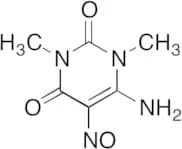
Formula:C29H26N2O4Color and Shape:NeatMolecular weight:466.536-Amino-1,3-dimethyl-5-nitrosouracil
CAS:Controlled ProductApplications 6-Amino-1,3-dimethyl-5-nitrosouracil (cas# 3346-61-0) is a compound useful in organic synthesis.
References Varma, R., et al.: J. Ocular Pharmacol. Ther., 16, 571 (2000),Formula:C6H8N4O3Color and Shape:NeatMolecular weight:184.15Tris(trimethylsilyl)guanine
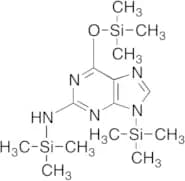
CAS:Controlled ProductApplications Tris(trimethylsilyl)guanine is an intermediate used in the synthesis of 9-(2-Hydroxyethyl)guanine (H942035), which is an impurity of the antiviral agent Acyclovir (A192400). 9-(2-Hydroxyethyl)guanine is a nucleoside phosphotransferase acceptor.
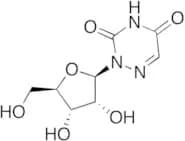
References Kamimura, A. et al.: Agric. Biol. Chem., 37, 2037 (1973);Formula:C14H29N5OSi3Color and Shape:NeatMolecular weight:367.676-Azauridine
CAS:Controlled ProductStability Hygroscopic
Applications 6-Azauridine is can be applied in antiviral studies.Formula:C8H11N3O6Color and Shape:NeatMolecular weight:245.19N7-(2-Hydroxyethyl)adenine
CAS:Controlled ProductApplications A DNA adduct ethylene oxide hydroxyethylnitrosourea. It is also used in the preparation of acyclic nucleosides and nucleotides as antiviral agents.
References Snoeck, R., et al.: Antimicrob. Agents Chemother., 32, 1839 (1988), Bronson, J., et al.: J .Med. Chem., 32, 1457 (1989), Balzarini, J., et al.: J. Biol. Chem., 266, 8686 (1991),Formula:C7H9N5OColor and Shape:NeatMolecular weight:179.1795,6-Diaminouracil Sulfate
CAS:Controlled ProductApplications 5,6-Diaminouracil sulfate is an intermediate in the synthesis of Paraxanthine (P192500) and Paraxanthine analogs.
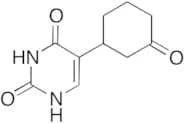
References Mueller, C.E., et al.: J. Med. Chem., 36, 3341 (1993),Formula:C6H4Cl2FNColor and Shape:NeatMolecular weight:180.0075-(3-Keto-cyclohexyl)uracil
Controlled ProductFormula:C10H12N2O3Color and Shape:NeatMolecular weight:208.2144-Amino-6-chloro-1-beta-D-ribofuranosylimidazo[4,5-c]pyridine
CAS:Controlled ProductApplications Adenosine analog
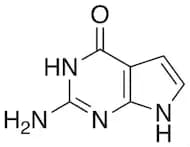
References Barbieri, D., et al.: Bioorg. Med. Chem. Lett., 8, 2533 (1998),Formula:C11H13ClN4O4Color and Shape:NeatMolecular weight:300.77-Deazaguanine
CAS:Controlled ProductApplications 7-Deazaguanine (cas# 7355-55-7) is a compound useful in organic synthesis.
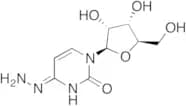
Formula:C6H6N4OColor and Shape:NeatMolecular weight:150.14N4-Aminocytidine
CAS:Controlled ProductApplications N4-Aminocytidine (cas# 57294-74-3) is a useful research chemical.
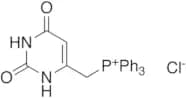
Formula:C9H14N4O5Color and Shape:NeatMolecular weight:258.236-Uracilylmethylene Triphenylphosphonium Chloride
CAS:Controlled ProductFormula:C23H20N2O2P•ClColor and Shape:NeatMolecular weight:422.848-Methoxymethyl-1-methyl-3-(2-methylpropyl) xanthine
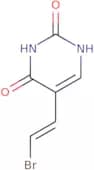
CAS:Controlled Product8-Methoxymethyl-1-methyl-3-(2-methylpropyl) xanthine (8MMX) is an intracellular calcium ion chelator that inhibits enzyme activity in the cyclic nucleotide phosphodiesterase enzyme family. 8MMX has been shown to be a potent inhibitor of both cyclic nucleotide phosphodiesterases and cyclic nucleotide phosphodiesterase isoenzymes. 8MMX has been shown to inhibit bladder contractility and improve bladder function in animal models. It also reduces the incidence of papillary muscle rupture, which can lead to heart failure, and improves ventricular function by increasing the rate of relaxation of the left ventricle. 8MMX is a potential treatment for pulmonary hypertension, which is caused by increased concentrations of intracellular calcium ions.Formula:C12H18N4O3Purity:Min. 95%Molecular weight:266.3 g/mol(E)-5-(2-Bromovinyl)uracil
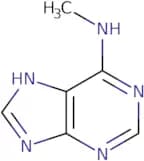
CAS:(E)-5-(2-Bromovinyl)uracil is a drug that has been shown to be effective against leukemic cells. It is a prodrug of 5-bromouracil, which is an antimetabolite and cytotoxic agent. (E)-5-(2-Bromovinyl)uracil has also been shown to be active against solid tumours, such as metastatic colorectal cancer, and bacteria. The mechanism of action involves the irreversible inhibition of the enzyme thymidylate synthase, which catalyzes the conversion of deoxyuridine monophosphate (dUMP) to thymidine monophosphate (dTMP). The drug binds to the dinucleotide phosphate pocket in the enzyme's active site and blocks access by dUMP. This leads to DNA synthesis errors, causing cell death. As a prodrug, it has low toxicity profiles and does not cause bone marrow suppression likeFormula:C6H5BrN2O2Purity:(¹H-Nmr) Min. 95 Area-%Color and Shape:Off-white to pale orange solid.Molecular weight:217.02 g/molN6-Methyladenine
CAS:N6-Methyladenine is a modification of adenine in DNA. It is formed by the methylation of the N6 position of adenine, which is a group P2 purine base. The structural analysis of this compound has been studied using x-ray diffraction data, and it has been found that it may inhibit cancer cells by modifying their DNA. This compound can also be used as an antimicrobial agent to treat infections caused by eukaryotes such as bacteria and fungi. N6-Methyladenine may be useful in transcriptional regulation and cellular transformation.
Formula:C6H7N5Purity:Min. 95%Color and Shape:PowderMolecular weight:149.15 g/mol9-[(5-Amino-1,3,4-thiadiazol-2-yl)methyl]-1,3-dimethyl-3,9-dihydro-1H-purine-2,6-dione
CAS:Controlled ProductPlease enquire for more information about 9-[(5-Amino-1,3,4-thiadiazol-2-yl)methyl]-1,3-dimethyl-3,9-dihydro-1H-purine-2,6-dione including the price, delivery time and more detailed product information at the technical inquiry form on this pageFormula:C10H11N7O2SPurity:Min. 95%Molecular weight:293.31 g/mol3-Methyl-7-(5-oxohexyl)-1-propylxanthine
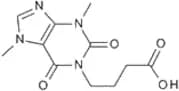
CAS:Controlled ProductPlease enquire for more information about 3-Methyl-7-(5-oxohexyl)-1-propylxanthine including the price, delivery time and more detailed product information at the technical inquiry form on this pageFormula:C15H22N4O3Purity:Min. 95%Molecular weight:306.36 g/mol1-(3-Carboxypropyl)-3,7-dimethylxanthine
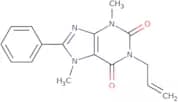
CAS:Controlled Product1-(3-Carboxypropyl)-3,7-dimethylxanthine is a drug that belongs to a class of drugs called multidrugs. It has been shown to inhibit the growth of endothelial cells by blocking the binding of tnf-α to its receptor on these cells. 1-(3-Carboxypropyl)-3,7-dimethylxanthine also inhibits cancer cell proliferation and has been shown to be effective in some human cancer models. This drug interacts with other molecules (e.g., proton) and can have significant effects on magnetic resonance spectroscopy assays as well as in humans.Formula:C11H14N4O4Purity:Min. 95%Color and Shape:PowderMolecular weight:266.25 g/mol1-Allyl-3,7-dimethyl-8-phenylxanthine
CAS:Controlled ProductPlease enquire for more information about 1-Allyl-3,7-dimethyl-8-phenylxanthine including the price, delivery time and more detailed product information at the technical inquiry form on this pageFormula:C16H16N4O2Purity:Min. 95%Molecular weight:296.32 g/mol1-(Ethyl-3-carboxypropyl)-3,7-dimethylxanthine
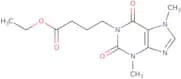
CAS:Controlled ProductPlease enquire for more information about 1-(Ethyl-3-carboxypropyl)-3,7-dimethylxanthine including the price, delivery time and more detailed product information at the technical inquiry form on this pageFormula:C13H18N4O4Purity:Min. 95%Molecular weight:294.31 g/mol8-Cyclopentyl-1,3-dimethylxanthine
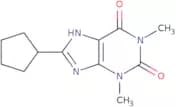
CAS:Controlled Product8-Cyclopentyl-1,3-dimethylxanthine (CPT) is a xanthine derivative that binds to the adenosine receptor and inhibits the phosphodiesterase enzyme. CPT is used in vivo as a model for measuring locomotor activity, dopamine receptors, adenosine receptors, and glutamate receptors. The binding of CPT to these receptors can lead to bronchoconstriction by stimulating the release of vasoactive substances from airway cells and increasing the sensitivity of airway cells to bronchoconstrictor stimuli. This drug also has been shown to inhibit calcium ion influx into cytosol and increase intracellular levels of cAMP.
Formula:C12H16N4O2Purity:Min. 95%Color and Shape:PowderMolecular weight:248.28 g/mol8-[(2-Hydroxyethyl)(methyl)amino]-1,3,9-trimethyl-3,9-dihydro-1H-purine-2,6-dione
CAS:Controlled ProductPlease enquire for more information about 8-[(2-Hydroxyethyl)(methyl)amino]-1,3,9-trimethyl-3,9-dihydro-1H-purine-2,6-dione including the price, delivery time and more detailed product information at the technical inquiry form on this page
Formula:C11H17N5O3Purity:Min. 95%Molecular weight:267.28 g/mol














![4-Amino-6-chloro-1-beta-D-ribofuranosylimidazo[4,5-c]pyridine](/_next/image/?url=https%3A%2Fstatic.cymitquimica.com%2Fproducts%2FTR%2Fthumb-webp%2FA603514.webp&w=3840&q=75)

![9-[(5-Amino-1,3,4-thiadiazol-2-yl)methyl]-1,3-dimethyl-3,9-dihydro-1H-purine-2,6-dione](/_next/image/?url=https%3A%2Fstatic.cymitquimica.com%2Fproducts%2F3D%2Fthumb-webp%2FFA125300.webp&w=3840&q=75)

![8-[(2-Hydroxyethyl)(methyl)amino]-1,3,9-trimethyl-3,9-dihydro-1H-purine-2,6-dione](/_next/image/?url=https%3A%2Fstatic.cymitquimica.com%2Fproducts%2F3D%2Fthumb-webp%2FFH132897.webp&w=3840&q=75)