Backbone Sugars and Nucleobases
Found 1001 products of "Backbone Sugars and Nucleobases"
5,6-Diamino-1,3-dimethyl uracil hydrate
CAS:5,6-Diamino-1,3-dimethyl uracil hydrate is a purine derivative that inhibits the growth of cancer cells by blocking the enzyme ribonucleotide reductase. This leads to a decrease in DNA synthesis, protein synthesis, and cell division. The anticancer activity of 5,6-Diamino-1,3-dimethyl uracil hydrate is due to its ability to inhibit the formation of ATP and the GTP cycle. It also has a potent inhibitory effect on the structural analysis of DNA and RNA. 5,6-Diamino-1,3-dimethyl uracil hydrate has been shown to produce apoptotic effects in many types of cancer cells. This drug also has specific agonist properties for G protein coupled receptors that are responsible for activating apoptosis.Formula:C6H10N4O2·xH2OPurity:Min. 95%Color and Shape:PowderMolecular weight:170.17 g/mol2-Fluoroadenine
CAS:2-Fluoroadenine is an inhibitor of DNA synthesis, which is used to study the effect of carcinogens on the cell cycle. It is a potent inducer of G2/M arrest in HL-60 cells, and has been shown to be cytotoxic to a number of different carcinoma cell lines. 2-Fluoroadenine disrupts collagen gel networks by binding to nitrogens in the protein matrix. This inhibits the glycosylation process that stabilizes collagen networks. The use of 2-fluoroadenine as a chemotherapeutic agent has been studied in animal models and clinical trials. 2-Fluoroadenine has been shown to inhibit mitochondrial membrane potential, leading to apoptosis caused by oxidative stress.Formula:C5H4FN5Purity:Min. 98 Area-%Color and Shape:Off-White PowderMolecular weight:153.12 g/mol7-Methylxanthine
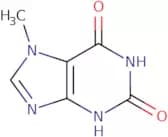
CAS:Controlled Product7-Methylxanthine is a purine alkaloid that is the primary metabolite of caffeine. It is structurally related to theobromine, which is found in chocolate. 7-Methylxanthine has been shown to have hypoglycemic effects and may be useful for the treatment of myopia. The optimum concentration of 7-methylxanthine for inhibiting carotenoid biosynthesis has been determined as 10 μM. It also inhibits axial elongation in cultured chick retinal cells by reducing carotenoid levels and increasing p-hydroxybenzoic acid levels in the retina. The analytical method for quantifying 7-methylxanthine relies on high performance liquid chromatography with ultraviolet detection (HPLC/UV).Formula:C6H6N4O2Purity:Min. 96 Area-%Color and Shape:White PowderMolecular weight:166.14 g/mol6-Amino-1-benzyluracil
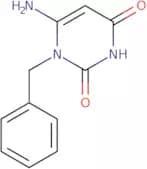
CAS:6-Amino-1-benzyluracil is a triethyl orthoformate that reacts with an aldehyde to form an imine. This reaction is known as alkylation. The imine reacts with benzamidine to form an anticancer drug called lumazine, which has been shown to be effective against cancer cells. 6-Amino-1-benzyluracil had low solubility in water and was therefore refluxed with ethyl acetoacetate and elemental acetoacetate. 6-Amino-1-benzyluracil is insoluble in the organic phase and can be removed by filtration.
Formula:C11H11N3O2Purity:Min. 95%Color and Shape:PowderMolecular weight:217.22 g/molO6-Benzylguanine
CAS:O6-alkylguanine-DNA alkyltransferase inhibitor
Formula:C12H11N5OPurity:Min. 95%Color and Shape:PowderMolecular weight:241.25 g/molBis(trimethylsilyl)cytosine
CAS:Bis(trimethylsilyl)cytosine is an immunosuppressive agent that binds to the immunodeficient acceptor. It has been shown to be active against a number of viruses, including HIV-1 and HSV-1. Bis(trimethylsilyl)cytosine also inhibits the activity of purine and pyrimidine nucleotide synthesis, although it does not inhibit the activity of adenosine deaminase or ribonucleotide reductase. This compound has been shown to stimulate the immune system in mice with a deficiency in T cells by reducing the expression of genes that are responsible for cytokines such as IL-4 and IL-10.Formula:C10H21N3OSi2Purity:Min. 90%Color and Shape:PowderMolecular weight:255.46 g/mol8-Hydroxyadenine
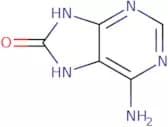
CAS:8-Hydroxyadenine is a reactive molecule that is used in the treatment of HIV infection. It is an inhibitor of reverse transcriptase and has been used to protect DNA against radiation damage. 8-Hydroxyadenine has been shown to induce a number of genotoxic effects, including neuronal death. 8-Hydroxyadenine can also be used as a DNA probe for the detection of HIV, with the advantage over other probes of having a high specificity for its target sequence.
Formula:C5H5N5OPurity:Min. 95%Color and Shape:PowderMolecular weight:151.13 g/mol5-Acetylamino-6-formylamino-3-methyluracil
CAS:5-Acetylamino-6-formylamino-3-methyluracil is an analysis method that can be used to determine the effectiveness of certain contraceptives. This drug has shown a potential to interact with other drugs, such as caffeine and amphetamines. It is also used to measure the enzyme activities of polymorphic human erythrocytes. 5-Acetylamino-6-formylamino-3-methyluracil is used in the preparation of blood samples for DNA sequencing and polymerase chain reaction (PCR) amplification. The concentration of intracellular calcium ions in humans has been shown to increase when this drug is administered, which leads to hyperproliferative diseases like cancer or HIV infection.Formula:C8H10N4O4Purity:(%) Min. 95%Color and Shape:Slightly Yellow PowderMolecular weight:226.19 g/molEniluracil
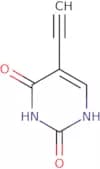
CAS:Eniluracil is a prodrug of 5-fluorouracil, which is an anticancer drug. It is not active when taken orally and must be hydrolyzed by esterases in the stomach to produce 5-fluorouracil. The x-ray diffraction data for eniluracil was collected from untreated human serum samples. Eniluracil has been shown to have matrix effects on solid tumours in mice, leading to increased antitumor activity. This compound also inhibits the enzyme dihydropyrimidine dehydrogenase, which leads to decreased levels of diphosphate nucleotides and accumulation of dinucleotide phosphate. Enlargement of the tumor is also inhibited by this drug due to its ability to inhibit DNA replication and transcription.
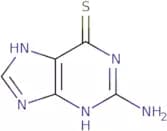
Formula:C6H4N2O2Purity:Min. 95%Color and Shape:White PowderMolecular weight:136.1 g/mol6-Thioguanine
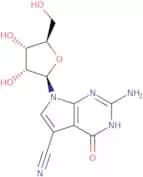
CAS:Phosphoribosyltransferase inhibitor; photocytotoxicFormula:C5H5N5SPurity:Min. 95%Color and Shape:PowderMolecular weight:167.19 g/mol7-Cyano-7-deazaguanosine
CAS:7-Cyano-7-deazaguanosine is a nucleoside that belongs to the category of 7-deazapurines. It is an optimized nucleic acid analogue that has been shown to act as a translational inhibitor in vitro and in vivo. This compound has been shown to have high yields in chemical synthesis, which makes it an attractive candidate for optimization and future research. 7-Cyano-7-deazaguanosine is a synthetic nucleotide with anticodon properties, which may be useful for the development of new drugs against bacterial infections.Formula:C12H13N5O5Purity:Min. 95%Color and Shape:PowderMolecular weight:307.26 g/mol3-Isobutyl-1-methylxanthine
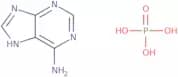
CAS:Controlled ProductA non-specific inhibitor of cAMP and cGMP phosphodiesterases (PDEs) with IC50 values between 2 and 50 µM. 2-isobutyl-1-methylxanthine (IBMX) has also been found to inhibit phenylephrine-induced 5-HT release by neuroendocrine epithelial cells and IBMX-mediated increase in cAMP and upregulation of Ca2+ channels promotes neuronal differentiation. Additionally IBMX stimulates secretion of thyroid hormones, resulting in cAMP-mediated activation of glycogenolysis and reduced glycogen storage.Formula:C10H14N4O2Color and Shape:Slightly Yellow PowderMolecular weight:222.24 g/molAdenine phosphate
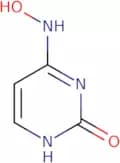
CAS:Controlled ProductAdenine phosphate is a molecule that acts as a regulator of endogenous adenosine. It has been shown to inhibit the growth of skin cells in tissue culture and to be effective against influenza virus and other viruses when used in combination with pyridoxine hydrochloride. The molecular weight of adenine phosphate is 314.2 g/mol, corresponding to two nitrogen atoms and four phosphorus atoms. Adenine phosphate is an oxidized form of adenosine triphosphate (ATP) with one phosphate group removed from the molecule. This irreversible oxidation occurs when ATP is exposed to the environment, for example, during tissue culture or viral infection. The effective dose for treating cancer has not yet been determined; however, doses of up to 5 mg/kg are not toxic to mice.Formula:C5H5N5•H3PO4Purity:Min. 95%Color and Shape:SolidMolecular weight:233.12 g/molN4-Hydroxycytosine
CAS:N4-Hydroxycytosine is an intramolecular hydrogen that inhibits the replication of viruses by inhibiting their DNA polymerase. It is a structural analogue of cytosine and can be found in both left- and right-handed forms, which are termed isomers. The chemical study of N4-hydroxycytosine has shown it to have inhibitory effects on human immunodeficiency virus and hepatitis C virus. 13C-NMR spectroscopy has been used to identify the chemical structure of N4-hydroxycytosine and its reactivity with other molecules. N4-Hydroxycytosine can be synthesized by the reaction between formaldehyde and 2,3,5,6-tetrafluorocytosine.Formula:C4H5N3O2Purity:Min. 95%Color and Shape:PowderMolecular weight:127.1 g/molAdenine sulphate
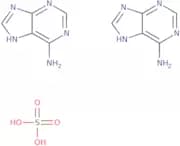
CAS:Adenine sulphate is a nucleotide that is involved in the formation of DNA and RNA. Adenine sulphate is synthesized from adenosine triphosphate and sulfuric acid. It has been shown to be an important component of DNA polymerase, which is responsible for the production of RNA and DNA. Adenine sulphate also plays a role in the development of insect resistance in plants and tissue culture cells. Adenine sulphate levels have been found to be reduced in patients with orotic aciduria, a condition characterized by high levels of orotic acid in the urine. The decreased adenine sulfate levels are thought to be due to an imbalance between adenosine diphosphate, which inhibits adenylosuccinate lyase (ADSL), and sulfite oxidase (SOX) activity. ADSL converts adenosine diphosphate into adenosinethiol disulfide, while SOX converts sulfite into hydrogen sulfide
Formula:C5H5N5•(H2O4S)0Purity:Min. 95%Color and Shape:White PowderMolecular weight:184.17 g/mol6-Chloro-9-(tetrahydro-2H-pyran-2-yl)purine
CAS:6-Chloro-9-(tetrahydro-2H-pyran-2-yl)purine is a nucleoside analog that is used to treat various types of cancer. It is a c–h bond regiospecific nucleophile that forms the 6-chloro 9-(tetrahydro-2H-pyran-2-yl)purine intermediate. The chloride ion acts as a nucleophile in the first step of this process, which results in the formation of an organocuprate and glyoxylate. 6CPP binds to DNA and inhibits RNA synthesis, leading to cell death by apoptosis or necrosis. This drug has been shown to be effective for treating human cell lines. 6CPP is also known for its antitumor effects, which may be due to its ability to inhibit phosphonates and cross-coupling reactions.Formula:C10H11ClN4OPurity:Min. 95%Color and Shape:SolidMolecular weight:238.67 g/mol3’,5’-Di-O-benzoyl-2’-deoxy-2’-fluoro-5-trifluoromethyl-arabinouridine
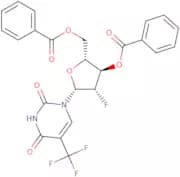
CAS:Please enquire for more information about 3’,5’-Di-O-benzoyl-2’-deoxy-2’-fluoro-5-trifluoromethyl-arabinouridine including the price, delivery time and more detailed product information at the technical inquiry form on this pagePurity:Min. 95%6-Chloro-7-deazaguanine
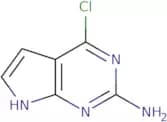
CAS:6-Chloro-7-deazaguanine (6CDG) is a pyrimidine nucleoside that is used in the treatment of hepatoblastoma and hepatitis. 6CDG is an alkylating agent that binds to DNA and causes strand breakage by forming covalent bonds with the N-7 position of guanine. It can also be used as an antiviral agent against herpes simplex virus, as it inhibits viral replication by inhibiting the viral DNA polymerase. 6CDG does not inhibit human DNA polymerase. The drug has been shown to be cytotoxic to MRC5 cells, which are resistant to pyrimidine analogs.
Formula:C6H5ClN4Purity:Min. 95%Color and Shape:PowderMolecular weight:168.58 g/mol8-Hydroxyguanine
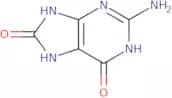
CAS:8-Hydroxyguanine is a purine derivative that is found in DNA. It is a byproduct of oxidative damage to DNA and can cause mutations. 8-Hydroxyguanine binds to the α1 subunit of DNA polymerase, inhibiting the polymerization of nucleotides. This prevents the synthesis of new DNA, resulting in cell death. In humans, 8-hydroxyguanine appears to be repaired at a higher rate than other organisms such as bacteria. A study has shown that human cells are able to repair 8-hydroxyguanine by using an enzyme called O6-alkylguanine transferase (AGT). The AGT protein removes the alkyl group from the guanine base and replaces it with an amino group during repair. This process results in the formation of O6-methylguanine, which can be eliminated by methylation or excreted through urine.Formula:C5H5N5O2Purity:Min. 98 Area-%Color and Shape:White PowderMolecular weight:167.13 g/mol3,7-Dimethyl-1-propargylxanthine
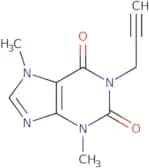
CAS:Controlled Product3,7-Dimethyl-1-propargylxanthine is a cyclase inhibitor that has been shown to have pharmacological effects. It has been shown to be effective in vivo models of Parkinson's disease and has reduced locomotor activity. This drug also inhibits the production of adenosine and dopamine, leading to neuronal death. The 3,7-dimethyl-1-propargylxanthine shows high selectivity for adenosine A3 receptors and is an antagonist at these receptors. It prevents mitochondrial membrane potential from decreasing, which may be due to inhibition of the production of reactive oxygen species by mitochondria. 3,7-Dimethyl-1-propargylxanthine also inhibits platelet aggregation by blocking the activation of phospholipase C and enhances platelet aggregation by inhibiting phosphodiesterase activity.Formula:C10H10N4O2Purity:Min. 95%Color and Shape:PowderMolecular weight:218.21 g/mol