Backbone Sugars and Nucleobases
Found 1001 products of "Backbone Sugars and Nucleobases"
7-Deazaxanthine
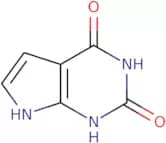
CAS:7-Deazaxanthine is a purine derivative that has been shown to have antiangiogenic properties. It inhibits the growth of cancer cells by inhibiting the synthesis of vascular endothelial growth factor (VEGF), which is a potent angiogenic factor. 7-Deazaxanthine also binds to the VEGF receptor, preventing it from binding to VEGF. The x-ray crystal structures and kinetic data for 7-deazaadenosine suggest that this compound may be an inhibitor of hydrogen bonding interactions between amino acids in protein molecules, leading to its antiangiogenic activity. 7-Deazaxanthine does not prevent the activation of tyrosine kinases or phosphatases. In addition, this compound has been shown to inhibit the proliferation of breast cancer cells in culture and in vivo studies using mouse models. This drug also has glycosidic bond, which can result in a variety of chemical structures due to different types of glycosFormula:C6H5N3O2Purity:Min. 98 Area-%Color and Shape:PowderMolecular weight:151.12 g/mol2-Thiouracil
CAS:2-Thiouracil is a photochemical that reacts with DNA by intermolecular hydrogen bonding, leading to DNA strand breakage. The reaction mechanism of 2-thiouracil has been elucidated through in vitro assays, which showed that the drug binds to the major groove of DNA duplexes and causes cleavage in the region containing two nitrogen atoms.Formula:C4H4N2OSPurity:Min. 98 Area-%Color and Shape:PowderMolecular weight:128.15 g/mol5-Hydroxymethylcytosine
CAS:5-Hydroxymethylcytosine is a metabolite of the nucleic acid cytosine. It is an epigenetic modification that alters gene expression without changing the DNA sequence. 5-Hydroxymethylcytosine has been shown to be a potential biomarker of cellular transformation and is involved in axonal growth, transcriptional regulation, and leukemia inhibitory factor. 5-Hydroxymethylcytosine binds to nuclear dna, which inhibits replication by binding to the duplexes of dna (the double helix) and halting transcriptional elongation. 5-Hydroxymethylcytosine also binds cell factor, which is necessary for cell proliferation and differentiation.Formula:C5H7N3O2Purity:Min. 95 Area-%Color and Shape:Off-White PowderMolecular weight:141.13 g/mol6-Benzoylamino-9H-purine-9-acetic acid
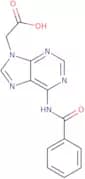
CAS:6-Benzoylamino-9H-purine-9-acetic acid (BAPAA) is a high quality reagent that is used in the synthesis of complex compounds. It is also a useful intermediate in the preparation of fine chemicals, speciality chemicals, and research chemicals. 6-Benzoylamino-9H-purine-9-acetic acid is a versatile building block for the synthesis of novel compounds with desired biological activity. This compound is an excellent reaction component because it can be used to synthesize various chemical structures.Formula:C14H11N5O3Purity:Min. 95%Color and Shape:PowderMolecular weight:297.27 g/mol7-Deazaguanine
CAS:7-Deazaguanine is a nucleoside with potential as an antiviral agent. 7-Deazaguanine inhibits the activity of the enzyme RNA polymerase II, which is required for viral replication. The drug binds to the DNA template, inhibiting polymerase chain reaction (PCR), and prevents transcription of viral RNA by hydrogen bonding to its complementary strands. In addition, it has been shown to reduce the production of epidermal growth factor in cells.Formula:C6H6N4OPurity:Min. 95%Color and Shape:Brown PowderMolecular weight:150.14 g/mol8-Aza-2,6-diaminopurine sulfate (1:x)
CAS:8-Aza-2,6-diaminopurine sulfate (1:x) is a sulfate salt that is soluble in water. The molecular mass of the compound is 581.10 g/mol and it has a molecular formula of C5H7N3O4S. The crystal structure of the compound consists of an asymmetric unit containing one molecule. The 8-aza-2,6-diaminopurine monohydrate salt has a solubility of 1 g/100 mL in water at 25°C. It also has a melting point of 190°C and a boiling point of 340°C.
Formula:C4H5N7·xH2SO4Purity:Min. 95%Color and Shape:Slightly Yellow PowderMolecular weight:151.13 g/mol5-Acetamido-6-amino-3-methyluracil hydrate
CAS:5-Acetamido-6-amino-3-methyluracil hydrate (AAU) is a drug that is used as an analytical reagent in the determination of caffeine, 5-hydroxytryptophan, and other compounds. It can be used to assess interactions between drugs and enzyme activities. AAU has been shown to be a suitable substrate for many enzymes, including alcohol dehydrogenase, acetylcholinesterase, catalase, and glucose oxidase. The sample preparation procedure is performed by dissolving the compound in water or ethanol. The sample is then filtered before it is analyzed using high performance liquid chromatography (HPLC). The chemical properties of AAU are such that it can be easily transported from one place to another without undergoing significant changes in physical properties. AAU has been shown to have no effect on biological samples when exposed to radiation.Formula:C7H10N4O3·H2OPurity:Min. 95%Color and Shape:Slightly Yellow PowderMolecular weight:216.2 g/mol6-Benzylamino-7-deazapurine
CAS:6-Benzylamino-7-deazapurine is a drug that has been shown to be effective in the treatment of pancreatic cancer. It is a monomer that reacts with nucleophiles such as 6-mercaptopurine, which are present in the human lung. The reaction generates an exergonic molecule that can be used to generate ATP and regenerate NAD+ during irradiation. This process has been observed using kinetic studies on human colon adenocarcinoma cells. 6-Benzylamino-7-deazapurine can also react with triazole compounds to form a linker and increase the rate of polymerization. The optimization of this reaction time could lead to more efficient cancer treatments.Formula:C13H12N4Purity:Min. 95%Color and Shape:PowderMolecular weight:224.26 g/mol3’,5’-Di-O-acetyl-2’-chloro-2’-deoxyuridine
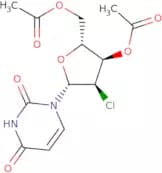
CAS:Please enquire for more information about 3’,5’-Di-O-acetyl-2’-chloro-2’-deoxyuridine including the price, delivery time and more detailed product information at the technical inquiry form on this pagePurity:Min. 95%8-Chloroguanine
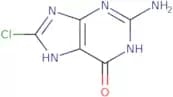
CAS:8-Chloroguanine is a carcinogen that has been shown to cause cancer in laboratory animals. It is a reactive compound with a hydroxyl group and a hydrogen bond that can react with DNA, leading to the formation of 8-chloroadenine (8-CAD) and 8-chloroguanine (8-CG). These compounds are then converted into hypochlorous acid, which has been shown to be an inflammatory agent. The analytical method for quantifying 8-chloroguanine can be done by electrochemical impedance spectroscopy. This method has been used in model studies of inflammatory diseases.Formula:C5H4ClN5OPurity:Min. 95 Area-%Color and Shape:White PowderMolecular weight:185.57 g/mol6-Aza-2-thiothymine
CAS:6-Aza-2-thiothymine is a hydrophobic base that is used in the preparation of DNA sequencing samples. It can be incorporated into DNA by enzymatic reactions with picolinic acid, which results in an increase in the number of thiol groups on the DNA. The incorporation of 6-aza-2-thiothymine into DNA is detected by binding to malonic acid and subsequent detection by matrix-assisted laser desorption ionization time-of-flight mass spectrometry. The presence of 6-aza-2-thiothymine can also be detected using a photochemical reaction with hydroxyl radicals, resulting in a change in the fluorescence properties of oligosaccharides bound to the DNA. This compound has been shown to inhibit prostate cancer cells and may be useful as a treatment for this type of cancer.
Formula:C4H5N3OSColor and Shape:White PowderMolecular weight:143.17 g/mol6-Hydrazinopurine
CAS:6-Hydrazinopurine is an anti-hepatitis drug that is a prodrug for 6-chloropurine. Its mechanism of action is not fully understood, but it has been shown to bind to the virus receptor and inhibit the replication of the virus. It also competitively inhibits amines in biochemical assays. This property may be due to its hydroxyl group, which can form a hydrogen bond with the amino group of amines. It has been shown to be active against prostate carcinoma cells. 6-Hydrazinopurine has been shown to inhibit the growth of cancer cells by inducing apoptosis and decreasing cell proliferation.Formula:C5H6N6Purity:Min. 95%Color and Shape:PowderMolecular weight:150.14 g/mol5-(2-Fluorovinyl)-2'-Deoxyuridine
CAS:5-(2-Fluorovinyl)-2'-Deoxyuridine is a hydrophobic analogue of acyclovir that has potent activity against herpes simplex virus type 1. It inhibits the synthesis of viral DNA, and thus prevents the formation of plaques in tissue culture. This drug also inhibits cell proliferation and viral production by l1210 cells as well as lung fibroblasts. 5-(2-Fluorovinyl)-2'-Deoxyuridine has shown inhibitory effects against uninfected cells, but not against cells infected with herpes simplex virus type 2.Formula:C11H13FN2O5Purity:Min. 95%Molecular weight:272.23 g/mol8-Bromoadenine
CAS:8-Bromoadenine is a nucleophile that reacts with electrophiles to form adducts. 8-Bromoadenine has been shown to induce DNA strand breaks and oxidative damage in vitro, which may be due to its ability to react with DNA bases and form intramolecular hydrogen bonds. 8-Bromoadenine has also been shown to cause inflammatory bowel disease in mice by increasing the production of proinflammatory cytokines. 8-Bromoadenine induces Toll-like receptor 4 (TLR4) signaling, which leads to enhancement of radiation response. This drug can also be used as the monosodium salt for treating cancer, although it only has a limited number of sequences that can be synthesized.Formula:C5H4BrN5Purity:Min. 95%Color and Shape:White PowderMolecular weight:214.02 g/mol8-Bromoguanine
CAS:8-Bromoguanine is a nucleoside analog drug that is used as an antileukemic agent. It is a synthetic derivative of guanine and has been shown to inhibit the growth of leukemic cells by interfering with the synthesis of DNA. 8-Bromoguanine has also been shown to be reactive with eosinophil peroxidase and other electron-rich substances, which may be due to its hydroxyl group. The analytical method for 8-bromoguanine includes fluorescence spectroscopy, high pressure liquid chromatography (HPLC), and thin layer chromatography (TLC). Chemical diversity studies have shown that 8-bromoguanine can react with glycosylase or hydroxy groups, forming reaction products.
Formula:C5H4BrN5OPurity:Min. 97 Area-%Color and Shape:PowderMolecular weight:230.02 g/mol3-Methyladenine
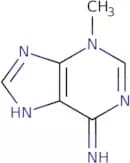
CAS:3-Methyladenine is a glycosylase that cleaves the glycosidic bond between the 3rd and 4th carbon of the ribose ring of the nucleotide 3-methyladenine. It also has synergistic effects with other agents that induce autophagy, such as rapamycin, and increases the expression of a response element in mouse monoclonal antibody. 3-Methyladenine inhibits growth factor-β1 and neuronal death by inducing apoptosis in cells overexpressing nuclear DNA polymerase. This drug is also used to study apoptosis by using a model system.
Formula:C6H7N5Purity:Min. 90 Area-%Color and Shape:PowderMolecular weight:149.15 g/mol5-Propyl-2-thiouracil
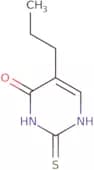
CAS:5-Propyl-2-thiouracil (PTU) is a drug used in the treatment of various types of cancer. It is a chemical analogue of thiouracil, but has a different mechanism of action. PTU inhibits the production of tropomyosin, which leads to inhibition of transcriptional regulation and expression of protein genes. PTU also blocks the hydrogen bond between the amino acid glutamine and deoxyribose phosphate backbone, thereby inhibiting translation. Clinical studies have shown that PTU is effective in treating cardiac hypertrophy, renal proximal tubule cells and clinical nephropathy. The use of PTU as a chemotherapeutic agent for cancer treatment has been limited due to its toxicity to animals.
Formula:C7H10N2OSPurity:Min. 95%Color and Shape:PowderMolecular weight:170.23 g/molN7-((2-Hydroxyethoxy)methyl)guanine
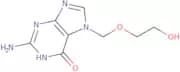
CAS:N7-((2-Hydroxyethoxy)methyl)guanine is a reagent, a complex compound, and a useful intermediate that is used in the manufacture of speciality chemicals. N7-((2-Hydroxyethoxy)methyl)guanine is also a versatile building block that has been shown to be effective in reactions involving the synthesis of N-heterocyclic carbene ligands.Formula:C8H11N5O3Purity:(%) Min. 95%Color and Shape:Off-White PowderMolecular weight:225.2 g/mol2’-C-Methyl-5-fluorouridine
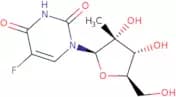
CAS:2’-C-Methyl-5-fluorouridine is a fine chemical that is used as a versatile building block for the synthesis of various complex compounds. It is also used as a reaction component in the synthesis of research chemicals and speciality chemicals. 2’-C-Methyl-5-fluorouridine is an important intermediate in organic chemistry and has many applications, such as being a reaction component in the synthesis of pharmaceuticals, agrochemicals, dyes, and perfumes.
Formula:C10H13FN2O6Purity:Min. 95%Color and Shape:SolidMolecular weight:276.22 g/mol9-Ethylguanine
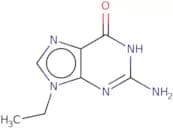
CAS:9-Ethylguanine is a protonated guanine derivative that has significant cytotoxicity. It is an analog of the natural nucleobase guanosine and is structurally similar to the group P2 purine base, hypoxanthine. 9-Ethylguanine specifically binds with nitrogen atoms in DNA, forming hydrogen bonds with adjacent bases. The compound has low potency and therefore must be administered at high doses for it to be effective. 9-Ethylguanine has been shown to have anticancer activity against cervical cancer cells in cell cultures, but no biological studies have been conducted on other cancer types.Formula:C7H9N5OPurity:Min. 95%Color and Shape:PowderMolecular weight:179.18 g/mol