Nucleotides
Subcategories of "Nucleotides"
Found 2638 products of "Nucleotides"
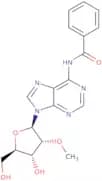
N6-Benzoyl-2'-O-methyladenosine
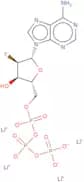
CAS:N6-Benzoyl-2'-O-methyladenosine is a nucleoside that is chemically synthesized. It has been shown to be an inhibitor of the polyhedrosis virus, which causes an infectious disease in silkworms. N6-Benzoyl-2'-O-methyladenosine also inhibits viral replication by interfering with the synthesis of messenger RNA. This compound can be used as a silver nitrate or silver salt prodrug for treating diseases caused by viruses and bacteria. This drug is not active against DNA viruses because it does not possess phosphate groups on its structure.Formula:C18H19N5O5Purity:Min. 95%Color and Shape:PowderMolecular weight:385.37 g/mol2'-Deoxy-2'-fluoroadenosine-5'-triphosphate tetralithium salt
CAS:2'-Deoxy-2'-fluoroadenosine-5'-triphosphate tetralithium salt (FdATP) is a competitive inhibitor of ATP. It inhibits the synthesis of RNA, DNA, and protein in cell culture at high concentrations. FdATP is also an analog of adenosine triphosphate (ATP), which is needed for cellular energy production. The competitive inhibition of ATP by FdATP prevents the formation of a phosphorylated enzyme that is required for the initiation of DNA synthesis. This can lead to cell death, as the cells cannot produce proteins required for growth and replication.Formula:C10H11FN5O12P3•Li4Purity:Min. 95%Color and Shape:PowderMolecular weight:532.9 g/mol2'-Deoxyadenosine monohydrate
CAS:2'-Deoxyadenosine monohydrate (2'-dA) is an adenosine nucleotide that is synthesized by the enzyme adenosine kinase. It is a competitive inhibitor of phosphodiesterase and inhibits the activity of this enzyme, which breaks down cyclic nucleotides to their corresponding monophosphate form. This leads to elevated levels of cAMP, which can cause neuronal death by apoptosis. 2'-dA has been shown to have sublethal effects on neurons at concentrations that are below those required for neuronal death and apoptosis. This may be due to its ability to inhibit the synthesis of ATP, thereby limiting the production of phosphoryl groups from ATP. The inhibition of ATP synthesis also reduces the amount of energy available for other processes within cells.
Formula:C10H13N5O3•H2OPurity:Min. 98 Area-%Color and Shape:PowderMolecular weight:269.26 g/mol5'-O-tert-Butyldiphenylsilyl-thymidine
CAS:5'-O-tert-Butyldiphenylsilyl-thymidine (TBS-T) is a class of nucleoside that is synthesized by condensation of two molecules of 5'-O-tert-butyldiphenylsilyl-2',3'-dideoxyuridine (TBDPS) and N6-benzoyladenine. TBS-Ts are used in the synthesis of phosphorothioate oligodeoxynucleotides. They have been shown to be useful as activators for the formation of phosphite linkages at the 3' terminus of DNA oligonucleotides. TBS-T is also used in other applications, such as the preparation of diastereomerically pure nucleosides for use in chemical reactions.
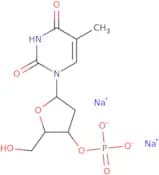
Formula:C26H32O5N2SiPurity:Min. 95%Color and Shape:White PowderMolecular weight:480.63 g/molThymidine 3′-monophosphate disodium
CAS:Thymidine 3′-monophosphate disodium is a chemotherapeutic agent that has been shown to have antiviral and anticancer properties. It is a nucleoside analogue, which mimics the structure of thymidine and inhibits DNA synthesis by interfering with the DNA replication process. Thymidine 3′-monophosphate disodium is also used as an activator in the synthesis of deoxyribonucleosides and ribonucleosides. This product is synthetic, high quality, and not chemically modified. It has CAS number 68698-19-1 and molecular weight of 242.06 g/mol.
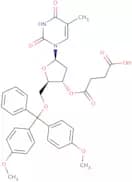
Formula:C10H15N2O8P•Na2Purity:Min. 95%Color and Shape:PowderMolecular weight:368.19 g/mol5'-O-DMT-thymidine 3'-O-succinate triethylammonium salt
CAS:5'-O-DMT-thymidine 3'-O-succinate triethylammonium salt is a novel antiviral agent that inhibits viral replication by competing with natural nucleosides for incorporation into the viral DNA or RNA. The 5'-O-DMT group prevents the elimination of thymidine from the monophosphate form. This product has a high purity and quality, as well as potent antiviral activity against HIV and other viruses.Formula:C35H36N2O10·xC6H15NPurity:Min. 95%Color and Shape:PowderMolecular weight:745.86 g/mol2-Methylthioadenosine
CAS:2-Methylthioadenosine is a purine nucleoside which induces necrotic cell death. It is the first of its kind to be shown to have activity against squamous carcinoma cells, and is activated by nucleoside phosphorylase in order to produce its cytotoxic form. 2-Methylthioadenosine also inhibits the transcription-polymerase chain reaction and increases oxidative injury. This drug has been shown to have receptor activity in brain cells, as well as chemotactic activity for gland cells. 2-Methylthioadenosine has been used as a model organism for polymerase chain reactions, and has been shown to inhibit p2y receptors in the human colon cancer cell line HT29.
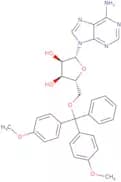
Formula:C11H15N5O4SPurity:Min. 95%Color and Shape:White Off-White PowderMolecular weight:313.34 g/mol5'-O-(4,4'-Dimethoxytrityl)adenosine
CAS:5'-O-(4,4'-Dimethoxytrityl)adenosine is a phosphoramidite that can be used as an activator for the synthesis of DNA. It is also used in the preparation of modified nucleosides and has anticancer activity. 5'-O-(4,4'-Dimethoxytrityl)adenosine is a modified ribonucleoside with high quality and high purity. This product has been shown to have antiviral activity against HIV-1.
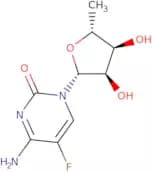
Formula:C31H31N5O6Purity:Min. 95 Area-%Color and Shape:White Off-White PowderMolecular weight:569.61 g/mol5'-Deoxy-5-fluorocytidine
CAS:5'-Deoxy-5-fluorocytidine is a cytosolic nucleoside analogue that is phosphorylated by cellular enzymes to the active form 5'-deoxy-5-fluorouridine monophosphate. It is a prodrug, which is activated in the body to release 5-FU and inhibits the growth of cancer cells. 5'-Deoxy-5-fluorocytidine has been shown to be effective against metastatic colorectal cancer in humans and resistant breast cancer in mice. The drug can also be used as an oral prodrug for 5-FU, which has a wide therapeutic index and low toxicity. Studies have shown that it selectively inhibits proliferation of solid tumours through inhibition of protein synthesis and cell division. The drug also has antiangiogenic effects, which are thought to contribute to its antitumor activity.Formula:C9H12FN3O4Purity:Min. 98 Area-%Color and Shape:White PowderMolecular weight:245.21 g/mol2'-Deoxy-3,5-dimethylcytidine
CAS:2'-Deoxy-3,5-dimethylcytidine is a nucleoside analog that is an activator of the ribonucleotide reductase enzyme. It has been shown to have anticancer properties in vitro and in vivo. 2'-Deoxy-3,5-dimethylcytidine has also been shown to be effective against HIV and herpes virus infections. 2'-Deoxy-3,5-dimethylcytidine is synthesized from deoxyribonucleosides or nucleosides by phosphitylation with phosphoramidites or diphosphates. The CAS number for this product is 198198-29-7.Formula:C11H17N3O4Purity:Min. 95%Color and Shape:PowderMolecular weight:255.27 g/mol5'-O-DMT-2'-O-hexylphthalimidouridine
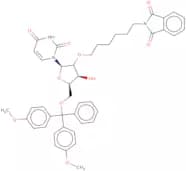
5'-O-DMT-2'-O-hexylphthalimidouridine is a novel nucleoside analog with anticancer activity. It is a modified nucleoside that has been synthesized and purified in high purity. 5'-O-DMT-2'-O-hexylphthalimidouridine is an activator of DNA and RNA synthesis and has antiviral properties. It also inhibits the production of tumor necrosis factor alpha (TNFα) by human synovial cells. This compound binds to the RNA polymerase II enzyme, which prevents transcription of genetic material from DNA templates into messenger RNA. This leads to inhibition of protein synthesis and cell death by apoptosis.
Formula:C44H45N3O10Purity:Min. 95%Molecular weight:775.86 g/mol2'-O-Methylcytidine
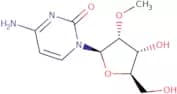
CAS:2'-O-Methylcytidine is a nucleoside with a hydroxyl group on the 2' carbon. The hydroxyl group makes it an effective inhibitor of viral replication, and it has been shown to be active against HIV-1 in cell culture. 2'-O-Methylcytidine is also metabolized by nucleotide salvage pathways, and the metabolic response can be studied using proton nuclear magnetic resonance (NMR) spectroscopy and x-ray diffraction data. It has been found that 2'-O-Methylcytidine inhibits protein synthesis in cancer cells, and this may be due to its ability to bind to the response element on DNA.
Formula:C10H15N3O5Purity:Min. 95%Color and Shape:White PowderMolecular weight:257.24 g/molβ-Nicotinamide adenine dinucleotide sodium dihydrate
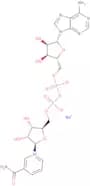
CAS:Coenzyme and regenerating electron donor in catabolic processes
Formula:C21H26N7NaO14P2•(H2O)2Purity:Min. 95%Color and Shape:White PowderMolecular weight:721.44 g/mol4-Hydroxy-6-methylpyrimidine
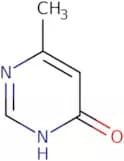
CAS:4-Hydroxy-6-methylpyrimidine (4-OHMP) is a metabolite of trimethyltin. It is formed in the liver by methylation of 4,6-dimethylpyrimidine (4,6-DMPU). The levels of 4-OHMP in urine samples are used to monitor exposure to this agent. The median values for urinary concentrations of 4-OHMP are typically 10 times higher than those found in blood samples. The metabolite can be detected in urine up to 2 weeks after an individual’s last contact with trimethyltin. This compound has been shown to inhibit the synthesis of glycol dimethyl ethers and carbamates.
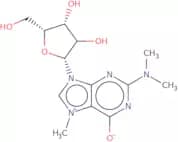
Formula:C5H6N2OPurity:Min. 95%Molecular weight:110.11 g/molN2,N2,7-Trimethylguanosine
CAS:Trimethylguanosine is a hydrogen-bonded base that is found in the DNA of all living organisms. It has a diagnostic role in cancer and metabolic disorders, as well as in the study of cell culture. Trimethylguanosine can be used to identify cancer cells by measuring its fluorescence properties, which are different from those of healthy cells. This compound also has a role in the diagnosis of metabolic disorders, such as diabetes mellitus and renal disease. Trimethylguanosine is also involved in biological function, and is necessary for the synthesis of proteins and nucleic acids.Formula:C13H20N5O5Purity:Min. 95 Area-%Color and Shape:PowderMolecular weight:326.33 g/molL-Cytidine
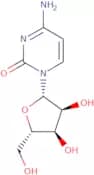
CAS:L-Cytidine is a nucleoside that is found in the body, and is also used as a drug. It is a precursor to other nucleosides, such as cytidine triphosphate, which is involved in DNA synthesis and repair. L-Cytidine has been shown to be effective against HIV infection by inhibiting the activity of the enzyme ns3 protease. This inhibition prevents viral proteins from being released from cells and infecting other cells. L-Cytidine has also been shown to be an inhibitor of creatine kinase and glycosidation, two enzymes that are necessary for cell metabolism. L-Cytidine has also been shown to be reactive with halides, which may lead to unwanted side effects.
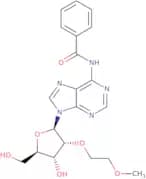
Formula:C9H13N3O5Purity:Min. 95%Color and Shape:PowderMolecular weight:243.22 g/molN6-Benzoyl-2'-O-(2-methoxyethyl)adenosine
CAS:N6-Benzoyl-2'-O-(2-methoxyethyl)adenosine is a novel nucleoside that can be used as an antiviral agent. It is an activator of viral polymerase and inhibits the proliferation of cells infected with HIV. This compound has been synthesized from 2'-deoxyadenosine monophosphate, which is a precursor to RNA and DNA synthesis. N6-Benzoyl-2'-O-(2-methoxyethyl)adenosine has also been shown to inhibit the growth of experimental tumors in mice. The synthesis of this compound is reliable and reproducible, making it a high quality product.
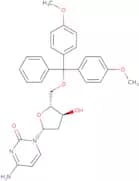
Formula:C20H23N5O6Purity:Min. 95%Molecular weight:429.43 g/mol2'-Deoxy-5'-O-DMT-cytidine
CAS:2'-Deoxy-5'-O-DMT-cytidine is an organic compound. It is a synthetic, combinational and amine nitrogen containing heterocyclic compound that is used in organic synthesis. This chemical is also used as a building block for the synthesis of heterocyclic compounds with other functional groups such as thionyl, formulae, chlorides and hydrogen atoms.Formula:C30H31N3O6Purity:Min. 95 Area-%Color and Shape:White PowderMolecular weight:529.58 g/mol1-(α-D-Ribofuranosyl)uracil
CAS:1-(α-D-Ribofuranosyl)uracil is a nucleoside analog made up of a uracil attached to a ribose sugar at the 1-position, with the sugar in the α configuration. This compound is of interest in biochemistry research and nucleoside chemistry, especially when studying stereochemistry or synthesizing analogs.Formula:C9H12N2O6Purity:(¹H-Nmr) Min. 95 Area-%Color and Shape:PowderMolecular weight:244.2 g/mol2',3'-Dideoxyinosine
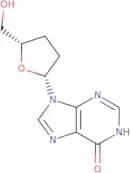
CAS:2',3'-Dideoxyinosine is a purine analog that can suppress human immunodeficiency virus (HIV) replication after intracellular metabolic conversionFormula:C10H12N4O3Purity:Min. 95 Area-%Color and Shape:White Off-White PowderMolecular weight:236.23 g/mol