Nucleotides
Subcategories of "Nucleotides"
Found 2638 products of "Nucleotides"
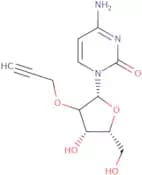
2'-O-Propargylcytidine
CAS:2'-O-Propargylcytidine is a novel nucleoside that has been modified from cytidine. It is designed to inhibit the activity of RNA polymerase and to be used in anticancer therapy. The synthesis of 2'-O-propargylcytidine has been achieved by modifying the nucleotide with propargylic chloride, which is then reacted with sodium cyanide. The resulting product is purified by column chromatography and recrystallization.
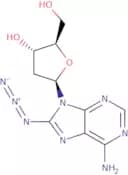
2'-O-Propargylcytidine is a phosphoramidite that can be used for DNA synthesis or as a monophosphate in RNA synthesis. This high purity product has a CAS number of 206552-85-4 and it can be used as an activator for ribonucleosides, such as adenosine, guanosine, uridine, cytidine, and thymidine.Formula:C12H15N3O5Purity:Min. 95%Color and Shape:PowderMolecular weight:281.26 g/mol8-Azido-2'-deoxyadenosine
CAS:8-azido-2-deoxyadenosine is an azide funcationalised nuceleoside
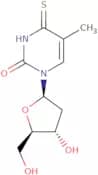
Formula:C10H12N8O3Purity:Min. 95%Color and Shape:PowderMolecular weight:292.25 g/mol4-Thiothymidine
CAS:4-Thiothymidine is a nucleoside analog that is converted to thymidine by the enzyme thymidine kinase. It has been shown to inhibit the growth of human skin cancer cells by binding to DNA duplexes and inhibiting the synthesis of new DNA strands. 4-Thiothymidine has also been shown to be effective against radiation-induced damage in cultured human cells and inhibits tumor growth in mice bearing a transplantable mouse skin cancer. 4-Thiothymidine can be used as an inhibitor for chemotherapy or radiation therapy for cancer patients. It is active on both site-specific and cell-specific gene targets, with a reactive hydrogen bond that helps stabilize its formation.Formula:C10H14N2O4SPurity:Min. 98 Area-%Color and Shape:Yellow PowderMolecular weight:258.3 g/molN6-Methyl-2'-O-methyladenosine
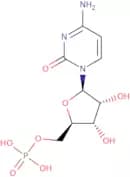
CAS:N6-Methyl-2'-O-methyladenosine is a nucleoside that is found in DNA. In some cases, the methyl group in this molecule can be modified, which can change its biological activity. N6-Methyl-2'-O-methyladenosine has been shown to reduce the severity of bowel disease and myocardial infarcts in experimental models. The structural analysis of vessels from patients with atherosclerosis revealed that this molecule inhibits vascular calcification. It also decreases expression of MMP-9, a protein involved in nephropathy and diabetic kidney disease. N6-Methyl-2'-O-methyladenosine is able to inhibit the development of vascular injury by blocking the activation of cells and reducing inflammation through pharmacological agents that are used in experimental models for blood vessel injury.Formula:C12H17N5O4Purity:Min. 97 Area-%Color and Shape:White PowderMolecular weight:295.29 g/molCytidine 5'-monophosphate free acid
CAS:Cytidine 5'-monophosphate is a nucleotide that is important in the synthesis of DNA and RNA. It is a precursor to uridine monophosphate (UMP) and uridylic acid (UDP). Cytidine 5'-monophosphate has been found to inhibit the growth of antibiotic-resistant strains of bacteria, such as those resistant to ampicillin, chloramphenicol, tetracycline, kanamycin, and streptomycin. Cytidine 5'-monophosphate also has inhibitory properties against energy metabolism and protein oxidation in bowel disease. This nucleotide has been shown to increase the rate constant for polymerase chain reaction (PCR) by up to 10-fold.Formula:C9H14N3O8PPurity:Min. 98 Area-%Color and Shape:White Off-White PowderMolecular weight:323.2 g/molN2,2'-O-Dimethylguanosine
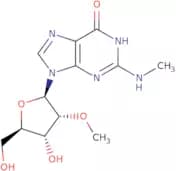
CAS:N2,2'-O-Dimethylguanosine is a nucleoside that belongs to the category of modified bases. It is synthesized from adenosine and a methyl group by a mutant strain of Escherichia coli. N2,2'-O-Dimethylguanosine can be identified by its characteristic UV-visible spectrum and high retention time on chromatographic columns. It has been shown to inhibit translation in E. coli at concentrations as low as 1 mM and also inhibits growth rate at concentrations as low as 2 mM. The chemical structure of this compound is similar to that of guanosine, but it contains an extra methyl group on its 2' carbon atom. This chemical modification may result in changes in the way the molecule interacts with other molecules or how it functions in the cell. N2,2'-O-Dimethylguanosine was first identified from a mutant strain of Escherichia coli that had been subjected to mutagenesisFormula:C12H17N5O5Purity:Min. 95%Molecular weight:311.29 g/molInosine 5'-monophosphate disodium salt hydrate
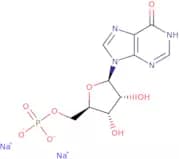
CAS:Inosine 5'-monophosphate disodium salt hydrate is a nucleotide that is synthesized from adenosine triphosphate in the energy metabolism of cells. It is used as an activator of signal pathways and as a potent inducer of metabolic enzymes. Inosine 5'-monophosphate disodium salt hydrate has been shown to induce bowel disease in mice with experimental colitis, suggesting its utility for treating inflammatory bowel disease. Inosine 5'-monophosphate disodium salt hydrate binds to the ATP-binding site of GTPase, stimulating the hydrolysis of ATP to ADP and phosphate. This reaction causes a conformational change in the enzyme's active site that increases the affinity for GTP by about 10-fold. The binding site is composed of two alpha helices sandwiching a central beta sheet and the catalytic residues are located at both ends of this beta sheet. Structural analysis has revealed that this drug interacts with
Formula:C10H11N4O8PNa2·xH2OPurity:Min. 99.0 Area-%Color and Shape:White PowderMolecular weight:392.17 g/mol3-Methylpseudouridine
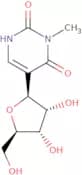
CAS:3-Methylpseudouridine is a uridine analog that inhibits the enzyme RNA polymerase. It has been shown to inhibit protein synthesis and can be used in the treatment of bacterial infections. 3-Methylpseudouridine is synthesized by solid-phase chemistry on a polymeric support and purified by high-performance liquid chromatography. It has been shown to inhibit the growth of bacteria in cell culture, but its effects on human cells are not known. 3-Methylpseudouridine also binds with high affinity to calf thymus DNA and it can be used as a substrate for aminoglycoside modification studies.Formula:C10H14N2O6Purity:Min. 95 Area-%Color and Shape:White PowderMolecular weight:258.23 g/molN6,N6,2'-O-Trimethyladenosine
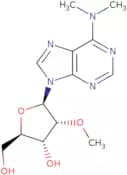
CAS:N6,N6,2'-O-Trimethyladenosine is a nucleoside that is found in small quantities in human tissues. It is synthesized by the enzyme polymerase from adenosine and S-adenosyl-L-methionine. N6,N6,2'-O-Trimethyladenosine is structurally similar to guanosine and cytidine and can be modified by nature or synthetic strategies. N6,N6,2'-O-Trimethyladenosine has been shown to have effects on fertility and may be involved in epigenetics as well as tuberculosis. Its role as an epigenetic marker for gene regulation has not been fully determined.Formula:C13H19N5O4Purity:Min. 88 Area-%Color and Shape:White PowderMolecular weight:309.32 g/mol2',5'-Dideoxyuridine
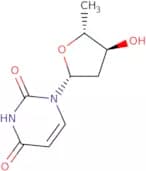
CAS:2',5'-Dideoxyuridine is a synthetic nucleoside analog derived from uridine, one of the four standard nucleosides found in RNA. It is chemically modified by the removal of hydroxyl (–OH) groups at the 2' and 5' positions of the sugar, altering its ability to participate in RNA or DNA chain formation.
Formula:C9H12N2O4Purity:Min. 95%Color and Shape:White To Off-White SolidMolecular weight:212.21 g/mol1', 2', 3', 4', 5'- ¹³C5-Adenosine
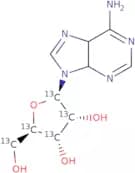
CAS:1', 2', 3', 4', 5'- ¹³C5-Adenosine is adenosine which has all five carbon atoms of the ribose sugar replaced with the stable isotope carbon-13 (^13C). Possible applications are in proteomics studies.Formula:C5C5H13N5O4Purity:Min. 97 Area-%Color and Shape:White PowderMolecular weight:272.2 g/molPseudouridine
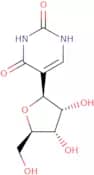
CAS:Uridine isomer; found in tRNAFormula:C9H12N2O6Purity:Min. 98 Area-%Color and Shape:White PowderMolecular weight:244.2 g/molCytidine
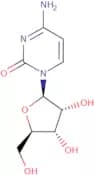
CAS:Cytidine is a nucleoside that belongs to the group of pyrimidine nucleosides. It can be absorbed from the intestine and hydrolyzed to uridine by intestinal enzymes. Cytidine has been shown to inhibit angiogenesis in animal model systems and transfection experiments, as well as being genotoxic in vitro. Cytidine has also been shown to inhibit polymerase chain reactions (PCR) and enzyme activities, such as cytidine deaminase, which converts cytidine into uracil.
Formula:C9H13N3O5Purity:Min. 99 Area-%Color and Shape:White Off-White PowderMolecular weight:243.22 g/mol2'-Deoxy-5-hydroxycytidine
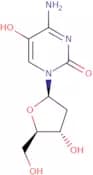
CAS:2'-Deoxy-5-hydroxycytidine is a nucleoside analog that is used to treat human immunodeficiency virus (HIV). It inhibits the synthesis of HIV by inhibiting the enzyme reverse transcriptase. This drug binds to DNA duplexes, and has been shown to be reactive with damaged DNA. The compound has been shown to inhibit viral replication in a model system, and also inhibits the polymerase chain reaction. 2'-Deoxy-5-hydroxycytidine may also have thermodynamic properties that are related to its potential for reactivity with oxidative DNA.
2'-Deoxy-5-hydroxycytidine is an analog of cytidine. It can be synthesized using solid phase synthesis on a resin support.Formula:C9H13N3O5Purity:Min. 95%Color and Shape:White PowderMolecular weight:243.22 g/molO6-Methylguanosine
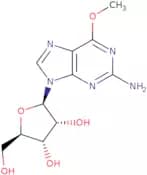
CAS:Intermediate in the synthesis of nelarabineFormula:C11H15N5O5Purity:Min. 95%Color and Shape:PowderMolecular weight:297.27 g/molN4,N4,2’-O-Trimethylcytidine
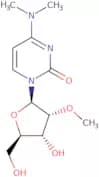
CAS:N4,N4,2’-O-Trimethylcytidine is a novel nucleoside that has been shown to be an anticancer drug. It inhibits the growth of cells by selectively inhibiting their DNA synthesis. N4,N4,2’-O-Trimethylcytidine is also active against viruses and is able to inhibit viral replication by blocking the synthesis of deoxyribonucleosides and phosphoramidites. This compound has been synthesized in high purity and quality with CAS No. 34218-81-0.Formula:C12H19N3O5Purity:Min. 95%Color and Shape:White PowderMolecular weight:285.3 g/molN2,N2-Dimethylguanosine
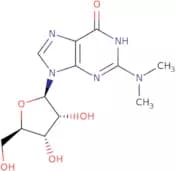
CAS:N2,N2-Dimethylguanosine is a purine nucleoside that is found in human serum. It belongs to the group of purines and has been shown to be involved in energy metabolism. N2,N2-Dimethylguanosine has been shown to be present at high levels in patients with autoimmune diseases such as rheumatoid arthritis. The x-ray crystal structures of wild-type strains of Escherichia coli and Streptococcus pneumoniae have been determined, which revealed that this compound interacts with the enzyme activity for primary sclerosing cholangitis. This nucleoside can also be detected by LC-MS/MS methods and multivariate logistic regression analysis.Formula:C12H17N5O5Purity:Min. 98 Area-%Color and Shape:Off-White PowderMolecular weight:311.3 g/mol5-Bromo-2'-deoxy-5'-O-DMT-uridine
5-Bromo-2'-deoxy-5'-O-DMT-uridine is an antiviral nucleoside that is a monophosphate analog of deoxyuridine. 5-Bromo-2'-deoxy-5'-O-DMT-uridine can be used to treat patients with leukemia and other cancers. 5-Bromo-2'-deoxy-5'-O-DMT-uridine has been shown to induce tumor cell apoptosis in vitro and in vivo, as well as inhibit the proliferation of tumor cells by blocking the synthesis of DNA. This drug also has anticancer properties, which are due to its ability to block RNA synthesis.Formula:C30H29BrN2O7Purity:Min. 95%Color and Shape:Off-white to beige solid.Molecular weight:609.48 g/mol3'-Deoxyinosine
CAS:3'-Deoxyinosine is a nucleoside analog that is used in the treatment of leukemia, lymphoma, and AIDS-related Kaposi's sarcoma. The drug inhibits DNA synthesis by inhibiting enzymes such as ribonucleotide reductase, thymidylate synthase, and dihydrofolate reductase. 3'-Deoxyinosine has minimal toxicity and may be administered orally or intravenously. It has been shown to have an inhibitory effect on the growth of skin cancer cells and leishmania parasites in cell culture. This drug also lowers blood pressure by interfering with the synthesis of angiotensin II and may be useful for treating hypertension. The drug is synthetically prepared in a laboratory by chemists.
Formula:C10H12N4O4Purity:Min. 95%Color and Shape:PowderMolecular weight:252.23 g/mol2'-Deoxy-N4-methylcytidine
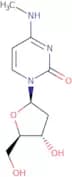
CAS:2'-Deoxy-N4-methylcytidine is a modified nucleoside that is used to inhibit the activity of protein kinases. It has been shown to inhibit the function of two different types of enzymes, eukaryotic protein kinase and bacterial RNA polymerase. 2'-Deoxy-N4-methylcytidine inhibits the activity of these enzymes by modifying their structure, which in turn prevents them from carrying out their normal functions. This modification can be achieved through deamination or protonation reactions with this drug. The effects of this drug are nonparametric and are observed at transcript levels.Formula:C10H15N3O4Purity:Min. 97 Area-%Color and Shape:White PowderMolecular weight:241.24 g/mol