Nucleotides
Subcategories of "Nucleotides"
Found 2637 products of "Nucleotides"
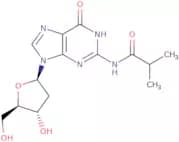
2'-Deoxy-N2-isobutyrylguanosine
CAS:2'-Deoxy-N2-isobutyrylguanosine (2'-DIBG) is an inhibitor of bacterial translocation that has been shown to inhibit the growth of several bacterial species. This drug binds to fatty acids, which are important for maintaining the integrity of the cell membrane and preventing bacterial translocation. 2'-DIBG also inhibits the production of reactive oxygen species by bacteria, which contributes to its antimicrobial activity. Inflammation can be reduced by inhibiting prostaglandin synthesis with 2'-DIBG. The inhibition of prostaglandin synthesis may be due to its ability to form acid conjugates with fatty acids and dicarboxylic acids, which are precursors for prostaglandins. 2'-DIBG also inhibits the synthesis of adenosine triphosphate (ATP) in bacteria, leading to a decrease in bacterial growth rate.
Formula:C14H19N5O5Purity:Min. 95%Color and Shape:White PowderMolecular weight:337.34 g/mol5-Aminoimidazole-4-carboxamide-1-b-D-ribofuranose 5'-monophosphate
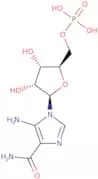
CAS:Controlled Product5-Aminoimidazole-4-carboxamide-1-b-D-ribofuranose 5'-monophosphate (AICAR) is an analogue of AMP that activates the AMPK pathway. It is a potent activator that increases the activity of this enzyme, which regulates cellular energy metabolism. AICAR has been shown to induce significant cytotoxicity in k562 cells and to increase the levels of ATP in these cells. This compound has also been shown to have potential use in metabolic disorders, such as type 2 diabetes, by increasing uptake and kinetic of glucose. AICAR has also been shown to activate the AMPK pathway in prostate cancer cells and increase cellular physiology.Formula:C9H15N4O8PPurity:Min. 95 Area-%Color and Shape:White PowderMolecular weight:338.21 g/molMizoribine
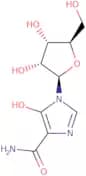
CAS:Inhibitor of heat shock protein Hsp60; immunosuppressant
Formula:C9H13N3O6Purity:Min. 95%Color and Shape:White PowderMolecular weight:259.22 g/mol2'-Deoxy-5-hydroxymethyluridine
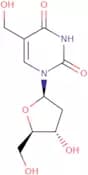
CAS:2'-Deoxy-5-hydroxymethyluridine (DHMU) is a natural compound that has been shown to have inhibitory properties against bowel disease. DHMU inhibits the proliferation of wild-type strains of Salmonella enterica serovar Typhimurium and Escherichia coli by binding to their nuclear dna. It also prevents DNA synthesis in human polymorphonuclear leukocytes and synergizes with pharmacological agents, such as radiation or chemotherapeutic agents, to induce cell death. This agent can be used as an analytical method for the detection of nucleic acids.Formula:C10H14N2O6Purity:Min. 98.0 Area-%Color and Shape:White PowderMolecular weight:258.23 g/molN6-Benzoyladenosine
CAS:N6-Benzoyladenosine is a purine nucleoside that is synthesized from uridine and has a high resistance to phosphorylation. It is found in the mitochondrial matrix of rat hepatocytes and can be used as a specific agent for the treatment of symptoms related to Parkinson's disease. N6-Benzoyladenosine inhibits protein synthesis by inhibiting the catalytic subunit of guanine nucleotide-binding proteins, which are involved in cellular energy production. It also inhibits camp levels and camp concentrations in mitochondria, which may be due to its effects on the trimethylbenzodiazepine receptor.Formula:C17H17N5O5Purity:Min. 98 Area-%Color and Shape:White PowderMolecular weight:371.35 g/mol8-Bromo-2'-deoxyguanosine
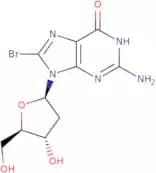
CAS:8-Bromo-2'-deoxyguanosine is a reactive brominated compound that has been shown to stabilize DNA strands. The effects of 8-bromo-2'-deoxyguanosine on the stability of DNA are due to the steric interactions between the bromine and amines in the DNA backbone, which prevent nucleophilic attack. 8-Bromo-2'-deoxyguanosine is an antihistamine, but it has also been used as a precursor for other drugs such as zidovudine, an antiviral drug used in HIV/AIDS therapy. It has also been proposed as a potential treatment for atherosclerosis.Formula:C10H12BrN5O4Purity:Min. 90 Area-%Color and Shape:Off-White PowderMolecular weight:346.14 g/mol2'-C-Methyladenosine
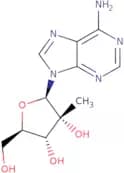
CAS:Antiviral compound; inhibitor of viral RNA replicationFormula:C11H15N5O4Purity:Min. 95%Color and Shape:PowderMolecular weight:281.27 g/molN4-Benzoyl-L-cytidine
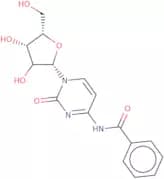
CAS:N4-Benzoyl-L-cytidine is an acid that is used as a building block in organic synthesis. It is a precursor to many biologically active compounds, including nucleosides and nucleotides. N4-Benzoyl-L-cytidine is an aminoacylated derivative of cytidine, which can be synthesized by reacting the benzoyl chloride with the corresponding amine. This reaction product can be purified by extraction into an organic solvent followed by washing with water and drying under vacuum. The compound can be converted to its hydrolysis products, benzoic acid and pyrrolidinone, through acidic hydrolysis. The synthesis of N4-benzoyl-L-cytidine can also be achieved using solid phase chemistry (SPS) to exploit the reactivity of amino acids and their derivatives.Formula:C16H17N3O6Purity:Min. 95%Color and Shape:PowderMolecular weight:347.32 g/mol2'-Deoxycytidine-3'-monophosphate
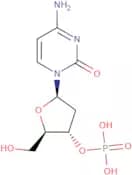
CAS:2'-Deoxycytidine-3'-monophosphate free acid is a nucleotide that is synthesized from deoxyadenosine triphosphate and deoxycytidine triphosphate in the presence of ribonucleotide reductase. It is the precursor to DNA synthesis, where it is converted to dCTP by thymidylate synthase. 2'-Deoxycytidine-3'-monophosphate free acid has low energy and vibrational levels, due to its glycosidic bond. This bond can be broken by chromatographic methods. The excised activated product uridine can be used for carcinogenesis studies, as well as for other molecular studies such as electron microscopy and crystallography. 2'-Deoxycytidine-3'-monophosphate free acid is an unstable molecule that can undergo dinucleotide rearrangements, electron transfer, or bond cleavage to form a metastable molecule withFormula:C9H14N3O7PPurity:Min. 95%Color and Shape:PowderMolecular weight:307.2 g/mol3'-Amino-2',3'-dideoxyinosine
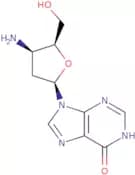
CAS:3'-Amino-2',3'-dideoxyinosine acts as a chain terminator in DNA synthesis due to the absence of a 3'-hydroxyl group. The 3'-amino group allows for the attachment of various molecules to the 3' end of oligonucleotides, and the inosine base introduces the potential for wobble base pairing, making it a specialized tool for research and potential diagnostic applications.Formula:C10H13N5O3Purity:Min. 95%Molecular weight:251.24 g/mol2',5'-Dideoxycytidine
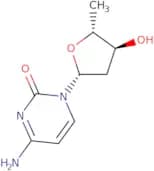
CAS:2',5'-Dideoxycytidine is a nucleoside for use in a variety of applications
Formula:C9H13N3O3Purity:Min. 95%Color and Shape:White Off-White PowderMolecular weight:211.22 g/mol3'-Amino-3'-deoxyguanosine
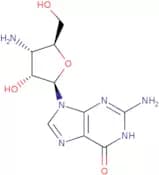
CAS:terminates RNA strand synthesis catalyzed by RNA polymerase.Formula:C10H14N6O4Purity:Min. 95%Color and Shape:Off-White PowderMolecular weight:282.3 g/mol2'-O-Allyladenosine
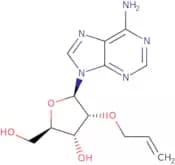
CAS:2'-O-Allyladenosine is a synthetic nucleoside analog that has been shown to be a competitive inhibitor of the enzyme guanosine kinase. It has a high yield and can be used as a synthon for the preparation of 2'-deoxyribose nucleosides. The alkylation of allyl groups onto adenosines provides an efficient method for synthesizing allylated purines, which are analogs with increased stability and affinity for DNA sequences. 2'-O-Allyladenosine has been shown to bind to DNA, RNA, and proteins. Its interaction with DNA is stronger than that of unmodified adenosine, due to the presence of two allyl groups that can form hydrogen bonds with the phosphate backbone. This interaction may also lead to increased affinity for sequences containing G-C base pairs.Formula:C13H17N5O4Purity:Min. 95%Color and Shape:PowderMolecular weight:307.31 g/molAcetyl coenzyme A lithium
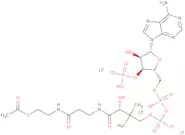
CAS:Acetyl coenzyme A lithium salt is a drug that inhibits the production of acetyl-CoA, which is an important molecule in the metabolism of fatty acids. This drug has been shown to be effective against cancerous cells by inhibiting the synthesis of lysine residues and carnitine. Acetyl coenzyme A lithium salt has also been shown to inhibit the growth of typhimurium, which may be due to its ability to inhibit NADPH-cytochrome p450 reductase. Acetyl coenzyme A lithium salt has not been shown to have any carcinogenic potential in humans, but it has been shown to have carcinogenic potential in animal models.Formula:C23H38N7O17P3S•LixPurity:Min. 85%Color and Shape:PowderMolecular weight:809.57 g/mol7-Methylguanosine 5'-triphosphate sodium
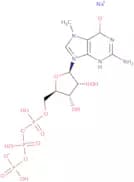
CAS:7-Methylguanosine 5'-triphosphate sodium salt is a Novel, High purity, Activator, High quality, Modified, Ribonucleosides. CAS No. 104809-18-9. Synthetic, DNA, Phosphoramidites. Anticancer, diphosphate. 7-Methylguanosine 5'-triphosphate sodium salt is an antiviral agent that blocks the synthesis of viral RNA or DNA by inhibiting the enzyme ribonucleotide reductase. It is a monophosphate analog of guanosine triphosphate and may be useful in the treatment of cancer or antiviral therapy because it inhibits cell proliferation and induces apoptosis in tumor cells.Formula:C11H18N5O14P3•NaxPurity:Min. 85 Area-%Color and Shape:PowderMolecular weight:537.21 g/mol5'-O-Acetyladenosine
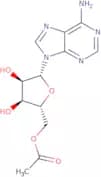
CAS:5'-O-Acetyladenosine is a labile nucleoside that can be converted to adenosine. It is a substrate for the enzyme ribonucleotide reductase, which converts it to adenosine monophosphate. 5'-O-Acetyladenosine has been shown to function as an equilibrating agent in the synthesis of guanosine and other pyrimidine nucleotides. In addition, it is a precursor for the synthesis of purines. 5'-O-Acetyladenosine can be synthesized from trimethyl phosphate and chloride gas yields acetaldehyde, which then reacts with phosphorus oxychloride to form 5'-O-acetyladeninol, which undergoes hydrolysis to yield 5'-O-acetyladenosine. The regioselectivity of this reaction depends on the concentration of reactants and solvents used in the reaction.Formula:C12H15N5O5Purity:Min. 95%Color and Shape:White PowderMolecular weight:309.28 g/mol2,2'-Anhydrouridine
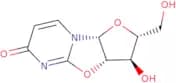
CAS:The nucleophilic opening of 2,2'-Anhydrouridine represents a novel synthetic approach for elaborating the ring of nucleosides. For example, compounds such as 2-amino-, 2-fluoro- and 2-phenylseleno-2-deoxyuridines are prepared from the nucleophilic opening of 2,2'-Anhydrouridine.Â2,2'-Anhydrouridine inhibits uridine phosphorylase, a key enzyme targeted by some antitumor drugs.
Formula:C9H10N2O5Purity:Min. 98 Area-%Color and Shape:White Off-White PowderMolecular weight:226.19 g/mol5'-O-DMT-2'-O-methyl-N6-phenoxyacetyladenosine
CAS:5'-O-DMT-2'-O-methyl-N6-phenoxyacetyladenosine is a novel synthetic nucleoside with antiviral and anticancer activities. It is a phosphoramidite that can be used to synthesize oligonucleotides of any sequence. It is a nucleoside analogue that has been shown to inhibit the activity of DNA gyrase and topoisomerase IV, which are enzymes that maintain the integrity of bacterial DNA. 5'-O-DMT-2'-O-methyl-N6-phenoxyacetyladenosine is also an activator of viral transcription and replication. 5'-O-DMT-2'-O-methyl-N6-phenoxyacetyladenosine has been shown to be active against methicillin resistant Staphylococcus aureus (MRSA) and Clostridium perfringens, although it is not active against acid fast bacteria suchFormula:C40H39N5O8Purity:Min. 95 Area-%Color and Shape:PowderMolecular weight:717.77 g/molAdenosine 5'-monophosphate monohydrate
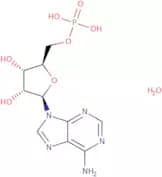
CAS:Adenosine 5'-monophosphate monohydrate (AMP) is a nucleotide that is released by cells in response to various stimuli. It is involved in the regulation of metabolic rate, cell death, and inflammatory responses. AMP may also act as a mediator of opioid-induced analgesia. AMP has been shown to inhibit the production of pro-inflammatory cytokines in activated macrophages and to reduce nociception at high doses. This drug also has an effect on blood pressure and may be used for the treatment of hypertension.Formula:C10H14N5O7P•H2OPurity:Min. 98 Area-%Color and Shape:White PowderMolecular weight:365.24 g/mol2,2'-Anhydrothymidine
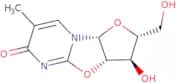
CAS:2,2'-Anhydrothymidine is an anhydro version of thymidine. As 2,2'-Anhydrothymidine is a modified version of thymidine it can help researchers understand what happens when DNA is changed or damaged. Other possible uses as in research related to antiviral drug creation.Formula:C10H12N2O5Purity:Min. 95%Color and Shape:White Off-White PowderMolecular weight:240.21 g/mol