Nucleotides
Subcategories of "Nucleotides"
Found 2637 products of "Nucleotides"
2'-Deoxy-N2-phenoxyacetylguanosine
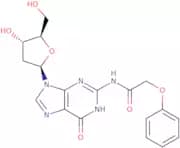
CAS:2'-deoxy-N2-phenoxyacetylguanosine is a synthetic nucleoside that is used as a substrate in experiments to study the properties of guanine. The compound can be synthesized by the reaction of 2'-deoxy-N2-phenoxyacetaldehyde with guanine. The synthesis starts with the condensation of 2'-deoxyribose and N2-phenoxyacetaldehyde, followed by the oxidation of the resulting anhydride to give aldehyde, which reacts with guanine to form a Schiff base. This then undergoes hydrolysis to yield 2'-deoxy-N2-phenoxyacetylguanosine.Formula:C18H19N5O6Purity:Min. 95%Molecular weight:401.38 g/molCytidine 5'-triphosphate disodium dihydrate
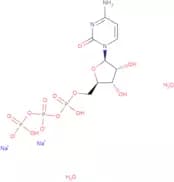
CAS:Cytidine 5'-triphosphate (CTP) disodium dihydrate prevents the action of aspartate carbamoyltransferase, an enzyme involved in pyrimidine biosynthesis. CTP serves as a molecule of high energy and acts as a coenzyme in glycerophospholipid biosynthesis and protein glycosylation.Formula:C9H16N3O14P3•(H2O)2•Na2Purity:Min. 95%Color and Shape:PowderMolecular weight:565.17 g/molN6-Cyclopentyladenosine
CAS:N6-Cyclopentyladenosine is a nucleoside analog that binds to the kappa-opioid receptor. The physiological effects of this drug are mediated through its interaction with the kappa-opioid receptor, which is found in the central nervous system and mediates many of the effects of morphine. N6-Cyclopentyladenosine has been shown to increase blood flow and heart rate in humans. This drug also inhibits tetrazolium dye uptake by papillary muscle cells, suggesting that it may have cardiotonic effects. N6-Cyclopentyladenosine has been used as an analytical probe for adenosine, which is metabolized by cyclic AMP and cyclic GMP phosphodiesterases into adenosine 3',5'-cyclic monophosphate (cAMP).Formula:C15H21N5O4Purity:Min. 95%Color and Shape:PowderMolecular weight:335.36 g/mol2'-O-(tert-Butyldimethylsilyl)-5'-O-DMT-N2-isobutyryl-guanosine
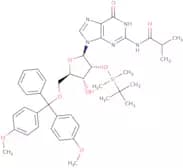
CAS:2'-O-(tert-Butyldimethylsilyl)-5'-O-DMT-N2-isobutyryl-guanosine is a synthetic nucleoside that has been modified with a tert-butyldimethylsilyl group. This modification is used to improve the efficiency of coupling reactions between nucleosides and phosphoramidites in oligonucleotide synthesis. The 2'-O-(tert-Butyldimethylsilyl)-5'-O-DMT-N2-isobutyryl guanosine is also used as a chromophore in spectroscopy experiments and as a ligand in metal coordination chemistry.Formula:C41H51N5O8SiPurity:Min. 98 Area-%Color and Shape:Off-White PowderMolecular weight:769.96 g/mol2'-Azido-2'-deoxyuridine
CAS:Formula:C9H11N5O5Purity:>98.0%(HPLC)Color and Shape:White to Almost white powder to crystalMolecular weight:269.22β-Nicotinamide Adenine Dinucleotide Disodium Salt, reduced form [for Biochemical Research]
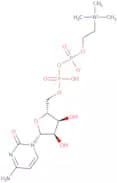
CAS:Formula:C21H27N7Na2O14P2Color and Shape:White to Orange to Green powder to crystalMolecular weight:709.41Cytidine 5'-diphosphocholine
CAS:Cytidine 5'-diphosphocholine is a nucleotide that is a precursor of uridine 5'-triphosphate and cytidine 5'-monophosphate, which are important for DNA synthesis. Cytidine 5'-diphosphocholine is used in the preparation of samples for experiments. This compound has been shown to induce neuronal death in an experimental model. It has also been shown to inhibit polymerase chain reactions and affect the activity of enzymes such as alpha-7 nicotinic acetylcholine receptors and glutamate decarboxylase. Cytidine 5'-diphosphocholine has been found to have no effect on basic fibroblast cells, but it does have physiological effects on human erythrocytes.Formula:C14H26N4O11P2Purity:Min. 98 Area-%Color and Shape:White PowderMolecular weight:488.32 g/mol2'-Deoxy-L-uridine
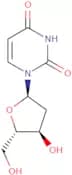
CAS:2'-Deoxy-L-uridine is a nucleoside that is found in the human body. It phosphorylates l-thymidine, which is a natural substrate, and this reaction prevents the formation of diphosphate from d-ribose 5'-monophosphate. 2'-Deoxy-L-uridine is an exogenous substance that inhibits cell growth by affecting protein synthesis and DNA replication. 2'-Deoxy-L-uridine has been shown to be more efficient than wild type uridine in inhibiting cell growth in vitro at concentrations of 1 mM or greater. The enantiomers of 2'-deoxy-L-uridine affect cell growth differently, with the (R)-enantiomer being more potent than the (S)-enantiomer.
Formula:C9H12N2O5Purity:Min. 95%Color and Shape:White PowderMolecular weight:228.2 g/molN4-Etheno 2'-deoxycytidine
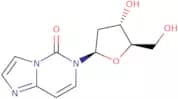
CAS:N4-Etheno 2'-deoxycytidine is an aromatic hydrocarbon that has been shown to be a potent inhibitor of DNA synthesis. It binds covalently with the N4 position of deoxycytidine in DNA, thereby inhibiting transcription and replication. This drug has been shown to be a potent inhibitor of DNA synthesis in human cells when it is added to the culture medium, but it does not inhibit protein synthesis. N4-Etheno 2'-deoxycytidine can also react with hydrogen bonds in cellular proteins and nucleosides that are involved in DNA repair mechanisms. This drug is reactive and may cause oxidative damage to cellular components, which may lead to carcinogenesis.Formula:C11H13N3O4Purity:Min. 95%Color and Shape:White PowderMolecular weight:251.24 g/molPolyguanylic acid potassium
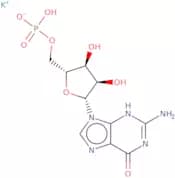
CAS:Polyguanylic acid potassium salt is a guanosine analog that is used as a probe for studying the interaction of cellular and target tissue. It has been found to be taken up by cells, with high affinity constants, and to be immobilized on cell surfaces. Polyguanylic acid potassium salt can also be used as an anticancer agent against epidermoid carcinoma cells with high affinity constants. The compound interacts with DNA and inhibits the growth of the tumor cells by interfering with the uptake of nucleic acids.Formula:(C10H14N5O8P)x•KxPurity:Min. 95%Color and Shape:PowderNicotinic acid adenine dinucleotide sodium
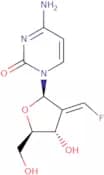
CAS:Nicotinic acid adenine dinucleotide sodium (NAAD) is a novel anticancer and antiviral agent. NAAD is an analog of nicotinamide adenine dinucleotide (NAD) that has been modified to include a sodium ion. This modification inhibits the synthesis of DNA and RNA, which are required for cell division and replication. It has been shown to inhibit the growth of cancer cells in vitro and in vivo. In addition, NAAD suppresses viral replication by inhibiting protein synthesis in cells infected with HIV-1 or influenza virus. NAAD has also been shown to be a potent inhibitor of ribonucleoside reductase, which converts ribonucleosides into deoxyribonucleosides. This inhibition prevents the conversion of diphosphate nucleotides into monophosphate nucleotides, which are necessary for DNA synthesis.Formula:C21H26N6O15P2•NaPurity:Min. 95%Molecular weight:687.4 g/mol(E)-2'-Deoxy-2'-(fluoromethylene)cytidine
CAS:(E)-2'-Deoxy-2'-(fluoromethylene)cytidine is a cytostatic compound that inhibits DNA synthesis in tumor cells. It has been shown to be more potent than tezacitabine and hl-60 cells, as well as being less toxic than benzimidazole compounds. This analog of cytosine has been shown to have potent antitumor activity against carcinoma cell lines and myeloid leukemia cell lines. The oral prodrug form of this drug has been shown to be an effective treatment for myeloid leukemia in mice.Formula:C10H12FN3O4Purity:Min. 95%Molecular weight:257.22 g/mol2'-Phosphoadenosine 5'-phosphosulfate tetralithium salt (mixture with 3'-isomer)
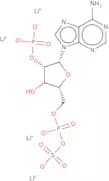
CAS:2'-Phosphoadenosine 5'-phosphosulfate tetralithium salt (mixture with 3'-isomer) is a novel, modified nucleoside. It has antiviral properties and can be used for the treatment of cancer. 2'-Phosphoadenosine 5'-phosphosulfate tetralithium salt (mixture with 3'-isomer) inhibits viral replication by inhibiting the synthesis of viral DNA and RNA. This compound also inhibits cancer cell proliferation by inhibiting deoxyribonucleic acid (DNA) and ribonucleic acid (RNA) synthesis.
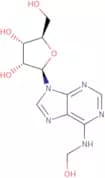
Formula:C10H11N5O13P2S·4LiPurity:Min. 95%Color and Shape:SolidMolecular weight:531 g/molN6-Hydroxymethyladenosine
CAS:Please enquire for more information about N6-Hydroxymethyladenosine including the price, delivery time and more detailed product information at the technical inquiry form on this pageFormula:C11H15N5O5Purity:Min. 95%Color and Shape:PowderMolecular weight:297.27 g/mol8-Aminoguanosine
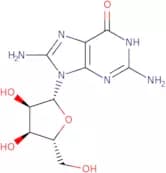
CAS:8-Aminoguanosine is a synthetic purine nucleoside that inhibits DNA synthesis. It has been shown to inhibit the proliferation of HL-60 cells, which are a model for human monocytes and neutrophils. 8-Aminoguanosine has been shown to bind to the template strand of DNA and inhibit the incorporation of deoxyribonucleotide triphosphates into the newly synthesized strand. This binding prevents DNA replication by preventing access to the template strand of DNA. 8-Aminoguanosine inhibits cyclin D2, an enzyme required for cell division, at concentrations as low as 0.1 mM, and it also inhibits microtubule assembly. 8-Aminoguanosine has shown in vitro activity against various tumor cell lines including Molt-4 and MCF7 cells, and in vivo activity in a mouse model against C3H/HeJ mice transplanted with Lewis lung carcinoma cells.
Formula:C10H14N6O5Purity:Min. 95%Color and Shape:PowderMolecular weight:298.26 g/mol5,6-Dihydrothymidine
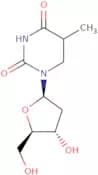
CAS:5,6-Dihydrothymidine is a hydroxylated thymidine analogue. It binds to the leukocyte antigen, which is found on many different types of cells. 5,6-Dihydrothymidine inhibits the replication of herpes simplex virus and can be used for diagnostic purposes. 5,6-Dihydrothymidine has been shown to have conformational properties that are similar to those of thymine, which allows it to bind to the template strand in DNA. This binding prevents the synthesis of messenger RNA from DNA. 5,6-Dihydrothymidine is also able to inhibit cell growth in culture and can be used as a cell culture medium supplement.Formula:C10H16N2O5Purity:Min. 95%Color and Shape:PowderMolecular weight:244.24 g/mol6-(Benzylamino)-3-methyl-1,2,3,4-tetrahydropyrimidine-2,4-dione
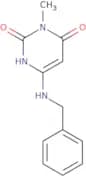
CAS:6-(Benzylamino)-3-methyl-1,2,3,4-tetrahydropyrimidine-2,4-dione (BMPT) is a synthetic cytokinin that belongs to the group of 6-benzylaminopurines. BMPT is an inhibitor of cytokinin receptor kinases, as it is a benzyl uracil derivative. BMPT can be used as a building block for the synthesis of other compounds and has been used as an inhibitor of cell growth in various organisms.
Formula:C12H13N3O2Purity:Min. 95%Molecular weight:231.25 g/molAracytidylyl-(5′→5′)-cytidine
CAS:Please enquire for more information about Aracytidylyl-(5′→5′)-cytidine including the price, delivery time and more detailed product information at the technical inquiry form on this pageFormula:C18H25N6O12PPurity:Min. 95%Molecular weight:548.4 g/molCytidine 5’-phosphoromorpholidate N,N’-dicyclohexyl-4-morpholinecarboximidamide
CAS:Cytidine 5’-phosphoromorpholidate N,N’-dicyclohexyl-4-morpholinecarboximidamide is a novel cytidine phosphoramidate monophosphate that has been shown to have anticancer and antiviral properties. It can be used as a DNA nucleoside phosphoramidite in the synthesis of oligonucleotides or as an antiviral agent by inhibiting viral RNA replication. Cytidine 5’-phosphoromorpholidate N,N’-dicyclohexyl-4-morpholinecarboximidamide is chemically synthesized in high purity and quality for use in research in the field of DNA, nucleosides, and antiviral agents.Formula:C30H52N7O9PPurity:Min. 95%Molecular weight:685.75 g/mol5'-O-DMT-thymidine-3'-lcaa-CPG
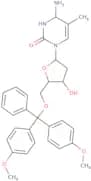
5'-O-DMT-thymidine-3'-lcaa-CPG is a nucleoside, ribonucleoside, and diphosphate that inhibits viral DNA synthesis. It is a novel compound with antiviral properties that has been shown to inhibit the replication of human cytomegalovirus (HCMV) and herpes simplex type 1 virus. 5'-O-DMT-thymidine-3'-lcaa-CPG also functions as an anticancer agent by inhibiting DNA synthesis in tumor cells. This nucleoside analog is phosphoramidite, which can be used for the preparation of modified oligonucleotides. 5'-O-DMT-thymidine-3'-lcaa-CPG has high purity and high quality.Purity:Min. 95%Color and Shape:Powder




![β-Nicotinamide Adenine Dinucleotide Disodium Salt, reduced form [for Biochemical Research]](/_next/image/?url=https%3A%2Fstatic.cymitquimica.com%2Fproducts%2F3B%2Fthumb-webp%2FD0920.webp&w=3840&q=75)