Nucleotides
Subcategories of "Nucleotides"
Found 2637 products of "Nucleotides"
6-Methyluridine
CAS:Methyluridine is a derivative of uridine that is used in the synthesis of pyrimidine nucleotides. This drug is also an inhibitor of orotidine 5′-monophosphate decarboxylase, which converts orotic acid to uracil. The conformational properties of methyluridine have been studied and found to be similar to those of other purine derivatives, such as adenine and guanine. In addition, methyluridine has been shown to inhibit the growth of typhimurium and increase the production of uracil in human lymphocytes. Methyluridine is metabolized by hydroxylation in liver microsomes, yielding 6-carboxylic acid.Formula:C10H14N2O6Purity:Min. 95%Color and Shape:PowderMolecular weight:258.23 g/molAdenosine 3'-monophosphate sodium
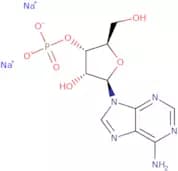
CAS:Adenosine 3'-monophosphate sodium is a nucleotide that is used as a substrate for enzymes. It has been shown to increase the enzymatic activity of papaverine, litoralis, subtilis, and histidine phosphatase. Adenosine 3'-monophosphate sodium also has protease activity, which can be activated by adding an enzyme preparation containing subtilisin and trypsin. This compound also has a pH optimum of 8.0-9.5 and is active at an alkaline pH of 9.5-10.5. The specific strain of bacteria will determine the optimal pH range for activity, with enterobacter bacterial strains having a maximum range of 6-7 and brevibacterium bacteria strains having a range of 4-6.Formula:C10H12N5O7PNa2Purity:Min. 95%Color and Shape:White To Off-White SolidMolecular weight:391.19 g/mol3'-O-Propargyladenosine
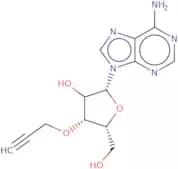
CAS:3'-O-Propargyladenosine is a modified nucleoside that has antiviral and anti-inflammatory properties. It is a synthetic compound that is chemically related to adenosine. 3'-O-Propargyladenosine is an activator of the immune system and it inhibits viral DNA synthesis. The compound also has been shown to reduce inflammation in mice by inhibiting the production of prostaglandin E2 (PGE2). 3'-O-Propargyladenosine has been shown to inhibit the replication of human immunodeficiency virus type 1 (HIV-1) and cytomegalovirus (CMV).Formula:C13H15N5O4Purity:Min. 95%Color and Shape:PowderMolecular weight:305.29 g/molCaffeoyl-coenzym A
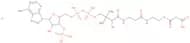
CAS:Please enquire for more information about Caffeoyl-coenzym A including the price, delivery time and more detailed product information at the technical inquiry form on this pageFormula:C30H42N7O19P3SPurity:Min. 95%Molecular weight:929.68 g/molMalonyl coenzyme A lithium salt - 90%
CAS:Malonyl coenzyme A lithium salt - 90% is a fatty acid that is involved in the biosynthesis of fats. It is also involved in the synthesis of prostaglandins, which are hormone-like substances that have a wide variety of effects on many different tissues. Malonyl coenzyme A lithium salt - 90% may be useful for the treatment of insulin resistance and obesity due to its ability to stimulate glucose uptake by fat cells and increase insulin sensitivity. The following product details are for a supplement:Formula:C24H38N7O19P3S·xLiPurity:Min. 95%Molecular weight:853.58 g/mol2'-Deoxyinosine-5'-triphosphate sodium,100mM aqueous solution
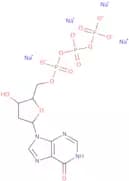
CAS:2'-Deoxyinosine-5'-triphosphate sodium (2'-dITP) is a modified nucleotide that has antiviral and anticancer properties. It has been shown to be an activator for ribonucleosides, deoxyribonucleosides, and DNA. 2'-DITP has also been shown to inhibit the growth of human breast cancer cells in vitro.
Formula:C10H11N4Na4O13P3Purity:Min. 95%Color and Shape:Clear LiquidMolecular weight:580.09 g/mol2-Phenylaminoadenosine
CAS:2-Phenylaminoadenosine (2-PA) is a potent and selective inhibitor of the P2Y receptor. 2-PA has been shown to reduce myocardial infarct size in vivo in mice, which may be due to its ability to inhibit the release of dopamine from the brain. In addition, 2-PA binds to LPS receptors on endothelial cells, reducing the production of proinflammatory cytokines and preventing platelet aggregation. 2-PA also inhibits the activation of toll-like receptor 4 (TLR4) in human monocytes, leading to reduced expression of proinflammatory cytokines and increased expression of anti-inflammatory cytokines. 2-PA is an agonist that binds with high affinity to P2Y receptors on erythrocytes. This binding results in decreased adenosine triphosphate (ATP) production by adenosine deaminase, which leads to decreased intracellular calcium levels and inhibition of neutrophFormula:C16H18N6O4Purity:Min. 95%Color and Shape:PowderMolecular weight:358.35 g/mol2-Chloroadenosine
CAS:2-Chloroinosine is an adenosine receptor agonist; metabolically stable analog of adenosineFormula:C10H12ClN5O4Purity:Min. 95%Color and Shape:PowderMolecular weight:301.69 g/molAdenosine 2',3'-cyclic monophosphate
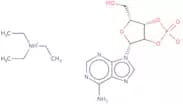
CAS:Adenosine 2',3'-cyclic monophosphate triethylammonium salt (AMP-TEA) is a structural analogue of adenosine. It is a potent inhibitor of protein synthesis by preventing the phosphodiesterase activity of cyclic nucleotide phosphodiesterases and cyclic nucleotide phosphodiesterase. AMP-TEA can be used as a tool to study translation in tissue culture, as well as to examine the effects on protein synthesis and other biochemical reactions that are regulated by cyclic nucleotides. It is also used for the preparation of tissue samples for enzymatic analysis or for radiolabeling experiments. AMP-TEA has an optimum pH of 4.5, but can be used at lower or higher pH values. The optimal temperature range for use is between 0°C and 50°C, with the maximum stability occurring at 37°C.Formula:C10H12N5O6PPurity:Min. 95%Color and Shape:PowderMolecular weight:329.21 g/mol2',3',5'-Tri-O-acetyl-8-bromoguanosine
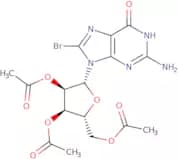
CAS:2',3',5'-Tri-O-acetyl-8-bromoguanosine is a synthetic nucleoside analog that inhibits the growth of tumor cells. It has been shown to inhibit the progression of prostate cancer and cervical cancer by binding to guanosine, preventing its conversion into ATP. This compound also prevents proliferation in hek293 and glioblastoma cells. The mechanism of action may be due to oxidative phosphite formation, which causes DNA damage and subsequent apoptosis.
Formula:C16H18BrN5O8Purity:Min. 95%Color and Shape:Off-White To Light (Or Pale) Yellow SolidMolecular weight:488.25 g/mol8-Nitroguanosine
CAS:8-Nitroguanosine is a nucleotide analogue that inhibits the activity of cyclic GMP in cells. It has been found to inhibit the growth of bacteria and cancer cells, as well as to stimulate the production of reactive oxygen species in brain cells. 8-Nitroguanosine has also been shown to inhibit the activity of cyclase enzymes in liver cells, which may be useful for treating liver disease. 8-Nitroguanosine is used as a chemical base for monoclonal antibodies that are used to study brain functions and pathogenic mechanisms.Formula:C10H12N6O7Purity:Min. 95%Molecular weight:328.24 g/mol5'-O-DMT-thymidine-3'-succinyl CPG 2000 Å
5'-O-DMT-thymidine-3'-succinyl CPG 2000 Å is a synthetic nucleoside that contains an acetyl group at the 5' position. The succinyl group has been added to the 3' position of the nucleoside and is bonded to a carrier molecule (2000 Å). This product is used as an activator in DNA synthesis, it also has antiviral and anticancer activities.Color and Shape:Powder2'-O-Propargyladenosine
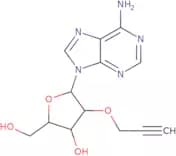
CAS:2'-O-Propargyladenosine is a modified nucleoside that belongs to the group of deoxyribonucleosides. It is an activator of viral DNA polymerases, which causes the synthesis of viral DNA to stop. This compound has antiviral and anticancer activities. 2'-O-Propargyladenosine has been shown to be effective against various human cancer cell lines in vitro and in vivo. It is a synthetic nucleoside with high purity, showing no detectable impurities by HPLC analysis.
Formula:C13H15N5O4Purity:Min. 95%Color and Shape:White PowderMolecular weight:305.29 g/molN6-(6-Aminohexyl)-2'-deoxyadenosine
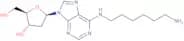
CAS:N6-(6-Aminohexyl)-2'-deoxyadenosine is a novel nucleoside that is structurally related to the natural nucleosides, dATP and dGTP. It has been shown to be an activator of ribonucleosides and phosphoramidites, which are used in the synthesis of DNA and RNA. N6-(6-Aminohexyl)-2'-deoxyadenosine has also been shown to inhibit cancer cells as well as antiviral activity against HIV-1.Formula:C16H26N6O3Purity:Min. 95%Color and Shape:Slightly Yellow PowderMolecular weight:350.43 g/mol1-b-D-Arabinofuranosyluracil 5'-monophosphate
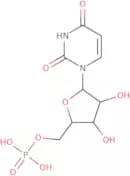
CAS:1-b-D-Arabinofuranosyluracil 5'-monophosphate is a pyrimidine nucleotide analog. Because of its structural similarity to natural nucleotides, it can interact with enzymes involved in nucleic acid synthesis. It is also a metabolite of Ara-U (arabinosyluracil), which is itself a compound studied for its biological activity. Scientists could potentially use this molecule in research to study how cells process and use nucleotides, and to understand how changes in nucleotide structure can affect biological processes.Formula:C9H13N2O9PPurity:Min. 95%Color and Shape:PowderMolecular weight:324.18 g/mol2'-Deoxy-3',5'-O-(1,1,3,3-tetraisopropyl-1,3-disiloxanediyl)uridine
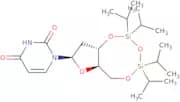
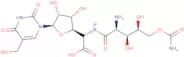
CAS:2'-Deoxy-3',5'-O-(1,1,3,3-tetraisopropyl-1,3-disiloxanediyl)uridine is a novel and synthetic nucleoside analog with antiviral activity. It inhibits the synthesis of DNA by binding to the enzyme ribonucleotide reductase. This compound has been shown to be an activator of PPARs in vitro.Formula:C21H38N2O6Si2Purity:Min. 95%Molecular weight:470.72 g/molPolyoxin B
CAS:Polyoxin B is a natural product that is produced by the fungus Polyporus umbellatus. It is a synthetase inhibitor that specifically inhibits the enzyme malic acid synthetase in bacteria and fungi. Polyoxin B has been shown to have antifungal activity in vitro and to inhibit the growth of Cryptococcus neoformans, which may be due to its ability to inhibit terminal residues, such as acetate extract, bacterial strain, and synthase enzyme.Formula:C17H25N5O13Purity:Min. 70%Color and Shape:Yellow PowderMolecular weight:507.41 g/mol2'-Deoxyuridine-5'-monophosphate disodium salt
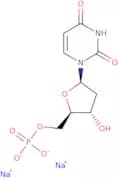
CAS:2'-Deoxyuridine-5'-monophosphate disodium salt (2DUMP) is a nucleoside analog that inhibits the synthesis of DNA and RNA by inhibiting the enzyme thymidylate synthase. 2DUMP is a covalent inhibitor of thymidylate synthase, which prevents the formation of dTMP from deoxyuridine 5'-triphosphate. This compound has been shown to be effective in treating squamous cell cancer and hyperproliferative diseases such as chronic myelogenous leukemia. 2DUMP is also used as an antiviral agent against HIV, herpes simplex virus, and varicella zoster virus. It has been shown to bind to benzalkonium chloride (BAK) in biological samples such as serum or plasma. 2DUMP binds to BAK through a covalent linkage between the 3' hydroxyl group on BAK and the phosphate group on 2DUMPFormula:C9H11N2O8PNa2Purity:Min. 95%Color and Shape:PowderMolecular weight:352.15 g/mol3'-O-Methylinosine
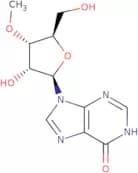
CAS:3'-O-Methylinosine is a synthetic nucleoside that inhibits the synthesis of viral DNA and RNA by interacting with the enzyme ribonucleotide reductase. This antiviral agent has been shown to be effective against a wide range of viruses, including human cytomegalovirus, herpes simplex virus type 1, varicella-zoster virus, and influenza A virus. 3'-O-Methylinosine has also been shown to inhibit the growth of cancer cells in vitro and in vivo.
Formula:C11H14N4O5Purity:Min. 95%Color and Shape:White PowderMolecular weight:282.25 g/mol2'-Deoxy-3,4,5,6-tetrahydrouridine
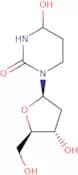
CAS:2'-Deoxy-3,4,5,6-tetrahydrouridine (2DTHR) is a cytidine deaminase inhibitor that is used in vitro to inhibit the production of tumor necrosis factor (TNF). 2DTHR has been shown to be active against hepatocellular carcinoma cells. It is also reactive with tumor tissue and can be eliminated at a rate similar to that of deoxycytidine kinase. This drug binds to the enzyme target and inhibits its activity by increasing enzyme levels, which causes cell death. 2DTHR inhibits TNF production in tumor tissue by binding to cytidine deaminase and preventing conversion of cytidine into uracil. This drug has been shown to cause tumor inhibition in vitro.
Formula:C9H16N2O5Purity:Min. 95%Color and Shape:PowderMolecular weight:232.23 g/mol