Vitamins
Vitamins are organic compounds required in small amounts for essential physiological functions and overall health. They play crucial roles in metabolism, immune function, and cellular maintenance. In this category, you will find a diverse range of vitamins, including water-soluble and fat-soluble types, necessary for research in nutrition, biochemistry, and health sciences. At CymitQuimica, we offer high-quality vitamins to support your research and development efforts, ensuring the accuracy and effectiveness of your studies on vitamin functions and deficiencies.
Found 1122 products of "Vitamins"
Sort by
Purity (%)
0
100
|
0
|
50
|
90
|
95
|
100
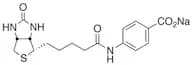
(+)-Biotin 4-Amidobenzoic Acid, Sodium Salt
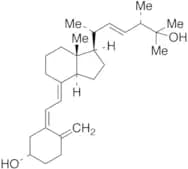
CAS:<p>Applications (+)-Biotin 4-Amidobenzoic Acid, Sodium Salt is a fluorigenic substrate for the determination of Biotinidase activity.<br></p>Formula:C17H20N3O4S·NaColor and Shape:White To Light YellowMolecular weight:385.4125-Hydroxy Vitamin D2
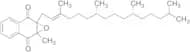
CAS:Controlled Product<p>Stability Light Sensitive, Temperature Sensitive<br>Applications A metabolite of Vitamin D2 (V676040).<br> Not a dangerous good if item is equal to or less than 1g/ml and there is less than 100g/ml in the package<br>References Barnes, P., et al.: J. Clin. Invest., 83, 1527 (1989), Holick, M., et al.: J. Cell Biochem., 88(2), 296 (2003), Maunsell, Z., et al.: Clin. Chem., 51, 1683 (2005),<br></p>Formula:C28H44O2Color and Shape:White To Light YellowMolecular weight:412.65Vitamin K1 2,3-Epoxide
CAS:Controlled Product<p>Applications Vitamin K1 2,3-Epoxide is a metabolite of Vitamin K1 (V676080), which is occurs widely in green plants, algae, and photosynthetic bacteria.<br>References Smee, D.F., et al.: Antimicrob. Agents Chemother., 23, 676 (1983), Miyamoto, T., et al.: Biochem. Pharmacol., 35, 839 (1986); Hassan, M.M.A., et al.: Anal. Profiles Drug Subs., 17, 449 (1988), Breton, J., et al.: Biochemistry, 33, 12405 (1994), Dowd, P., et al.: Science, 269, 1684 (1995);<br></p>Formula:C31H46O3Color and Shape:Light YellowMolecular weight:466.70Isovitamin D3 (90%)
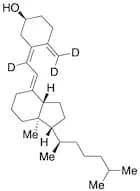
CAS:Controlled Product<p>Stability Light Sensitive<br>Applications Isovitamin D3 is a metabolite of Vitamin D. Studies show that Isovitamin D3 is biologically active in normal rats but inactive in anephric rats.<br>References Holick, M.F. et al.: Science, 180, 964 (1973); Wilczek, H. et al.: Prak. Lek., 59, 794 (1979);<br></p>Formula:C27H44OPurity:90%Color and Shape:NeatMolecular weight:384.6413-cis-Retinyl Acetate (85%)
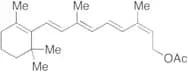
CAS:Controlled Product<p>Applications 13-cis-Retinyl Acetate is a derivative of 13-Cis-Retinol (R252110), an active metabolite of vitamin A.<br>References Shantz, E., et al.: J. Biol. Chem., 183, A61 (1950), Barua, A., et al.: Biochem. J., 164, 133 (1977), Brouwer, I., et al.: Nutr. Res. Rev., 14, 267 (2001), Grillenberger, M., et al.: Br. J. Nutr., 95, 379 (2006),<br></p>Formula:C22H32O2Purity:85%Color and Shape:NeatMolecular weight:328.494-Deoxy Pyridoxine Hydrochloride
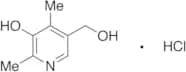
CAS:Controlled Product<p>Stability Hygroscopic<br>Applications 4-Deoxypyridoxine is the deoxy analogue of Pyridoxine (P991735). 4-Deoxypyridoxine is a vitamin B6 antimetabolite; 4-Deoxypyridoxine can induce a deficient status that alters the function and ultrastructure of EC similar to vascular disease.<br>References La Pesa, M. et al.: Pathologia, 62, 907 (1970); Chang, S..: J. Nutrit. Sci. Vitaminol., 46, 149 (2000); Yamashita, J.: J. Nutrit. Sci. Vitaminol., 22, 1 (1976);<br></p>Formula:C8H12ClNO2Color and Shape:Off-WhiteMolecular weight:189.64Saikosaponin A
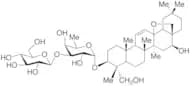
CAS:Controlled Product<p>Stability Hygroscopic<br>Applications Saikosaponin A was shown to exhibit anti-inflammatory activities by suppressing activation of NF-kB signaling pathway.<br>References Wu, S.J., et al.: Am. J. Chin. Med., 38, 99 (2010); Wu. S.J., et al.: J. Med. Food., 11, 224 (2008); Yoon, S.S., et al.: Neurosci. Lett., 529, 97 (2012); Lu, C.N., et al.: Int. Immunopharmacol., 14, 121 (2012);<br></p>Formula:C42H68O13Color and Shape:NeatMolecular weight:780.98Vitamin D4
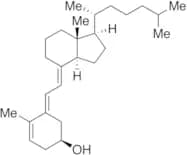
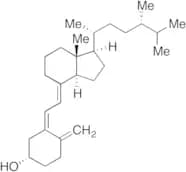
CAS:<p>Stability Hygroscopic, Temperature Sensitive<br>Applications Vitamin D4 is the active analogue of Vitamin D.<br> Not a dangerous good if item is equal to or less than 1g/ml and there is less than 100g/ml in the package<br>References Holick, M., et al.: J. Biochemistry, 10, 2799 (1971), Haddad, J., et al.: J. Bone Miner. Res., 4, 243 (1989), Palmieri, G., et al.: J. Clin. Endocrin. Metab., 82, 3516 (1997),<br></p>Formula:C28H46OColor and Shape:NeatMolecular weight:398.66Pterine-6-carboxylic Acid
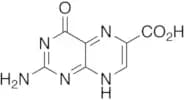
CAS:Controlled Product<p>Applications Pterine-6-carboxylic Acid is a degradation product of Folic acid (F680300).<br>References Akhtar, M., et al.: J. Pharm. Biomed. Anal., 19, 269 (1999), Andrisano, V., et al.: J. Pharm. Biomed. Anal., 32, 983 (2003), Patro, B., et al.: Bioorg. Med. Chem. Lett., 15, 67 (2005),<br></p>Formula:C7H5N5O3Color and Shape:NeatMolecular weight:207.1511-cis-Retinol, >85%
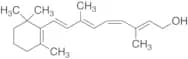
CAS:<p>Stability Light Sensitive, Temperature Sensitive<br>Applications A metabolite of Vitamin A (R252000(M)).<br>References Touma, S., et al.: Biochem. Pharmacol., 78, 1127 (2009), Muniz, A., et al.: Biochem., 48, 6854 (2009), Guignard, T., et al.: J. Biol. Chem., 285, 18759 (2010),<br></p>Formula:C20H30OPurity:>85%Color and Shape:NeatMolecular weight:286.45Calcitroic Acid
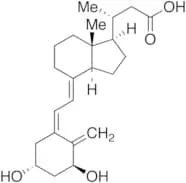
CAS:Controlled Product<p>Stability Light Sensitive<br>Applications Calcitroic Acid is a major metabolite of Calcitriol (C144500).<br> Not a dangerous good if item is equal to or less than 1g/ml and there is less than 100g/ml in the package<br>References Esvelt, R.P. et al.: Arch. Biochem. Biophys., 206, 403 (1981); Onisko, B.L. et al.: Biochemistry, 19, 4124 (1980); Reddy, G.S. et al.: Biochemistry, 28, 1763 (1989);<br></p>Formula:C23H34O4Purity:>85%Color and Shape:NeatMolecular weight:374.51Pyridoxine-d3 hydrochloride
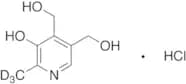
CAS:Controlled Product<p>Applications Labelled Pyridoxine. One of the vitamins of the B6 complex; present in many foodstuffs (yeast, liver and cereals). Pyridoxine has a role in transporting protein Bsu1, Pyridoxine contributes to thiamine uptake; characterization of thiamine (vitamin B1) transporter Thi9 from Schizosaccharomyces pombe.<br>References Williams, R., et al.: J. Biol. Chem., 87, 581 (1930), Rodionov, D., et al.: J. Biol. Chem., 277, 48949 (2002),Nosaka, K., et al.: Mol. Microbiol., 58, 467 (2005),<br></p>Formula:C82H3H8NO3·ClHColor and Shape:White To Off-WhiteMolecular weight:208.66δ-Tocotrienol
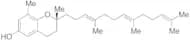
CAS:<p>Stability Light Sensitive<br>Applications δ-Tocotrienol is a natural substance with vitamin E activity. It can work as an antioxidant. It inhibits the growth of human breast cancer cells.<br>References Sen, C., et al.: Life Sci., 78, 2088 (2006); Yoshida, Y., et al.: Chem. Phys. Lipids, 123, 63 (2005)<br></p>Formula:C27H40O2Color and Shape:Light Yellow To Dark OrangeMolecular weight:396.61all-trans-Retinol
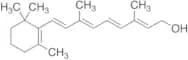
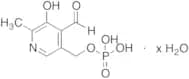
CAS:Controlled Product<p>Stability Liight Sensitive, Temperature Sensitive<br>Applications Occurs preformed only in animals; metabolized from carotenoids, such β-carotene, in the intestinal mucosa. Dietary sources include liver, milk, butter, cheese, eggs and fish liver oils or as carotenois from fruits and vegetables. Stored primarily in the liver in esterified form; transported in the blood by retinol binding protein (RBP). Nutritional factor.<br>References Davis, M., et al.: J. Biol. Chem., 15, 167 (1913), Crouch, R.K., et al.: Photochem. Photobiol., 64, 613 (1996),<br></p>Formula:C20H30OColor and Shape:Off-White To Dark YellowMolecular weight:286.45Pyridoxal 5-Phosphate Hydrate
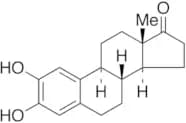
CAS:Controlled Product<p>Applications Pyridoxal 5-phosphate Hydrate (cas# 853645-22-4) is a useful research chemical.<br></p>Formula:C8H10NO6P·xH2OColor and Shape:NeatMolecular weight:247.14 + x(18.02)2-Hydroxy Estrone
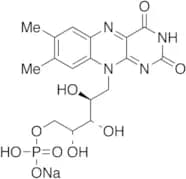
CAS:Controlled ProductFormula:C18H22O3Color and Shape:Off-White To Light BrownMolecular weight:286.37Riboflavin Phosphate Sodium Salt (~70%)
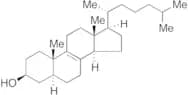
CAS:<p>Stability Hygroscopic<br>Applications One of the bioactive forms of Riboflavin. Nutritional factor found in milk, eggs, malted barley, liver, kidney, heart, leafy vegetables. Richest natural source is yeast. Minute amounts present in all plant and animal cells. Vitamin (enzyme cofactor).<br>References Unna, K., et al.: J. Pharmacol. Exp. Ther., 76, 75 (1942), Rivlin, et al.: N. Engl. J. Med., 283, 463 (1970), Al-Shammary, F.J., et al.: Anal. Profiles Drug Subs., 19, 429 (1990),<br></p>Formula:C17H20N4O9P·NaPurity:~70%Color and Shape:Yellow-OrangeMolecular weight:478.33Zymostenol
CAS:Controlled Product<p>Applications Zymostenol, is the derivative of Zymosterol (Z701520), which is an sterol intermediate in the biosynthesis of cholesterol (C432501).<br>References Roland, E.D., et al.: J. Am. Chem. Soc., 111, 278 (1989); Echevarria, F., et al.: J. Biol. Chem., 265, 8484 (1990); Baranovskii, A.V., et al.: Russian. J. Bioorg. Chem., 28, 250 (2002); Schoenheimer, et al.: J. Biol. Chem., 105, 355 (1934);<br></p>Formula:C27H46OColor and Shape:NeatMolecular weight:386.65