Glycerophospholipids / Phospholipids
Glycerophospholipids, also known as phospholipids, are essential components of cell membranes, providing structural integrity and participating in cellular signaling. These lipids consist of a glycerol backbone, two fatty acid chains, and a phosphate-containing group. Phospholipids are involved in various biological processes, including membrane dynamics, signal transduction, and lipid metabolism. At CymitQuimica, we offer a comprehensive selection of high-quality glycerophospholipids and phospholipids to support your research and industrial applications.
Found 381 products of "Glycerophospholipids / Phospholipids"
Sort by
Purity (%)
0
100
|
0
|
50
|
90
|
95
|
100
1,2-Di-O-dodecyl-rac-glycerol
CAS:<p>1,2-Di-O-dodecyl-rac-glycerol (DODG) is a fatty acid that is produced by the hydrolysis of 1,2-diacylglycerols in the intestines. It has been shown to be responsible for chronic pain and pancreatitis. The cytosolic calcium levels are increased as a result of DODG binding to the cytosol, leading to increased production of reactive oxygen species and activation of nuclear factor kappa B (NFκB). This leads to an increase in cytokine tnf-α and prostaglandin E2 in pancreatic cells. Inhibition of pancreatic lipase activity may also contribute to the development of pancreatitis. DODG binds to the exocrine pancreas by blocking its enzymes, causing abdominal pain and pancreatitis.</p>Formula:C27H56O3Molecular weight:428.73 g/molL-Proline β-naphthylamide hydrochloride
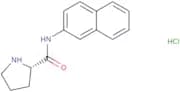
CAS:<p>Please enquire for more information about L-Proline β-naphthylamide hydrochloride including the price, delivery time and more detailed product information at the technical inquiry form on this page</p>Formula:C15H16N2O•HClPurity:Min. 95%Color and Shape:PowderMolecular weight:276.76 g/molOctadecanoic acid, 1,1'-[1-[(phenylmethoxy)methyl]-1,2-ethanediyl] ester
CAS:<p>Please enquire for more information about Octadecanoic acid, 1,1'-[1-[(phenylmethoxy)methyl]-1,2-ethanediyl] ester including the price, delivery time and more detailed product information at the technical inquiry form on this page</p>Formula:C46H82O5Purity:Min. 95%Molecular weight:715.14 g/molL-aPhosphatidylcholine - ex Soy
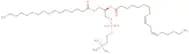
CAS:<p>L-aPhosphatidylcholine is a phospholipid that is a major component of cell membranes. It has been shown to inhibit the growth of human tumor cells in culture and to have anticancer activity. L-aPhosphatidylcholine has been shown to cause an increase in the size of cultured mouse mammary tumor cells, which may be due to its ability to stimulate the production of cellular growth factors such as epidermal growth factor (EGF). The effects of L-aPhosphatidylcholine on ascitic tumor cells have also been studied and found to be pseudoplastic with localization at the interface between the two phases. Tumor inhibition was seen when L-aPhosphatidylcholine was applied topically, but not when it was given orally. This may be due to its lack of uptake by tumors when given orally.</p>Formula:C42H80NO8PColor and Shape:PowderMolecular weight:758.06 g/mol1,2-Di-O-hexadecyl-rac-glycero-3-phosphocholine
CAS:<p>1,2-Di-O-hexadecyl-rac-glycero-3-phosphocholine is a surfactant that is used in the production of emulsions, detergents, and other chemical products. It is also used as a fusogenic agent for the treatment of dry eye syndrome. The adsorption mechanism of 1,2-Di-O-hexadecyl-rac-glycero-3-phosphocholine is photochemical in nature and is dependent on the concentration of sodium dodecyl sulfate (SDS) in solution. At concentrations greater than 0.1% SDS, 1,2-Di-O-hexadecyl -rac -glycero -3 -phosphocholine will adsorb to the surface of an oil droplet and form a micelle layer with an outer hydrophobic layer. This process can be reversed by exposing the system to ultraviolet light or adding more SDS to</p>Formula:C40H84NO6PPurity:Min. 95%Molecular weight:706.07 g/molDL-α-Methyllauric acid methyl ester
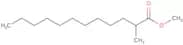
CAS:<p>DL-alpha-Methyllauric acid methyl ester is a cocatalyst for organic reactions, used in the production of plastics, dyes, and pharmaceuticals. DL-alpha-Methyllauric acid methyl ester is also used as an additive in the production of food and beverages to prevent spoilage and to inhibit the growth of microorganisms. It can be used as a reagent in the analysis of geosmin in water samples or copper salt in soil samples. DL-alpha-Methyllauric acid methyl ester is also used to calibrate gas chromatography systems by comparing retention times with linear calibration curves. This compound is analyzed using headspace microextraction for metal halide compounds.</p>Formula:C14H28O2Purity:Min. 95%Color and Shape:Clear LiquidMolecular weight:228.37 g/mol1,2-Di-O-tetradecyl-rac-glycerol
CAS:<p>1,2-Di-O-tetradecyl-rac-glycerol (1,2-DOTG) is a hydrophobic compound that has been found to be expressed in the brain. The physicochemical methods used to obtain this compound are the same as those used for other hydrophobic compounds. It has been shown to inhibit folic acid metabolism, and can be used as an immunoregulator in vitro. 1,2-DOTG can also be saponified with alkali metal hydroxides or triethylamine hydrochloride to produce intermediates that are useful in analytical chemistry.</p>Formula:C31H64O3Purity:Min. 95%Color and Shape:Clear LiquidMolecular weight:484.84 g/molLecithin
CAS:<p>Lecithin is a fat-like substance that consists of a glycerol molecule with three fatty acids attached to it. It is found in the membranes of cells and has many biological functions, including acting as an emulsifier and being involved in the uptake of cholesterol from the blood stream. Lecithin also has antioxidant properties, which have been shown by its ability to inhibit oxidation of α-tocopherol. Lecithin can be used as a therapeutic agent for inflammatory diseases and other conditions linked to oxidative stress.</p>Formula:C42H80NO8PPurity:Min. 97%Color and Shape:Yellow PowderMolecular weight:758.06 g/mol1,2-Di-O-benzyl-glycero-3-phosphocholine
CAS:<p>Please enquire for more information about 1,2-Di-O-benzyl-glycero-3-phosphocholine including the price, delivery time and more detailed product information at the technical inquiry form on this page</p>Formula:C22H32NO6PPurity:Min. 95%Molecular weight:437.5 g/mol1-O-Octadecyl-2-O-methyl-rac-glycero-3-phospho-N,N-dimethylethanolamine
CAS:<p>Please enquire for more information about 1-O-Octadecyl-2-O-methyl-rac-glycero-3-phospho-N,N-dimethylethanolamine including the price, delivery time and more detailed product information at the technical inquiry form on this page</p>Formula:C26H56NO6PPurity:Min. 95%Molecular weight:509.7 g/mol1,2-Dipalmitoyl-rac-glycero-3-phospho-N-methylethanolamine
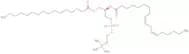
<p>Please enquire for more information about 1,2-Dipalmitoyl-rac-glycero-3-phospho-N-methylethanolamine including the price, delivery time and more detailed product information at the technical inquiry form on this page</p>Formula:C38H76NO8PMolecular weight:706.00 g/mol1-O-Hexadecyl-1,3-propandiol-3-phosphocholine
<p>Please enquire for more information about 1-O-Hexadecyl-1,3-propandiol-3-phosphocholine including the price, delivery time and more detailed product information at the technical inquiry form on this page</p>Formula:C24H52NO5PPurity:Min. 95%Color and Shape:PowderMolecular weight:465.65 g/mol1,3-Dipalmitoyl-2-O-benzylglycerol
CAS:<p>1,3-Dipalmitoyl-2-O-benzylglycerol is a versatile building block that can be used in the synthesis of many complex compounds. It has been shown to be an effective reaction component for the synthesis of a variety of chemical products and can be used as a reagent for research purposes. 1,3-Dipalmitoyl-2-O-benzylglycerol is highly reactive and can be used as a speciality chemical or as a useful intermediate. 1,3-Dipalmitoyl-2-O-benzylglycerol has been reported to have CAS number 52729-75-7.</p>Formula:C42H74O5Purity:Min. 95%Color and Shape:PowderMolecular weight:659.04 g/mol(1S,2Z)-2-[(2R)-3-[Benzyloxy(2-cyanoethoxy)phosphoryl]oxy-2-(9H-fluoren-9-ylmethoxycarbonylamino)propylidene]cyclopentanecarboxylic acid
CAS:<p>Please enquire for more information about (1S,2Z)-2-[(2R)-3-[Benzyloxy(2-cyanoethoxy)phosphoryl]oxy-2-(9H-fluoren-9-ylmethoxycarbonylamino)propylidene]cyclopentanecarboxylic acid including the price, delivery time and more detailed product information at the technical inquiry form on this page</p>Formula:C34H35N2O8PPurity:Min. 95%Molecular weight:630.63 g/mol(1S,2E)-2-[(2R)-3-[Benzyloxy(2-cyanoethoxy)phosphoryl]oxy-2-(9H-fluoren-9-ylmethoxycarbonylamino)propylidene]cyclopentanecarboxylic acid
<p>Please enquire for more information about (1S,2E)-2-[(2R)-3-[Benzyloxy(2-cyanoethoxy)phosphoryl]oxy-2-(9H-fluoren-9-ylmethoxycarbonylamino)propylidene]cyclopentanecarboxylic acid including the price, delivery time and more detailed product information at the technical inquiry form on this page</p>Formula:C34H35N2O8PPurity:Min. 95%Molecular weight:630.63 g/mol1,3-Dipalmitoyl-glycero-2-phosphoethanolamine
CAS:<p>Please enquire for more information about 1,3-Dipalmitoyl-glycero-2-phosphoethanolamine including the price, delivery time and more detailed product information at the technical inquiry form on this page</p>Formula:C37H74NO8PPurity:ReportedColor and Shape:White/Off-White SolidMolecular weight:691.96 g/molLecithin
CAS:<p>Lecithin is a phospholipid normally derived from sources like soybeans, sunflower seeds, or egg yolks. Widely used as an excipient in pharmaceutical formulations, lecithin is used as an emulsifier to ensure a uniform dispersion of the active ingredients, as a solubilizing agent to enhance the bioavailability of poorly water-soluble drugs, and as a dispersing agent in liposomes or lipid-based drug delivery systems.</p>Purity:Min. 80 Area-%Color and Shape:PowderMolecular weight:758.061-O-Hexadecyl-3-O-benzyl-sn-glycero-2-phosphocholine
CAS:<p>Please enquire for more information about 1-O-Hexadecyl-3-O-benzyl-sn-glycero-2-phosphocholine including the price, delivery time and more detailed product information at the technical inquiry form on this page</p>Formula:C31H58NO6PPurity:Min. 95%Molecular weight:571.8 g/mol2-Hydroxyethyl laurate
CAS:<p>1-Lauroyl ethylene glycol is a monoclonal antibody that binds to the fatty acid component of cell membranes. It has been shown to induce rapid lysis of Staphylococcus aureus cells in the presence of plasma glucose, chloride, and fatty acids. Monolaurate is formed as a byproduct during this process. 1-Lauroyl ethylene glycol also has the potential to be used as an adjuvant for vaccines, due to its ability to induce an immune response against antigens in mice. The monoclonal antibody can be used as a carrier for hydroxylated drugs and solid dispersions such as antibiotics. 1-Lauroyl ethylene glycol is soluble at low pH levels, making it suitable for oral administration.</p>Formula:C14H28O3Purity:Min. 95%Color and Shape:PowderMolecular weight:244.37 g/mol1,2-Di-O-octadecyl-rac-glycero-3-phosphocholine
CAS:<p>1,2-Di-O-octadecyl-rac-glycero-3-phosphocholine is a lipid analogue of phosphatidylcholine. This compound has been used to study the transport rate of water vapor and fatty acids at the air-liquid interface. 1,2-Di-O-octadecyl-rac-glycero-3-phosphocholine also has minimal toxicity and can be used as an analog for epidermal growth factor (EGF).</p>Purity:Min. 95%Molecular weight:762.18 g/mol


![Octadecanoic acid, 1,1'-[1-[(phenylmethoxy)methyl]-1,2-ethanediyl] ester](/_next/image/?url=https%3A%2Fstatic.cymitquimica.com%2Fproducts%2F3D%2Fthumb-webp%2FFO172107.webp&w=3840&q=75)





![(1S,2Z)-2-[(2R)-3-[Benzyloxy(2-cyanoethoxy)phosphoryl]oxy-2-(9H-fluoren-9-ylmethoxycarbonylamino)p…](/_next/image/?url=https%3A%2Fstatic.cymitquimica.com%2Fproducts%2F3D%2Fthumb-webp%2FFB183563.webp&w=3840&q=75)
![(1S,2E)-2-[(2R)-3-[Benzyloxy(2-cyanoethoxy)phosphoryl]oxy-2-(9H-fluoren-9-ylmethoxycarbonylamino)p…](/_next/image/?url=https%3A%2Fstatic.cymitquimica.com%2Fproducts%2F3D%2Fthumb-webp%2FFB183564.webp&w=3840&q=75)