Glycerophospholipids / Phospholipids
Found 383 products of "Glycerophospholipids / Phospholipids"
1,2-Di-O-tetradecyl-rac-glycerol
CAS:1,2-Di-O-tetradecyl-rac-glycerol (1,2-DOTG) is a hydrophobic compound that has been found to be expressed in the brain. The physicochemical methods used to obtain this compound are the same as those used for other hydrophobic compounds. It has been shown to inhibit folic acid metabolism, and can be used as an immunoregulator in vitro. 1,2-DOTG can also be saponified with alkali metal hydroxides or triethylamine hydrochloride to produce intermediates that are useful in analytical chemistry.
Formula:C31H64O3Purity:Min. 95%Color and Shape:Clear LiquidMolecular weight:484.84 g/molPalmitoyl-DL-carnitine
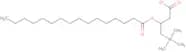
CAS:Palmitoyl-DL-carnitine is a natural compound found in the body that plays an important role in energy metabolism. It has been shown to significantly increase intracellular calcium levels and activate the enzyme activity of phospholipase A2, which is responsible for the release of arachidonic acid from membrane phospholipids. Palmitoyl-DL-carnitine also has an effect on cellular energy metabolism by increasing mitochondrial membrane potential and decreasing reactive oxygen species production. Palmitoyl-DL-carnitine also protects against muscle cell death by inhibiting apoptosis and necrosis, which are usually triggered by pharmacological agents such as rotenone or bafilomycin A1.
Formula:C23H45NO4Purity:Min. 95%Color and Shape:PowderMolecular weight:399.61 g/molRef: 3D-FP172246
Discontinued productLecithin
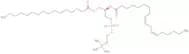
CAS:Lecithin is a fat-like substance that consists of a glycerol molecule with three fatty acids attached to it. It is found in the membranes of cells and has many biological functions, including acting as an emulsifier and being involved in the uptake of cholesterol from the blood stream. Lecithin also has antioxidant properties, which have been shown by its ability to inhibit oxidation of α-tocopherol. Lecithin can be used as a therapeutic agent for inflammatory diseases and other conditions linked to oxidative stress.
Formula:C42H80NO8PPurity:Min. 97%Color and Shape:Yellow PowderMolecular weight:758.06 g/molRef: 3D-FP11769
Discontinued product1,2-Dipalmitoyl-sn-glycero-3-phospho-N,N-dimethylethanolamine
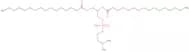
CAS:1,2-Dipalmitoyl-sn-glycero-3-phospho-N,N-dimethylethanolamine is a liquid crystalline molecule that is used in the synthesis of lipids. It has two hydrophilic heads and one hydrophobic tail, which allows it to be soluble in water. 1,2-Dipalmitoyl-sn-glycero-3-phospho-N,N-dimethylethanolamine can form bilayers with other molecules due to its transition properties. The transition occurs at temperatures between 43°C and 45°C. This transition is linearly dependent on the temperature increase. When heated to 50°C, this molecule undergoes a second phase transition from a liquid crystalline state to a thermotropic liquid crystalline state. The calorimetry data for this molecule shows that there are no enthalpic or entropic contributions to the entropy change during the phaseFormula:C39H78NO8PPurity:Min. 95%Molecular weight:720.03 g/molRef: 3D-FD172100
Discontinued productCannflavin A
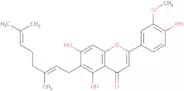
CAS:A prenylflavonoid found in Cannabis sativa
Formula:C26H28O6Purity:Min. 95 Area-%Color and Shape:PowderMolecular weight:436.5 g/molRef: 3D-FC171893
Discontinued productOctadecanoic acid, 1,1'-[1-[(phenylmethoxy)methyl]-1,2-ethanediyl] ester
CAS:Please enquire for more information about Octadecanoic acid, 1,1'-[1-[(phenylmethoxy)methyl]-1,2-ethanediyl] ester including the price, delivery time and more detailed product information at the technical inquiry form on this page
Formula:C46H82O5Purity:Min. 95%Molecular weight:715.14 g/molRef: 3D-FO172107
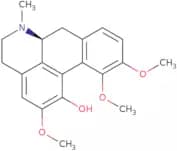
Discontinued product(+)-Corydine
CAS:Corydine is a diterpenoid alkaloid that has been isolated from the Chinese herb Stephania. It is an antimicrobial agent and has been shown to inhibit the growth of mouse tumor cells with a potency comparable to cryptopine and stephania. Corydine is structurally similar to protopine, which has been shown to have anticarcinogenic properties in mice. Protopine is also found in the genus Stephania. The chemical structure of corydine was determined by using gas chromatography-mass spectrometry analyses, showing that it contains p-hydroxybenzoic acid. This compound may be responsible for its anticarcinogenic activity.
Formula:C20H23NO4Purity:Min. 95%Color and Shape:PowderMolecular weight:341.4 g/molN-(Phenylsulfonyl)tetradecanamide
Please enquire for more information about N-(Phenylsulfonyl)tetradecanamide including the price, delivery time and more detailed product information at the technical inquiry form on this page
Formula:C20H33NO3SPurity:Min. 95%Molecular weight:367.55 g/molRef: 3D-FP172238
Discontinued product1,2-Di-O-hexadecyl-sn-glycero-3-phosphoserine
1,2-Di-O-hexadecyl-sn-glycero-3-phosphoserine is a useful scaffold for the synthesis of complex compounds. It is an intermediate in the synthesis of many other compounds and has been used as a reagent in research laboratories. This chemical is also used as a building block for the synthesis of other chemicals that are difficult to synthesize, such as glycerophosphocholine. 1,2-Di-O-hexadecyl-sn-glycero-3-phosphoserine can be used as a raw material in the production of speciality chemicals. CAS No.: 535865
Formula:C38H78NO8PPurity:Min. 95 Area-%Molecular weight:708.02 g/mol1,2-Dipalmitoyl-sn-glycero-3-phosphoserine
1,2-Dipalmitoyl-sn-glycero-3-phosphoserine is a versatile building block that can be used in the synthesis of many different compounds. It is a fine chemical and research chemical that has been shown to be useful in the synthesis of various complex compounds. 1,2-Dipalmitoyl-sn-glycero-3-phosphoserine is also a speciality chemical and reagent that is available at high quality. This compound has been shown to have many uses as a reaction component or scaffold in organic synthesis.
Formula:C38H74NO10PPurity:Min. 95 Area-%Molecular weight:735.99 g/mol1-O-Octadecyl-2-O-methyl-rac-glycero-3-phospho-hexyl-6-N,N,N-trimethylamine
Please enquire for more information about 1-O-Octadecyl-2-O-methyl-rac-glycero-3-phospho-hexyl-6-N,N,N-trimethylamine including the price, delivery time and more detailed product information at the technical inquiry form on this page
Formula:C31H66NO6PPurity:Min. 95%Color and Shape:PowderMolecular weight:579.8 g/molRef: 3D-FO172253
Discontinued product1-Myristoyl-1,3-propandiol
Please enquire for more information about 1-Myristoyl-1,3-propandiol including the price, delivery time and more detailed product information at the technical inquiry form on this page
Formula:C17H34O3Purity:Min. 95%Color and Shape:PowderMolecular weight:286.45 g/molRef: 3D-FM172274
Discontinued product1-Myristoyl-rac-glycero-2-phosphocholine
1-Myristoyl-rac-glycero-2-phosphocholine is a useful scaffold for the synthesis of complex compounds. It is a high quality, versatile building block that can be used as a reagent or research chemical. 1-Myristoyl-rac-glycero-2-phosphocholine is also a useful intermediate in the synthesis of complex compounds with pharmaceutical applications, such as antibiotics and antifungals.
Formula:C22H46NO7PPurity:Min. 95 Area-%Molecular weight:467.58 g/mol1-Naphthyl myo-inositol-1-phosphate, sodium salt
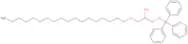
1-Naphthyl myo-inositol-1-phosphate is a high quality, reagent that is used as an intermediate in the synthesis of complex compounds. It has been shown to be a useful scaffold for the production of speciality chemicals and research chemicals. This compound can also be used as a reaction component in the synthesis of other compounds. CAS No.: 51381-08-8Formula:C16H18NaO9PPurity:Min. 95%Color and Shape:PowderMolecular weight:408.27 g/mol1-O-Octadecyl-3-O-trityl-rac-glycerol
CAS:1-O-Octadecyl-3-O-trityl-rac-glycerol is a hydrogenation catalyst that can be used in the asymmetric hydrogenation of olefins. It is prepared by the reaction of 1,1,1,3,5,5,5-octadecafluorohexane with racemic glycerol using catalytic amounts of palladium chloride and triphenylphosphine. The catalyst has been shown to be effective for the reduction of alkenes to alkanes.
Formula:C40H58O3Purity:Min. 95%Color and Shape:PowderMolecular weight:586.89 g/molRef: 3D-FO172249
Discontinued product1,3-Dipalmitoyl-2-O-benzylglycerol
CAS:1,3-Dipalmitoyl-2-O-benzylglycerol is a versatile building block that can be used in the synthesis of many complex compounds. It has been shown to be an effective reaction component for the synthesis of a variety of chemical products and can be used as a reagent for research purposes. 1,3-Dipalmitoyl-2-O-benzylglycerol is highly reactive and can be used as a speciality chemical or as a useful intermediate. 1,3-Dipalmitoyl-2-O-benzylglycerol has been reported to have CAS number 52729-75-7.
Formula:C42H74O5Purity:Min. 95%Color and Shape:PowderMolecular weight:659.04 g/molRef: 3D-FD172096
Discontinued product(1S,2E)-2-[(2R)-3-[Benzyloxy(2-cyanoethoxy)phosphoryl]oxy-2-(9H-fluoren-9-ylmethoxycarbonylamino)propylidene]cyclopentanecarboxylic acid
Please enquire for more information about (1S,2E)-2-[(2R)-3-[Benzyloxy(2-cyanoethoxy)phosphoryl]oxy-2-(9H-fluoren-9-ylmethoxycarbonylamino)propylidene]cyclopentanecarboxylic acid including the price, delivery time and more detailed product information at the technical inquiry form on this page
Formula:C34H35N2O8PPurity:Min. 95%Molecular weight:630.63 g/mol1-O-Octadecyl-2-O-methyl-sn-glycero-3-phospho-N,N-dimethylethanolamine
Please enquire for more information about 1-O-Octadecyl-2-O-methyl-sn-glycero-3-phospho-N,N-dimethylethanolamine including the price, delivery time and more detailed product information at the technical inquiry form on this page
Purity:Min. 95%1-O-Octadecyl-2-O-methyl-sn-glycero-3-phospho-N-isopropylethanolamine
Please enquire for more information about 1-O-Octadecyl-2-O-methyl-sn-glycero-3-phospho-N-isopropylethanolamine including the price, delivery time and more detailed product information at the technical inquiry form on this page
Purity:Min. 95%1-O-Hexadecyl-2-O-methyl-sn-glycero-3-phosphoethanolamine
1-O-Hexadecyl-2-O-methyl-sn-glycero-3-phosphoethanolamine is a versatile building block that can be used in many different reactions. It is a reaction component and reagent, providing high quality research chemicals, specialty chemicals, or useful intermediates. 1-O-Hexadecyl-2-O-methyl sn glycero 3 phosphate ethanolamine is a complex compound that can be used as an intermediate for the synthesis of more complicated molecules. This chemical has been shown to have a wide variety of uses, including being a useful scaffold for the design of new drugs and fine chemicals.
Formula:C22H48NO6PPurity:Min. 93 Area-%Molecular weight:453.60 g/molRef: 3D-H-1845
Discontinued product


![Octadecanoic acid, 1,1'-[1-[(phenylmethoxy)methyl]-1,2-ethanediyl] ester](/_next/image/?url=https%3A%2Fstatic.cymitquimica.com%2Fproducts%2F3D%2Fthumb-webp%2FFO172107.webp&w=3840&q=75)








![(1S,2E)-2-[(2R)-3-[Benzyloxy(2-cyanoethoxy)phosphoryl]oxy-2-(9H-fluoren-9-ylmethoxycarbonylamino)p…](/_next/image/?url=https%3A%2Fstatic.cymitquimica.com%2Fproducts%2F3D%2Fthumb-webp%2FFB183564.webp&w=3840&q=75)