Nucleosides
Nucleosides are fundamental building blocks of nucleic acids, composed of a nitrogenous base attached to a sugar molecule. In this section, you can find a wide variety of nucleosides essential for research in molecular biology, biochemistry, and pharmacology. These compounds play crucial roles in the synthesis of DNA and RNA, and are also vital in various metabolic processes. Nucleosides are used in studying genetic material, developing antiviral and anticancer therapies, and understanding cellular mechanisms. At CymitQuimica, we provide high-quality nucleosides to support your research and development needs, ensuring purity and reliability for your experimental applications.
Found 3567 products of "Nucleosides"
Sort by
Purity (%)
0
100
|
0
|
50
|
90
|
95
|
100
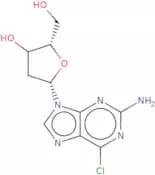
6-Chloro-9-(2-deoxy-b-L-erythro-pentofuranosyl)-9H-purin-2-amine
CAS:<p>6-Chloro-9-(2-deoxy-b-L-erythro-pentofuranosyl)-9H-purin-2-amine is a novel antiviral and anticancer agent. It is an analog of adenosine that inhibits viral replication by inhibiting DNA synthesis. 6CePP2A is an activator of nucleoside deoxyribonucleotidyltransferase, which converts dATP to dTTP.</p>Formula:C10H12ClN5O3Purity:Min. 95%Molecular weight:285.69 g/molN4-Benzoyl-2'-deoxy-5'-O-DMT-2'-trifluoroacetamidocytidine
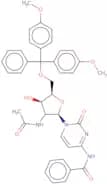
<p>N4-Benzoyl-2'-deoxy-5'-O-DMT-2'-trifluoroacetamidocytidine is a novel nucleoside analog that is activated by ribonucleotide reductase. This compound inhibits the synthesis of DNA and RNA in cells, which leads to the inhibition of cellular proliferation. N4-Benzoyl-2'-deoxy-5'-O-DMT-2'-trifluoroacetamidocytidine has been shown to be effective against cancer cells, as well as antiviral and antiretroviral activity. It is also active against drug resistant strains of HIV.</p>Formula:C39H35F3N4O8Purity:Min. 95%Molecular weight:744.71 g/mol2-(sec-Butylthio)pyrimidine-5-carbaldehyde
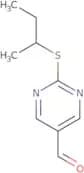
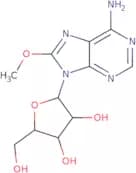
CAS:<p>2-(sec-Butylthio)pyrimidine-5-carbaldehyde is a molecule that inhibits cell growth and angiogenesis. It was found to inhibit the phosphorylation of specific proteins, leading to the inhibition of cell growth and angiogenesis. This compound has been shown to be effective against prostate cancer cells in vitro and in vivo, as well as in a mouse model for breast cancer. In this model, the drug inhibited tumor growth without any apparent toxicity to normal tissues. 2-(sec-Butylthio)pyrimidine-5-carbaldehyde has been tested as a potential antiangiogenic agent in mice, with results showing no adverse effects on animals.</p>Formula:C9H12N2OSPurity:Min. 95%Molecular weight:196.27 g/mol8-Methoxyadenosine
CAS:<p>8-Methoxyadenosine is an acidic adenosine that acts as a competitive antagonist of the A1 receptor. It has a high affinity for this receptor and blocks the binding of adenosine to the receptor, thereby inhibiting its function. 8-Methoxyadenosine is also a competitive antagonist of the uridine nucleotide, which inhibits enzymatic catalysis by ribonucleoside kinase and ribonucleotide reductase. It has been shown to have properties similar to those of other pyrimidine nucleosides such as cytidine, thymine, and uridine. This molecule has a hydroxyl group in its structure, which is essential for binding to these enzymes. 8-Methoxyadenosine also has a phosphate group in its structure, which is necessary for the synthesis of DNA or RNA from deoxyribonucleotides. The benzoate group in 8-methoxyadenosine's structure makes</p>Purity:Min. 95%NPOM-Caged-dT CEP
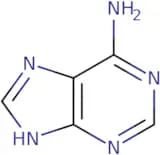
CAS:<p>Please enquire for more information about NPOM-Caged-dT CEP including the price, delivery time and more detailed product information at the technical inquiry form on this page</p>Formula:C50H58N5O13PPurity:Min. 95%Molecular weight:968 g/molAdenine
CAS:<p>Adenine is a purine nucleoside that has guanine as its base. It has the chemical formula C5H5N5O and can be found in RNA, DNA, and ATP. Adenine is an important component of the human body because it is a key component of nucleic acids. It also plays a role in the regulation of metabolism and the production of energy. Adenine is one of the most abundant molecules in cells, making up 75% of DNA and 50% of RNA. Adenine is biosynthesized from aspartic acid by removing an amino group on aspartate to form oxaloacetate, which reacts with glyoxylate to form citric acid. This reaction requires vitamin B6 to function properly. The optimum concentration for adenine is between 10-100 mM, but it can be toxic at high concentrations (greater than 1 M). Adenine binds to sulfa drugs through hydrogen bonding interactions and also inhibits the enzyme x</p>Formula:C5H5N5Purity:Min. 98.0 Area-%Molecular weight:135.13 g/molRef: 3D-Q-200596
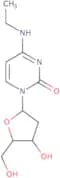
1kgTo inquire5kgTo inquire10kgTo inquire25kgTo inquire2500gTo inquire-Unit-kgkgTo inquireN4-Ethyl-2'-deoxycytidine
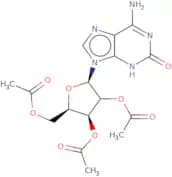
CAS:<p>N4-Ethyl-2'-deoxycytidine is a novel nucleoside analog that inhibits the activity of DNA polymerase. It is used as an anticancer, antiviral and antiretroviral agent. N4-Ethyl-2'-deoxycytidine has been shown to be active against herpes simplex virus type 1 (HSV-1), HSV-2, cytomegalovirus (CMV), human immunodeficiency virus type 1 (HIV-1) and HIV-2 in vitro. This drug also has antiangiogenic properties due to its ability to inhibit the synthesis of vascular endothelial growth factor A. N4-Ethyl-2'-deoxycytidine is a modified nucleoside that can be phosphorylated by cellular enzymes, which activates it by converting it into a monophosphate or diphosphate form. This drug inhibits the production of RNA from DNA and also prevents protein</p>Formula:C11H17N3O4Purity:Min. 95%Molecular weight:255.27 g/mol2',3',5'-Tri-O-acetylisoguanosine
CAS:<p>2',3',5'-Tri-O-acetylisoguanosine is a modified nucleoside with anticancer activity. It is a ribonucleoside that is deoxyribonucleosides, and it has been shown to be an activator of the diphosphate moiety in the enzyme DNA polymerase. This novel compound has antiviral and antibacterial properties, as well as anti-inflammatory activities. 2',3',5'-Tri-O-acetylisoguanosine (TAI) is also used as a monophosphate donor in phosphoramidite coupling reactions.</p>Formula:C16H19N5O8Purity:Min. 95%Molecular weight:409.35 g/molN6-Monobutyryl-2'-deoxyadenosine 3',5'-cyclic monophosphate sodium salt
CAS:<p>N6-Monobutyryl-2'-deoxyadenosine 3',5'-cyclic monophosphate sodium salt is a novel antiviral and anticancer agent that is a synthetic nucleoside analogue. It has been shown to be effective at inhibiting the growth of human cancer cells in vitro and in vivo. N6-Monobutyryl-2'-deoxyadenosine 3',5'-cyclic monophosphate sodium salt binds to viral RNA, resulting in inhibition of protein synthesis and cell death.</p>Formula:C14H18N5O6P·NaPurity:Min. 95%Molecular weight:406.29 g/molN4-Benzoyl-5'-O-DMT-2'-O-(2-methylacetamido)-5-methylcytidine 3'-CE phosphoramidite
<p>N4-Benzoyl-5'-O-DMT-2'-O-(2-methylacetamido)-5-methylcytidine 3'-CE phosphoramidite is a novel, antiviral, and anticancer agent. It has high purity and quality, and is modified with an acetyl group (N4-benzoyl) at the 5' position of the nucleotide sugar. This product has a CAS No. of 636371-27-0 and may be used as a monophosphate or diphosphate. The N4-benzoyl group is not present in natural nucleosides; therefore, this analog can serve as an activator for ribonucleoside kinase by mimicking the natural substrate.</p>Purity:Min. 95%2-(Methylthio)-4-(P-Tolylamino)Pyrimidine-5-Carboxylic Acid
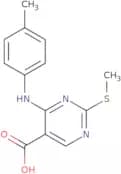
CAS:<p>2-(Methylthio)-4-(P-tolylamino)pyrimidine-5-carboxylic acid is an anticancer drug that is a novel, modified nucleoside. It has been shown to be active as a monophosphate and diphosphate in vitro. 2-(Methylthio)-4-(P-tolylamino)pyrimidine-5-carboxylic acid has also been shown to have antiviral activity against HIV and herpes simplex virus type 1 (HSV1).</p>Formula:C13H13N3O2SPurity:Min. 95%Molecular weight:275.33 g/mol2'-Deoxy-5'-DMT-5-[3-(trifluoroacetylamino)-1-propynyl]-uridine 3'-CE phosphoramidite
CAS:<p>2'-Deoxy-5'-DMT-5-[3-(trifluoroacetylamino)-1-propynyl]-uridine 3'-CE phosphoramidite is a novel modified nucleoside that is synthesized by the reaction of 2'-deoxy-5'-DMT-5-[3-(trifluoroacetylamino)-1-propynyl] uridine with bis(2,4,6-trimethylbenzoyl)phosphine and then with tetrazole. This product inhibits the synthesis of viral RNA and DNA and has been shown to be effective against cancer cells in vitro.</p>Formula:C44H49F3N5O9PPurity:Min. 95%Molecular weight:879.86 g/mol8-Bromoguanosine-5'-triphosphate sodium salt - 10 mM aqueous solution
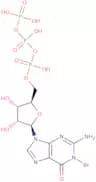
CAS:<p>8-Bromoguanosine-5'-triphosphate sodium salt is a nucleotide analog that inhibits the enzyme ribonucleotide reductase. This drug inhibits bacterial growth by interfering with protein synthesis and cell division. It binds to the purine riboswitch, which is an allosteric regulatory binding site on the ribosome, inactivating it. 8-Bromoguanosine-5'-triphosphate sodium salt also binds to the active site of bacterial RNA polymerase and inhibits DNA synthesis. The activity of this drug has been shown using a bacteriophage system in which the enzyme protein synthesis was inhibited by 8-bromoguanosine-5'-triphosphate sodium salt.</p>Formula:C10H15N5O14P3Br·xNaPurity:Min. 95%Molecular weight:602.08 g/mol2,6-Dichloro-9-(3',5'-di-O-benzoyl-2'-deoxy-2'-fluoro-a-D-arabinofuranosyl)purine
<p>2,6-Dichloro-9-(3',5'-di-O-benzoyl-2'-deoxy-2'-fluoro-a-D-arabinofuranosyl)purine is a nucleoside that is used in the synthesis of antiviral drugs. It is a modified monophosphate with a 3',5'-di-O-benzoyl group and 2'-deoxyribose. This substance can be prepared from the corresponding 2,6-dichloropurine by reaction with chloroacetaldehyde diethyl acetal. 2,6 Dichloro 9-(3',5'-di-O-benzoyl) purine has been shown to have anticancer activity against various human cancer cell lines in vitro and in vivo.</p>Purity:Min. 95%5-Fluoro-1-(b-L-ribofuranosyl)-uracil
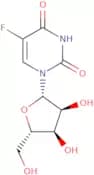
CAS:<p>5-Fluoro-1-(b-L-ribofuranosyl)-uracil is a triflate that is synthesized by the intramolecular, stereospecific reaction of l-guanosine and l-adenosine. It has been shown to have high yields in its synthesis. 5-Fluoro-1-(b-L-ribofuranosyl)-uracil can be used to produce glycosidations with d-galactose and l-thymidine. This product can also be used for the production of l-[5-(2,4,6-trimethoxybenzoyl)-1Hpyrazol]-3-[(2S,3R)-3-(bromomethyl)pyrrolidin]-2one (PBI), which is an inhibitor of protein kinase C.</p>Purity:Min. 95%2-Amino-9-(b-D-ribofuranosyl)purine 5'-O-triphosphate - 10mM aq. solution
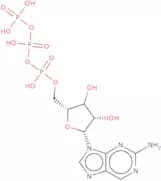
CAS:<p>2-Amino-9-(b-D-ribofuranosyl)purine 5'-O-triphosphate is a synthetic nucleoside that is modified by phosphoramidite chemistry. This compound is an antiviral agent that inhibits viral DNA synthesis and replication. It has also been shown to have anticancer properties. 2-Amino-9-(b-D-ribofuranosyl)purine 5'-O-triphosphate inhibits the enzymatic activity of the enzyme ribonucleotide reductase, which converts ribonucleotides into deoxyribonucleotides. The resulting monophosphate form of this compound accumulates in cells, which leads to cell death.</p>Formula:C10H16N5O13P3Purity:Min. 95%Color and Shape:PowderMolecular weight:507.18 g/mol2'-O-tert-Butyldimethylsilyl-5'-O-DMT-3-methyluridine 3'-CE phosphoramidite
CAS:<p>2'-O-tert-Butyldimethylsilyl-5'-O-DMT-3-methyluridine 3'-CE phosphoramidite is a modified nucleoside that has antiviral and anticancer properties. It is synthesized by the reaction of 2'-O-tert-butyldimethylsilyl-5'-O-DMT (2,6-dimethoxytrityl) with 3 methyluridine. The compound has been shown to be an activator for DNA polymerase, ribonucleases and deoxyribonucleases in vitro. It also inhibits tumor cell proliferation and induces apoptosis in cultured cells. This compound is a high quality product with CAS number 179762-50-6 and is available at high purity.</p>Formula:C46H63N4O9PSiPurity:Min. 95%Molecular weight:875.07 g/mol3'-Azido-2',3'-dideoxy-5'-O-DMT-5-methylcytidine
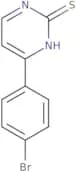
<p>3'-Azido-2',3'-dideoxy-5'-O-DMT-5-methylcytidine (Zidovudine) is a nucleoside analog that inhibits the replication of human immunodeficiency virus type 1. It is phosphorylated by cellular enzymes to form the active triphosphate form, which incorporates into viral DNA and causes chain termination. Zidovudine has been used in the treatment of HIV infection and AIDS. This drug also has antiviral activity against other retroviruses such as HIV type 2 and measles virus, as well as some DNA viruses, such as herpes simplex type 1. Zidovudine may be useful for the treatment of cancer, particularly Kaposi's sarcoma.</p>Purity:Min. 95%4-(4-Bromophenyl)pyrimidine-2-thiol
CAS:<p>The dynamical module is a polluting, herbaceous, high pressure system. It has the following characteristics:</p>Formula:C10H7BrN2SPurity:Min. 95%Molecular weight:267.15 g/mol3'-Deoxy-L-thymidine
CAS:<p>3'-Deoxy-L-thymidine is a nucleoside analog that inhibits HIV replication by interfering with the synthesis of viral DNA. The drug binds to the enzyme thymidine phosphorylase, which converts thymidine into deoxyuridine monophosphate, and prevents conversion of deoxyuridine to deoxythymidine monophosphate. This leads to inhibition of both DNA synthesis and the production of RNA. 3'-Deoxy-L-thymidine has dose-limiting toxicity at high doses and is not active against other viruses such as herpes simplex virus or cytomegalovirus. It is metabolized in the liver by enzymes such as 5-fluorocytosine, which converts it into its active form, 5-fluorouracil.</p>Formula:C10H14N2O4Purity:Min. 95%Molecular weight:226.23 g/mol




![2'-Deoxy-5'-DMT-5-[3-(trifluoroacetylamino)-1-propynyl]-uridine 3'-CE phosphoramidite](/_next/image/?url=https%3A%2Fstatic.cymitquimica.com%2Fproducts%2F3D%2Fthumb-webp%2FPD138044.webp&w=3840&q=75)