Nucleosides
Found 3569 products of "Nucleosides"
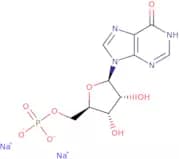
Inosine 5'-monophosphate disodium salt hydrate
CAS:Inosine 5'-monophosphate disodium salt hydrate is a nucleotide that is synthesized from adenosine triphosphate in the energy metabolism of cells. It is used as an activator of signal pathways and as a potent inducer of metabolic enzymes. Inosine 5'-monophosphate disodium salt hydrate has been shown to induce bowel disease in mice with experimental colitis, suggesting its utility for treating inflammatory bowel disease. Inosine 5'-monophosphate disodium salt hydrate binds to the ATP-binding site of GTPase, stimulating the hydrolysis of ATP to ADP and phosphate. This reaction causes a conformational change in the enzyme's active site that increases the affinity for GTP by about 10-fold. The binding site is composed of two alpha helices sandwiching a central beta sheet and the catalytic residues are located at both ends of this beta sheet. Structural analysis has revealed that this drug interacts with
Formula:C10H11N4O8PNa2·xH2OPurity:Min. 99.0 Area-%Color and Shape:White PowderMolecular weight:392.17 g/mol2'(3')-O-(4-Benzoyl)benzoyladenosine-5'-triphosphate triethylammonium salt
CAS:2'(3')-O-(4-Benzoyl)benzoyladenosine-5'-triphosphate triethylammonium salt is a nucleoside analog of Adenosine-5'-triphosphate (ATP), a key player in cellular energy transfer. 2'(3')-O-(4-Benzoyl)benzoyl has been added to this molecule as well as a triethylammonium salt which helps to increase the stability of the molecule in solutions. 2'(3')-O-(4-Benzoyl)benzoyladenosine-5'-triphosphate triethylammonium salt has potential use as a tool for understanding how cells use ATP and how changes to ATP affect cellular processes. Other possible uses are in the study of how ATP interacts with enzymes.
Formula:C24H24N5O15P3·C6H15NPurity:Min. 75 Area-%Color and Shape:White PowderMolecular weight:816.58 g/mol2’C-Methyl-2-thiouridine
CAS:2’C-Methyl-2-thiouridine is a novel nucleoside phosphoramidite that has been synthesized to serve as an activator for DNA polymerases. 2’C-Methyl-2-thiouridine is a potent antiviral agent that inhibits the replication of the hepatitis C virus in vitro. It also has antiproliferative effects against certain cancer cells and can be used as an anticancer drug. 2’C-Methyl-2-thiouridine contains a methylated thiol group, which confers a high degree of resistance to degradation by thiols, including glutathione (GSH). This compound is stable to hydrolysis and may be used in the synthesis of deoxyribonucleosides or monophosphate nucleotides.
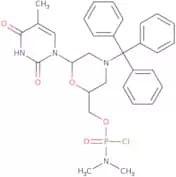
Purity:Min. 95%Morpholino T monomer
CAS:Morpholino T is a modified nucleoside amidite used to prepare morpholino oligomers
Formula:C31H34ClN4O5PPurity:Min. 98 Area-%Color and Shape:White PowderMolecular weight:609.05 g/molRef: 3D-PM137474
Discontinued product2'-Deoxy-2'-fluoro-L-uridine
CAS:2'-Deoxy-2'-fluoro-L-uridine is a synthetic nucleoside analog of uridine where the sugar is both fluorinated at the 2' position and in the L-configuration, which is the mirror image of naturally occurring D-nucleosides. This modification makes it structurally distinct and biologically significant for certain applications in drug development and biochemical research.
Formula:C9H11FN2O5Purity:Min. 95%Color and Shape:White PowderMolecular weight:246.2 g/molRef: 3D-ND02886
Discontinued product2'-Deoxyuridine-5'-diphosphate triethylammonium, 10 mM aqueous solution
CAS:a deoxynucleotide diphosphate
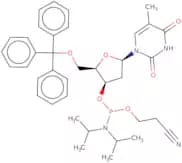
Formula:C9H14N2O11P2•C6H15NMolecular weight:489.35 g/mol5'-O-Tritylthymidine 3'-CE phosphoramidite
CAS:5'-O-Tritylthymidine 3'-CE phosphoramidite is a synthetic, modified nucleoside. It is an ester of thymidine and trityl chloride. 5'-O-Tritylthymidine 3'-CE phosphoramidite is used as an anticancer drug and has been shown to activate the transcription of ribonucleic acid (RNA) in vitro, which may be due to inhibition of the enzyme RNA polymerase II. This product has also been shown to have antitumour activity against human colon and ovarian cancer cells in vivo.
Formula:C38H45N4O6PPurity:Min. 95%Molecular weight:684.78 g/molFluorescein-5(6)-carboxamidocaproyl-[5(3-aminoallyl)2-deoxyuridine-5-tr
Fluorescein-5(6)-carboxamidocaproyl-[5(3-aminoallyl)2-deoxyuridine-5-triphosphate] is a modified nucleoside analog that is used as an antiviral agent against herpesviruses. This compound is phosphorylated by the virus encoded thymidine kinase, which converts it to the monophosphate form. Fluorescein-5(6)-carboxamidocaproyl-[5(3-aminoallyl)2-deoxyuridine-5-triphosphate] inhibits DNA synthesis by inhibiting viral DNA polymerase and has been shown to be active against human papillomavirus type 16 (HPV16) in vitro. It has also been shown to inhibit tumor cell proliferation and induce apoptosis in some types of cancer cells.
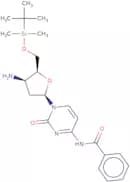
Purity:Min. 95%3'-Amino-N4-benzoyl-5'-O-tert-butyldimethylsilyl-2',3'-dideoxycytidine
CAS:3'-Amino-N4-benzoyl-5'-O-tert-butyldimethylsilyl-2',3'-dideoxycytidine (3'-ABT) is a novel diphosphate nucleoside that has been used in clinical trials as an activator of anticancer drugs. 3'-ABT is also used as a building block for synthesis of 2',3'-dideoxyuridine, which has antiviral properties. 3'-ABT can be synthesized by reacting N4-benzoyl-5'-O-tert-butyldimethylsilylcytosine with sodium bis(trimethylsilyl)amide and 2,6,8,10,-dodecatriene.
Formula:C22H32N4O4SiPurity:Min. 95%Molecular weight:444.6 g/mol4’-C-Methyl-2-thiouridine
CAS:4’-C-Methyl-2-thiouridine is an activator that has anticancer properties. It is a modified nucleoside with antiviral and antifungal activities, which has been shown to inhibit the growth of human tumor cells in vitro. 4’-C-methyl-2-thiouridine is able to inhibit viral replication in vitro and has been shown to be active against herpes simplex virus type 1 (HSV1) and herpes simplex virus type 2 (HSV2). Interestingly, this compound was found to have no effect on the intracellular levels of thymidine kinase or on cellular DNA synthesis.
Formula:C10H14N2O5SPurity:Min. 95%Molecular weight:274.29 g/mol1,3-Dimethylpseudouridine
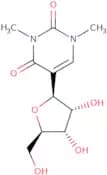
CAS:1,3-Dimethylpseudouridine is a methylated derivative of pseudouridine, which is a naturally occurring modified nucleoside found in RNA. This compounds can be used in research applications
Formula:C11H16N2O6Purity:Min. 95%Color and Shape:PowderMolecular weight:272.25 g/molRef: 3D-ND162827
Discontinued product2'-Deoxycytidine 3'-O-L-valinyl ester
CAS:2'-Deoxycytidine 3'-O-L-valinyl ester is a replication inhibitor that is used in biochemical research. It binds to the NS3 protease of the hepatitis C virus, preventing it from cleaving the polyprotein into functional proteins. This molecule also inhibits autophagy and may be a potential therapeutic agent for cancer.
Formula:C14H22N4O5Purity:Min. 95%Molecular weight:326.35 g/mol8-Bromoguanosine
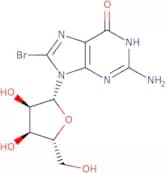
CAS:8-Bromoguanosine (8BrG) is a potent inhibitor of cyclase enzymes that lead to the formation of cyclic guanosine monophosphate (cGMP). It has been shown to inhibit signal pathways, such as those regulated by the G protein-coupled receptor (GPCR), which are activated by the 2-adrenergic receptor. 8BrG has been shown to be effective against C. glabrata and other fungi and has been used in experimental models for infectious diseases.
Formula:C10H12BrN5O5Purity:Min. 95%Color and Shape:White PowderMolecular weight:362.14 g/mol3'-O-Acetyl-5'-tert-butyldiphenylsilyl-2'-deoxy-2'-fluoro-5-methyluridine
3'-O-Acetyl-5'-tert-butyldiphenylsilyl-2'-deoxy-2'-fluoro-5-methyluridine is a synthetic nucleoside that has antiviral activity. It is a modified nucleoside that contains a monophosphate group, which makes it an activator of DNA polymerase. 3'-O-Acetyl-5'-tert-butyldiphenylsilyl-2'-deoxy-2'-fluoro-5-methyluridine is novel because it contains an acetyl group at the 3' position and a silyl ether on the 2' oxygen atom. 3'-O-Acetyl-5'-tert-butyldiphenylsilyl-2'-deoxy-2'-fluoro -5 -methyluridine has CAS No. 62768‑36‑3 and is available in high purity.Purity:Min. 95%Allopurinol riboside
CAS:Allopurinol riboside is a hydroxyl analog of allopurinol. Allopurinol riboside has minimal toxicity in tissue culture and exhibits no cytotoxicity in human serum. It is a potent inhibitor of microbial infection, including infections caused by Hepatitis C virus (HCV), Leishmania amazonensis, and Mycobacterium tuberculosis. Allopurinol riboside binds to adenine nucleotide and inhibits the synthesis of purines, which are necessary for DNA replication. This binding also inhibits the production of ATP, leading to cell death. In addition, allopurinol riboside inhibits the growth of human macrophages in vitro by inhibiting protein synthesis. Allopurinol riboside may be useful for treating HCV-induced liver disease or leishmaniasis.
Formula:C10H12N4O5Purity:Min. 97 Area-%Color and Shape:White PowderMolecular weight:268.23 g/molRef: 3D-NA07960
Discontinued product5-Carboxy-2’-deoxycytidine
CAS:Please enquire for more information about 5-Carboxy-2’-deoxycytidine including the price, delivery time and more detailed product information at the technical inquiry form on this page
Formula:C10H13N3O6Molecular weight:271.23 g/molTenofovir disoproxil fumarate
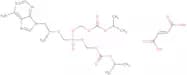
CAS:Anti-viral; reverse transcriptase inhibitor
Formula:C23H34N5O14PPurity:Min. 97.5 Area-%Color and Shape:White Off-White PowderMolecular weight:635.52 g/mol3′-UMP
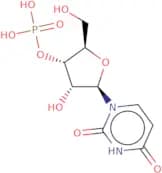
CAS:3′-UMP is a modified nucleoside that has antiviral activity, and is synthesized by the phosphoramidite method. It is a novel compound, which has not been previously reported. 3′-UMP is an activator of ribonucleotide reductase and can be used to treat viral infections. This drug also has anticancer effects and can be used as a chemotherapeutic agent for the treatment of leukemia. 3′-UMP has high purity and high quality.
Formula:C9H13N2O9PPurity:Min. 95%Molecular weight:324.18 g/mol7’-Hydroxy-N2-Isobutyryl-N-trityl-morpholino guanine
CAS:N2-Isobutyryl-7’-HO-N-trityl-morpholino guanosine is a novel nucleoside analog that has been synthesized to have an improved pharmacological profile.
Formula:C33H34N6O4Purity:Min. 95%Color and Shape:PowderMolecular weight:578.66 g/mol