Nucleosides
Found 3569 products of "Nucleosides"
N4-Methylcytidine
CAS:N4-Methylcytidine is a member of the group P2. Its chemical structure consists of two nitrogen atoms, one carbon atom, and four hydrogen atoms. It is a nucleoside analogue that inhibits synthesis of human mitochondrial DNA by inhibiting bacterial enzyme uridine-cytidine kinase, which converts uridine to cytidine in the mitochondria. N4-Methylcytidine has been shown to be potent against viruses such as HIV and herpes simplex virus type 1 (HSV-1) in cell culture studies. This antiviral effect is due to the interference with viral dna replication and protein synthesis by preventing incorporation of uracil into dna and ribosomal RNA.
Formula:C10H15N3O5Purity:Min. 95%Color and Shape:PowderMolecular weight:257.24 g/molRef: 3D-NM76577
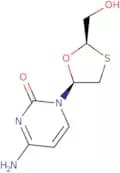
Discontinued productLamivudine
CAS:Anti-viral; reverse transcriptase inhibitor
Formula:C8H11N3O3SPurity:Min. 95%Color and Shape:White PowderMolecular weight:229.26 g/mol3'-O-Amino-2'-deoxycytidine
CAS:3'-O-Amino-2'-deoxycytidine (3'-AAC) is an activator nucleoside that has antiviral and anticancer properties. It can be used with other anticancer agents such as doxorubicin, methotrexate, and 5-fluorouracil to increase the efficacy of these compounds. 3'-AAC is a phosphoramidite monophosphate that can be used in the synthesis of oligodeoxynucleotides. This product is also a novel chemical entity that has not been previously described in any publication or patent application.
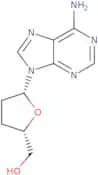
Formula:C9H14N4O4Purity:Min. 95%Molecular weight:242.23 g/mol2',3'-Dideoxyadenosine
CAS:2',3'-Dideoxyadenosine is a nucleoside analog that inhibits HIV replication and is a competitive inhibitor of adenylyl cyclase. This latter action reduces levels of cyclic adenosine monophosphate (cAMP)
Formula:C10H13N5O2Purity:Min. 95%Color and Shape:PowderMolecular weight:235.25 g/mol5-Methoxy-4’-thiouridine
5-Methoxy-4’-thiouridine is a monophosphate nucleoside that is synthesized by the phosphorylation of 5-methoxy-4’-thioguanosine. It has antiviral activity, which is due to its ability to inhibit viral DNA polymerase and prevent the production of viral DNA. 5-Methoxy-4’-thiouridine also inhibits the synthesis of deoxyribonucleosides and ribonucleosides, thereby preventing the formation of RNA and DNA. This agent has been shown to be an anticancer agent that can cause cell death by inhibiting protein synthesis.
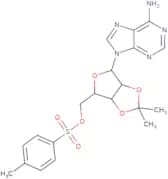
Purity:Min. 95%5'-O-Tosyl-2',3'-O-isopropylideneadenosine
CAS:5'-O-Tosyl-2',3'-O-isopropylideneadenosine is a novel modified nucleoside with antiviral and anticancer activities. It is an activator of the enzyme ribonucleotide reductase, which converts ribonucleotides to deoxyribonucleotides. This drug has been shown to have anticancer activity in a variety of tumor cell lines, including leukemias, lymphomas, and sarcomas. In addition, it has been shown to be active against HIV and herpes simplex virus type 1 (HSV-1). 5'-O-Tosyl-2',3'-O-isopropylideneadenosine is also known by CAS No. 5605-63-0.
Formula:C20H23N5O6SPurity:Min. 95%Color and Shape:PowderMolecular weight:461.49 g/molRef: 3D-NT15541
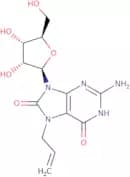
Discontinued product7-Allyl-7,8-dihydro-8-oxoguanosine
CAS:Agonist of toll-like receptors TLR7
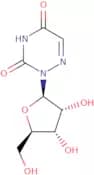
Formula:C13H17N5O6Purity:Min. 95%Color and Shape:White PowderMolecular weight:339.3 g/mol6-Azauridine
CAS:Inhibitor of uridine monophosphate synthase
Formula:C8H11N3O6Purity:Min. 95%Color and Shape:White PowderMolecular weight:245.19 g/mol2'-Deoxyguanosine-5'-carboxylic acid
CAS:2'-Deoxyguanosine-5'-carboxylic acid is a synthetic nucleoside that has antiviral and anticancer properties. It is an activator of DNA polymerase, which is used in the synthesis of DNA. 2'-Deoxyguanosine-5'-carboxylic acid also inhibits the activity of ribonucleotide reductase and deoxyribonucleotide reductase, which are enzymes that catalyze the conversion of ribose-5-phosphate to deoxyribose-5-phosphate. This substance also blocks viral replication by inhibiting RNA synthesis in cells infected with HIV or herpes simplex virus type 1.
Formula:C10H11N5O5Purity:Min. 95%Molecular weight:281.23 g/mol2'(3')-O-(4-Benzoyl)benzoyladenosine-5'-triphosphate triethylammonium salt
CAS:2'(3')-O-(4-Benzoyl)benzoyladenosine-5'-triphosphate triethylammonium salt is a nucleoside analog of Adenosine-5'-triphosphate (ATP), a key player in cellular energy transfer. 2'(3')-O-(4-Benzoyl)benzoyl has been added to this molecule as well as a triethylammonium salt which helps to increase the stability of the molecule in solutions. 2'(3')-O-(4-Benzoyl)benzoyladenosine-5'-triphosphate triethylammonium salt has potential use as a tool for understanding how cells use ATP and how changes to ATP affect cellular processes. Other possible uses are in the study of how ATP interacts with enzymes.
Formula:C24H24N5O15P3·C6H15NPurity:Min. 75 Area-%Color and Shape:White PowderMolecular weight:816.58 g/molAdenosine 5'-triphosphate magnesium salt
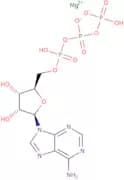
CAS:Adenosine-5'-triphosphate (ATP) is a nucleotide found in all living cells. It is used as a coenzyme for adenosine kinase, adenosine phosphokinase, and adenosine deaminase. ATP also acts as an important signaling molecule and has been shown to be involved in the regulation of cell metabolism, muscle contraction, and other cellular processes. The human body normally produces enough ATP to meet its needs through aerobic metabolism of glucose or fatty acids, but under certain conditions such as intense muscular activity or insufficient oxygen, more ATP must be produced by anaerobic metabolism. In these situations the mitochondria use glycolysis to produce lactic acid which is then converted into pyruvic acid by the enzyme lactate dehydrogenase. Pyruvic acid is then oxidized by the enzyme pyruvate dehydrogenase complex to produce acetyl-CoA which is further oxidized by the enzyme complex called Krebs
Formula:C10H18N5O13P3•xMgPurity:Min. 95 Area-%Color and Shape:White Off-White PowderMolecular weight:509.20 g/mol2'-Deoxyuridine-5'-diphosphate triethylammonium, 10 mM aqueous solution
CAS:a deoxynucleotide diphosphate
Formula:C9H14N2O11P2•C6H15NMolecular weight:489.35 g/molCytidine based prodrug with gemcitabine
Cytidine based prodrug with gemcitabine is a nucleoside analog that has antiviral and anticancer properties. It is a modified cytidine-based prodrug with gemcitabine which is an anticancer drug. Cytidine based prodrug with gemcitabine inhibits viral DNA synthesis by competitively inhibiting the incorporation of deoxycytidine monophosphate into the viral DNA chain. The prodrug also inhibits the proliferation of cancer cells by interfering with DNA synthesis, which leads to cell death.
Purity:Min. 95%N6-Benzoyl-2'-deoxy-5'-O-DMT-adenosine 3'-O-succinate triethylammonium salt
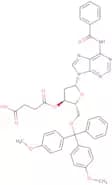
CAS:N6-Benzoyl-2'-deoxy-5'-O-DMT-adenosine 3'-O-succinate triethylammonium salt is a novel nucleoside analog that has antiviral and anticancer properties. It is a ribonucleotide with an N6-(benzoyl)-2'-deoxyadenosine base linked to the 3' position of the sugar through an acetyl group, with a succinic acid moiety at the 5' position. This drug inhibits DNA synthesis and has been shown to block HIV replication in vitro. It also has activity against human papillomavirus type 16 (HPV16) infections in vivo.
Formula:C42H39N5O9·C6H15NPurity:Min. 95%Color and Shape:PowderMolecular weight:858.98 g/molRef: 3D-NB10413
Discontinued product3'-Azido-3'-deoxy-5'-O-MMT-D3-thymidine
Controlled Product3'-Azido-3'-deoxy-5'-O-MMT-D3-thymidine is a novel nucleoside phosphoramidite that is used to synthesize oligonucleotides. It is an activator of ribonucleotide synthesis, a process in which the 5'-phosphate group is attached to the 3' hydroxyl group of a ribose sugar molecule. This phosphoramidite has antiviral and anticancer activities. 3'-Azido-3'-deoxy-5'-O-MMT-D3-thymidine has been shown to inhibit viral replication by inhibiting viral reverse transcriptase, an enzyme required for viral replication. It also inhibits DNA synthesis in cancer cells, leading to apoptosis (programmed cell death) and cell cycle arrest.
Formula:C30H26N5O5D3Purity:Min. 95%Molecular weight:542.61 g/molN6-Acetyl-2',3',5'-tri-O-acetyl-8-hydroxyadenosine
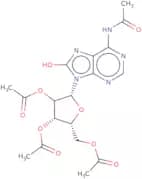
N6-Acetyl-2',3',5'-tri-O-acetyl-8-hydroxyadenosine is a modified nucleoside that is used in the synthesis of oligonucleotides. It is an activator with antiviral and anticancer properties, as well as various other biological activities. The CAS number for this product is 91359-02-2. The purity of this product ranges from 99% to 100%. This chemical has not been previously synthesized and has not been modified by any substituents or moieties.
Formula:C18H21N5O9Purity:Min. 95%Color and Shape:PowderMolecular weight:451.39 g/molRef: 3D-NA08462
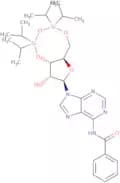
Discontinued productN6-Benzoyl-3',5'-O-(1,1,3,3- tetraisopropyl-1,3-disiloxanediyl)adenosine
CAS:N6-Benzoyl-3',5'-O-(1,1,3,3-tetraisopropyl-1,3-disiloxanediyl)adenosine is a novel antiviral agent that belongs to the class of nucleoside analogues. It has high antiviral activity against human cytomegalovirus and herpes simplex virus type 1. N6-Benzoyl-3',5'-O-(1,1,3,3-tetraisopropyl-1,3-disiloxanediyl)adenosine also has anticancer effects and is used in the treatment of leukemia. This drug inhibits DNA synthesis by acting as a competitive inhibitor for deoxyribonucleotide triphosphates and binds to ribonucleosides in order to inhibit DNA replication.Formula:C29H43N5O6Si2Purity:Min. 95%Color and Shape:White PowderMolecular weight:613.87 g/molRef: 3D-NB09330
Discontinued productTFA-aha-dC
TFA-aha-dC is a modified nucleoside analog that is an antiviral and anticancer drug. It inhibits the enzyme DNA polymerase, which is required for replication of viral and bacterial DNA. TFA-aha-dC binds to the active site of the enzyme, preventing it from binding to DNA and blocking its activity. TFA-aha-dC also has demonstrated anti-inflammatory properties.
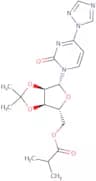
Formula:C20H28F3N5O6Purity:Min. 95%Molecular weight:491.46 g/mol5'-O-Isobutyryl-2',3'-O-isopropylidene-N4-triazolylcytidine
5'-O-Isobutyryl-2',3'-O-isopropylidene-N4-triazolylcytidine (IBITC) is a novel antiviral agent. IBITC is a diphosphate derivative of cytidine with antiviral activity against herpes simplex virus type 1 (HSV1). It has been shown to inhibit HSV1 replication in vitro and in vivo. IBITC is currently undergoing Phase I clinical trials for the treatment of HSV1.Formula:C18H23N5O6Purity:Min. 90%Molecular weight:405.4 g/molRef: 3D-ND181579
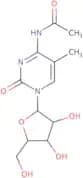
Discontinued productN4-Acetyl-5-methylcytidine
CAS:N4-Acetyl-5-methylcytidine is a novel, modified nucleoside with antiviral and anticancer properties. It is an activator of RNA polymerase II and inhibits DNA synthesis by inhibiting the activity of DNA polymerase. N4-Acetyl-5-methylcytidine has been shown to be effective in treating cancers that are sensitive to chemotherapy, such as lymphomas, myelomas, and leukemias. It can be used as a substitute for cytosine in the synthesis of oligonucleotides and phosphoramidites.
Purity:Min. 95%