Nucleosides
Found 3569 products of "Nucleosides"
2'-Deoxyisocytidine
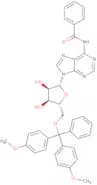
CAS:2'-deoxyisocytidine is a nucleoside that is used in biochemical research. It can be synthesized by two methods: solid-phase synthesis and depyrimidination. 2'-deoxyisocytidine has been shown to be more efficient than other fluorescent nucleosides when used with the excimer laser technique. The stability of this compound has also been shown to be greater than other fluorescein-based compounds, which makes it an appropriate substitute when using phosphoramidite chemistry.Formula:C9H13N3O4Purity:Min. 95%Color and Shape:PowderMolecular weight:227.22 g/molN6-Benzoyl-5'-O-DMT-adenosine
CAS:N6-Benzoyl-5'-O-DMT-adenosine is a synthetic nucleoside with antiviral activity. It is an activator of viral DNA polymerase and inhibits viral replication by inhibiting DNA synthesis in the host cell. N6-Benzoyl-5'-O-DMT-adenosine has shown anticancer activity in tumor cells, which may be due to its ability to inhibit ribonucleotide reductase and diphosphate kinase.
Formula:C38H35N5O7Purity:Min. 95%Color and Shape:White PowderMolecular weight:673.73 g/mol5-(2-Amino-2-oxoethyl)-2-thiouridine
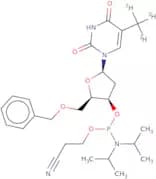
CAS:5-(2-Amino-2-oxoethyl)-2-thiouridine is a modified deoxyribonucleoside that is used as a phosphoramidite to synthesize oligonucleotides. 5-(2-Amino-2-oxoethyl)-2-thiouridine inhibits the synthesis of viral DNA and RNA, and its antiviral activity has been shown in vitro. It also may have anticancer activity due to its ability to inhibit DNA synthesis and cell proliferation. This compound has high quality, high purity, and novel properties.Formula:C11H15N3O6SPurity:Min. 95%Color and Shape:PowderMolecular weight:317.32 g/mol5'-O-Benzyl-D3-thymidine 3'-CE phosphoramidite
Controlled Product5'-O-Benzyl-D3-thymidine 3'-CE phosphoramidite is a novel 5'-O-benzyl modified nucleoside. It has antiviral, anticancer and monophosphate properties. It is also an activator of the diphosphate moiety and has been used in DNA synthesis and in the preparation of oligonucleotides. This compound has been shown to be an efficient inhibitor of HIV reverse transcriptase and human T cell leukemia virus type 1 (HTLV-1) replication. 5'-O-Benzyl-D3-thymidine 3'-CE phosphoramidite is an analogue of thymidine 3'-CMP that has been synthesized with a benzyl group on the 5' position.Formula:C26H34N4O6PD3Purity:Min. 95%Molecular weight:535.6 g/mol8-Benzyloxy-2'-deoxyguanosine
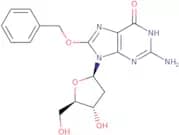
CAS:8-Benzyloxy-2'-deoxyguanosine is a dinucleoside that is synthesised from uracil and hydrogenated 8-hydroxyquinoline. The synthesis of 8-benzyloxy-2'-deoxyguanosine was achieved by cyclic photocyclization of 2,4,6-trichlorobenzaldehyde with 2,4,6-trimethoxyphenylacetone in the presence of sodium nitrite. This compound has been used for the quantification of DNA damage caused by irradiation or sodium chloride. 8-Benzyloxy-2'-deoxyguanosine has also been shown to inhibit the polymerase chain reaction (PCR) amplification of oligodeoxynucleotides.Formula:C17H19N5O5Purity:Min. 95%Color and Shape:Off-White To Brown SolidMolecular weight:373.36 g/molL-Cytidine
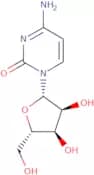
CAS:L-Cytidine is a nucleoside that is found in the body, and is also used as a drug. It is a precursor to other nucleosides, such as cytidine triphosphate, which is involved in DNA synthesis and repair. L-Cytidine has been shown to be effective against HIV infection by inhibiting the activity of the enzyme ns3 protease. This inhibition prevents viral proteins from being released from cells and infecting other cells. L-Cytidine has also been shown to be an inhibitor of creatine kinase and glycosidation, two enzymes that are necessary for cell metabolism. L-Cytidine has also been shown to be reactive with halides, which may lead to unwanted side effects.
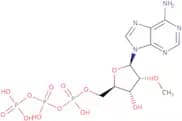
Formula:C9H13N3O5Purity:Min. 95%Color and Shape:PowderMolecular weight:243.22 g/mol2'-O-Methyladenosine-5'-triphosphate sodium salt - 100mM aqueous solution
CAS:2'-O-Methyladenosine-5'-triphosphate sodium salt is a novel nucleoside phosphoramidite. It is an activator and it can be used in the synthesis of DNA and RNA. The compound has antiviral properties and has been shown to inhibit DNA replication, protein synthesis, and RNA transcription. The compound also inhibits the growth of cancer cells by inducing apoptosis.Formula:C11H18N5O13P3·xNaPurity:Min. 95%Color and Shape:PowderMolecular weight:521.21 g/mol8-(Benzyloxy)guanosine
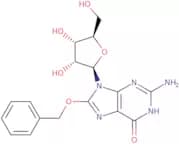
CAS:8-(Benzyloxy)guanosine is a novel nucleoside analog that is an activator of ribonucleotide reductase. It has been shown to inhibit the proliferation of cancer cells in vitro and in vivo, as well as inhibit the production of diphosphate from ATP. This compound also has antiviral activity against herpes simplex virus type 1 (HSV-1) and human immunodeficiency virus type 1 (HIV-1). 8-(Benzyloxy)guanosine is synthesized by reacting the 8-hydroxy group on guanosine with benzaldehyde, followed by phosphorylation with diphosphate. This compound has CAS No. 3868-36-8 and can be used for research purposes only.Formula:C17H19N5O6Purity:Min. 95 Area-%Color and Shape:White To Off-White SolidMolecular weight:389.36 g/molN6-Benzoyl-7-deaza-2'-deoxy-7-iodoadenosine
CAS:N6-Benzoyl-7-deaza-2'-deoxy-7-iodoadenosine is an antiviral compound that inhibits the synthesis of DNA and RNA. It is a synthetic, modified nucleoside with antiviral properties. The compound has been shown to be active against both animal and human tumor cells, as well as being effective in the treatment of viral infections.N6-Benzoyl-7-deaza-2'-deoxy-7-iodoadenosine is water soluble and biologically stable.Purity:Min. 95%3'-O-Benzoyl-2'-deoxyuridine
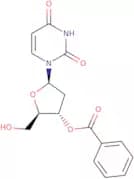
CAS:3'-O-Benzoyl-2'-deoxyuridine is a synthetic nucleoside that is used in the synthesis of DNA and RNA. 3'-O-Benzoyl-2'-deoxyuridine is also an antiviral agent that has shown efficacy against HIV, HSV, and influenza virus. 3'-O-Benzoyl-2'-deoxyuridine is a phosphoramidite monophosphate that can be used as a building block for DNA or RNA synthesis. It is also a diphosphate that can be used to synthesize modified nucleosides. This product has novel properties and high purity, making it suitable for research purposes.Formula:C16H16N2O6Purity:Min. 95%Color and Shape:PowderMolecular weight:332.31 g/molN4-Benzoyl-3'-deoxycytidine
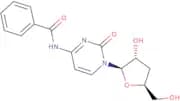
CAS:N4-Benzoyl-3'-deoxycytidine is a novel antiviral agent that has shown activity against DNA and RNA viruses. It is an activator of DNA polymerase, which is essential for replication of viral nucleic acids. The compound is a modified nucleoside with a benzoyl group at the 4' position of the ribose moiety. It also has phosphoramidite, monophosphate, and diphosphate analogues. N4-Benzoyl-3'-deoxycytidine binds to the enzyme DNA polymerase, thereby inhibiting its ability to synthesize deoxyribonucleotides from ribonucleotides. This results in inhibition of viral DNA synthesis and subsequent inhibition of viral replication.Formula:C16H17N3O5Purity:Min. 95%Color and Shape:White To Off-White SolidMolecular weight:331.32 g/mol2'-Deoxy-7-deazaisoguanosine triphosphate
CAS:2'-Deoxy-7-deazaisoguanosine triphosphate is a nucleotide analogue that is used as an antiviral agent in the treatment of HIV. It has potent activity against HIV and other retroviruses, including SIV, FIV, and HTLV-1. 2'-Deoxy-7-deazaisoguanosine triphosphate has been shown to act as an activator of DNA polymerase by enhancing the incorporation of deoxynucleotide triphosphates into DNA. It also inhibits the synthesis of viral DNA by inhibiting the activity of reverse transcriptase enzymes. 2'-Deoxy-7-deazaisoguanosine triphosphate can be synthesized from diphosphates and phosphoramidites through a modified phosphoramidite approach that allows for high quality and purity with high yield.Formula:C11H17N4O13P3Purity:Min. 95%Molecular weight:506.19 g/mol5'-Azido-2',5'-dideoxy-2'-fluorouridine
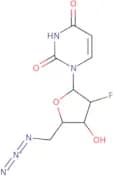
CAS:5'-Azido-2',5'-dideoxy-2'-fluorouridine is a novel nucleoside that is a phosphoramidite. It is an antiviral agent that has been shown to inhibit the synthesis of RNA in cells. This drug also inhibits the growth of cancer cells and can be used for the treatment of leukemia, lymphoma, and myeloma. 5'-Azido-2',5'-dideoxy-2'-fluorouridine has been shown to bind to DNA through its azide group and form a stable covalent bond with the N7 position of guanine. This bond prevents the incorporation of adenosine triphosphate (ATP) into DNA, which prevents DNA transcription and replication.Formula:C9H10FN5O4Purity:Min. 95%Molecular weight:271.21 g/mol7-Deaza 2-C-methyl-N6-methyladenosine
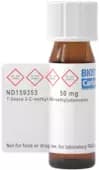
CAS:7-Deaza 2-C-methyl-N6-methyladenosine is a nucleoside that is modified with a methyl group at the 7 position of the deoxyribose ring. It has antiviral and anticancer properties. 7-Deaza 2-C-methyl-N6-methyladenosine is an activator of phosphoramidites, which are compounds that can be used to synthesize DNA or RNA.Formula:C13H18N4O4Purity:Min. 95 Area-%Molecular weight:294.31 g/mol5-Aminoimidazole-4-carboxamide-1-b-D-ribofuranose
CAS:Acadesine is a purine nucleoside analogue that inhibits the synthesis of ATP in cells. Acadesine blocks phosphorylation of adenosine monophosphate (AMP) to adenosine triphosphate (ATP) by inhibiting the activity of kinase-3, an enzyme involved in the production of ATP. Acadesine also inhibits the release of ATP from muscle cells into the blood stream and preferentially targets kidney cells, thereby reducing renal injury. Acadesine has been shown to be effective at reducing proteinuria and improving renal function in rats with acute kidney injury. Acadesine also has anti-inflammatory properties due to its ability to inhibit proteins that are involved in inflammation.Formula:C9H14N4O5Purity:Min. 98 Area-%Color and Shape:PowderMolecular weight:258.23 g/mol5'-O-DMT-2'-O-methyl-5-methyluridine
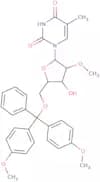
CAS:5'-O-DMT-2'-O-methyl-5-methyluridine is a modified nucleoside that is used in the synthesis of DNA. It is an anticancer drug and antiviral agent. 5'-O-DMT-2'-O-methyl-5-methyluridine has been shown to inhibit the growth of leukemia cells, even when they are resistant to other drugs. It also inhibits certain viruses, such as herpes simplex virus type 1 (HSV1), by preventing viral replication and inhibiting protein synthesis. This nucleoside is synthesized from 5'-O-DMT and 2'-O-methylcytosine.Formula:C32H34N2O8Purity:Min. 95%Color and Shape:PowderMolecular weight:574.64 g/molAdenosine 3',5'-bisphosphate triethylammonium salt - 10mM aqueous solution
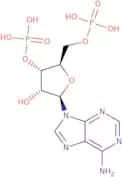
CAS:Adenosine 3',5'-bisphosphate triethylammonium salt is a metabolite of adenosine and an ester of triethylamine. The conjugate acid has been isolated from mouse urine. It is a metabolite of adenosine in the liver and is hydrolyzed to adenosine monophosphate and bisphosphate. Adenosine 3',5'-bisphosphate triethylammonium salt is used to study the metabolism of adenosine in mice. It has also been shown that this metabolite can inhibit the growth of E. coli (a bacterium) and mouse erythrocyte mitochondria by blocking ATP synthesis at the level of substrate-level phosphorylation.Formula:C10H15N5O10P2•(C6H15N)xPurity:Min. 95%Molecular weight:427.2 g/mol5'-O-(4,4'-Dimethoxytrityl)adenosine
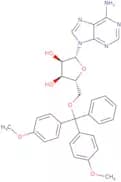
CAS:5'-O-(4,4'-Dimethoxytrityl)adenosine is a phosphoramidite that can be used as an activator for the synthesis of DNA. It is also used in the preparation of modified nucleosides and has anticancer activity. 5'-O-(4,4'-Dimethoxytrityl)adenosine is a modified ribonucleoside with high quality and high purity. This product has been shown to have antiviral activity against HIV-1.
Formula:C31H31N5O6Purity:Min. 95 Area-%Color and Shape:White Off-White PowderMolecular weight:569.61 g/mol2,2'-Anhydro-6-methoxycarbonyl-b-D-arabinofuranosyl uracil
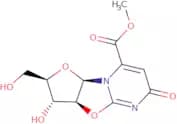
CAS:2,2'-Anhydro-6-methoxycarbonyl-b-D-arabinofuranosyl uracil is a novel and high purity anticancer and antiviral agent. It is an activator that has been shown to exhibit antineoplastic activity in vitro. The compound also inhibits the formation of RNA and DNA, which are necessary for the replication of cells. 2,2'-Anhydro-6-methoxycarbonyl-b-D-arabinofuranosyl uracil is a modified nucleoside that has been synthesized by phosphoramidite chemistry. This product can be used for research purposes and as a starting material for the synthesis of other compounds with similar structures.Formula:C11H12N2O7Purity:Min. 95%Molecular weight:284.22 g/mol5’-O-Benzoyl-3’-O-(4-methoxybenzoyl)-2’-O,4’-C- methyleneuridine
5'-O-Benzoyl-3'-O-(4-methoxybenzoyl)-2'-O,4'-C-methyleneuridine is a nucleoside that is synthesized from 5'-O-benzoyl-2'-deoxyadenosine and 4'-methoxybenzoyl chloride. It has antiviral and anticancer properties. 5' - O - benzoyl - 3' - O - (4-methoxybenzoyl) - 2' - O,4' - C methyleneuridine is a novel nucleoside with anti-cancer and antiviral effects. It can also be used as an activator for the synthesis of oligonucleotides or as a ribonucleotide phosphoramidite. The chemical name for this compound is 5’ – O – benzoyl – 3’ – O – (4 methoxybenzoyl) – 2Purity:Min. 95%