Nucleosides
Found 3569 products of "Nucleosides"
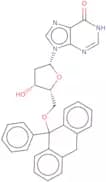
2'-Deoxy-5'-O-pixylinosine
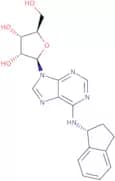
2'-Deoxy-5'-O-pixylinosine is a nucleoside that is structurally similar to the natural nucleosides. It is modified with an o-pixyl group at the 2' position of the sugar moiety and contains a phosphate group at the 5' position of the sugar moiety. 2'-Deoxy-5'-O-pixylinosine has antiviral, anticancer, and high purity properties due to its ability to inhibit viral DNA polymerases. This compound has been shown to be active against a broad spectrum of viruses including HIV and herpes simplex virus types 1 and 2 (HSV1 and HSV2). This compound is also able to inhibit tumor growth in vitro.Formula:C30H26N4O4Purity:Min. 95%Molecular weight:506.57 g/mol(R)-N-(2,3-Dihydro-1H-indenyl)adenosine
CAS:(R)-N-(2,3-Dihydro-1H-indenyl)adenosine is a purine nucleoside with the attachment of a 2,3-dihydro-1H-indenyl group via a nitrogen atom. This adenosine-based product can be used for research purposesFormula:C19H21N5O4Purity:Min. 95 Area-%Color and Shape:White PowderMolecular weight:383.4 g/mol5-(Cyanomethyl)-uridine
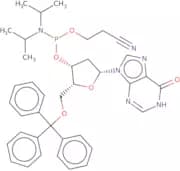
CAS:5-(Cyanomethyl)-uridine (5-CMU) is a monophosphate nucleoside that is synthetically derived from uracil. This nucleoside has antiviral activity and can be used to treat infections caused by the herpesviridae family, such as herpes simplex virus type 1 and 2. 5-CMU is modified with cyanomethyl groups on the ribose moiety. It is also a phosphoramidite building block for DNA synthesis and can be used in the preparation of oligonucleotides. The CAS number for 5-CMU is 58479-73-5.Formula:C11H13N3O6Purity:Min. 95%Color and Shape:PowderMolecular weight:283.24 g/mol2'-Deoxy-5'-O-tritylinosine 3'-CE phosphoramidite
2'-Deoxy-5'-O-tritylinosine 3'-CE phosphoramidite is an anticancer drug that inhibits the growth of cancer cells. It is a modified nucleoside that is synthesized by reacting 2'-deoxy-5'-O-tritylinosine with a phosphoramidite. This product can be used for the synthesis of DNA, RNA and deoxyribonucleic acid (DNA).Formula:C38H43N6O5PPurity:Min. 95%Molecular weight:694.78 g/mol5,6-Dihydro-5-azacytidine acetate
5,6-Dihydro-5-azacytidine acetate is a monophosphate nucleoside that is used in the synthesis of DNA and RNA. It is an antiviral agent that inhibits the synthesis of DNA by preventing the conversion of deoxyribonucleotides to diphosphates. 5,6-Dihydro-5-azacytidine acetate has been found to have anticancer properties and is used in cancer treatment. This chemical also has a high purity and quality, making it a suitable reagent for use in phosphoramidite coupling reactions for oligonucleotide synthesis. 5,6-Dihydro-5-azacytidine acetate has been shown to be active against a variety of human tumor cell lines, including leukemia cells.Formula:C10H17N4O7Purity:Min. 95%Color and Shape:White PowderMolecular weight:305.26 g/mol5-Methoxycarbonylmethyl-2-thiouridine
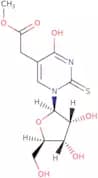
CAS:Nucleoside functionalised on the baseFormula:C12H16N2O7SPurity:Min. 95 Area-%Color and Shape:White Off-White PowderMolecular weight:332.33 g/molN6-Benzoyl-2'-O-tert-butyldimethylsilyl-5'-O-DMT-adenosine
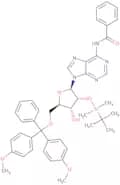
CAS:N6-Benzoyl-2'-O-tert-butyldimethylsilyl-5'-O-DMT-adenosine is a nucleoside that can be used in the synthesis of oligomers. It is a synthetic nucleoside with an absorption maximum at 410 nm and emission maximum at 522 nm. This compound has been shown to be efficient in the synthesis of phosphoramidites and ligands, as well as in rna synthesis and modifications. N6-Benzoyl-2'-O-tert-butyldimethylsilyl-5'-O-DMT-adenosine may inhibit bacterial growth by binding to the ribosome, preventing protein synthesis.
Formula:C44H49N5O7SiPurity:Min. 97 Area-%Color and Shape:PowderMolecular weight:787.97 g/molN3-Methyl-2'-O-methyluridine
CAS:2'-O-methyluridine is an antiviral nucleoside that is used as a phosphoramidite in the synthesis of oligonucleotides. It has been shown to inhibit viral replication, and has been found to be effective in treating HIV-1 by inhibiting reverse transcriptase. N3-Methyl-2'-O-methyluridine also inhibits DNA synthesis and cell proliferation, and may be useful for the treatment of cancer. This modified nucleoside has been synthesized from uracil and contains a methyl group at the 3' position. The methyl group prevents 2'-O-methyluridine from being activated by cellular thymidylate synthase, which normally converts deoxyribonucleotides into ribonucleotides. This novel nucleotide has not yet been used in clinical trials but it may provide an alternative to other drugs used for cancer treatments.
Formula:C11H16N2O6Purity:Min. 95 Area-%Color and Shape:White Off-White PowderMolecular weight:272.25 g/mol2'-C-Methylguanosine
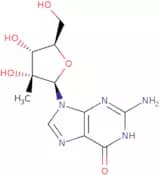
CAS:2'-C-Methylguanosine is a synthetic nucleoside analog of guanosine, modified at the 2'-carbon of the ribose sugar with a methyl group. This modification changes the molecule's biological behavior, making it potential useful in antiviral research and biochemical studies, especially those involving RNA synthesis.Formula:C11H15N5O5Purity:Min. 95%Color and Shape:PowderMolecular weight:297.27 g/mol1-(Arabinofuranosyl)-5-azidomethyluracil
CAS:1-(Arabinofuranosyl)-5-azidomethyluracil (AFAU) is a novel nucleoside that is synthesized by the reaction of 5-azido-1-(2'-deoxyribofuranosyl) uracil with phosphoramidite. The synthesis of this nucleoside has been used as a model for the synthesis of other deoxyribonucleosides. AFAU is an activator of ribonucleotide reductase and has shown activity against DNA and RNA viruses, such as influenza virus, herpes simplex virus type 1, and human immunodeficiency virus type 1.Purity:Min. 95%N6-Benzoyl-9-(3'-O-Deoxy-3'-fluoro-b-D-xylofuranosyl)adenine
N6-Benzoyl-9-(3'-O-Deoxy-3'-fluoro-b-D-xylofuranosyl)adenine is a novel compound that was synthesized in order to improve the activity of adenine. It has been shown to be an effective anticancer agent and antiviral agent in vitro. This drug has also been shown to be effective against herpes simplex virus type 1, herpes simplex virus type 2, varicella zoster virus, and HIV. N6-Benzoyl-9-(3'-O-Deoxy-3'-fluoro-b-D-xylofuranosyl)adenine is a ribonucleoside that binds to DNA and inhibits the synthesis of RNA. The phosphoramidites were synthesized with high purity and high quality. CAS Number: 51401061Purity:Min. 95%2'-Deoxycytidine-5'-triphosphate trisodium salt
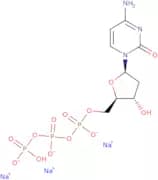
CAS:2'-Deoxycytidine-5'-triphosphate trisodium salt is an activator that has been shown to exhibit anticancer and antiviral activities. It is a novel nucleoside phosphoramidite that is used in the synthesis of DNA, RNA, and other nucleic acids. 2'-Deoxycytidine-5'-triphosphate trisodium salt has been modified by substituting the oxygen atom for a sulfur atom at the 5' position of the sugar moiety. This change makes it resistant to degradation by ribonucleases. 2'-Deoxycytidine-5'-triphosphate trisodium salt has also been shown to act as an inhibitor of human telomerase activity.Formula:C9H13N3O13P3Na3Purity:(%) Min. 85%Color and Shape:PowderMolecular weight:533.1 g/molCytidyl-3'-5'-guanosine ammonium
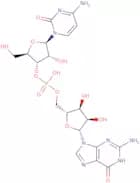
CAS:Cytidyl-3'-5'-guanosine ammonium salt is a modified nucleoside that has antiviral and anticancer properties. It is synthetically made by modifying the phosphate groups of cytidine and guanosine with phosphoramidites. Cytidyl-3'-5'-guanosine ammonium salt has been shown to activate protein kinase C, which may be related to its anticancer activity.Formula:C19H25N8O12PPurity:Min. 95%Color and Shape:PowderMolecular weight:588.42 g/mol5’-O-Acetyl-5-acetyloxymethyluridine
CAS:5’-O-Acetyl-5-acetyloxymethyluridine is an activated nucleoside that is a phosphoramidite. It can be used in the synthesis of oligonucleotides and has antiviral, anticancer, and antiretroviral activities. This product is a novel compound that can be used to synthesize high quality deoxyribonucleosides and diphosphate ribonucleosides. 5’-O-Acetyl-5-acetyloxymethyluridine is an activator for DNA polymerases and RNA polymerases with a high degree of purity.Formula:C14H18N2O9Purity:Min. 95%Molecular weight:358.3 g/mol5'-O-Tritylthymidine
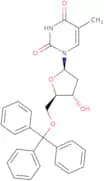
CAS:5'-O-Tritylthymidine is a nucleoside that is found in human mitochondrial DNA. It is synthesized from uridine by the enzyme thymidylate synthase and can be converted to thymine by the enzyme thymidine phosphorylase. 5'-O-Tritylthymidine has been shown to inhibit cancer cell growth, but its mechanism of action is not clear. It may inhibit xylene production. 5'-O-Tritylthymidine also causes an increase in p53 activity, which may lead to apoptosis of cancer cells.Formula:C29H28N2O5Purity:Min. 95%Molecular weight:484.54 g/mol7-Deaza-2'-deoxy-6-methoxyguanosine
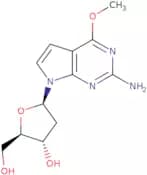
CAS:7-Deaza-2'-deoxy-6-methoxyguanosine is a modified nucleoside and antiviral agent. It has been shown to inhibit the synthesis of DNA, RNA and protein in cells infected with the herpes simplex virus (HSV). 7-Deaza-2'-deoxy-6-methoxyguanosine is also an anticancer agent that has been shown to inhibit tumor growth in animal models. This compound is synthesized by phosphoramidite chemistry and is a novel precursor for the preparation of modified DNA and RNA. The purity of this product is greater than 98%.Formula:C12H16N4O4Purity:Min. 95%Color and Shape:PowderMolecular weight:280.29 g/mol3’-Deoxy-5-fluoro-3’-methyluridine
CAS:3’-Deoxy-5-fluoro-3’-methyluridine is a nucleoside that has antiviral and anticancer properties. It is synthesized from 5-fluorouracil, which is a prodrug that is activated by 3’-deoxy-5-fluoro-3’-methyl uridine to produce 5′,6′ difluorodeoxyadenosine. This compound can be used in the treatment of hepatitis B virus and hepatitis C virus infections. 3’-Deoxy-5-fluoro-3’ methyluridine has also been shown to inhibit the growth of cancer cells in vitro.Purity:Min. 95%5-Hydroxymethyl-2’-β-C-methyluridine
CAS:5-Hydroxymethyl-2’C-methyluridine is a modified nucleoside that is an activator of cellular DNA synthesis. It is a synthetic compound that has been shown to be active against cancer cells in vitro. 5-Hydroxymethyl-2’C-methyluridine has also been used to inhibit the replication of various viruses, including herpes simplex virus type 1 and 2, cytomegalovirus, and human immunodeficiency virus type 1. This drug was shown to be safe and effective in clinical trials for the treatment of HIV/AIDS patients with no adverse side effects.Formula:C11H16N2O7Purity:Min. 95%Color and Shape:PowderMolecular weight:288.25 g/mol3'-Azido-3'-deoxythymidine 5'-monophosphate sodium salt
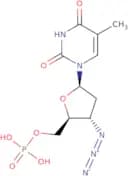
CAS:3'-Azido-3'-deoxythymidine 5'-monophosphate sodium salt is a synthetic nucleoside that is structurally related to thymidine. It has antiviral and anticancer properties, as well as the potential for use in gene therapy. 3'-Azido-3'-deoxythymidine 5'-monophosphate sodium salt is active against herpes simplex virus type 1 (HSV-1) and HSV-2, human immunodeficiency virus type 1 (HIV-1), human papillomavirus types 16 and 18 (HPV), Epstein Barr Virus (EBV), and cytomegalovirus (CMV). 3'-Azido-3'-deoxythymidine 5'-monophosphate sodium salt inhibits the production of HIV by preventing the viral reverse transcriptase from synthesizing DNA from RNA.Formula:C10H13N5NaO7PPurity:Min. 95%Molecular weight:369.23 g/mol5'-Amino-5'-deoxythymidine
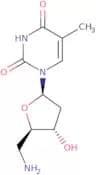
CAS:5'-Amino-5'-deoxythymidine is a nucleoside that is structurally related to thymidine. It has been shown to be a substrate for fatty acid synthase, which is a key enzyme in the synthesis of membrane lipids. 5'-Amino-5'-deoxythymidine has been shown to induce tumorigenesis in mouse bladder carcinoma cells. This compound also does not form stable complexes with DNA duplexes and can inhibit uptake of thymidylate into cells by competitive inhibition. 5'-Amino-5'-deoxythymidine binds to the cell surface and acts as an antibody response modifier.Formula:C10H15N3O4Purity:Min. 98 Area-%Color and Shape:White Off-White PowderMolecular weight:241.24 g/mol