Nucleosides
Found 3569 products of "Nucleosides"
5'-Carboxy-2-chloro-2'-3'-O-isopropylideneadenosine
CAS:5'-Carboxy-2-chloro-2'-3'-O-isopropylideneadenosine is a monophosphate nucleoside that inhibits viral replication by inhibiting the synthesis of both DNA and RNA. This compound is used to treat cancers such as leukemia, lymphoma, and multiple myeloma. It also has antiviral properties that are active against herpes simplex virus (HSV) and human cytomegalovirus (CMV). 5'-Carboxy-2-chloro-2'-3'-O-isopropylideneadenosine is a modified nucleoside with a phosphoramidite group on the 2' position of the ribose sugar.Formula:C13H14ClN5O5Purity:Min. 95%Color and Shape:Off-White PowderMolecular weight:355.74 g/mol2,3'-Anhydro-N4-benzoyl-2'-deoxycytidine 5'-CE phosphoramidite
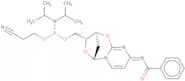
2,3'-Anhydro-N4-benzoyl-2'-deoxycytidine 5'-CE phosphoramidite is a novel nucleoside analog that has been synthesized to have the same chemistry as 2,3'-dideoxycytidine 5'-C phosphoramidite. It has antiviral and anticancer properties. This compound can be used in the synthesis of oligonucleotides for DNA sequencing and for gene therapy. 2,3'-Anhydro-N4-benzoyl-2'-deoxycytidine 5'-CE phosphoramidite is not toxic to normal cells, but it inhibits replication of viruses such as HIV and herpes simplex virus.Formula:C25H32N5O5PPurity:Min. 95%Molecular weight:513.54 g/molN4-Acetyl-2'-deoxy-5'-O-DMT-2'-fluorocytidine
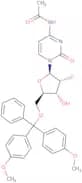
CAS:N4-Acetyl-2'-deoxy-5'-O-DMT-2'-fluorocytidine is a cytosine analog with high affinity for the T cell receptor. It can be used to generate antibodies against cytosine and as a screening tool for plasmon resonance.
Formula:C32H32FN3O7Purity:Min. 95%Color and Shape:White PowderMolecular weight:589.61 g/molN6-Dimethyl-3’-b-C-methyladenosine
CAS:N6-Dimethyl-3’-b-C-methyladenosine is a novel nucleoside analog that has antiviral and anticancer properties. It is a phosphoramidite, which can be used as an activator for the synthesis of modified oligonucleotides. N6-Dimethyl-3’-b-C-methyladenosine has been shown to activate ribonucleosides and deoxyribonucleosides in vitro. This compound also has anticancer properties, which may be due to its ability to act as an activator in the synthesis of DNA.Purity:Min. 95%1'-13CCytidine
CAS:Please enquire for more information about 1'-13CCytidine including the price, delivery time and more detailed product information at the technical inquiry form on this pageFormula:CC8H13N3O5Purity:Min. 95%Color and Shape:PowderMolecular weight:244.21 g/mol5'-O-p-Anisoyl-D3-thymidine
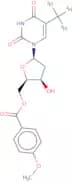
Controlled Product5'-O-p-Anisoyl-D3-thymidine is a nucleoside analogue that is used in antiviral and anticancer treatments. It is synthesized by the condensation of 3,4-dihydroxyacetophenone with 2,6-diaminopurine followed by phosphorylation of the 5' hydroxyl group. This product has been shown to be an activator of both DNA polymerase and RNA polymerase. In addition, it can inhibit the production of viral proteins such as HIV protease without affecting protein synthesis in mammalian cells. It also inhibits cancer cell growth by stopping DNA replication at the G2 phase. 5'-O-p-Anisoyl-D3-thymidine has been shown to be highly purified and can be used for research purposes. This product may have a CAS number but it will not be listed on this website due to company policy.Formula:C18H17N2O7D3Purity:Min. 95%Molecular weight:379.38 g/molN2-Phenylacetyl-L-guanosine
N2-Phenylacetyl-L-guanosine is a nucleoside that has been synthetically modified to have the desired properties of an anticancer agent. This compound inhibits DNA synthesis and is therefore cytotoxic to cells. It also inhibits RNA synthesis and is antiviral. N2-Phenylacetyl-L-guanosine has been found to be effective in preventing the growth of leukemia cells, breast cancer cells, prostate cancer cells, and ovarian cancer cells. N2-Phenylacetyl-L-guanosine is a nucleotide analogue that can be used as a building block for DNA or RNA synthesis. It can be used as a phosphate donor in phosphoramidite chemistry and can activate other nucleosides for use in chemical biology.
Formula:C18H19N5O6Purity:Min. 95%Molecular weight:401.37 g/mol4,6-Diamino-2-(b-D-ribofuranosyl)-2H-pyrazolo[3,4-d]pyrimidine
CAS:4,6-Diamino-2-(b-D-ribofuranosyl)-2H-pyrazolo[3,4-d]pyrimidine is a nucleoside monophosphate that is used as an antiviral agent. It inhibits the synthesis of viral DNA and RNA by inhibiting the activity of enzymes needed for nucleotide synthesis. 4,6-Diamino-2-(b-D-ribofuranosyl)-2H-pyrazolo[3,4-d]pyrimidine has shown anticancer properties in vitro against human colon cancer cells. This drug has been shown to inhibit the growth of tumor cells with high expression levels of cyclin D1 and low levels of p27 (a cell cycle regulatory protein).Purity:Min. 95%N2,N2-Dimethylguanosine
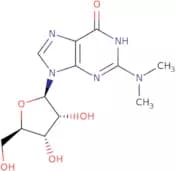
CAS:N2,N2-Dimethylguanosine is a purine nucleoside that is found in human serum. It belongs to the group of purines and has been shown to be involved in energy metabolism. N2,N2-Dimethylguanosine has been shown to be present at high levels in patients with autoimmune diseases such as rheumatoid arthritis. The x-ray crystal structures of wild-type strains of Escherichia coli and Streptococcus pneumoniae have been determined, which revealed that this compound interacts with the enzyme activity for primary sclerosing cholangitis. This nucleoside can also be detected by LC-MS/MS methods and multivariate logistic regression analysis.Formula:C12H17N5O5Purity:Min. 98 Area-%Color and Shape:Off-White PowderMolecular weight:311.3 g/mol2',3'-Dideoxy-5-iodouridine
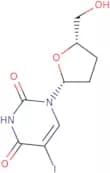
CAS:2',3'-Dideoxy-5-iodouridine is a synthetic nucleoside analog derived from uridine, one of the natural building blocks of RNA. This molecule has been chemically modified to disrupt the normal processes of DNA and RNA synthesis, making it a candidate for antiviral and anticancer research.Formula:C9H11IN2O4Purity:Min. 95%Color and Shape:PowderMolecular weight:338.1 g/mol3'-Azido-N6-benzoyl-2',3'-dideoxyadenosine
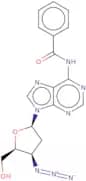
CAS:3'-Azido-N6-benzoyl-2',3'-dideoxyadenosine is an antiviral drug that inhibits the synthesis of viral DNA and RNA. This antiviral drug is a novel synthetic nucleoside analogue that is phosphorylated to form monophosphate, which inhibits the synthesis of RNA. 3'-Azido-N6-benzoyl-2',3'-dideoxyadenosine has been shown to be effective against cancer cells by inhibiting ribonucleotide reductase and DNA synthesis. 3'-Azido-N6-benzoyl-2',3'-dideoxyadenosine also inhibits DNA synthesis by blocking the enzymes DNA polymerase and deoxyribonucleoside kinase.Formula:C17H16N8O3Purity:Min. 95%Color and Shape:PowderMolecular weight:380.36 g/mol5-(N-Isopentenyl-N-trifluoroacetyl)aminomethyluridine
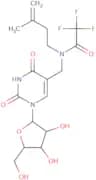
CAS:5-(N-Isopentenyl-N-trifluoroacetyl)aminomethyluridine is a nucleoside analog that is structurally related to cytidine. It was first synthesized in the 1970s, and has been shown to possess antiviral activity against herpes simplex virus type 1. In addition, it has been shown to inhibit DNA synthesis and the formation of DNA double strands. 5-(N-Isopentenyl-N-trifluoroacetyl)aminomethyluridine is an activator of protein kinase C and cyclic AMP phosphodiesterase, as well as a DNA polymerase inhibitor with anticancer properties.Purity:Min. 95%5’-O-DMT-2’-b-C-methyladenosine
5’-O-DMT-2’-b-C-methyladenosine is a modified nucleoside with antiviral and anticancer activity. It is an activator of DNA synthesis, and can be used as a precursor for phosphoramidites for the synthesis of oligonucleotides. The 5’-O-DMT group in this compound may be replaced with other activating groups to synthesize different modified nucleosides.
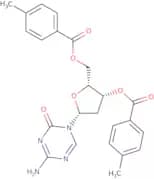
Purity:Min. 95%1-(2'-Deoxy-3',5'-di-O-toluoyl-b-D-ribofuranosyl)-4-amino-1,2-dihydro-2-oxo-1,3,5-triazine
CAS:1-(2'-Deoxy-3',5'-di-O-toluoyl-b-D-ribofuranosyl)-4-amino-1,2-dihydro-2-oxo-1,3,5-triazine is a nucleoside derivative that features a modified pyrimidinone (triazine) base attached to a protected deoxyribose sugar. This molecule can be used in research.Formula:C24H24N4O6Purity:Min. 95%Color and Shape:White To Off-White SolidMolecular weight:464.48 g/mol5'-O-DMT-2'-O-methyl-5-methyluridine
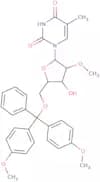
CAS:5'-O-DMT-2'-O-methyl-5-methyluridine is a modified nucleoside that is used in the synthesis of DNA. It is an anticancer drug and antiviral agent. 5'-O-DMT-2'-O-methyl-5-methyluridine has been shown to inhibit the growth of leukemia cells, even when they are resistant to other drugs. It also inhibits certain viruses, such as herpes simplex virus type 1 (HSV1), by preventing viral replication and inhibiting protein synthesis. This nucleoside is synthesized from 5'-O-DMT and 2'-O-methylcytosine.Formula:C32H34N2O8Purity:Min. 95%Color and Shape:PowderMolecular weight:574.64 g/mol2'-Deoxy-5'-O-DMT-2'-fluorouridine
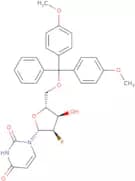
CAS:2'-Deoxy-5'-O-DMT-2'-fluorouridine is a medicament that belongs to the group of antineoplastic agents and is used in cancer treatment. It inhibits the synthesis of DNA by inhibiting the enzyme thymidylate synthetase, which is required for the formation of thymine nucleotides. This drug has been shown to be effective against some cancer cells in vitro and in vivo, but not all. 2'-Deoxy-5'-O-DMT-2'-fluorouridine can also inhibit terminal growth phases and induce programmed cell death. Solid phase synthesis has been used to synthesize this molecule as a phosphoramidite.Formula:C30H29FN2O7Purity:Min. 98 Area-%Color and Shape:White PowderMolecular weight:548.57 g/molAdenosine 5'-phosphosulfate sodium salt, 10 mM in water
CAS:Adenosine 5′-phosphosulfate sodium salt has been used quantify pyrophosphate and in enzyme-linked bioluminescence assay for adenosine triphosphate (ATP).Product provided as 10 mM solution in water.Formula:C10H14N5O10PSPurity:Min. 90.0 Area-%Molecular weight:427.28 g/molN4-Methylcytidine 5'-triphosphate triethylammonium salt
N4-Methylcytidine 5'-triphosphate triethylammonium salt is a novel nucleoside analog that inhibits the growth of tumor cells. It is synthesized by reacting N4-methylcytidine with phosphoramidite in an amine base, and then treated with triethylamine to produce a triethylammonium salt. This nucleoside analog inhibits DNA synthesis by inhibiting the enzyme ribonucleotide reductase, which converts ribonucleotides to deoxyribonucleotides. The resulting monophosphate compound has been shown to be effective in cancer treatment and may also be used as an antiviral agent.Formula:C10H18N3O14P3Purity:Min. 95%Molecular weight:497.18 g/molInosine 5'-diphosphate disodium salt
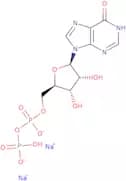
CAS:Inosine-5'-diphosphate disodium salt (IDPS) is a nitro compound that is used in the synthesis of antibacterial drugs. It is also used in the production of polymers and as a precursor to other organic compounds. IDPS has been shown to have antibacterial activity against halogeno bacteria, such as buprestidae, and many Gram-positive bacteria, including encapsulated strains. IDPS has been shown to be effective against both damaged cells and healthy cells in culture. The mechanism of action may involve inhibition of protein synthesis by blocking the ribosomes or by interfering with DNA replication. This drug also inhibits growth rate of japonica rice and heterocycles.Formula:C10H12N4Na2O11P2Purity:Min. 90.0 Area-%Color and Shape:White PowderMolecular weight:472.15 g/mol6-Azacytidine
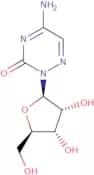
CAS:6-Azacytidine is a molecule that contains a hydroxyl group and a glycosidic bond. It has been shown to inhibit the growth of mollicutes, which are non-cellular bacteria. 6-Azacytidine has also been shown to be toxic in animal tissue culture studies. The drug can be eliminated through the urine or bile after being metabolized by the liver. 6-Azacytidine is not active against human cells in cell culture, but it does show some toxicity against human liver cells.Formula:C8H12N4O5Purity:Min. 95%Color and Shape:PowderMolecular weight:244.2 g/mol





![4,6-Diamino-2-(b-D-ribofuranosyl)-2H-pyrazolo[3,4-d]pyrimidine](/_next/image/?url=https%3A%2Fstatic.cymitquimica.com%2Fproducts%2F3D%2Fthumb-webp%2FND162980.webp&w=3840&q=75)