Nucleosides
Nucleosides are fundamental building blocks of nucleic acids, composed of a nitrogenous base attached to a sugar molecule. In this section, you can find a wide variety of nucleosides essential for research in molecular biology, biochemistry, and pharmacology. These compounds play crucial roles in the synthesis of DNA and RNA, and are also vital in various metabolic processes. Nucleosides are used in studying genetic material, developing antiviral and anticancer therapies, and understanding cellular mechanisms. At CymitQuimica, we provide high-quality nucleosides to support your research and development needs, ensuring purity and reliability for your experimental applications.
Found 3569 products of "Nucleosides"
Sort by
Purity (%)
0
100
|
0
|
50
|
90
|
95
|
100
6-Amino-1-(2'-deoxy-a-D-ribofuranosyl)-4-methoxy-1H- pyrazolo[3,4-d]pyrimidine
6-Amino-1-(2'-deoxy-a-D-ribofuranosyl)-4-methoxy-1H- pyrazolo[3,4-d]pyrimidine is a modified nucleoside that is an antiviral agent and anticancer drug. It inhibits viral replication by inhibiting the activity of DNA polymerase. 6-[Amino(2'-deoxyribofuranosyl)]-1-(2'-deoxyribofuranosyl)-4-methoxypyrazolo[3,4-d]pyrimidine has been shown to inhibit the growth of cancer cells without affecting healthy cells.Purity:Min. 95%N-Acetyl-2'-O-[(tert-butyl)dimethylsilyl]-5'-O-DMT-6'-O-methylguanosine-3'-CE phosphoramidite
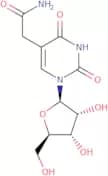
CAS:N-Acetyl-2'-O-[(tert-butyl)dimethylsilyl]-5'-O-DMT-6'-O-methylguanosine-3'-CE phosphoramidite is a nucleoside and nucleotide analog. It is synthesized by reacting 2'-deoxyguanosine with acetyl chloride, 5'-dimethoxytrityl chloride, and 3'-Ce phosphoramidite in an organic solvent. N-Acetyl-2'-O-[(tert-butyl)dimethylsilyl]-5'-O-DMT-6'-O-methylguanosine has been shown to inhibit the growth of cancer cells and viruses in cell culture studies. It is also a potent inhibitor of HIV replication in vitro.Formula:C49H66N7O9PSiPurity:Min. 95%Color and Shape:PowderMolecular weight:956.15 g/mol5-Carbamoylmethyluridine
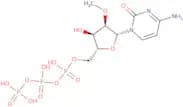
CAS:5-Carbamoylmethyluridine is a nucleoside that is structurally related to uridine. It is synthesized from uridine by methyl esterification with carbamic acid and methoxycarbonyl chloride. 5-Carbamoylmethyluridine interacts with actin filaments and has been shown to alter the expression of messenger RNA in eukaryotes. 5-Carbamoylmethyluridine also acts as a competitive inhibitor of the formation of a ternary complex, which includes ATP, GTP, and UTP, at the level of ribonucleotide reductase. This inhibition leads to decreased synthesis of messenger RNA in cells.Formula:C11H15N3O7Purity:Min. 95 Area-%Color and Shape:White PowderMolecular weight:301.25 g/mol2'-O-Methylcytidine-5'-triphosphate sodium salt - 100mM aqueous solution
CAS:2'-O-Methylcytidine-5'-triphosphate sodium salt is a synthetic, modified nucleoside analog. It can be used as an antiviral agent and anticancer drug to inhibit viral replication and tumor growth. 2'-O-Methylcytidine-5'-triphosphate sodium salt has the ability to activate cellular DNA synthesis. This compound also inhibits RNA polymerase activity in cancer cells, which inhibits the production of proteins vital for cell division. 2'-O-Methylcytidine-5'-triphosphate sodium salt can be used as a phosphoramidite building block for the synthesis of oligonucleotides with novel structures.Formula:C10H18N3O14P3·xNaPurity:Min. 95%Color and Shape:Clear LiquidMolecular weight:497.18 g/mol6-O-Methylinosine
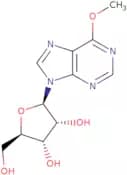
CAS:6-O-Methylinosine is a modified nucleoside that is used in the synthesis of recombinant proteins. It is synthesized from the reaction of methylphosphate and 6-O-methylguanosine. The phosphate group of the 6-O-methylguanosine molecule reacts with methylphosphate in an acid or neutral environment, while it reacts with phosphoric acid in a basic environment. This reaction can be monitored by measuring the amount of free phosphate groups present after the reaction. The rate of this reaction can be increased by increasing temperature and pH. 6-O-Methylinosine has been shown to have anticancer activity, which may be due to its ability to inhibit enzyme catalysis and modify DNA structure.Formula:C11H14N4O5Purity:Min. 95%Color and Shape:White PowderMolecular weight:282.25 g/molN1-Methylinosine
CAS:Controlled ProductN1-Methylinosine is a purine derivative that can be used as an imaging agent for the detection of autoimmune disorders. It has been shown to form stable complexes with proteins and human serum proteins, which have been detected in urine samples. N1-Methylinosine has also been used in clinical studies to measure disease activity in patients with rheumatoid arthritis and chronic kidney disease. This drug is activated by catalysis to produce a fluorescent product that can be detected using nmr spectroscopy. N1-Methylinosine is able to bind to autoantibodies and activate markers of chronic inflammation, such as nuclear factor kappa B (NF-κB) and tumor necrosis factor alpha (TNFα). N1-Methylinosine has also been shown to inhibit breast cancer cell growth and reduce the severity of chronic kidney disease.Formula:C11H14N4O5Purity:Min. 95%Color and Shape:PowderMolecular weight:282.25 g/molN4-Benzoyl-3'-O-tert-butyldimethylsilyl-5'-O-DMT-N4-methylcytidine
N4-Benzoyl-3'-O-tert-butyldimethylsilyl-5'-O-DMT-N4-methylcytidine is a nucleoside that is chemically modified by the addition of a benzoyl group. It has antiviral, anticancer and antiretroviral activities. N4-Benzoyl-3'-O-tert-butyldimethylsilyl-5'-O-DMT-N4-methylcytidine inhibits viral DNA synthesis by inhibiting both viral DNA polymerase and reverse transcriptase, which are enzymes required for the production of viral DNA. It also inhibits cancer cell growth by forming covalent bonds with deoxyribonucleic acid (DNA) in the cancer cells and initiating apoptosis. This nucleoside has been shown to be active against HIV, Herpes Simplex Virus Type 1 (HSV1), and Human CytomegalovPurity:Min. 95%7-Deaza-2'-deoxyadenosine
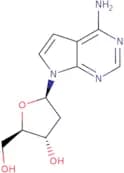
CAS:7-Deaza-2'-deoxyadenosine is an oligodeoxynucleotide analog that has been shown to be a potent inhibitor of human ovarian carcinoma cells. It inhibits the uptake of organic anion transporters, which are proteins found in the cell membrane that transport organic anions such as nucleosides and nucleotides. 7-Deaza-2'-deoxyadenosine has also been shown to inhibit DNA synthesis and polymerase chain reactions by binding to the enzyme RNA polymerase II. This drug can be synthesized with solid phase chemistry, making it a highly reproducible product.Formula:C11H14N4O3Purity:Min. 98 Area-%Color and Shape:White PowderMolecular weight:250.26 g/mol2’C-Methyl-5-methoxyuridine
CAS:2’-C-Methyl-5-methoxyuridine is a nucleoside analog that inhibits viral replication by inhibiting DNA synthesis. It is also used in the treatment of cancer, as it inhibits the growth of tumor cells by altering their genetic material. This drug is a phosphorothioate and can be activated with an activator to form its active form, which is incorporated into DNA during replication. 2’-C-Methyl-5-methoxyuridine has been shown to be effective against many viruses, including human immunodeficiency virus (HIV), herpes simplex virus type 1 (HSV1), and herpes simplex virus type 2 (HSV2). This drug has been shown to cause death of tumor cells via apoptosis or cell cycle arrest at the G0/G1 phase.
Purity:Min. 95%1-(2'-Deoxy-2'-fluoro-5-methyl-b-D-arabinofuranosyl)cytosine 5'-triphosphate triethylammonium salt
1-(2'-Deoxy-2'-fluoro-5-methyl-β-D-arabinofuranosyl)cytosine 5'-triphosphate triethylammonium salt is an antiviral nucleoside that can inhibit the replication of DNA and RNA viruses. It is a novel, synthetic nucleoside that has not been previously reported in the literature. This compound has been shown to be active against some human cancer cells in vitro, but no studies have been conducted in vivo. 1-(2'-Deoxy-2'-fluoro-5-methyl-β-D-arabinofuranosyl)cytosine 5'-triphosphate triethylammonium salt also shows anticancer activity with minimal toxicity to normal cells in vitro.Purity:Min. 95%6-Amino-2,5-dihydro-2-(b-D-ribofuranosyl)-4H-pyrazolo[3,4-d]pyrimidin-4-one
CAS:6-Amino-2,5-dihydro-2-(b-D-ribofuranosyl)-4H-pyrazolo[3,4-d]pyrimidin-4-one is a novel chemical. It is a nucleoside analog that has been shown to inhibit the growth of cancer cells in vitro and in vivo. 6-Amino-2,5-dihydro-2-(b-D ribofuranosyl)-4H pyrazolo[3,4 d]pyrimidin 4 one has also been shown to inhibit viral replication. It is phosphoramidites that are modified with bifunctional linkers for coupling to DNA or RNA molecules. 6 amino 2 5 dihydro 2 (b D ribofuranosyl) 4 H pyrazolo 3 4 d pyrimidine 4 one has high purity and high quality.Purity:Min. 95%N-Phenylpyridin-4-amine
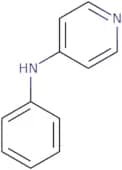
CAS:N-Phenylpyridin-4-amine is a tautomeric compound that has been shown to inhibit the growth of cancer cells. It is able to bind to tyrosine kinase and inhibit its activity, which affects the proliferation of cancer cells. N-Phenylpyridin-4-amine also inhibits mitochondrial functions by inhibiting cytochrome c oxidase. This drug also has an anti-inflammatory effect, inhibiting the production of cytokines such as IL1β, IL6, and TNFα. The biological function of N-Phenylpyridin-4-amine is not yet fully understood. It may be due to the inhibition of protein tyrosine phosphatases (such as PTP1B), which are involved in insulin signalling pathways.Formula:C11H10N2Purity:Min. 95%Color and Shape:White Off-White PowderMolecular weight:170.21 g/molCytarabine hydrochloride
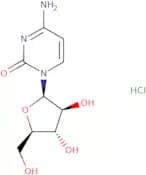
CAS:Anti-viral; anti-neoplasticFormula:C9H13N3O5·HClPurity:Min. 98 Area-%Color and Shape:White PowderMolecular weight:279.68 g/mol5'-Deoxy-5'-fluoro-5'-(methylthio)adenosine
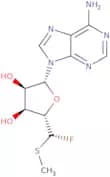
CAS:5'-Deoxy-5'-fluoro-5'-(methylthio)adenosine is an analogue of adenosine that has inhibitory activities on the biosynthetic pathway of polyamines. It has been shown to have a cytostatic effect on murine leukemia cells in vitro. 5'-Deoxy-5'-fluoro-5'-(methylthio)adenosine inhibits the production of polyamines by interfering with the enzyme responsible for their biosynthesis, ornithine decarboxylase. 5'-Deoxy-5'-fluoro-5'-(methylthio)adenosine also inhibits the growth of murine leukemia cells and other leukemia cell lines, including L1210 and MM1.Formula:C11H14FN5O3SPurity:Min. 95%Molecular weight:315.33 g/mol5'-O-p-Anisoyl-2'-deoxyuridine 3'-CE phosphoramidite
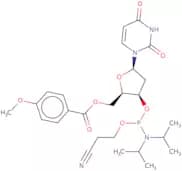
5'-O-p-Anisoyl-2'-deoxyuridine 3'-CE phosphoramidite is an anticancer nucleoside analog that inhibits viral replication. It is a modified nucleoside with a 5' anisoyl group and a 2' deoxyuridine moiety. This compound is synthesized by reacting the 5'-O-p-anisoyl-2'-deoxyuridine 3'-cyclohexylphosphate with phosphorus oxychloride to form the 5'-O-p-anisoyl-2'-deoxyuridine 3'-cyanoethyl phosphoramidite, which can be used for the synthesis of DNA or RNA. The phosphoramidite can also be used as an activator in polymerase chain reactions (PCR).Formula:C26H35N4O8PPurity:Min. 95%Molecular weight:562.55 g/mol1-(2'-O-4-C-Methylene-b-D-ribofuranosyl)thymine
CAS:1-(2'-O-4-C-Methylene-b-D-ribofuranosyl)thymine is a nucleoside analog with a modified ribofuranosyl sugar, which includes a 2'-O-4'-C-methylene bridge that constrains the sugar conformation.Formula:C11H14N2O6Purity:Min. 95%Color and Shape:PowderMolecular weight:270.24 g/molN4-Acetyl-5'-O-DMT-2'-O-methylcytidine
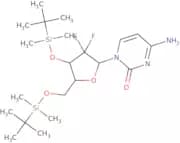
CAS:N4-Acetyl-5'-O-DMT-2'-O-methylcytidine is a cytidine analogue that has been synthesized to be used as an enzyme-linked probe. It is labelled with biotin and can be detected by binding to an antibody which has been labelled with a fluorescent tag. Cytidine analogues are synthesized on a solid phase and then cleaved from the support material. The spacer arm is added to the 5' end of the nucleotide and the 3'-OH group is modified with 2'-O-methyl groups. N4-Acetyl-5'-O-DMT-2'-O-methylcytidine has been shown to be sensitive in techniques such as solid phase synthesis, nucleic acid research, and immunoassays.Formula:C33H35N3O8Purity:Min. 95%Color and Shape:Off-White PowderMolecular weight:601.65 g/mol3',5'-Bis-O-tert-butyldimethylsilyl-2'-deoxy-2',2'-difluorocytidine
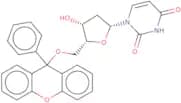
CAS:3',5'-Bis-O-tert-butyldimethylsilyl-2'-deoxy-2',2'-difluorocytidine is a modified nucleoside that is used as an antiviral agent. It is a phosphoramidite or monophosphate, which can be synthesized from 2'-deoxycytidine and N,N-bis(tert-butyldimethylsilyl)acetamide. 3',5'-Bis-O-tert-butyldimethylsilyl-2'-deoxy-2',2'-difluorocytidine inhibits the synthesis of DNA and RNA by inhibiting the enzymes DNA gyrase and RNA polymerase II. This drug has been shown to have anticancer effects in vitro and in vivo.Purity:Min. 95%2'-Deoxy-5'-O-pixyluridine
2'-Deoxy-5'-O-pixyluridine (2DPU) is a novel, synthetic nucleoside that is an active ingredient in antiviral and anticancer drugs. 2DPU has been shown to inhibit the replication of human immunodeficiency virus type 1 (HIV-1) by inhibiting the viral enzyme HIV reverse transcriptase. The phosphoramidite form of 2DPU is used as a building block for DNA synthesis and for the synthesis of other nucleosides. The monophosphate form of 2DPU is used in the synthesis of antiviral drugs, including acyclovir, zidovudine, and ribavirin.Formula:C28H24N2O6Purity:Min. 95%Molecular weight:484.51 g/mol2'-Deoxy-6-thioguanosine
CAS:2'-Deoxy-6-thioguanosine is a purine nucleoside analog that inhibits the activation of transcription factors such as nuclear factor kappa-B (NF-κB) and activator protein 1 (AP-1). It also inhibits the synthesis of proinflammatory cytokines, such as IL-1β, IL-6, and TNFα. The matrix effect is an important factor in the prevention of tumor progression. 2'-Deoxy-6-thioguanosine has been shown to inhibit cell proliferation and induce apoptosis in squamous cell carcinoma cells by modulating the expression of HLA class II molecules on tumors. It also prevents invasion by blocking matrix metalloproteinase activity. 2'-Deoxy-6-thioguanosine has been found to be effective against bowel diseases such as ulcerative colitis and Crohn's disease, as well as infectious diseases such as HIV/AIDS.Formula:C10H13N5O3SPurity:Min. 97 Area-%Color and Shape:PowderMolecular weight:283.31 g/mol
![6-Amino-1-(2'-deoxy-a-D-ribofuranosyl)-4-methoxy-1H- pyrazolo[3,4-d]pyrimidine](/_next/image/?url=https%3A%2Fstatic.cymitquimica.com%2Fproducts%2F3D%2Fthumb-webp%2FNA162964.webp&w=3840&q=75)

![N-Acetyl-2'-O-[(tert-butyl)dimethylsilyl]-5'-O-DMT-6'-O-methylguanosine-3'-CE phosphoramidite](/_next/image/?url=https%3A%2Fstatic.cymitquimica.com%2Fproducts%2F3D%2Fthumb-webp%2FPA152483.webp&w=3840&q=75)




![6-Amino-2,5-dihydro-2-(b-D-ribofuranosyl)-4H-pyrazolo[3,4-d]pyrimidin-4-one](/_next/image/?url=https%3A%2Fstatic.cymitquimica.com%2Fproducts%2F3D%2Fthumb-webp%2FNA162979.webp&w=3840&q=75)