Nucleosides
Nucleosides are fundamental building blocks of nucleic acids, composed of a nitrogenous base attached to a sugar molecule. In this section, you can find a wide variety of nucleosides essential for research in molecular biology, biochemistry, and pharmacology. These compounds play crucial roles in the synthesis of DNA and RNA, and are also vital in various metabolic processes. Nucleosides are used in studying genetic material, developing antiviral and anticancer therapies, and understanding cellular mechanisms. At CymitQuimica, we provide high-quality nucleosides to support your research and development needs, ensuring purity and reliability for your experimental applications.
Found 3569 products of "Nucleosides"
Sort by
Purity (%)
0
100
|
0
|
50
|
90
|
95
|
100
1-(4'-Azido-2'-deoxy-2'-fluoro-b-D-arabinofuranosyl)N4-(n-arachidoyl)-cytosine
1-(4'-Azido-2'-deoxy-2'-fluoro-b-D-arabinofuranosyl)N4-(n-arachidoyl)-cytosine is a modified nucleoside. The synthesis of this compound was achieved by the use of a novel activator, which activates the azido group to give a reactive intermediate that reacts with the 5' position of cytidine. The monophosphate form has been shown to be an antiviral agent. It has also been shown to activate the transcription factor NFAT and activate the expression of genes involved in cellular proliferation and differentiation, such as c-Jun and c-Fos.Purity:Min. 95%N4-Benzoyl-2'-deoxy-2'-fluorocytidine
CAS:N4-Benzoyl-2'-deoxy-2'-fluorocytidine is a novel, synthetic nucleoside that has been shown to inhibit the growth of cancer cells and is being investigated as a potential anticancer drug. N4-Benzoyl-2'-deoxy-2'-fluorocytidine has also been found to be active against HIV, Herpes simplex virus type 1 (HSV-1) and 2 (HSV-2), and influenza A virus. It prevents the replication of viruses by inhibiting DNA synthesis in the host cell.Formula:C16H16FN3O5Purity:Min. 95%Color and Shape:PowderMolecular weight:349.31 g/mol5'-O-DMT-thymidine 3'-O-succinate triethylammonium salt
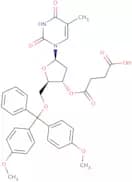
CAS:5'-O-DMT-thymidine 3'-O-succinate triethylammonium salt is a novel antiviral agent that inhibits viral replication by competing with natural nucleosides for incorporation into the viral DNA or RNA. The 5'-O-DMT group prevents the elimination of thymidine from the monophosphate form. This product has a high purity and quality, as well as potent antiviral activity against HIV and other viruses.Formula:C35H36N2O10·xC6H15NPurity:Min. 95%Color and Shape:PowderMolecular weight:745.86 g/mol4'-C-Fluoroadenosine
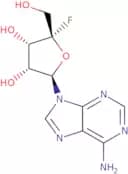
CAS:4'-C-Fluoroadenosine is a fluorine-substituted analog of adenosine, which has been shown to have minimal toxicity in animals. 4'-C-Fluoroadenosine inhibits the uptake of trypanosomes by macrophages and has been shown to be effective in treating Leishmania donovani infections in mice. Its mechanism of action is not yet clear, but it may involve inhibiting the enzymatic activity of enzymes involved in the metabolism of adenosine and/or enhancing the activity of those that are involved in catalysing adenoside triphosphate synthesis.Purity:Min. 95%3’-Deoxy-5-fluoro-3’-methyluridine
CAS:3’-Deoxy-5-fluoro-3’-methyluridine is a nucleoside that has antiviral and anticancer properties. It is synthesized from 5-fluorouracil, which is a prodrug that is activated by 3’-deoxy-5-fluoro-3’-methyl uridine to produce 5′,6′ difluorodeoxyadenosine. This compound can be used in the treatment of hepatitis B virus and hepatitis C virus infections. 3’-Deoxy-5-fluoro-3’ methyluridine has also been shown to inhibit the growth of cancer cells in vitro.Purity:Min. 95%5'-O-Benzoyl-2'-deoxyinosine
5'-O-Benzoyl-2'-deoxyinosine is an antiviral agent that inhibits the replication of certain viruses. It is a nucleoside analog that contains a benzoyl group at the 5' position and a 2'-deoxyribose sugar moiety. It has been shown to inhibit the growth of cancer cells in vitro and to produce cytotoxic effects on human lymphocytes. This compound is synthesized by reacting an appropriate ribonucleotide with phosphoramidite reagents, which are used as starting materials for DNA synthesis.Purity:Min. 95%2'-Deoxynucleoside-5'-triphosphate mixture
2'-Deoxynucleoside-5'-triphosphate mixture are a group of phosphorylated compounds that are used in the synthesis of DNA. They are used as antiviral and anticancer agents, as well as activators for certain enzymes. They are also used to synthesize deoxyribonucleotides. The 2'-deoxynucleoside-5'-triphosphate mixture is purified and modified to produce high purity products for research purposes. These compounds have novel properties, making them suitable for creating new drugs with improved efficacy and reduced side effects.
Purity:Min. 95%6-Methylmercapto-9-(b-D-ribofuranosyl)purine
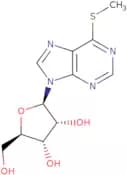
CAS:6-Methylmercapto-9-(b-D-ribofuranosyl)purine (6MMPR) is a nucleotide analog that is synthesized through the process of ribosylation. It has been shown to be reactive and inflammatory in the colon, which may be due to its role as an enzyme inhibitor. 6MMPR inhibits target enzymes such as 2-methylthio-6-chloropurine riboside, which are involved in DNA synthesis and repair. This drug also has anti-inflammatory properties, which may be due to its ability to inhibit the production of inflammatory cytokines by activated immune cells. 6MMPR is used for the treatment of bowel diseases such as Crohn's disease and ulcerative colitis.Formula:C11H14N4O4SPurity:Min. 95%Color and Shape:White PowderMolecular weight:298.32 g/mol3-Iodo-1-(2-C-methyl-b-D-ribofuranosyl)-1H-pyrazolo[3,4-d]pyrimidin-4-amine,
CAS:3-Iodo-1-(2-C-methyl-b-D-ribofuranosyl)-1H-pyrazolo[3,4-d]pyrimidin-4-amine is a novel antiviral monophosphate nucleotide analog. It has been shown to be an effective activator of the enzyme ribonucleotide reductase, which is involved in DNA synthesis and repair. 3Iodo possesses anticancer activity, inhibiting the proliferation of cancer cells by interfering with DNA synthesis. The compound also inhibits tumor cell growth in vivo by inducing apoptosis. 3Iodo has been shown to inhibit HIV replication and may have potential as a treatment for HIV/AIDS.Purity:Min. 95%2'-Deoxy-5-formylcytidine
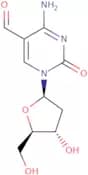
CAS:2'-Deoxy-5-formylcytidine is a nucleoside analog that is used as a chemotherapeutic agent. It is cytotoxic to cells by binding to DNA and preventing the synthesis of DNA, RNA, and protein. The drug has been shown to induce cellular senescence in human fibroblasts, which can be reversed by the addition of deuterium. 2'-Deoxy-5-formylcytidine also inhibits the production of reactive oxygen species (ROS) by inducing the expression of antioxidant enzymes such as superoxide dismutase 2 and glutathione peroxidase 1. The oxidation products are misincorporated into DNA strands, leading to intramolecular hydrogen bonds with cytosine bases. These modifications lead to denaturation of DNA and inhibition of transcription and replication. 2'-Deoxy-5-formylcytidine also interacts with oligodeoxynucleotides, which leads to misincFormula:C10H13N3O5Purity:Min. 97 Area-%Color and Shape:White PowderMolecular weight:255.23 g/mol2'-O-Allylcytidine
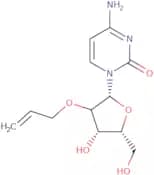
CAS:2'-O-Allylcytidine is a synthetic nucleotide that contains an allylated amino function. It is synthesized by the regiospecific allylation of uridine and guanosine. 2'-O-Allylcytidine has been used in research studies for the synthesis of oligonucleotides with specific sequences and for high-yield production of synthons.Formula:C12H17N3O5Purity:Min. 95%Color and Shape:PowderMolecular weight:283.28 g/mol1-(2'-Deoxy-2'-fluoro-b-D-arabinofuranosyl)6-methylpurine
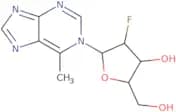
CAS:1-(2'-Deoxy-2'-fluoro-b-D-arabinofuranosyl)6-methylpurine is a synthetic nucleoside analog that has been shown to be an activator of DNA synthesis in mammalian cells. It has antiviral, anticancer, and antibiotic properties due to its ability to inhibit the growth of a variety of cancer cells. 1-(2'-Deoxy-2'-fluoro-b-D-arabinofuranosyl)6-methylpurine also inhibits viral replication by interfering with the replication machinery. This nucleoside analog is a modified form of 6MP and has high purity and quality.Purity:Min. 95%2-Deoxy-2-Fluoro-a-D-arabinofuranosylamine
CAS:2-Deoxy-2-Fluoro-a-D-arabinofuranosylamine is a novel antiviral agent that is synthesized from 2,4,6-trichlorobenzoyl chloride and 2,4,6-trifluorophenylglycine. It has been shown to be effective in inhibiting the replication of HIV and HSV types 1 and 2. This compound also has anticancer activity against colorectal cancer cells. The synthesis of this compound results in high purity with a high yield.Formula:C5H10FNO3Purity:Min. 95%Molecular weight:151.14 g/mol3’-b-Azido-2’,3’-dideoxy-5’-O-(4-methoxytrityl)uridine
CAS:3’-b-Azido-2’,3’-dideoxy-5’-O-(4-methoxytrityl)uridine (AZDU) is a modified nucleoside that is used as an antiviral agent. AZDU inhibits viral DNA synthesis by acting as a competitive inhibitor of the enzyme ribonucleotide reductase. AZDU has also been shown to inhibit tumor cell growth in vitro and in vivo. In addition, AZDU has been found to have anticancer activity against human leukemia cells, which may be due to its ability to inhibit DNA synthesis.Purity:Min. 95%6-Amino-1-(2'-deoxy-a-D-ribofuranosyl)-4-methoxy-1H- pyrazolo[3,4-d]pyrimidine
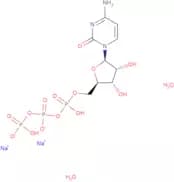
6-Amino-1-(2'-deoxy-a-D-ribofuranosyl)-4-methoxy-1H- pyrazolo[3,4-d]pyrimidine is a modified nucleoside that is an antiviral agent and anticancer drug. It inhibits viral replication by inhibiting the activity of DNA polymerase. 6-[Amino(2'-deoxyribofuranosyl)]-1-(2'-deoxyribofuranosyl)-4-methoxypyrazolo[3,4-d]pyrimidine has been shown to inhibit the growth of cancer cells without affecting healthy cells.Purity:Min. 95%CTP 2Na
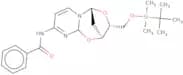
CAS:CTP serves as a molecule of high energy. It acts as a coenzyme in glycerophospholipid biosynthesis and protein glycosylation.Formula:C9H14N3Na2O14P3Purity:Min. 95.0 Area-%Color and Shape:White PowderMolecular weight:527.12 g/mol2,3'-Anhydro-5'-O-tert-butyldimethylsilyl-N4-benzoyl-2'-deoxycytidine
CAS:2,3'-Anhydro-5'-O-tert-butyldimethylsilyl-N4-benzoyl-2'-deoxycytidine is an antiviral agent that is a synthetic nucleoside analogue. It acts as an activator of monophosphate and as a DNA phosphoramidite. 2,3'-Anhydro-5'-O-tert-butyldimethylsilyl-N4-benzoyl-2'-deoxycytidine has been shown to inhibit the growth of cancer cells and is being studied for its anticancer activity. This drug also inhibits ribonucleotide reductase, which prevents the conversion of ribonucleotides to deoxyribonucleotides, thereby inhibiting DNA synthesis.Formula:C22H31N3O4SiPurity:Min. 95%Molecular weight:429.6 g/molN4-Acetyl-2'-deoxy-5'-O-DMT-5-methylcytidine 3'-CE phosphoramidite
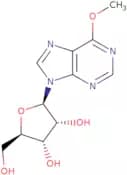
CAS:N4-Acetyl-2'-deoxy-5'-O-DMT-5-methylcytidine 3'-CE phosphoramidite is a novel nucleoside and deoxyribonucleoside that has been synthesized by the chemical modification of cytidine. It is an anticancer drug and antiviral agent, which has been shown to activate DNA polymerase, inhibit RNA synthesis and have antiviral activities against HIV, HSV, CMV, and VZV. N4-Acetyl-2'-deoxy-5'-O-DMT-5-methylcytidine 3'-CE phosphoramidite has high purity with low impurities (0.1% DMSO), making it a valuable nucleoside for use in synthesis of ribonucleotide analogues.Formula:C42H52N5O8PPurity:Min. 97 Area-%Color and Shape:White Off-White PowderMolecular weight:785.86 g/mol6-O-Methylinosine
CAS:6-O-Methylinosine is a modified nucleoside that is used in the synthesis of recombinant proteins. It is synthesized from the reaction of methylphosphate and 6-O-methylguanosine. The phosphate group of the 6-O-methylguanosine molecule reacts with methylphosphate in an acid or neutral environment, while it reacts with phosphoric acid in a basic environment. This reaction can be monitored by measuring the amount of free phosphate groups present after the reaction. The rate of this reaction can be increased by increasing temperature and pH. 6-O-Methylinosine has been shown to have anticancer activity, which may be due to its ability to inhibit enzyme catalysis and modify DNA structure.Formula:C11H14N4O5Purity:Min. 95%Color and Shape:White PowderMolecular weight:282.25 g/molN4-Benzoyl-3'-O-tert-butyldimethylsilyl-5'-O-DMT-N4-methylcytidine
N4-Benzoyl-3'-O-tert-butyldimethylsilyl-5'-O-DMT-N4-methylcytidine is a nucleoside that is chemically modified by the addition of a benzoyl group. It has antiviral, anticancer and antiretroviral activities. N4-Benzoyl-3'-O-tert-butyldimethylsilyl-5'-O-DMT-N4-methylcytidine inhibits viral DNA synthesis by inhibiting both viral DNA polymerase and reverse transcriptase, which are enzymes required for the production of viral DNA. It also inhibits cancer cell growth by forming covalent bonds with deoxyribonucleic acid (DNA) in the cancer cells and initiating apoptosis. This nucleoside has been shown to be active against HIV, Herpes Simplex Virus Type 1 (HSV1), and Human CytomegalovPurity:Min. 95%






![3-Iodo-1-(2-C-methyl-b-D-ribofuranosyl)-1H-pyrazolo[3,4-d]pyrimidin-4-amine,](/_next/image/?url=https%3A%2Fstatic.cymitquimica.com%2Fproducts%2F3D%2Fthumb-webp%2FNI14087.webp&w=3840&q=75)


![6-Amino-1-(2'-deoxy-a-D-ribofuranosyl)-4-methoxy-1H- pyrazolo[3,4-d]pyrimidine](/_next/image/?url=https%3A%2Fstatic.cymitquimica.com%2Fproducts%2F3D%2Fthumb-webp%2FNA162964.webp&w=3840&q=75)