Nucleosides
Found 3569 products of "Nucleosides"
5'-Amino-5'-deoxythymidine
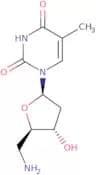
CAS:5'-Amino-5'-deoxythymidine is a nucleoside that is structurally related to thymidine. It has been shown to be a substrate for fatty acid synthase, which is a key enzyme in the synthesis of membrane lipids. 5'-Amino-5'-deoxythymidine has been shown to induce tumorigenesis in mouse bladder carcinoma cells. This compound also does not form stable complexes with DNA duplexes and can inhibit uptake of thymidylate into cells by competitive inhibition. 5'-Amino-5'-deoxythymidine binds to the cell surface and acts as an antibody response modifier.Formula:C10H15N3O4Purity:Min. 98 Area-%Color and Shape:White Off-White PowderMolecular weight:241.24 g/mol2,3'-Anhydro-N4-benzoyl-2'-deoxycytidine 5'-CE phosphoramidite
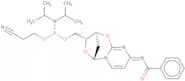
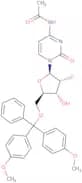
2,3'-Anhydro-N4-benzoyl-2'-deoxycytidine 5'-CE phosphoramidite is a novel nucleoside analog that has been synthesized to have the same chemistry as 2,3'-dideoxycytidine 5'-C phosphoramidite. It has antiviral and anticancer properties. This compound can be used in the synthesis of oligonucleotides for DNA sequencing and for gene therapy. 2,3'-Anhydro-N4-benzoyl-2'-deoxycytidine 5'-CE phosphoramidite is not toxic to normal cells, but it inhibits replication of viruses such as HIV and herpes simplex virus.Formula:C25H32N5O5PPurity:Min. 95%Molecular weight:513.54 g/molN4-Acetyl-2'-deoxy-5'-O-DMT-2'-fluorocytidine
CAS:N4-Acetyl-2'-deoxy-5'-O-DMT-2'-fluorocytidine is a cytosine analog with high affinity for the T cell receptor. It can be used to generate antibodies against cytosine and as a screening tool for plasmon resonance.
Formula:C32H32FN3O7Purity:Min. 95%Color and Shape:White PowderMolecular weight:589.61 g/molN6-Dimethyl-3’-b-C-methyladenosine
CAS:N6-Dimethyl-3’-b-C-methyladenosine is a novel nucleoside analog that has antiviral and anticancer properties. It is a phosphoramidite, which can be used as an activator for the synthesis of modified oligonucleotides. N6-Dimethyl-3’-b-C-methyladenosine has been shown to activate ribonucleosides and deoxyribonucleosides in vitro. This compound also has anticancer properties, which may be due to its ability to act as an activator in the synthesis of DNA.Purity:Min. 95%1'-13CCytidine
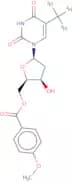
CAS:Please enquire for more information about 1'-13CCytidine including the price, delivery time and more detailed product information at the technical inquiry form on this pageFormula:CC8H13N3O5Purity:Min. 95%Color and Shape:PowderMolecular weight:244.21 g/mol5'-O-p-Anisoyl-D3-thymidine
Controlled Product5'-O-p-Anisoyl-D3-thymidine is a nucleoside analogue that is used in antiviral and anticancer treatments. It is synthesized by the condensation of 3,4-dihydroxyacetophenone with 2,6-diaminopurine followed by phosphorylation of the 5' hydroxyl group. This product has been shown to be an activator of both DNA polymerase and RNA polymerase. In addition, it can inhibit the production of viral proteins such as HIV protease without affecting protein synthesis in mammalian cells. It also inhibits cancer cell growth by stopping DNA replication at the G2 phase. 5'-O-p-Anisoyl-D3-thymidine has been shown to be highly purified and can be used for research purposes. This product may have a CAS number but it will not be listed on this website due to company policy.Formula:C18H17N2O7D3Purity:Min. 95%Molecular weight:379.38 g/molN2-Phenylacetyl-L-guanosine
N2-Phenylacetyl-L-guanosine is a nucleoside that has been synthetically modified to have the desired properties of an anticancer agent. This compound inhibits DNA synthesis and is therefore cytotoxic to cells. It also inhibits RNA synthesis and is antiviral. N2-Phenylacetyl-L-guanosine has been found to be effective in preventing the growth of leukemia cells, breast cancer cells, prostate cancer cells, and ovarian cancer cells. N2-Phenylacetyl-L-guanosine is a nucleotide analogue that can be used as a building block for DNA or RNA synthesis. It can be used as a phosphate donor in phosphoramidite chemistry and can activate other nucleosides for use in chemical biology.
Formula:C18H19N5O6Purity:Min. 95%Molecular weight:401.37 g/mol4,6-Diamino-2-(b-D-ribofuranosyl)-2H-pyrazolo[3,4-d]pyrimidine
CAS:4,6-Diamino-2-(b-D-ribofuranosyl)-2H-pyrazolo[3,4-d]pyrimidine is a nucleoside monophosphate that is used as an antiviral agent. It inhibits the synthesis of viral DNA and RNA by inhibiting the activity of enzymes needed for nucleotide synthesis. 4,6-Diamino-2-(b-D-ribofuranosyl)-2H-pyrazolo[3,4-d]pyrimidine has shown anticancer properties in vitro against human colon cancer cells. This drug has been shown to inhibit the growth of tumor cells with high expression levels of cyclin D1 and low levels of p27 (a cell cycle regulatory protein).Purity:Min. 95%Guanosine 3',5'-cyclic monophosphate sodium salt
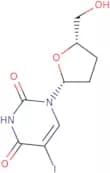
CAS:Guanosine 3',5'-cyclic monophosphate sodium salt (cGMP) is a cyclic nucleotide that is involved in the regulation of many cellular processes. It binds to specific guanine nucleotide-binding proteins (G proteins) and activates protein kinase A, which regulates glucose metabolism and energy production. cGMP also affects neuronal death, axonal growth, and bowel disease by acting as a cyclase inhibitor or activating the immune system. It has been shown to reduce the severity of infectious diseases such as HIV and malaria by activating the immune system.Formula:C10H11N5NaO7PPurity:Min. 95%Color and Shape:PowderMolecular weight:367.19 g/mol2',3'-Dideoxy-5-iodouridine
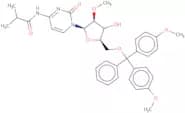
CAS:2',3'-Dideoxy-5-iodouridine is a synthetic nucleoside analog derived from uridine, one of the natural building blocks of RNA. This molecule has been chemically modified to disrupt the normal processes of DNA and RNA synthesis, making it a candidate for antiviral and anticancer research.Formula:C9H11IN2O4Purity:Min. 95%Color and Shape:PowderMolecular weight:338.1 g/mol5'-O-DMT-N4-isobutyryl-2'-O-methylcytidine
5'-O-DMT-N4-isobutyryl-2'-O-methylcytidine is a novel, synthetic nucleoside. It is a phosphoramidate prodrug of 5'-deoxy-5'-O-dimethoxytrityl-N4-isobutyrylcytidine, which is an antiviral and anticancer agent. 5'-O-DMT-N4-isobutyrylcytidine inhibits DNA synthesis by competitively inhibiting the activity of the enzyme ribonucleotide reductase (RNR).Formula:C35H39N3O8Purity:Min. 95%Molecular weight:629.7 g/mol2'-Deoxy-N2-isobutyryl-5'-O-MMT-guanosine
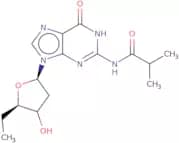
CAS:2'-Deoxy-N2-isobutyryl-5'-O-MMT-guanosine is a synthetic, modified nucleoside. It is an activator of DNA synthesis, and it has been found to inhibit the growth of cancer cells in vitro. This compound has shown success in the treatment of HIV infection in vitro and has also been shown to be effective against hepatitis B virus (HBV) and herpes simplex virus type 1 (HSV). The compound may be useful as an antiviral agent.Formula:C34H35N5O6Purity:Min. 95%Molecular weight:609.69 g/mol5'-Carboxy-2-chloro-2'-3'-O-isopropylideneadenosine
CAS:5'-Carboxy-2-chloro-2'-3'-O-isopropylideneadenosine is a monophosphate nucleoside that inhibits viral replication by inhibiting the synthesis of both DNA and RNA. This compound is used to treat cancers such as leukemia, lymphoma, and multiple myeloma. It also has antiviral properties that are active against herpes simplex virus (HSV) and human cytomegalovirus (CMV). 5'-Carboxy-2-chloro-2'-3'-O-isopropylideneadenosine is a modified nucleoside with a phosphoramidite group on the 2' position of the ribose sugar.Formula:C13H14ClN5O5Purity:Min. 95%Color and Shape:Off-White PowderMolecular weight:355.74 g/molN4-Benzoyl-5'-O-benzoyl-2'-O-tert-butyldimethylsilylcytidine 3'-CE phosphoramidite
N4-Benzoyl-5'-O-benzoyl-2'-O-tert-butyldimethylsilylcytidine 3'-CE phosphoramidite is a novel nucleoside that has been modified by the addition of a benzoyl group to the 5' position of the ribonucleotide moiety. N4-Benzoyl-5'-O-benzoyl-2'-O-tert-butyldimethylsilylcytidine 3'-CE phosphoramidite is an anticancer and antiviral agent that inhibits viral replication by competitive inhibition of DNA polymerase. N4-Benzoyl-5'-O-benzoyl -2'-O -tert -butyldimethylsilylcytidine 3'-CE phosphoramidite is active against HIV, herpes virus, and cytomegalovirus. This compound also inhibits the synthesisFormula:C38H52N5O8PSiPurity:Min. 95%Molecular weight:765.93 g/molS-Adenosyl-L-methionine disulfate tosylate
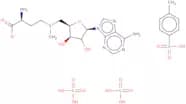
CAS:S-Adenosyl-L-methionine disulfate tosylate (SAMe) is a dietary supplement that is used to treat depression and liver disease. It is also a metabolite of the amino acid methionine, which is formed by the enzyme S-adenosylmethionine synthase. SAMe has been shown to inhibit the activation of caspase 3, which causes apoptosis in cells, and may be useful for treating cancer and other diseases. The chromatographic method used to separate SAMe from other compounds relies on its evaporative properties, due to its high water solubility.Formula:C22H34N6O16S4Purity:Min. 95 Area-%Color and Shape:White PowderMolecular weight:766.8 g/mol5’-O-DMT-2’-b-C-methyladenosine
5’-O-DMT-2’-b-C-methyladenosine is a modified nucleoside with antiviral and anticancer activity. It is an activator of DNA synthesis, and can be used as a precursor for phosphoramidites for the synthesis of oligonucleotides. The 5’-O-DMT group in this compound may be replaced with other activating groups to synthesize different modified nucleosides.
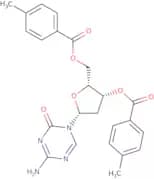
Purity:Min. 95%1-(2'-Deoxy-3',5'-di-O-toluoyl-b-D-ribofuranosyl)-4-amino-1,2-dihydro-2-oxo-1,3,5-triazine
CAS:1-(2'-Deoxy-3',5'-di-O-toluoyl-b-D-ribofuranosyl)-4-amino-1,2-dihydro-2-oxo-1,3,5-triazine is a nucleoside derivative that features a modified pyrimidinone (triazine) base attached to a protected deoxyribose sugar. This molecule can be used in research.Formula:C24H24N4O6Purity:Min. 95%Color and Shape:White To Off-White SolidMolecular weight:464.48 g/molN4-Benzoyl-3'-deoxy-5'-O-DMT-cytidine
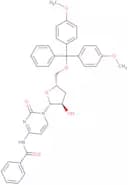
CAS:N4-Benzoyl-3'-deoxy-5'-O-DMT-cytidine is a synthetic nucleoside that is used as an activator for DNA synthesis. It is also used in the preparation of diphosphate derivatives for use as antiviral and anticancer agents or as probes for DNA and RNA research. N4-Benzoyl-3'-deoxy-5'-O-DMT-cytidine is a novel, high purity, and high quality chemical with CAS No. 86234-45-9.
Formula:C37H35N3O7Purity:Min. 95%Molecular weight:633.69 g/mol5'-(Furan-2-yl)-5'-O-DMT-2’-O-methylcytidine
CAS:5'-(Furan-2-yl)-5'-O-DMT-2’-O-methylcytidine is a high purity phosphoramidite, deoxyribonucleoside, and ribonucleoside that can be used in the synthesis of antiviral drugs, anti-cancer agents, and nucleotides. 5'-(Furan-2-yl)-5'-O-DMT-2’-O-methylcytidine has been shown to inhibit the growth of various cancer cells. This product also belongs to a novel class of synthetic nucleosides that can be modified with fluorine or other substituents at any position on the sugar ring.Purity:Min. 95%Guanosine 5'-monophosphate calcium salt
CAS:guanosine 5'-monophosphate calcium salt is a dietary supplement that contains calcium carbonate and guanosine 5'-monophosphate. This product is a light-exposed supplement that contains phenolic acids, polycarboxylic acids, and cyclic nucleotide phosphodiesterases. It is used to maintain ATP levels in the body. Guanosine 5'-monophosphate calcium salt should not be taken by people with a history of kidney stones or those taking other supplements containing calcium. This product may contain preservatives, excipients, or pharmaceutical ingredients for potency and stability purposes.
Formula:C10H12CaN5O8PPurity:Min. 95%Molecular weight:401.28 g/molN6-Benzoyl-2',3'-dideoxy-3'-N-DMT-adenosine
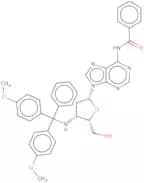
N6-Benzoyl-2',3'-dideoxy-3'-N-DMT-adenosine is a novel nucleoside that can be used as an antiviral agent. It is a phosphoramidite and has been shown to inhibit replication of HIV, HSV, and CMV. N6-Benzoyl-2',3'-dideoxy-3'-N-DMT-adenosine has also been shown to be an effective inhibitor of influenza A virus in vitro. This drug inhibits viral DNA synthesis by competing with natural nucleosides for incorporation into the viral DNA chain and by inhibiting viral DNA polymerase activity.Formula:C38H36N6O5Purity:Min. 95%Molecular weight:656.75 g/mol6-Azacytidine
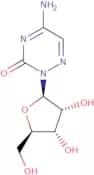
CAS:6-Azacytidine is a molecule that contains a hydroxyl group and a glycosidic bond. It has been shown to inhibit the growth of mollicutes, which are non-cellular bacteria. 6-Azacytidine has also been shown to be toxic in animal tissue culture studies. The drug can be eliminated through the urine or bile after being metabolized by the liver. 6-Azacytidine is not active against human cells in cell culture, but it does show some toxicity against human liver cells.Formula:C8H12N4O5Purity:Min. 95%Color and Shape:PowderMolecular weight:244.2 g/mol2-Chloro-N,N-dimethyl-2’C-methyladenosine
CAS:2-Chloro-N,N-dimethyl-2’C-methyladenosine is a synthetic nucleoside that inhibits viral DNA synthesis. It is a modified deoxyribonucleoside that contains a chloro group at the 2’ position of the sugar ring and a methyl group at the 3’ position. This drug has antiviral activity against herpes simplex virus type 1 (HSV-1) and herpes simplex virus type 2 (HSV-2), respiratory syncytial virus (RSV), and influenza A virus. It also displays anticancer activity in vitro. This drug inhibits cancer cell growth by interfering with DNA replication and triggering apoptosis through inhibition of protein kinase C and activation of caspases.Purity:Min. 95%3',5'-O-(1,1,3,3-Tetraisopropyl-1,3-disiloxanediyl)uridine
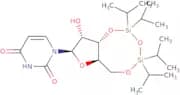
CAS:Used as aprotected uridine nucleoside in RNA synthesis. The 1,1,3,3-tetraisopropyl-1,3-disiloxanediyl (TIPDS or TBDPSi2) group serves as a bulky and selectively acid-labile protecting group for the 3' and 5' hydroxyl groups of the uridine ribonucleoside during RNA oligonucleotide synthesis.Formula:C21H38N2O7Si2Purity:Min. 95%Color and Shape:White PowderMolecular weight:486.71 g/mol2-Methylthioadenosine
CAS:2-Methylthioadenosine is a purine nucleoside which induces necrotic cell death. It is the first of its kind to be shown to have activity against squamous carcinoma cells, and is activated by nucleoside phosphorylase in order to produce its cytotoxic form. 2-Methylthioadenosine also inhibits the transcription-polymerase chain reaction and increases oxidative injury. This drug has been shown to have receptor activity in brain cells, as well as chemotactic activity for gland cells. 2-Methylthioadenosine has been used as a model organism for polymerase chain reactions, and has been shown to inhibit p2y receptors in the human colon cancer cell line HT29.
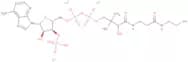
Formula:C11H15N5O4SPurity:Min. 95%Color and Shape:White Off-White PowderMolecular weight:313.34 g/molAcetoacetyl coenzyme A lithium salt
CAS:Acetoacetyl coenzyme A lithium salt is a novel phosphoramidite building block. It's a modified nucleoside that can be used in the synthesis of oligonucleotides and DNA. Acetoacetyl coenzyme A lithium salt has antiviral, anticancer, and antifungal activities.Formula:C25H36N7O18P3SLi4·5H2OPurity:Min. 96 Area-%Color and Shape:PowderMolecular weight:965.42 g/molCyclopentenyl cytosine 5'-triphosphate sodium salt
Cyclopentenyl cytosine 5'-triphosphate sodium salt is a synthetic, activator diphosphate. It is used as a phosphoramidite in the synthesis of DNA and RNA. Cyclopentenyl cytosine 5'-triphosphate sodium salt has been shown to have anticancer and antiviral properties.Purity:Min. 95%9-(b-D-Arabinofuranosyl)-8-chloroadenine
CAS:9-(b-D-arabinofuranosyl)-8-chloroadenine is a deoxyribonucleoside that is structurally related to adenosine. It has antiviral properties and has been shown to be active against herpes virus, influenza A virus, and cytomegalovirus. 9-(b-D-Arabinofuranosyl)-8-chloroadenine is an activator of cellular DNA polymerase δ and has been shown to inhibit the replication of HIV in human T lymphocytes. 9-(b-D-Arabinofuranosyl)-8-chloroadenine also inhibits the proliferation of tumor cells and is being investigated as a potential chemotherapeutic agent for cancer treatment.
Purity:Min. 95%2’,3’-Anhydro-7-deazaadenosine
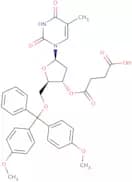
CAS:2’,3’-Anhydro-7-deazaadenosine is a modified nucleoside that is used in the treatment of viral infections. It is an antiviral drug that has been shown to have anticancer properties. 2’,3’-Anhydro-7-deazaadenosine can be synthesized from deoxyribonucleosides and diphosphates. The compound has been shown to inhibit the synthesis of DNA by binding to the enzyme DNA polymerase and blocking the formation of a phosphodiester bond between the 5' phosphate group and 3'-OH group. This may lead to inhibition of DNA replication and transcription. 2’,3’-Anhydro-7-deazaadenosine also inhibits protein synthesis by inhibiting RNA polymerase activity.Purity:Min. 95%5'-O-DMT-thymidine 3'-O-succinate triethylammonium salt
CAS:5'-O-DMT-thymidine 3'-O-succinate triethylammonium salt is a novel antiviral agent that inhibits viral replication by competing with natural nucleosides for incorporation into the viral DNA or RNA. The 5'-O-DMT group prevents the elimination of thymidine from the monophosphate form. This product has a high purity and quality, as well as potent antiviral activity against HIV and other viruses.Formula:C35H36N2O10·xC6H15NPurity:Min. 95%Color and Shape:PowderMolecular weight:745.86 g/molN6-Benzoyl-5'-O-benzoyl-2'-O-tert-butyldimethylsilyladenosine 3'-CE phosphoramidite
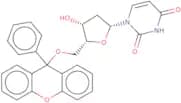
N6-Benzoyl-5'-O-benzoyl-2'-O-tert-butyldimethylsilyladenosine 3'-CE phosphoramidite is an activator that is used to synthesize modified nucleosides. N6-Benzoyl-5'-O-benzoyl-2'-O-tert-butyldimethylsilyladenosine 3'-CE phosphoramidite has been shown to activate the synthesis of ribonucleosides, deoxyribonucleosides and other modified nucleosides. It reacts with a variety of DNA, RNA and protein substrates, including those containing phosphate groups. N6-Benzoyl-5'-O-benzoyl-2'-O-tert-butyldimethylsilyladenosine 3'-CE phosphoramidite has also been shown to have anticancer activity in vitro and in vivoFormula:C39H52N7O7PSiPurity:Min. 95%Molecular weight:789.95 g/mol2'-Deoxy-5'-O-pixyluridine
2'-Deoxy-5'-O-pixyluridine (2DPU) is a novel, synthetic nucleoside that is an active ingredient in antiviral and anticancer drugs. 2DPU has been shown to inhibit the replication of human immunodeficiency virus type 1 (HIV-1) by inhibiting the viral enzyme HIV reverse transcriptase. The phosphoramidite form of 2DPU is used as a building block for DNA synthesis and for the synthesis of other nucleosides. The monophosphate form of 2DPU is used in the synthesis of antiviral drugs, including acyclovir, zidovudine, and ribavirin.Formula:C28H24N2O6Purity:Min. 95%Molecular weight:484.51 g/molN4-Acetyl-5'-O-DMT-2'-O-methylcytidine
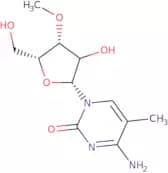
CAS:N4-Acetyl-5'-O-DMT-2'-O-methylcytidine is a cytidine analogue that has been synthesized to be used as an enzyme-linked probe. It is labelled with biotin and can be detected by binding to an antibody which has been labelled with a fluorescent tag. Cytidine analogues are synthesized on a solid phase and then cleaved from the support material. The spacer arm is added to the 5' end of the nucleotide and the 3'-OH group is modified with 2'-O-methyl groups. N4-Acetyl-5'-O-DMT-2'-O-methylcytidine has been shown to be sensitive in techniques such as solid phase synthesis, nucleic acid research, and immunoassays.Formula:C33H35N3O8Purity:Min. 95%Color and Shape:Off-White PowderMolecular weight:601.65 g/mol3'-O-Methyl-5-methylcytidine
CAS:3'-O-Methyl-5-methylcytidine is a nucleoside with antiviral and anticancer properties. It has been shown to be an activator of RNA polymerase, the enzyme that catalyzes the transcription of DNA into RNA. 3'-O-Methyl-5-methylcytidine binds to the active site of RNA polymerase and is able to stimulate transcription in vitro. This drug has also been shown to have high purity and high quality.Formula:C11H17N3O5Purity:Min. 95%Color and Shape:PowderMolecular weight:271.27 g/mol5-Bromo-7-(2-C-methyl-b-D-ribofuranosyl)-7H-pyrrolo[2,3-d]pyrimidin-4-amine
CAS:5-Bromo-7-(2-C-methyl-b-D-ribofuranosyl)-7H-pyrrolo[2,3-d]pyrimidin-4-amine is a chemical compound that has antiviral and anticancer properties. It is synthesized by the reaction of 5,5'-dibromoimidazole with 4,4'-dimethoxytrityl chloride. This product is used as a building block in the synthesis of deoxyribonucleosides, modified phosphoramidites, and nucleosides. It also has high purity and high quality.Purity:Min. 95%Coenzyme A trilithium salt
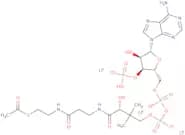
CAS:Coenzyme A trilithium salt is a synthetic cofactor that is used in the synthesis of long-chain fatty acids. It is membrane permeable and has minimal toxicity, making it an attractive candidate for treating hepatic steatosis. Coenzyme A trilithium salt also activates human mitochondrial beta-oxidation by increasing the availability of substrate and enhancing the expression of genes involved in beta-oxidation. This molecule has been shown to be effective in improving the symptoms of X-linked adrenoleukodystrophy (X-ALD) by stimulating creatine kinase activity and suppressing lysosomal accumulation of long chain fatty acids.
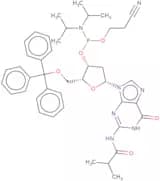
Formula:C21H33Li3N7O16P3SPurity:Min. 80%Color and Shape:White Off-White PowderMolecular weight:785.33 g/mol2'-Deoxy-N2-isobutyryl-5'-O-tritylguanosine 3'-CE phosphoramidite
2'-Deoxy-N2-isobutyryl-5'-O-tritylguanosine 3'-CE phosphoramidite is a novel nucleoside analogue that has antiviral and anticancer properties. This compound is synthesized by the reaction of 5'-O-tritylguanosine with 2'-deoxyribonucleosides in high purity. The final product is purified by chromatography and characterized using mass spectrometry and nuclear magnetic resonance spectroscopy.Purity:Min. 95%5-Chloro-7-(2-C-methyl-b-D-ribofuranosyl)-7H-pyrrolo[2,3-d]pyrimidin-4-amine
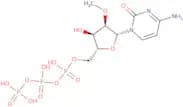
CAS:5-Chloro-7-(2-C-methyl-b-D-ribofuranosyl)-7H-pyrrolo[2,3-d]pyrimidin-4-amine is a novel nucleoside and phosphoramidite activator. It is synthesized from 2'-deoxyadenosine, 5'-chloropurine riboside, and 1,1'-bis(diisopropylphosphino)ferrocene. This compound has been shown to be an effective antiviral and anticancer agent in vitro.Formula:C12H15ClN4O4Purity:Min. 95%Molecular weight:314.72 g/mol2'-O-Methylcytidine-5'-triphosphate sodium salt - 100mM aqueous solution
CAS:2'-O-Methylcytidine-5'-triphosphate sodium salt is a synthetic, modified nucleoside analog. It can be used as an antiviral agent and anticancer drug to inhibit viral replication and tumor growth. 2'-O-Methylcytidine-5'-triphosphate sodium salt has the ability to activate cellular DNA synthesis. This compound also inhibits RNA polymerase activity in cancer cells, which inhibits the production of proteins vital for cell division. 2'-O-Methylcytidine-5'-triphosphate sodium salt can be used as a phosphoramidite building block for the synthesis of oligonucleotides with novel structures.Formula:C10H18N3O14P3·xNaPurity:Min. 95%Color and Shape:Clear LiquidMolecular weight:497.18 g/mol2-Thiouridine-5'-monophosphate triethylammonium salt - aqueous solution
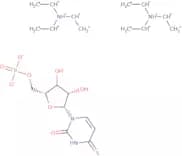
CAS:2-Thiouridine-5'-monophosphate triethylammonium salt is a synthetic nucleotide analog that inhibits the growth of cells by binding to the anticodon region, which blocks the entrance of amino acids into the ribosome. It also inhibits cell growth by preventing glycosidic bond formation and inhibiting purine metabolism. This drug has functional groups that allow it to be purified by chromatography and diffraction techniques. The drug is not active against bacteria that are resistant to glutamic acid, such as Mycobacterium tuberculosis or Mycobacterium avium complex. 2-Thiouridine-5'-monophosphate triethylammonium salt is a precursor for other drugs, such as cytidine 5'-triphosphate, which can be used in chemotherapy treatments.Formula:C21H43N4O8PSPurity:Min. 95%Color and Shape:Clear LiquidMolecular weight:542.63 g/molN6-Benzoyl-5'-O-DMT-2'-O-propynyladenosine 3'-CE phosphoramidite
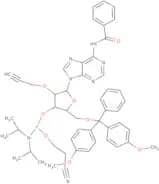
CAS:N6-Benzoyl-5'-O-DMT-2'-O-propynyladenosine 3'-CE phosphoramidite is a modified nucleoside, which is an important building block for DNA and RNA synthesis. It is synthesized by the condensation of 6-benzoyladenosine with 2'-O-propynyladenosin. The stability of this compound has been demonstrated by its resistance to hydrolysis and oxidation, while it can also be activated with a variety of activators, including NaBH4 or NaCNBH3. This novel nucleotide has shown anticancer activity in vivo and antiviral activity against HIV.
Formula:C50H54N7O8PPurity:Min. 95%Molecular weight:911.98 g/molN6-([6-Aminohexyl]carbamoylmethyl)adenosine 5'-triphosphate lithium salt
CAS:N6-([6-Aminohexyl]carbamoylmethyl)adenosine 5'-triphosphate lithium salt is a monophosphate nucleoside that has been modified with a 6-aminohexylaminocarbonyl group. It is an antiviral and anticancer agent that inhibits the synthesis of DNA, RNA, and proteins. N6-[(6-Aminohexyl)carbamoylmethyl]adenosine 5'-triphosphate lithium salt is novel and high quality.Formula:C18H32N7O14P3·xLiPurity:Min. 95%6-Chloro-7-deaza-9-(b-D-ribofuranosyl)purine
CAS:6-Chloro-7-deaza-9-(b-D-ribofuranosyl)purine is a novel nucleoside that has been shown to be an efficient activator of the transcription factor NFκB in vitro. 6-Chloro-7-deaza-9-(b-D-ribofuranosyl)purine is synthesized by phosphoramidite chemistry and purified by HPLC. It has been demonstrated to inhibit the replication of human immunodeficiency virus (HIV) in a dose dependent manner, which may be due to its ability to inhibit the synthesis of viral DNA and RNA. This product is highly pure and can be used for many purposes, including as a synthetic building block for DNA or as an antiviral drug.Formula:C11H12ClN3O4Purity:Min. 95%Color and Shape:White PowderMolecular weight:285.69 g/molN-Benzoyl-2'-deoxy-2'-fluoroadenosine, 3'-(hydrogen phosphonate)
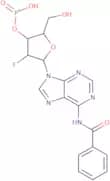
CAS:N-Benzoyl-2'-deoxy-2'-fluoroadenosine, 3'-(hydrogen phosphonate) is a novel nucleoside that inhibits the replication of virus by binding to viral RNA. It is synthesized by reacting 2'-deoxy-2'-fluoroadenosine with pentafluorophenyl phosphate in the presence of an activator such as dicyclohexylcarbodiimide or N-hydroxysuccinimide. The synthesis of N-benzoyl-2'-deoxy-2'-fluoroadenosine, 3'-(hydrogen phosphonate) can be accomplished using commercially available nucleosides and phosphoramidites.Purity:Min. 95%L-Cytidine
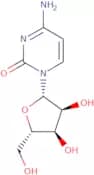
CAS:L-Cytidine is a nucleoside that is found in the body, and is also used as a drug. It is a precursor to other nucleosides, such as cytidine triphosphate, which is involved in DNA synthesis and repair. L-Cytidine has been shown to be effective against HIV infection by inhibiting the activity of the enzyme ns3 protease. This inhibition prevents viral proteins from being released from cells and infecting other cells. L-Cytidine has also been shown to be an inhibitor of creatine kinase and glycosidation, two enzymes that are necessary for cell metabolism. L-Cytidine has also been shown to be reactive with halides, which may lead to unwanted side effects.
Formula:C9H13N3O5Purity:Min. 95%Color and Shape:PowderMolecular weight:243.22 g/mol6-Amino-1-(2'-deoxy-b-D-ribofuranosyl)-4-hydrazino-1H-pyrazolo[3,4-d]pyrimidine
6-Amino-1-(2'-deoxy-b-D-ribofuranosyl)-4-hydrazino-1H-pyrazolo[3,4-d]pyrimidine (6ADRP) is a synthetic nucleoside that is used as an activator of ribonucleosides and diphosphates in DNA synthesis. 6ADRP has antiviral activity against HIV and herpes simplex virus type 1. It binds to the viral DNA polymerase and prevents the addition of nucleotides to the growing DNA strand. 6ADRP is phosphorylated by T7 kinase to form the active metabolite, 6-amino-1-(2'-deoxy-[alpha]-D-ribofuranosyl)-5'-triphosphate (6ATP), which inhibits viral replication by preventing the formation of RNA primers.Purity:Min. 95%Adenosine 5'-O-(3-thiotriphosphate), BODIPY FL thioester sodium salt - 5mM buffered aqueous solution
Adenosine 5'-O-(3-thiotriphosphate), BODIPY FL thioester sodium salt - 5mM buffered aqueous solution is a novel nucleoside that is synthesized from the corresponding phosphoramidites. This compound is an activator of DNA synthesis in mammalian cells and a potent inhibitor of viral replication. It has antiviral activity against HIV, herpes, and influenza viruses. The molecule can be modified to include different substituents such as fluoro, bromo, or chloro groups and has been shown to have anticancer activity.Formula:C24H27BF2N8Na3O13P3SPurity:Min. 95%Molecular weight:878.28 g/mol6-Amino-9-(2',3'-dideoxy-2'-fluoro-β-D-arabinofuranosyl)purine
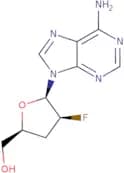
CAS:6-Amino-9-(2',3'-dideoxy-2'-fluoro-β-D-arabinofuranosyl)purine is a nucleoside analog that is used to treat HIV. It is a prodrug that undergoes phosphorylation by host cell kinases to form its active form, 2'-deoxycytidine monophosphate (2'DCPM). This drug has been shown to inhibit the replication of HIV in vitro and in vivo. 6-Amino-9-(2',3'-dideoxy-2'-fluoro-β-D-arabinofuranosyl)purine has antiviral potency against both group M and N HIV isolates. It also enhances polymerase chain reaction amplification of HIV DNA and can be used in tissue culture experiments to study the effects of drugs on the virus. Clinical trials have shown that 6-amino 9-(2',3'-dideoxy-2Formula:C10H12FN5O2Purity:Min. 95%Color and Shape:White PowderMolecular weight:253.24 g/mol2'-Deoxy-4'-thioadenosine
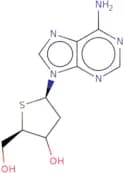
CAS:2'-Deoxy-4'-thioadenosine is a purine nucleoside that is synthesized from 4-thiouridine and phosphorylase. It is cytotoxic and has significant cytotoxicity against cultured cells. The cytotoxicity of 2'-deoxy-4'-thioadenosine was found to be due to its conversion to the triphosphate form in the cells, which inhibits both DNA synthesis and RNA synthesis. This drug also has an inhibitory effect on the growth of tumor cells by inhibiting ribosomal protein synthesis.Formula:C10H13N5O2SPurity:Min. 95%Molecular weight:267.31 g/mol2'-O-Acetyl-3'-azido-5'-O-(4-methylbenzoyl)-3'-deoxyuridine
CAS:2'-O-Acetyl-3'-azido-5'-O-(4-methylbenzoyl)-3'-deoxyuridine (2'AAZ) is a modified nucleoside that has antiviral and anticancer activities. This compound blocks the synthesis of DNA, RNA, and proteins. 2'AAZ inhibits cell proliferation by interfering with the replication of DNA and by inhibiting protein synthesis. It has been shown to inhibit the growth of cancer cells in vitro and in vivo. The IC50 values for 2'AAZ are 5 μM for herpes simplex virus type 1 (HSV1) infection in Vero cells, 4 μM for HSV2 infection in Vero cells, 3 μM for influenza A virus (H1N1) infection in MDCK cells, and 0.5 μM for human immunodeficiency virus type 1 (HIV-1) infection in CEM-SS cells.Purity:Min. 95%




![4,6-Diamino-2-(b-D-ribofuranosyl)-2H-pyrazolo[3,4-d]pyrimidine](/_next/image/?url=https%3A%2Fstatic.cymitquimica.com%2Fproducts%2F3D%2Fthumb-webp%2FND162980.webp&w=3840&q=75)













![5-Bromo-7-(2-C-methyl-b-D-ribofuranosyl)-7H-pyrrolo[2,3-d]pyrimidin-4-amine](/_next/image/?url=https%3A%2Fstatic.cymitquimica.com%2Fproducts%2F3D%2Fthumb-webp%2FNB14095.webp&w=3840&q=75)
![5-Chloro-7-(2-C-methyl-b-D-ribofuranosyl)-7H-pyrrolo[2,3-d]pyrimidin-4-amine](/_next/image/?url=https%3A%2Fstatic.cymitquimica.com%2Fproducts%2F3D%2Fthumb-webp%2FNC14096.webp&w=3840&q=75)
![N6-([6-Aminohexyl]carbamoylmethyl)adenosine 5'-triphosphate lithium salt](/_next/image/?url=https%3A%2Fstatic.cymitquimica.com%2Fproducts%2F3D%2Fthumb-webp%2FNA73270.webp&w=3840&q=75)

![6-Amino-1-(2'-deoxy-b-D-ribofuranosyl)-4-hydrazino-1H-pyrazolo[3,4-d]pyrimidine](/_next/image/?url=https%3A%2Fstatic.cymitquimica.com%2Fproducts%2F3D%2Fthumb-webp%2FNA162940.webp&w=3840&q=75)