Nucleosides
Found 3569 products of "Nucleosides"
2-Chloro-N,N-dimethyl-2’C-methyladenosine
CAS:2-Chloro-N,N-dimethyl-2’C-methyladenosine is a synthetic nucleoside that inhibits viral DNA synthesis. It is a modified deoxyribonucleoside that contains a chloro group at the 2’ position of the sugar ring and a methyl group at the 3’ position. This drug has antiviral activity against herpes simplex virus type 1 (HSV-1) and herpes simplex virus type 2 (HSV-2), respiratory syncytial virus (RSV), and influenza A virus. It also displays anticancer activity in vitro. This drug inhibits cancer cell growth by interfering with DNA replication and triggering apoptosis through inhibition of protein kinase C and activation of caspases.Purity:Min. 95%3’C-Methylguanosine
CAS:3’C-Methylguanosine is a nucleoside that inhibits viral replication by acting as an antiviral agent. It is also used in anticancer treatments, and has been shown to be a novel phosphoramidite activator of DNA synthesis. 3’C-Methylguanosine has a CAS number of 115303-89-4, and the molecular weight is 277.3 g/mol. This chemical compound has not been modified or reacted with any other substances, and is suitable for use in research and development.
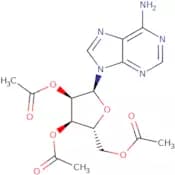
Purity:Min. 95%2,3,5-Tri-O-acetyl α-adenosine
CAS:2,3,5-Tri-O-acetyl α-adenosine is a nucleoside analog of adenosine that has been tri-acetylated. This molecule can be used in research.Formula:C16H19N5O7Purity:Min. 95%Color and Shape:PowderMolecular weight:393.35 g/molCytidine-2'-monophosphate sodium
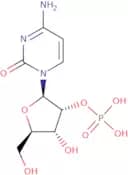
CAS:Cytidine-2'-monophosphate sodium (CMP) is a nucleotide that is used as a monophosphate or diphosphate. It can be used to synthesize DNA and RNA. CMP also has antiviral, anticancer, and high purity properties. CMP is an activator of DNA polymerases and helps in the synthesis of DNA. It has novel properties that make it different from other nucleotides, such as its modified sugar moiety.Formula:C9H12Na2N3O8PPurity:Min. 90%Color and Shape:PowderMolecular weight:367.18 g/mol2'-O-Propargylcytidine
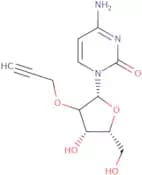
CAS:2'-O-Propargylcytidine is a novel nucleoside that has been modified from cytidine. It is designed to inhibit the activity of RNA polymerase and to be used in anticancer therapy. The synthesis of 2'-O-propargylcytidine has been achieved by modifying the nucleotide with propargylic chloride, which is then reacted with sodium cyanide. The resulting product is purified by column chromatography and recrystallization.
2'-O-Propargylcytidine is a phosphoramidite that can be used for DNA synthesis or as a monophosphate in RNA synthesis. This high purity product has a CAS number of 206552-85-4 and it can be used as an activator for ribonucleosides, such as adenosine, guanosine, uridine, cytidine, and thymidine.Formula:C12H15N3O5Purity:Min. 95%Color and Shape:PowderMolecular weight:281.26 g/mol6-(4-Morpholino)-9-(β-D-ribofuranosyl)-9H-purine
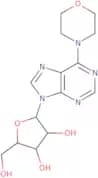
CAS:6-(4-Morpholino)-9-(β-D-ribofuranosyl)-9H-purine is a modified monophosphate analog of adenosine. It is an antiviral agent that inhibits the synthesis of nucleic acids in virus-infected cells, preventing viral replication and spread. 6-(4-Morpholino)-9-(β-D-ribofuranosyl)-9H-purine is also used as a radiosensitizer to treat cancer. This drug is synthesized by high purity, high quality and reliable suppliers.Formula:C14H19N5O5Purity:Min. 95%Color and Shape:PowderMolecular weight:337.33 g/mol5-Formyl-2'-O-methylcytidine
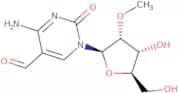
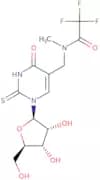
CAS:5-Formyl-2'-O-methylcytidine is a molecule that is involved in cellular processes such as DNA methylation, the addition of a methyl group to the 5 position of a cytosine residue. It has been shown to be an important epigenetic regulator and can be used as a strategy to treat tuberculosis. 5-Formyl-2'-O-methylcytidine is synthesized from guanine, which undergoes conversion into cytosine via enzymatic modification. This process is catalyzed by methyltransferase enzymes and it is usually carried out with S-adenosylmethionine (SAM) as the methyl donor. The product then converts back into guanine through deamination, which can be catalyzed by either adenine phosphoribosyltransferase or adenylate kinase.Formula:C11H15N3O6Purity:Min. 95 Area-%Color and Shape:PowderMolecular weight:285.25 g/mol5-(N-Methyl-N-trifluoroacetyl-aminomethyl)-2-thiouridine
CAS:5-(N-Methyl-N-trifluoroacetyl-aminomethyl)-2-thiouridine is a novel antiviral drug that inhibits the synthesis of viral DNA. It has been shown to be effective against HIV, herpes simplex virus and cytomegalovirus (CMV). 5-(N-Methyl-N-trifluoroacetyl-aminomethyl)-2-thiouridine is a nucleoside analogue that can be used as an activating agent in the synthesis of oligonucleotides and phosphoramidites. It has anticancer properties and may also have applications in gene therapy.Purity:Min. 95%6-Amino-3-iodo-4-methoxy-1-(b-D-ribofuranosyl)-1H-pyrazolo[3,4-d]pyrimidine
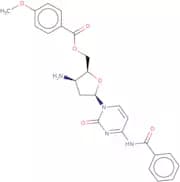
CAS:6-Amino-3-iodo-4-methoxy-1-(beta-D-ribofuranosyl)-1H-pyrazolo[3,4-d]pyrimidine is a synthetic nucleoside that has antiviral activity. It is an activator of DNA polymerase and can be used to synthesize DNA and RNA. 6AIOMP binds to the ribonucleotide reductases in cells and inhibits their activity. This prevents the conversion of ribonucleotides into deoxyribonucleotides, which are essential for DNA synthesis.Purity:Min. 95%3'-Amino-5'-O-p-anisoyl-N4-benzoyl-2',3'-dideoxycytidine
3'-Amino-5'-O-p-anisoyl-N4-benzoyl-2',3'-dideoxycytidine is a synthetic nucleoside that inhibits DNA synthesis by competitively inhibiting the activity of deoxycytidine kinase. 3'-Amino-5'-O-p-anisoyl-N4-benzoyl-2',3'-dideoxycytidine is an antiviral agent and has been shown to be effective against herpes simplex virus type 1 and varicella zoster virus. It has also been shown to have anticancer properties, which may be due to its ability to inhibit the growth of human breast cancer cells in culture.Formula:C24H24N4O6Purity:Min. 95%Molecular weight:464.47 g/mol2'-Deoxy-5'-O-DMT-5-fluoro-O4-(2,4,6-trimethylphenyl)uridine 3'-CE phosphoramidite
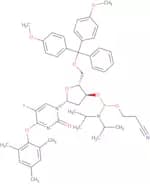
CAS:2'-Deoxy-5'-O-DMT-5-fluoro-O4-(2,4,6-trimethylphenyl)uridine 3'-CE phosphoramidite is a nucleoside that has high purity and high quality. It is an anti cancer agent that inhibits the growth of cells by preventing DNA synthesis and RNA synthesis. This product is also used as an antiviral agent for influenza A virus and herpes simplex virus type 1 (HSV1). 2'-Deoxy-5'-O-DMT-5-fluoro-O4-(2,4,6-trimethylphenyl)uridine 3'-CE phosphoramidite is synthesized from ribonucleosides and deoxyribonucleosides. It can be modified to produce monophosphate, diphosphate or triphosphate forms of the nucleotide.Formula:C48H56FN4O8PPurity:Min. 95%Molecular weight:866.95 g/mol5’-O-DMT-2’-b-C-methyladenosine
5’-O-DMT-2’-b-C-methyladenosine is a modified nucleoside with antiviral and anticancer activity. It is an activator of DNA synthesis, and can be used as a precursor for phosphoramidites for the synthesis of oligonucleotides. The 5’-O-DMT group in this compound may be replaced with other activating groups to synthesize different modified nucleosides.
Purity:Min. 95%8-(Allyloxy)guanosine
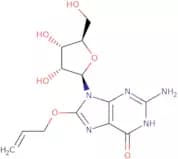
CAS:8-(Allyloxy)guanosine is a nucleoside analog. It is an antiviral and anticancer drug that inhibits DNA synthesis by inhibiting the enzyme DNA polymerase. 8-AOG also inhibits the expression of genes involved in inflammatory responses, such as lipoxygenase, cyclooxygenase 2, and 5-lipoxygenase. This compound has been shown to be effective against herpes simplex virus types 1 and 2, cytomegalovirus, Epstein-Barr virus, adenovirus type 3, and human immunodeficiency virus type 1 (HIV-1). 8-(Allyloxy)guanosine can be used to inhibit the tumor growth of human cancer cells in vitro. 8-(Allyloxy)guanosine has been shown to have a low toxicity to healthy cells in vitro and when administered in vivo.Formula:C13H17N5O6Purity:Min. 95%Color and Shape:PowderMolecular weight:339.3 g/molAdenosine - Endotoxin level below 1000 EU/g
CAS:Adenosine is a naturally-occurring organic solvent found in the human body. It has been shown to inhibit fibroid growth and to have an anti-inflammatory effect on the uterus. Adenosine is also a potent endogenous vasodilator, which may be due to its ability to activate adenosine receptors. In addition, it has been demonstrated that adenosine inhibits the synthesis of target enzymes such as collagenase and hyaluronidase. The uptake of adenosine by cells is inhibited by nevirapine, which is an HIV protease inhibitor. This inhibition leads to increased extracellular levels of adenosine, which stimulates phosphorylation of extracellular-regulated kinases (ERKs) and decreases histamine release from mast cells. The ERKs are activated in response to many stimuli including cytokines, growth factors, and stressors such as UV light or heat shock.BR> In vitro studies using human tissue have shown that adFormula:C10H13N5O4Purity:(Titration) 99.0 To 101.0%Color and Shape:White Off-White PowderMolecular weight:267.24 g/mol3’-deoxy-3’-fluorosangivamycin
CAS:3’-deoxy-3’-fluorosangivamycin is a modified deoxyribonucleoside with antiviral and anticancer properties. It is an activator of DNA polymerase. 3’-deoxy-3’-fluorosangivamycin has been shown to inhibit the replication of human immunodeficiency virus type 1 (HIV-1) in the calf thymus DNA system. This drug is also effective against other viruses, such as herpes simplex virus type 2 (HSV-2), cytomegalovirus (CMV), and influenza A virus. 3′-deoxy-3′-fluorosangivamycin binds to viral DNA and inhibits nucleotide incorporation, leading to inhibition of viral RNA synthesis and protein synthesis.Purity:Min. 95%L-Thymidine
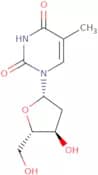
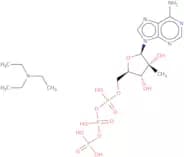
CAS:L-Thymidine is an antiviral drug that is used in the treatment of chronic hepatitis. It has been shown to be active against a range of viruses, including HIV, HSV, and HBV. L-Thymidine can also be used to treat patients with cancer as an anti-cancer agent. L-Thymidine is a prodrug that is converted into thymidine triphosphate (TTP), which inhibits viral DNA polymerase by competitive inhibition. The antiviral activity of L-Thymidine may be due to its ability to inhibit the synthesis of viral proteins required for viral replication by interfering with the protein production process or by inhibiting the formation of dsDNA during reverse transcription.Formula:C10H14N2O5Purity:Min. 95%Color and Shape:PowderMolecular weight:242.23 g/mol2'-C-Methyladenosine 5'-triphosphate triethyl ammonium salt - Aqueous solution
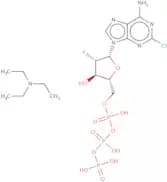
CAS:2'-C-Methyladenosine 5'-triphosphate triethyl ammonium salt is a synthetic nucleotide analog of adenosine triphosphate (ATP), modified at the 2'-carbon of the ribose ring. This molecule has potential applications in biochemical, enzymatic, and antiviral research, particularly in studies involving RNA synthesis and viral RNA polymerases.
Formula:C35H79N9O13P3Purity:Min. 95%Color and Shape:Colorless PowderMolecular weight:926.98 g/mol2’-O-Acetyl-8-bromo-7-cyano-7-deaza-3’-deoxy-3’-fluoro-5’-O-toluoyladenosine
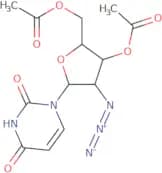
2'-O-Acetyl-8-bromo-7-cyano-7-deaza-3'-deoxy-3'-fluoro-5'-O-[toluoyl]adenosine (ABT) is a modified nucleoside that has anticancer and antiviral properties. ABT is a monophosphate nucleotide with an acetyl group at the 2' position of the ribose and a toluoyl group on the 7 position of the adenine moiety. In vitro, ABT inhibits tumor proliferation in breast cancer cells and suppresses viral replication in herpes simplex virus type 1 (HSV1) infected cells. ABT also has potential as a novel therapeutic agent for treating cancers and other diseases caused by HSV1 infection.Purity:Min. 95%3’,5’-Di-O-acetyl-2’-azido-2’-deoxyuridine
CAS:Please enquire for more information about 3’,5’-Di-O-acetyl-2’-azido-2’-deoxyuridine including the price, delivery time and more detailed product information at the technical inquiry form on this pagePurity:Min. 95%5'-Carboxy-2-chloro-2'-3'-O-isopropylideneadenosine
CAS:5'-Carboxy-2-chloro-2'-3'-O-isopropylideneadenosine is a monophosphate nucleoside that inhibits viral replication by inhibiting the synthesis of both DNA and RNA. This compound is used to treat cancers such as leukemia, lymphoma, and multiple myeloma. It also has antiviral properties that are active against herpes simplex virus (HSV) and human cytomegalovirus (CMV). 5'-Carboxy-2-chloro-2'-3'-O-isopropylideneadenosine is a modified nucleoside with a phosphoramidite group on the 2' position of the ribose sugar.Formula:C13H14ClN5O5Purity:Min. 95%Color and Shape:Off-White PowderMolecular weight:355.74 g/molPseudothymidine
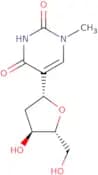
CAS:Pseudothymidine is the nucleobase analog of thymidine. It is a synthetic substance that has been used in the polymerase chain reactions (PCRs) to form DNA molecules. Pseudothymidine is not naturally found in cells and can be used as a substitute for thymidine during PCR to make more copies of DNA sequences. It has been shown that pseudothymidine can be incorporated into DNA without disrupting the polymerase chain reaction. The thermal denaturation of pseudothymidine is 10 °C lower than that of thymidine, allowing it to be used at higher temperatures with less risk of degradation.Formula:C10H14N2O5Purity:Min. 95%Color and Shape:PowderMolecular weight:242.23 g/molN6-Benzoyl-2'-C-methyladenosine
N6-Benzoyl-2'-C-methyladenosine is synthetic and has antiviral properties. It is a nucleoside that belongs to the group of modified nucleosides. This compound can be used as an activator for DNA synthesis and as a novel monophosphate, diphosphate, or triphosphate. N6-Benzoyl-2'-C-methyladenosine is also available in high purity, with CAS No., and at a competitive price.Purity:Min. 95%2,3'-Anhydrouridine 5'-CE phosphoramidite
2,3'-Anhydrouridine 5'-CE phosphoramidite is a novel modified phosphoramidite that can be used in the synthesis of ribonucleosides and DNA. It has antiviral activity, and is being studied as an anticancer drug. 2,3'-Anhydrouridine 5'-CE phosphoramidite has been shown to inhibit the replication of HIV-1 and herpes simplex virus type 1 (HSV-1). The nucleoside analogs are being studied for their potential use in chemotherapy.Formula:C18H27N4O6PPurity:Min. 95%Molecular weight:426.41 g/molGuanosine 3',5'-cyclic monophosphate sodium salt
CAS:Guanosine 3',5'-cyclic monophosphate sodium salt (cGMP) is a cyclic nucleotide that is involved in the regulation of many cellular processes. It binds to specific guanine nucleotide-binding proteins (G proteins) and activates protein kinase A, which regulates glucose metabolism and energy production. cGMP also affects neuronal death, axonal growth, and bowel disease by acting as a cyclase inhibitor or activating the immune system. It has been shown to reduce the severity of infectious diseases such as HIV and malaria by activating the immune system.Formula:C10H11N5NaO7PPurity:Min. 95%Color and Shape:PowderMolecular weight:367.19 g/mol3'-O-Aminoacetoxy-2'-deoxycytidine
Please enquire for more information about 3'-O-Aminoacetoxy-2'-deoxycytidine including the price, delivery time and more detailed product information at the technical inquiry form on this pageFormula:C12H18N4O4Purity:Min. 98 Area-%Color and Shape:PowderMolecular weight:282.30 g/mol5'-O-DMT-α-thymidine
5'-O-DMT-a-thymidine is a modified nucleoside that is used in the synthesis of DNA and RNA. This product is a high quality and pure monophosphate, which has been modified to reduce its potential for activation by phosphatases. It is suitable for use in anticancer drugs and antiviral agents.
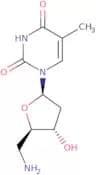
Formula:C31H32N2O7Purity:Min. 95%Molecular weight:544.6 g/mol5'-Amino-5'-deoxythymidine
CAS:5'-Amino-5'-deoxythymidine is a nucleoside that is structurally related to thymidine. It has been shown to be a substrate for fatty acid synthase, which is a key enzyme in the synthesis of membrane lipids. 5'-Amino-5'-deoxythymidine has been shown to induce tumorigenesis in mouse bladder carcinoma cells. This compound also does not form stable complexes with DNA duplexes and can inhibit uptake of thymidylate into cells by competitive inhibition. 5'-Amino-5'-deoxythymidine binds to the cell surface and acts as an antibody response modifier.Formula:C10H15N3O4Purity:Min. 98 Area-%Color and Shape:White Off-White PowderMolecular weight:241.24 g/mol2',3',5'-Tri-O-benzoyl-N6-benzyl-2'-C-methyladenosine
CAS:2',3',5'-Tri-O-benzoyl-N6-benzyl-2'-C-methyladenosine is an adenosine analog for potential use in research into antiviral drug development or nucleoside analogs.Formula:C39H33N5O7Purity:Min. 95%Color and Shape:PowderMolecular weight:683.71 g/mol3’-β-Azido-2’,3’-dideoxy-5-fluorouridine
CAS:Please enquire for more information about 3’-beta-Azido-2’,3’-dideoxy-5-fluorouridine including the price, delivery time and more detailed product information at the technical inquiry form on this page
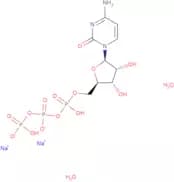
Purity:Min. 95%CTP 2Na
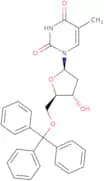
CAS:CTP serves as a molecule of high energy. It acts as a coenzyme in glycerophospholipid biosynthesis and protein glycosylation.Formula:C9H14N3Na2O14P3Purity:Min. 95.0 Area-%Color and Shape:White PowderMolecular weight:527.12 g/mol5'-O-Tritylthymidine
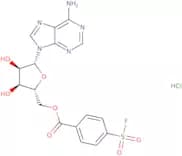
CAS:5'-O-Tritylthymidine is a nucleoside that is found in human mitochondrial DNA. It is synthesized from uridine by the enzyme thymidylate synthase and can be converted to thymine by the enzyme thymidine phosphorylase. 5'-O-Tritylthymidine has been shown to inhibit cancer cell growth, but its mechanism of action is not clear. It may inhibit xylene production. 5'-O-Tritylthymidine also causes an increase in p53 activity, which may lead to apoptosis of cancer cells.Formula:C29H28N2O5Purity:Min. 95%Molecular weight:484.54 g/mol5'-(4-Fluorosulfonylbenzoyl)adenosine HCI
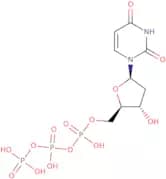
CAS:ATP analog; covalent inhibitor of anthrax edema factorFormula:C17H17ClFN5O7SPurity:Min. 95%Color and Shape:White Off-White PowderMolecular weight:489.86 g/mol2'-Deoxyuridine-5'-triphosphate trisodium
CAS:2'-Deoxyuridine-5'-triphosphate trisodium salt is a fluorophore that is excited by the absorption of light at wavelengths of 365 nm. The emission spectrum ranges from 380 to 500 nm and has a maximum at 480 nm. 2'-Deoxyuridine-5'-triphosphate trisodium salt can be used as a labeling agent for metal ion, molecule, or macrocyclic ligand. It can also be used as an acceptor in fluorescence energy transfer experiments.Formula:C9H15N2O14P3•Na3Purity:Min. 95%Color and Shape:PowderMolecular weight:537.11 g/molClofarabine 5'-triphosphate triethylammonium salt
CAS:Clofarabine is a nucleoside analog that is used to treat various types of cancer, including leukemia, lymphoma, and solid tumours. Clofarabine has been shown to have minimal toxicity in healthy cells and is usually well tolerated by patients. It acts by inhibiting the synthesis of DNA in rapidly dividing cells. This effect can be synergistic with other anti-cancer agents such as the cytotoxic agent Bleomycin. Clofarabine binds to an intracellular target and inhibits DNA synthesis by blocking the enzyme DNA polymerase. Inhibition of this enzyme leads to cell death. Clofarabine has been tested in pediatric patients from age 1 month old up to 18 years old. The drug has been found to be safe for use in this population.Formula:C10H14ClFN5O12P3Purity:Min. 95%Color and Shape:PowderMolecular weight:543.62 g/molN3-Methyl-2'-O-methyluridine
CAS:2'-O-methyluridine is an antiviral nucleoside that is used as a phosphoramidite in the synthesis of oligonucleotides. It has been shown to inhibit viral replication, and has been found to be effective in treating HIV-1 by inhibiting reverse transcriptase. N3-Methyl-2'-O-methyluridine also inhibits DNA synthesis and cell proliferation, and may be useful for the treatment of cancer. This modified nucleoside has been synthesized from uracil and contains a methyl group at the 3' position. The methyl group prevents 2'-O-methyluridine from being activated by cellular thymidylate synthase, which normally converts deoxyribonucleotides into ribonucleotides. This novel nucleotide has not yet been used in clinical trials but it may provide an alternative to other drugs used for cancer treatments.
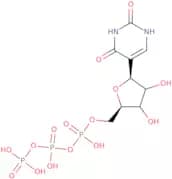
Formula:C11H16N2O6Purity:Min. 95 Area-%Color and Shape:White Off-White PowderMolecular weight:272.25 g/molPseudouridine-5'-triphosphate trisodium salt - 100mM aqueous solution
CAS:Pseudouridine-5'-triphosphate trisodium salt (PUR) is a nucleoside analogue that inhibits the synthesis of RNA. PUR is also a potent inhibitor of DNA synthesis and can be used to inhibit angiogenesis. PUR has been shown to have an effect on vascular endothelial cells, platelets, and cancer cells in vitro. This drug targets the vessels and other target cells such as those found in cardiovascular diseases, ovary, and cancer. PUR has been shown to be effective in vivo studies using mice models for the treatment of osteogenic sarcoma.Formula:C9H12N2O15P3Na3Purity:Min. 95 Area-%Color and Shape:Colorless PowderMolecular weight:550.09 g/mol3'-O-Acetyl-2'-deoxy-N2-isobutyrylguanosine
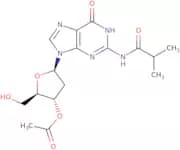
CAS:3'-O-Acetyl-2'-deoxy-N2-isobutyrylguanosine is a modified nucleoside that can be used as an antiviral agent. It is a phosphoramidite that is activated by diphosphate and has been shown to inhibit DNA replication in vitro. 3'-O-Acetyl-2'-deoxy-N2-isobutyrylguanosine also has anticancer activity and can be used to treat leukemia, lymphoma, and myeloma. This high quality product is synthesized from natural deoxyribonucleosides and has a purity of > 98%.Formula:C16H21N5O6Purity:Min. 95%Molecular weight:379.37 g/mol2'-Deoxy-5-(2-hydroxyethyl)-2',3'-di-O-toluoyluridine
2'-Deoxy-5-(2-hydroxyethyl)-2',3'-di-O-toluoyluridine is a novel modified nucleoside with antiviral and anticancer activities. It is synthesized from 2'-deoxyuridine monophosphate, which is activated with bis(trimethylsilyl)acetamide (BSA). This nucleoside has been shown to inhibit the growth of cancer cells in vitro and in vivo.Purity:Min. 95%3'-O-Aminoacetoxythymidine
Amino functionalised thymidineFormula:C13H21N4O4Purity:Min. 98 Area-%Color and Shape:PowderMolecular weight:297.33 g/mol5’-O-Benzoyl-3’-O-(4-methoxybenzoyl)-2’-O,4’-C- methyleneuridine
5'-O-Benzoyl-3'-O-(4-methoxybenzoyl)-2'-O,4'-C-methyleneuridine is a nucleoside that is synthesized from 5'-O-benzoyl-2'-deoxyadenosine and 4'-methoxybenzoyl chloride. It has antiviral and anticancer properties. 5' - O - benzoyl - 3' - O - (4-methoxybenzoyl) - 2' - O,4' - C methyleneuridine is a novel nucleoside with anti-cancer and antiviral effects. It can also be used as an activator for the synthesis of oligonucleotides or as a ribonucleotide phosphoramidite. The chemical name for this compound is 5’ – O – benzoyl – 3’ – O – (4 methoxybenzoyl) – 2Purity:Min. 95%3'-O-Aminoacetoxy-2'-deoxyguanosine
Please enquire for more information about 3'-O-Aminoacetoxy-2'-deoxyguanosine including the price, delivery time and more detailed product information at the technical inquiry form on this page
Formula:C13H17N6O4Purity:Min. 98 Area-%Color and Shape:PowderMolecular weight:321.32 g/mol3'-O-Benzoylthymidine
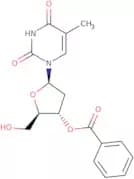
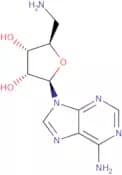
CAS:3'-O-Benzoylthymidine is a nucleoside that is used in the synthesis of DNA. It is a monomeric compound that contains two deoxyribose sugars and one deoxyribonucleotide. 3'-O-Benzoylthymidine interacts with the phosphite triester, which stabilizes the nucleobase. This reaction leads to the formation of a glycosidic bond between the phosphate group and the 5' carbon atom in the sugar ring of 3'-O-benzoylthymidine. The chloride ion is then added to form an intermediate compound with a reactive electrophilic carbon center that can be used for subsequent reactions with other compounds or nucleobases. 3'-O-Benzoylthymidine can also be conjugated to other compounds through covalent bonds, such as phosphonates, to form more complex molecules.Formula:C17H18N2O6Purity:Min. 95%Color and Shape:PowderMolecular weight:346.34 g/mol5'-Amino-5'-deoxyadenosine hydrochloride
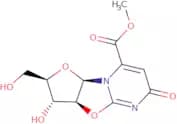
CAS:5'-Amino-5'-deoxyadenosine hydrochloride (5'-ADeA) is a nucleotide that is synthesized from ribose 5-phosphate and adenosine monophosphate. It has been shown to have potential as a biomarker for skin cancer. The synthesis of 5'-ADeA is catalyzed by the enzyme caffeic acid 4-monooxygenase, which converts caffeic acid into 5'-ADeA. This reaction requires molecular oxygen, NADPH, and iron ions. The activity of this enzyme can be inhibited by sodium carbonate or basic fibroblast growth factor (bFGF). This drug has been shown to have anti-inflammatory effects in vivo.Formula:C10H14N6O3Purity:Min. 95 Area-%Color and Shape:PowderMolecular weight:266.26 g/mol2,2'-Anhydro-6-methoxycarbonyl-b-D-arabinofuranosyl uracil
CAS:2,2'-Anhydro-6-methoxycarbonyl-b-D-arabinofuranosyl uracil is a novel and high purity anticancer and antiviral agent. It is an activator that has been shown to exhibit antineoplastic activity in vitro. The compound also inhibits the formation of RNA and DNA, which are necessary for the replication of cells. 2,2'-Anhydro-6-methoxycarbonyl-b-D-arabinofuranosyl uracil is a modified nucleoside that has been synthesized by phosphoramidite chemistry. This product can be used for research purposes and as a starting material for the synthesis of other compounds with similar structures.Formula:C11H12N2O7Purity:Min. 95%Molecular weight:284.22 g/mol3’-b-C-Methylcytidine
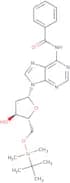
CAS:3’-b-C-Methylcytidine is a nucleoside analog that inhibits the viral enzyme reverse transcriptase and is used as an antiviral agent. 3’-b-C-Methylcytidine binds to DNA and prevents RNA synthesis, which is essential for viral replication. It has been shown to inhibit the growth of cultured cells from human breast cancer and melanoma, suggesting that it also has anticancer activity. 3’-b-C-Methylcytidine can be synthesized in high purity and at high yield using phosphoramidites. This nucleoside analog may be useful in clinical applications due to its ability to activate transcription, which may lead to novel therapeutic strategies.Purity:Min. 95%N6-Benzoyl-5'-O-tert-butyldimethylsilyl-2'-deoxyadenosine
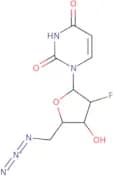
CAS:N6-Benzoyl-5'-O-tert-butyldimethylsilyl-2'-deoxyadenosine is an anti-cancer drug that is used to inhibit the growth of cancer cells in vitro. It has been shown to induce apoptosis in human leukemia cells and may be a novel anticancer agent. This compound has also been shown to have antiviral activity against HIV, herpes simplex virus type 2, hepatitis B virus, and influenza A virus. N6-Benzoyl-5'-O-tert-butyldimethylsilyl-2'-deoxyadenosine is phosphoramidites are synthesized by treatment of 2'-deoxyadenosine with diphosphate in the presence of trimethylammonium tetrafluoroborate or hexafluoroantimonate. The final product contains a benzoyl moiety on the 6' position and a tertiary butyl groupFormula:C23H31N5O4SiPurity:Min. 97 Area-%Color and Shape:White Off-White PowderMolecular weight:469.61 g/mol5'-Azido-2',5'-dideoxy-2'-fluorouridine
CAS:5'-Azido-2',5'-dideoxy-2'-fluorouridine is a novel nucleoside that is a phosphoramidite. It is an antiviral agent that has been shown to inhibit the synthesis of RNA in cells. This drug also inhibits the growth of cancer cells and can be used for the treatment of leukemia, lymphoma, and myeloma. 5'-Azido-2',5'-dideoxy-2'-fluorouridine has been shown to bind to DNA through its azide group and form a stable covalent bond with the N7 position of guanine. This bond prevents the incorporation of adenosine triphosphate (ATP) into DNA, which prevents DNA transcription and replication.Formula:C9H10FN5O4Purity:Min. 95%Molecular weight:271.21 g/molb-Nicotinamide adenine dinucleotide phosphate, reduced tetra(cyclohexylammonium)
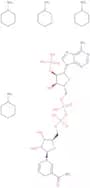
CAS:b-Nicotinamide adenine dinucleotide phosphate, reduced tetra(cyclohexylammonium), or NADPH, is involved in redox reactions, where it acts as an electron donor. NADPH is essential for anabolic reactions, such as lipid and cholesterol biosynthesis, and fatty acid chain elongation. It also plays a significant role in antioxidation mechanisms, protecting cells from oxidative stress by neutralizing reactive oxygen species (ROS) and regenerating antioxidants like glutathioneFormula:C21H30N7O17P3·4C6H13NPurity:Min. 90 Area-%Color and Shape:Slightly Yellow PowderMolecular weight:1,142.12 g/mol2-Chloro-2',3'-O-isopropylideneadenosine
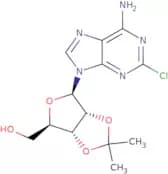
CAS:2-Chloro-2',3'-O-isopropylideneadenosine is a novel, anti-cancer drug that inhibits the synthesis of DNA. It is a phosphoramidite monophosphate with a molecular weight of 288.08 g/mol and an empirical formula C6H12ClNO5PS. The chemical name for this compound is 2-chloro-N-(2,3-diisopropyl)adenine diphosphate. This product has not yet been approved by the FDA for use in humans or animals.Formula:C13H16ClN5O4Purity:Min. 95%Color and Shape:PowderMolecular weight:341.75 g/mol2’,3’,5’-Tri-O-benzoyl-2’C-methyl-5-methoxyuridine
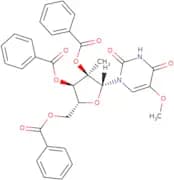
CAS:2’,3’,5’-Tri-O-benzoyl-2’C-methyl-5-methoxyuridine is a modified nucleoside that is used as an anticancer drug. It is synthesized from 2’,3’,5’triphosphate and 2’C-methyl-5-methoxyuridine. This compound is used to treat leukemia and other cancers by inhibiting the synthesis of DNA. Inhibiting DNA synthesis prevents the reproduction of cancer cells. The chemical structure of this compound was first published in 2007.Purity:Min. 95%



![6-Amino-3-iodo-4-methoxy-1-(b-D-ribofuranosyl)-1H-pyrazolo[3,4-d]pyrimidine](/_next/image/?url=https%3A%2Fstatic.cymitquimica.com%2Fproducts%2F3D%2Fthumb-webp%2FNA162944.webp&w=3840&q=75)