Nucleosides
Nucleosides are fundamental building blocks of nucleic acids, composed of a nitrogenous base attached to a sugar molecule. In this section, you can find a wide variety of nucleosides essential for research in molecular biology, biochemistry, and pharmacology. These compounds play crucial roles in the synthesis of DNA and RNA, and are also vital in various metabolic processes. Nucleosides are used in studying genetic material, developing antiviral and anticancer therapies, and understanding cellular mechanisms. At CymitQuimica, we provide high-quality nucleosides to support your research and development needs, ensuring purity and reliability for your experimental applications.
Found 3567 products of "Nucleosides"
Sort by
Purity (%)
0
100
|
0
|
50
|
90
|
95
|
100
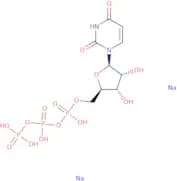
Uridine 5'-triphosphate disodium
CAS:<p>Uridine 5'-triphosphate disodium salt is a supramolecular complex that binds to gold nanoparticles. The binding of uridine 5'-triphosphate disodium salt to gold nanoparticles can be used for the detection of metal ions through the photometric method. Uridine 5'-triphosphate disodium salt has been shown to inhibit the glutathione-dependent reduction of vitamin B12, which is a key step in methionine synthesis and folate metabolism. This inhibition may lead to a decrease in protein synthesis, ATP production, and cell division.</p>Formula:C9H15N2O15P3•Na2Purity:Min. 95%Color and Shape:PowderMolecular weight:530.12 g/molPoly(2'-O-Methyladenosine 5'-monophosphate) sodium
CAS:<p>Please enquire for more information about Poly(2'-O-Methyladenosine 5'-monophosphate) sodium including the price, delivery time and more detailed product information at the technical inquiry form on this page</p>Formula:(C11H16N5O7P)x•NaxPurity:Min. 95%N1-Methyladenosine-5’-monophosphate
CAS:<p>The N1-methyladenosine is a reversible modification in tRNA, mRNA and long non-coding RNA</p>Formula:C11H16N5O7PPurity:Min. 95%Color and Shape:PowderMolecular weight:361.25 g/molN6-Propargyladenosine-5'-triphosphate sodium salt
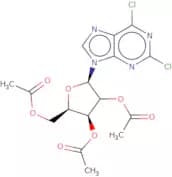
<p>N6-Propargyladenosine-5'-triphosphate sodium salt is a phosphoramidite that is useful in the synthesis of oligodeoxyribonucleotides and DNA. This novel nucleotide has been shown to be an activator for mammalian cells and to inhibit tumor growth in mice. N6-Propargyladenosine-5'-triphosphate sodium salt is synthesized by reacting propargylamine with ATP, which produces a novel nucleotide with anti-cancer properties.</p>Formula:C13H18N5O13P3Purity:Min. 95%Molecular weight:545.23 g/mol2,6-Dichloro-9-(2',3',5'-tri-O-acetyl-b-D-ribofuranosyl)purine
CAS:<p>2,6-Dichloro-9-(2',3',5'-tri-O-acetyl-b-D-ribofuranosyl)purine is a protected nucleoside analog which can possibly be used as a synthetic intermediate in the preparation of purine-based nucleosides, especially in medicinal chemistry and nucleic acid synthesis. This compound is composed of 2,6-Dichloropurine – a modified purine base where chlorine atoms replace the hydrogen atoms at positions 2 and 6 and a β-D-ribofuranose. The 2', 3', and 5' hydroxyl groups on the ribose are protected with acetyl groups (–OAc). These tri-O-acetyl protections prevent unwanted reactions during synthetic steps.</p>Formula:C16H16Cl2N4O7Purity:Min. 95%Color and Shape:White PowderMolecular weight:447.23 g/mol2'-O-Methylguanosine 5'-monophosphate triethylammonium
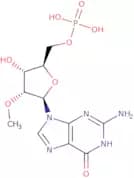
CAS:<p>2'-O-Methylguanosine 5'-monophosphate triethylammonium salt is a phosphate group containing nucleotide that is found in human urine. It can be used as a biomarker for the detection of non-Hodgkin's lymphoma. 2'-O-Methylguanosine 5'-monophosphate triethylammonium salt has been shown to coelute with guanosine in urine samples from patients with cancer, and also shows sensitivity to elements such as arsenic, mercury, and lead. This nucleotide is methylated in many types of cancer cells, which makes it useful for radioimmunoassays and antibody production.</p>Formula:C11H16N5O8PPurity:Min. 95%Color and Shape:PowderMolecular weight:377.25 g/mol1-(8-Phosphonooctyl)-7-deazaxanthine
CAS:<p>1-(8-Phosphonooctyl)-7-deazaxanthine is an organic compound that inhibits endothelial cell growth. It has been shown to inhibit the phosphorylation of intracellular proteins, leading to a reduction in the activity of tyrosine kinases and protein kinase C. 1-(8-Phosphonooctyl)-7-deazaxanthine is also a noncompetitive inhibitor of phosphonate metabolism, with an inhibitory potency of 0.1 μM. This compound has been shown to be an anticancer agent in vitro and in vivo, but not as potent as other known drugs such as doxorubicin or cisplatin.</p>Formula:C14H22N3O5PPurity:Min. 95%Molecular weight:343.32 g/mol2′-O-(2-Methoxy-2-oxoethyl)-5-methyl-uridine
CAS:<p>2′-O-(2-Methoxy-2-oxoethyl)-5-methyl-uridine is a nucleoside that can be used as an anticancer drug and antiviral agent. It has shown potent in vitro cytotoxic activity against human leukemia cells and other cancer cell lines, including breast, prostate, ovarian, and colon cancers. 2′-O-(2-Methoxy-2-oxoethyl)-5-methyl-uridine also has good antiherpetic potential. This compound is a novel and synthetic nucleoside with high purity, high quality, and excellent stability. It is soluble in water, methanol, ethanol, acetone, acetonitrile; slightly soluble in chloroform; insoluble in ether or hexane. CAS No. 149301-23-5</p>Formula:C13H18N2O8Purity:Min. 95%Molecular weight:330.29 g/mol2′-O-[2-(Methylamino)-2-oxoethyl]adenosine
CAS:<p>2′-O-[2-(Methylamino)-2-oxoethyl]adenosine is a nucleoside that can be used as an anticancer, antiviral, and anticoagulant. It is synthesized from the natural nucleosides adenosine and cytidine. 2′-O-[2-(Methylamino)-2-oxoethyl]adenosine has been shown to inhibit the growth of tumor cells in vitro. This compound also inhibits viral replication by inhibiting DNA synthesis through inhibition of ribonucleotide reductase and deoxyribonucleotide reductase. 2′-O-[2-(Methylamino)-2-oxoethyl]adenosine is phosphorylated by ATP to produce 2′-O-[2-(methylamino)-2-oxoethyl]adenosinophosphate (AMP). AMP then binds to the purinergic receptor P1, which leads to</p>Formula:C13H18N6O5Purity:Min. 95%Molecular weight:338.32 g/mol9-(b-D-Arabinofuranosyl)guanine - Bio-X ™
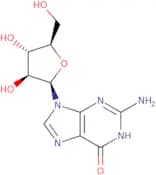
CAS:<p>9-(b-D-Arabinofuranosyl) guanine is a purine nucleoside in which guanine is attached to arabinofuranose via a beta-N(9)-glycosidic bond. 9-(b-D-Arabinofuranosyl) guanine binds to the phosphate groups in DNA and inhibits the synthesis of DNA causing cell death. It also has antineoplastic properties.</p>Formula:C10H13N5O5Purity:Min. 95%Color and Shape:PowderMolecular weight:283.24 g/mol4',5'-Didehydro-5'-deoxy-2'-O-methyluridine
CAS:<p>4',5'-Didehydro-5'-deoxy-2'-O-methyluridine is a novel nucleoside phosphoramidite. It is a monophosphate, high purity and high quality. 4',5'-Didehydro-5'-deoxy-2'-O-methyluridine is an activator of DNA polymerase and can be used in the synthesis of DNA. 4',5'-Didehydro-5'-deoxy-2'-O-methyluridine also has antiviral properties and can be used to synthesize deoxyribonucleosides. It has been modified to have a diphosphate group at the 5' end, which allows it to be incorporated into DNA during synthesis.</p>Formula:C11H13NO5Purity:Min. 95%Molecular weight:239.22 g/molInosine 5'-diphosphate trisodium
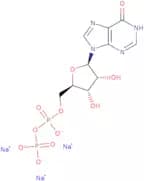
CAS:<p>Inosine 5'-diphosphate trisodium salt is an antiviral compound that is used to inhibit the replication of many viruses, including herpes, influenza, and HIV. It has been shown to be effective against cancer cells in vitro. Inosine 5'-diphosphate trisodium salt is a modified nucleotide that is used as a phosphoramidite for DNA synthesis. This compound can also be used as an activator for deoxyribonucleoside triphosphates. It has been shown to have anticancer activity in vivo and in vitro and also inhibits viral DNA synthesis by preventing the formation of ribonucleotide triphosphates from ribonucleotides. The molecular weight of this compound is 390.4 g/mol and its CAS number is 81012-88-6.</p>Formula:C10H11N4O11P2•Na3Purity:Min. 95%Color and Shape:PowderMolecular weight:494.13 g/mol2'-O-Methyladenosine 5'-triphosphate lithium - 100 mM aqueous solution
CAS:<p>2'-O-Methyladenosine 5'-triphosphate lithium is a novel nucleotide that has been synthesized to act as an antiviral and anticancer agent. It can be used in the production of ribonucleosides, deoxyribonucleosides, and modified DNA. It is also a high quality phosphoramidite that can be used in the synthesis of DNA and RNA. 2'-O-Methyladenosine 5'-triphosphate lithium has been shown to inhibit the replication of HIV-1 and other viruses by inhibiting viral transcription. It is also active against cancer cells, with an IC50 value of 0.2 μM for HL-60 cells.</p>Formula:C11H18N5O13P3•Li3Purity:Min. 95%Molecular weight:542 g/molAcetyl coenzyme A trilithium
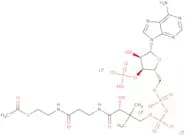
CAS:<p>Acetyl coenzyme A trilithium salt (ACAT) is a prodrug that is metabolized in vivo to the active form, acetyl coenzyme A. Acetyl coenzyme A has been shown to inhibit the growth of human carcinoma cells and some typhimurium strains. It binds to cytochrome P450, which is involved in the oxidation of acetate and other organic substrates. ACAT has also been shown to be effective against squamous cell carcinoma by inhibiting the production of reactive oxygen species (ROS) in these cells. The anticancer activity of ACAT may be due to its ability to inhibit the conversion of amines into heterocyclic amines, which are known carcinogens.</p>Formula:C23H35Li3N7O17P3SPurity:Min. 95%Color and Shape:White PowderMolecular weight:827.37 g/molAdenosine 5'-phosphosulfate triethylamine salt
<p>Please enquire for more information about Adenosine 5'-phosphosulfate triethylamine salt including the price, delivery time and more detailed product information at the technical inquiry form on this page</p>Formula:C16H30N6O10PSPurity:Min. 95%Molecular weight:529.46 g/mol2′-O-2-Methoxy-2-oxoethyl-5-methyl-cytidine
<p>2′-O-2-Methoxy-2-oxoethyl-5-methylcytidine (2′OMeC) is a synthetic ribonucleoside that is used in DNA synthesis. 2′OMeC is a nucleotide analog that inhibits DNA and RNA synthesis by competitively inhibiting the enzyme activity of DNA polymerase, RNA polymerase, and other enzymes involved in the process. This drug has been shown to inhibit the replication of human immunodeficiency virus type 1 (HIV-1) and hepatitis C virus (HCV). It also has anticancer properties through its ability to inhibit protein synthesis. The novel structure of this drug gives it high quality and purity.</p>Formula:C13H19N3O7Purity:Min. 95%Molecular weight:329.31 g/molXanthosine dihydrate
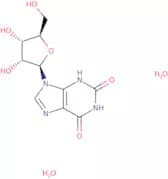
CAS:Controlled Product<p>Xanthosine dihydrate is a crystalline polymorph of xanthosine. It has been shown to have anti-inflammatory effects in animal models and also inhibits the production of pro-inflammatory cytokines and nitric oxide. Xanthosine dihydrate binds to benzimidazole compounds and caffeine, which are involved in the inflammatory process. This drug also inhibits the production of nitric oxide and prostaglandins by inhibiting cyclooxygenase enzymes. Xanthosine dihydrate is a solute that can be used in cell culture experiments to study how cells respond to different concentrations of it.</p>Formula:C10H12N4O6·2H2OPurity:Min. 99 Area-%Color and Shape:PowderMolecular weight:320.26 g/mol2'-C-Methylguanosine 5'-triphosphate triethyl ammonium salt - Aqueous solution
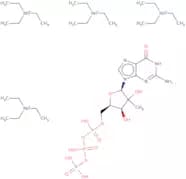
CAS:<p>2'-C-Methylguanosine 5'-triphosphate triethyl ammonium salt - Aqueous solution is a synthetic nucleotide analog for use in research</p>Formula:C11H18N5O14P3·4C6H15NPurity:Min. 95%Color and Shape:PowderMolecular weight:941.97 g/molN4-Benzoyl-2'-deoxy-5'-O-DMT-a-cytidine
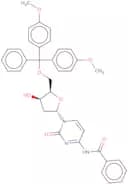
CAS:<p>N4-Benzoyl-2'-deoxy-5'-O-DMT-a-cytidine is a modified nucleoside that is synthesized by the reaction of the 2'-deoxyribonucleoside with 4-benzoylchloroformate and dimethoxytrityl. It has antiviral activity against a variety of DNA viruses, including herpes simplex virus type 1 (HSV), herpes simplex virus type 2 (HSV), varicella zoster virus, human cytomegalovirus, Epstein Barr virus, and human immunodeficiency virus. N4-Benzoyl-2'-deoxy-5'-O-DMT-a-cytidine also has anticancer properties and may be used for the treatment of melanoma. This compound shows good results in animal models and clinical trials.</p>Formula:C37H35N3O7Purity:Min. 95%Color and Shape:PowderMolecular weight:633.71 g/molMethyl 6-((((2-cyanoethoxy)(diisopropylamino)phosphanyl)-oxy)methyl) nicotinate
CAS:<p>Methyl 6-((((2-cyanoethoxy)(diisopropylamino)phosphanyl)-oxy)methyl) nicotinate is a novel, modified nucleoside that is phosphorylated by T4 kinase. It is an activator of the antiviral ribonucleotide reductase and has been shown to have anticancer activity. Methyl 6-((((2-cyanoethoxy)(diisopropylamino)phosphanyl)-oxy)methyl) nicotinate is a monophosphate or diphosphate prodrug that can be used for the treatment of viral infections and cancer. This drug also inhibits the synthesis of RNA and DNA, blocks protein synthesis, and causes cell death by apoptosis.</p>Purity:Min. 95%N6-Benzoyl-2'-deoxy-5'-O-DMT-2'-fluoroadenosine
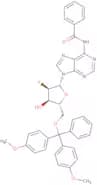
CAS:<p>N6-Benzoyl-2'-deoxy-5'-O-DMT-2'-fluoroadenosine is a sulfur containing compound that is an antibiotic. It has been shown to inhibit the growth of bacteria by binding to their ribosomes, which prevents protein synthesis and cell division. N6-Benzoyl-2'-deoxy-5'-O-DMT-2'-fluoroadenosine also inhibits chemotaxis in roseobacters, which is the movement of cells or organisms in response to certain factors. This antibiotic may be useful for preventing symbiosis between marine bacteria and other organisms, as it inhibits the motility of these bacteria and their cycling. N6-Benzoyl-2'-deoxy-5'-O-DMT-2'-fluoroadenosine also has a genetic determinant that regulates enteric bacteria and clades of ocean bacteria.</p>Formula:C38H34FN5O6Purity:Min. 95%Color and Shape:White PowderMolecular weight:675.72 g/mol2'-C-Methylcytidine 5'-diphosphate triethylammonium salt
CAS:<p>2'-C-Methylcytidine 5'-diphosphate triethylammonium salt is a synthetic nucleotide analog derived from cytidine, modified at the 2'-carbon of the sugar (ribose) and carrying a 5'-diphosphate group. It has potential application as an intermediate in the synthesis of antiviral agents and for studying RNA-dependent RNA polymerase (RdRP) activity, particularly in RNA viruses.</p>Formula:C10H17N3O11P2Purity:Min. 95%Color and Shape:PowderMolecular weight:417.2 g/mol5'-O-tert-Butyldiphenylsilyl-7-deaza-2'-deoxy-7-iodoguanosine
<p>5'-O-tert-Butyldiphenylsilyl-7-deaza-2'-deoxy-7-iodoguanosine is a nucleotide that is used in the synthesis of oligonucleotides. 5'-O-tert-Butyldiphenylsilyl-7-deaza-2'-deoxy-7-iodoguanosine is a novel deoxyribonucleotide that can be activated to form a phosphate linker. The high purity and quality of this nucleotide are ensured by the use of state of the art purification techniques.</p>Formula:C27H31IN4O4SiPurity:Area-% Min. 95 Area-%Color and Shape:PowderMolecular weight:630.55 g/mol5'-O-Benzoyl-2'-deoxy-N2-isobutyrylguanosine
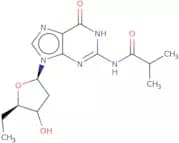
CAS:<p>5'-O-Benzoyl-2'-deoxy-N2-isobutyrylguanosine is a novel nucleoside that is synthesized by the modification of 5'-O-benzoyl-2'-deoxyguanosine with 2',3' -diisobutyrylaminopropylidene. It has shown anticancer, antiviral, and antiretroviral properties in vitro. In addition, this compound has been shown to inhibit the growth of human leukemia cells in vivo in a dose dependent manner. The structure of 5'-O-benzoyl-2'-deoxy-N2-isobutyrylguanosine is similar to that of the natural nucleosides adenosine and guanosine.</p>Formula:C21H23N5O6Purity:Min. 97 Area-%Color and Shape:Off-White PowderMolecular weight:441.45 g/mol3'-Amino-N4-benzoyl-5'-O-tert-butyldimethylsilyl-2',3'-dideoxycytidine
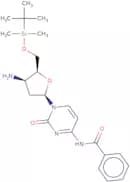
CAS:<p>3'-Amino-N4-benzoyl-5'-O-tert-butyldimethylsilyl-2',3'-dideoxycytidine (3'-ABT) is a novel diphosphate nucleoside that has been used in clinical trials as an activator of anticancer drugs. 3'-ABT is also used as a building block for synthesis of 2',3'-dideoxyuridine, which has antiviral properties. 3'-ABT can be synthesized by reacting N4-benzoyl-5'-O-tert-butyldimethylsilylcytosine with sodium bis(trimethylsilyl)amide and 2,6,8,10,-dodecatriene.</p>Formula:C22H32N4O4SiPurity:Min. 95%Molecular weight:444.6 g/mol2'-Deoxyuridine-5'-monophosphate free acid
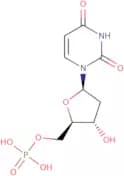
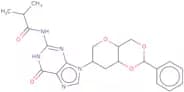
CAS:<p>2'-Deoxyuridine-5'-monophosphate free acid is a nucleotide that is found in biological samples. It has been shown to have high values for x-ray crystallography and hyperproliferative disease. 2'-Deoxyuridine-5'-monophosphate free acid inhibits the activity of DNA polymerase, which may be due to its ability to act as a competitive inhibitor of thymidylate synthase. This nucleotide also has potential as a drug target because it inhibits the growth of cells infected with fungi and bacteria. 2'-Deoxyuridine-5'-monophosphate free acid prevents bacterial and fungal replication by blocking DNA synthesis through inhibition of the enzyme thymidylate synthetase.</p>Formula:C9H13N2O8PPurity:Min. 95%Molecular weight:308.18 g/mol1,5-Anhydro-4,6-O-benzylidene-2,3-dideoxy-2-(N2-isobutyrylguanidin-1-yl)-D-glucitol
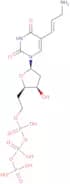
<p>1,5-Anhydro-4,6-O-benzylidene-2,3-dideoxy-2-(N2-isobutyrylguanidin-1-yl)-D-glucitol is an activator that can be used in the synthesis of DNA and RNA. It is a novel compound with antiviral properties and anticancer effects. It has been shown to have high purity and quality. This activator is a phosphoramidite that can be used in the synthesis of DNA or RNA and has been modified to have antiviral properties. It is synthesized using deoxyribonucleosides as starting materials, which are obtained from natural sources such as yeast extract or tryptophan.</p>Formula:C22H25N5O5Purity:Min. 95%Molecular weight:439.48 g/mol5-Aminoallyl 2'-deoxyuridine 5'-triphosphate lithium salt - 100mM aqueous solution
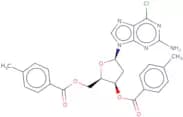
CAS:<p>5-Aminoallyl 2'-deoxyuridine 5'-triphosphate lithium salt - 100mM aqueous solution is a novel nucleoside analog with antiviral and anticancer activity. It has been shown to inhibit the replication of HIV-1 in human peripheral blood mononuclear cells and to inhibit tumor growth in mice. This drug also inhibits DNA synthesis, which may be due to its ability to inhibit ribonucleotide reductase and deoxynucleotide reductase, enzymes that are necessary for DNA synthesis.</p>Formula:C12H20N3O14P3·xLiPurity:Min. 95%Color and Shape:Colorless PowderMolecular weight:523.22 g/mol2-Amino-6-chloro-9-(2'-deoxy-3',5'-di-O-toluoyl-b-D-ribofuranosyl)purine
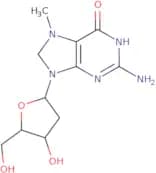
CAS:<p>2-Amino-6-chloro-9-(2'-deoxy-3',5'-di-O-toluoyl-b-D-ribofuranosyl)purine is a purine nucleoside analog where the purine base has a 2-amino group at position 2 and a chlorine at position 6. The sugar is 2'-deoxy, meaning it lacks the 2'-hydroxyl group (like in DNA), and has two toluoyl protection groups attached to the 3' and 5' positions on the sugar.</p>Formula:C26H24ClN5O5Purity:Min. 95%Color and Shape:Off-white solid.Molecular weight:521.95 g/mol2'-Deoxy-N7-methylguanosine
CAS:<p>2'-Deoxy-N7-methylguanosine is a hydrogenolysis product of guanosine. It can be synthesized in four steps from glycosyl chloride, glycosylamine, and methyl iodide. The catalytic hydrogenolysis of 2'-deoxy-N7-methylguanosine with Raney Ni gives the corresponding 6-amino derivative. Hydrolysis of this amino group converts it to a nucleoside. This nucleoside has been shown to hydrolyze with half-life of about 1 hour at pH 8.5 and 37°C. The hydrolysis of purines by 2'-deoxy-N7-methylguanosine is inhibited by adenosine analogues like 2',3'-dideoxyadenosine and 3',4'-dideoxyadenosine.</p>Formula:C11H17N5O4Purity:Min. 95%Molecular weight:283.28 g/molNicotinamide-β-D-riboside bromide
CAS:<p>A precursor to the indispensable cofactor nicotinamide adenine dinucleotide (NAD+).</p>Formula:C11H15BrN2O5Purity:Min. 90 Area-%Molecular weight:335.15 g/molRef: 3D-N-2553
1gTo inquire5gTo inquire250mgTo inquire500mgTo inquire2500mgTo inquire-Unit-ggTo inquire5-Carboxy-2’-deoxycytidine
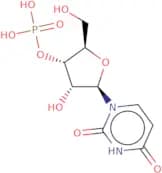
CAS:<p>Please enquire for more information about 5-Carboxy-2’-deoxycytidine including the price, delivery time and more detailed product information at the technical inquiry form on this page</p>Formula:C10H13N3O6Molecular weight:271.23 g/mol3′-UMP
CAS:<p>3′-UMP is a modified nucleoside that has antiviral activity, and is synthesized by the phosphoramidite method. It is a novel compound, which has not been previously reported. 3′-UMP is an activator of ribonucleotide reductase and can be used to treat viral infections. This drug also has anticancer effects and can be used as a chemotherapeutic agent for the treatment of leukemia. 3′-UMP has high purity and high quality.</p>Formula:C9H13N2O9PPurity:Min. 95%Molecular weight:324.18 g/mol4’,5’-Didehydro-2’-O-methyl-5-methyluridine
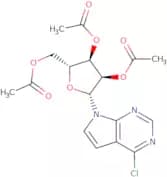
CAS:<p>4,5-Didehydro-2'-O-methyl-5'-methyluridine (4,5-DdUMP) is a monophosphate nucleoside that has antiviral and anticancer properties. It is an activator of DNA polymerase alpha and can be used to synthesize DNA. 4,5-DdUMP is a precursor to the nucleosides in the synthesis of deoxyribonucleic acid (DNA). This compound also inhibits DNA gyrase and topoisomerase IV.<br>4,5-DdUMP has been shown to be active against HIV, herpes simplex virus type 1 (HSV1), HSV type 2 (HSV2), human cytomegalovirus (CMV), Epstein Barr virus (EBV), influenza A virus, vesicular stomatitis virus (VSV), mouse leukemia L1210 cells, and human leukemia HL60 cells. It also inhibits proliferation of tumor</p>Purity:Min. 95%6-Chloro-7-deaza-9-(2',3',5'-tri-O-acetyl-β-D-ribofuranosyl)purine
CAS:<p>6-Chloro-7-deaza-9-(2',3',5'-tri-O-acetyl-β-D-ribofuranosyl)purine is a monophosphate nucleoside analog that is used as an antiviral agent. It is a synthetic compound that is activated by phosphorylation to form the triphosphate, which inhibits viral DNA synthesis by binding to the RNA polymerase enzyme. 6-Chloro-7-deaza-9-(2',3',5'-tri-O-acetyl-β-D-ribofuranosyl)purine has been shown to be effective against cancer cells in vitro and in vivo and may be useful for the treatment of human immunodeficiency virus (HIV).</p>Formula:C17H18ClN3O7Purity:Min. 97 Area-%Color and Shape:Clear LiquidMolecular weight:411.79 g/molN(4)-(N-(6-Trifluoroacetylamidocaproyl)-2-aminoethyl)-5'-O-DMT-5-methyl-2'-deoxycytidine-3'-N,N-diisopropylmethylphosphoramidite
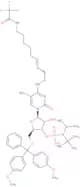
CAS:<p>N(4)-(N-(6-Trifluoroacetylamidocaproyl)-2-aminoethyl)-5'-O-DMT-5-methyl-2'-deoxycytidine-3'-N,N-diisopropylmethylphosphoramidite (CAS No. 117032-52-7) is a novel anticancer, antiviral and high quality ribonucleoside phosphoramidite. The product is chemically modified to avoid the incorporation of radioactive isotopes and can be used in DNA synthesis for research purposes. N(4)-(N-(6-Trifluoroacetylamidocaproyl)-2-aminoethyl)-5'-O-DMT-5-methyl-2'-deoxycytidine 3'-N,N-diisopropylmethylphosphoramidite has been shown to inhibit the replication of RNA virus in vitro</p>Formula:C48H64F3N6O10PPurity:Min. 95%Molecular weight:973.03 g/mol2',3'-Dideoxy-2',3'-didehydro-5-fluoro-uridine,
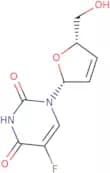
CAS:<p>2',3'-Dideoxy-2',3'-didehydro-5-fluoro-uridine is a nucleoside that is used as an antiviral agent. This drug has been shown to inhibit the replication of HIV in vitro and in vivo. It has also been shown to be nontoxic and well tolerated in humans, with no adverse effects on white blood cell counts, liver function, or kidney function. The mechanism of action of 2',3'-dideoxy-2',3'-didehydro-5-fluoro-uridine is not known. It may inhibit viral DNA synthesis by blocking the incorporation of uracil into DNA or by inhibiting the activity of RNA polymerase.</p>Formula:C9H9FN2O4Purity:Min. 95%Molecular weight:228.18 g/mol2′-O-[2-(Methylamino)-2-oxoethyl]guanosine
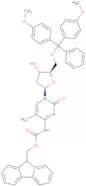
CAS:<p>2′-O-[2-(Methylamino)-2-oxoethyl]guanosine is a monophosphate nucleoside with anticancer properties. It has been shown to activate the transcription of genes that regulate cell growth and differentiation, and to induce apoptosis in tumor cells. This compound is an analog of guanosine, which is not modified at the 2′ position. It has been used to synthesize phosphoramidites for oligonucleotide synthesis, and may be useful as a novel therapeutic agent for cancer treatment.</p>Formula:C13H18N6O6Purity:Min. 95%Molecular weight:354.32 g/mol2'-Deoxy-5’-O-DMT-N4-Fmoc-5-methylcytidine
CAS:<p>2'-Deoxy-5'O-DMT-N4-Fmoc-5-methylcytidine is a modified nucleoside that is used to synthesize antiviral ribonucleosides and deoxyribonucleosides. It can be used to synthesize novel anticancer drugs, which are effective against tumor cells.</p>Purity:Min. 95%3’-Deoxy-3’-a-C-methyl-N6-dimethyladenosine
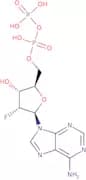
CAS:<p>3’-Deoxy-3’-a-C-methyl-N6-dimethyladenosine is a modified nucleoside that is an activator of phosphoramidite. It has anticancer, antiviral, and antiretroviral properties. 3’-Deoxy-3’-a-C-methyl-N6-dimethyladenosine is used as a building block in the synthesis of DNA and RNA. 3’-Deoxy-3’-a-C methyl N6 dimethyladenosine has been shown to be cytotoxic against cancer cells and HIV infected cells.</p>Purity:Min. 95%2'-Deoxy-2'-fluoroadenosine-5'-diphosphate
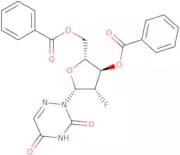
CAS:<p>2'-Deoxy-2'-fluoroadenosine-5'-diphosphate (FAD) is an irreversible enzyme inhibitor that binds to the active site of the decarboxylase enzyme. FAD binds to cytochrome P450 and inhibits aromatase, which is an enzyme responsible for the conversion of testosterone to estradiol. It has been shown that FAD inactivates the enzyme by protonation at the active site. The protonated form of FAD is a nucleophile and forms a covalent bond with the substrate, thereby inhibiting decarboxylases. This inhibition can be reversed by fluoride ions, which are also used as catalysts in organic synthesis reactions involving carboxylic acid derivatives.</p>Formula:C10H14FN5O9P2Purity:Min. 95%Molecular weight:429.19 g/mol3’,5’-Bis-O-benzoyl-2’-deoxy-2’-fluoro-β-D-arabino-6-azidouridine
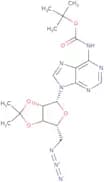
CAS:<p>Please enquire for more information about 3’,5’-Bis-O-benzoyl-2’-deoxy-2’-fluoro-beta-D-arabino-6-azidouridine including the price, delivery time and more detailed product information at the technical inquiry form on this page</p>Purity:Min. 95%5'-Azido-N6-Boc-5'-deoxy-2',3'-O-isopropylideneadenosine
CAS:<p>5'-Azido-N6-Boc-5'-deoxy-2',3'-O-isopropylideneadenosine is an antiviral and anticancer agent that inhibits the replication of RNA and DNA. It inhibits viral infection by inhibiting the synthesis of viral genomes, which are made up of DNA or RNA. 5'-Azido-N6-Boc-5'-deoxy-2',3'-O-isopropylideneadenosine is a novel modified nucleoside analog that blocks the incorporation of ribonucleotides into viral DNA or RNA. The drug has been shown to be effective against Hepatitis B, Hepatitis C, HIV, and other viruses. This compound can also be used as a chemotherapeutic agent for cancer treatment due to its inhibition of DNA synthesis.</p>Formula:C18H24N8O5Purity:Min. 95%Molecular weight:432.43 g/mol5'-Ethylcarboxamido-2-iodo-2',3'-O-isopropylideneadenosine
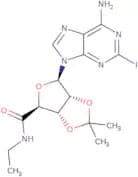
CAS:<p>5'-Ethylcarboxamido-2-iodo-2',3'-O-isopropylideneadenosine is a phosphoramidite nucleoside that is synthesized by the reaction of 5'-ethoxycarbonyl-N,N-diisopropylaminomethylene adenosine with 2,3'-O-(1,1'-biphenyl)-2'-propionic acid ethyl ester. It is used as an antiviral agent and has shown anticancer activity. This novel synthetic nucleoside is structurally related to the natural nucleosides adenosine and inosine.</p>Formula:C15H19IN6O4Purity:Min. 95%Molecular weight:474.26 g/mol[1,2,4]Triazolo[1,5-a]pyrimidine-2-carboxylic acid
CAS:<p>[1,2,4]Triazolo[1,5-a]pyrimidine-2-carboxylic acid is a heterocyclic compound made up of a pyrimidine ring and a triazole ring. It can be used in research applications</p>Formula:C6H4N4O2Purity:Min. 95%Color and Shape:White PowderMolecular weight:164.12 g/mol3,5-Dichloro-4-pyridone-1-acetic acid
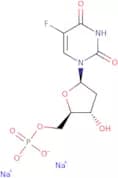
CAS:<p>3,5-Dichloro-4-pyridone-1-acetic acid is a chlorinated derivative of 7-aminocephalosporanic acid that is synthesized from hydrochloric acid and chloroacetic anhydride. It is used in the pharmaceutical industry as a reagent to produce medicines such as antibiotics and anti-inflammatory agents. The product yield of this reaction is high, which makes it an excellent choice for industrial use. 3,5-Dichloro-4-pyridone-1-acetic acid also has a low toxicity profile and can be easily degraded by bacteria in the environment.</p>Formula:C7H5Cl2NO3Purity:Min. 95%Molecular weight:222.02 g/mol2'-Deoxy-5-fluorouridine 5'-monophosphate sodium salt
CAS:<p>2'-Deoxy-5-fluorouridine 5'-monophosphate sodium salt is a prodrug that is converted to fluorouracil in the body. Fluorouracil inhibits the activity of thymidylate synthase and other enzymes involved in DNA synthesis, which are associated with cancer. It is also an inhibitor binding to the enzyme RNA polymerase II, which may contribute to its anti-cancer effects. 2'-Deoxy-5-fluorouridine 5'-monophosphate sodium salt has been shown to inhibit the growth of human tumor cells in culture and in animal models. The matrix effect may be responsible for this activity. 2'-Deoxy-5-fluorouridine 5'-monophosphate sodium salt can be used as a model system for studying cancer tissues.</p>Formula:C9H12FN2O8P·xNaPurity:Min. 85 Area-%Color and Shape:White Off-White PowderMolecular weight:326.17 g/mol9-(2',3',5'-Tri-O-benzoyl-2'C-methyl-b-D-ribofuranosyl)purine
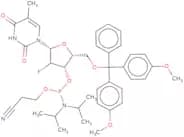
CAS:<p>9-(2',3',5'-tri-O-benzoyl-2'C-methyl-β-D-ribofuranosyl)purine is a nucleoside that was synthesized and patented in 1993. It is a novel modified nucleoside with antiviral, anticancer, and DNA activating properties. 9-(2',3',5'-tri-O-benzoyl-2'C-methyl-β-D-ribofuranosyl)purine has been shown to inhibit HIV replication by inhibiting the viral reverse transcriptase enzyme. It also inhibits the growth of human cancer cells in culture and has been studied as an anticancer drug. This nucleoside is a substrate for ribonucleotide reductase and phosphoramidite synthase, which convert it into its monophosphate form. The monophosphate form can be converted into the triphosphate form by phosphatases or polymerases</p>Purity:Min. 95%2'-Deoxy-5'-O-DMT-2'-fluoro-5-methyluridine 3'-CE phosphoramidite
CAS:<p>2'-Deoxy-5'-O-DMT-2'-fluoro-5-methyluridine 3'-CE phosphoramidite is a novel antiviral agent that inhibits the synthesis of DNA, RNA, and proteins. It is synthesized by the reaction of 5-fluoro-2'-deoxyuridine with 2',3' -dideoxyadenosine 5'-O-(4,4'-dimethoxytrityl)-3',5' -cyanoethyl phosphate in an organic solvent. The product is purified by column chromatography and crystallized from ethyl acetate. 2'-Deoxy-5'-O-DMT-2'-fluoro-5-methyluridine 3'-CE phosphoramidite has been shown to be an anticancer agent against breast cancer cells in vitro and in vivo.</p>Formula:C40H48FN4O8PPurity:Min. 95%Color and Shape:PowderMolecular weight:762.82 g/mol5-Chloro-2-pyridinecarboxylic acid methyl ester
CAS:<p>5-Chloro-2-pyridinecarboxylic acid methyl ester is a monophosphate nucleoside that can be used in the synthesis of DNA and RNA. It is also an antiviral, anticancer, and anticoagulant agent. 5-Chloro-2-pyridinecarboxylic acid methyl ester has been shown to inhibit DNA replication and transcription by inhibiting the activity of enzymes involved in these processes. It can be used as a building block for the synthesis of DNA and RNA. The purity of this product is high, with no detectable impurities at levels above 0.1%.</p>Formula:C7H6ClNO2Purity:Min. 95%Color and Shape:PowderMolecular weight:171.58 g/mol






![2′-O-[2-(Methylamino)-2-oxoethyl]adenosine](/_next/image/?url=https%3A%2Fstatic.cymitquimica.com%2Fproducts%2F3D%2Fthumb-webp%2FNM182883.webp&w=3840&q=75)









![2′-O-[2-(Methylamino)-2-oxoethyl]guanosine](/_next/image/?url=https%3A%2Fstatic.cymitquimica.com%2Fproducts%2F3D%2Fthumb-webp%2FNM182884.webp&w=3840&q=75)

![[1,2,4]Triazolo[1,5-a]pyrimidine-2-carboxylic acid](/_next/image/?url=https%3A%2Fstatic.cymitquimica.com%2Fproducts%2F3D%2Fthumb-webp%2FNT57365.webp&w=3840&q=75)