Nucleosides
Nucleosides are fundamental building blocks of nucleic acids, composed of a nitrogenous base attached to a sugar molecule. In this section, you can find a wide variety of nucleosides essential for research in molecular biology, biochemistry, and pharmacology. These compounds play crucial roles in the synthesis of DNA and RNA, and are also vital in various metabolic processes. Nucleosides are used in studying genetic material, developing antiviral and anticancer therapies, and understanding cellular mechanisms. At CymitQuimica, we provide high-quality nucleosides to support your research and development needs, ensuring purity and reliability for your experimental applications.
Found 3567 products of "Nucleosides"
Sort by
Purity (%)
0
100
|
0
|
50
|
90
|
95
|
100
2'-Deoxy-5'-O-DMT-5-(3-methacryloyl)uridine 3'-CE phosphoramidite
CAS:<p>2'-Deoxy-5'-O-DMT-5-(3-methacryloyl)uridine 3'-CE phosphoramidite is a synthetic nucleoside analogue. It is an antiviral and anticancer agent that inhibits viral DNA synthesis by inhibiting the enzyme DNA polymerase. The compound also induces apoptosis in cancer cells by inhibiting RNA synthesis. 2'-Deoxy-5'-O-DMT-5-(3-methacryloyl)uridine 3'-CE phosphoramidite has been shown to be cytotoxic to human breast cancer cells, and is currently being studied as a potential treatment for prostate cancer.</p>Formula:C43H51N4O10PPurity:Min. 95%Molecular weight:814.88 g/mol2'-Deoxyadenosine-5'-triphosphate dilithium salt
<p>2'-Deoxyadenosine-5'-triphosphate dilithium salt is a modified nucleoside that is used in the synthesis of DNA. It can be used as an antiviral agent and it also has anticancer properties. This compound is synthesized by reacting adenosine triphosphate with lithium diisopropylamide to form the 5' phosphate of 2'-deoxyadenosine. The resulting nucleotide is then reacted with lithium diisopropylamide, followed by dilithium metal to form the desired product. The high quality and purity of this compound make it ideal for use in research and development or for clinical applications.</p>Formula:C10H13N5O12P3·2LiPurity:Min. 95%Molecular weight:502.04 g/mol2',3'-Dideoxyinosine-5'-monophosphate triethylammonium salt
<p>2',3'-Dideoxyinosine-5'-monophosphate triethylammonium salt is a synthetic nucleoside that is used to inhibit the production of viral DNA. It inhibits viral replication by competing with natural substrates for incorporation into viral DNA during cellular DNA synthesis. 2',3'-Dideoxyinosine-5'-monophosphate triethylammonium salt also has antiviral and anticancer activity. This product is not for human use, but for research purposes only.</p>Purity:Min. 95%N4-Acetyl-2'-deoxy-5'-O-DMT-cytidine 3'-succinyl CPG 500 Å
<p>N4-Acetyl-2'-deoxy-5'-O-DMT-cytidine 3'-succinyl CPG 500 Å is a novel modified nucleoside that has been shown to inhibit the replication of HIV and other viruses. N4-Acetyl-2'-deoxy-5'-O-DMT-cytidine 3'-succinyl CPG 500 Å is an activator for DNA synthesis. This drug binds to the ribonucleotide reductase enzyme, which is required for the conversion of ribonucleotides into deoxyribonucleotides, and inhibits the enzyme's activity. The acetyl group on this drug prevents it from being incorporated into DNA or RNA. This drug can be used as an antiviral or anticancer agent.</p>Purity:Min. 95%Color and Shape:Powder5-Bromo-2'-deoxyuridine-5'-triphosphate sodium salt
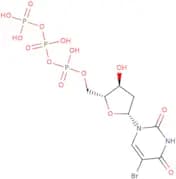
CAS:<p>5-Bromo-2'-deoxyuridine-5'-triphosphate sodium salt is a modified nucleoside with antiviral properties. This drug inhibits the polymerase activity of reverse transcriptase and thus prevents the synthesis of DNA from RNA. 5-Bromo-2'-deoxyuridine-5'-triphosphate sodium salt has been shown to be effective against herpes viruses, influenza virus, and cytomegalovirus. This drug also prevents the replication of HIV.</p>Formula:C9H14N2O14P3BrPurity:Min. 95%Molecular weight:547.04 g/mol5-Methyl-4'-thiouridine
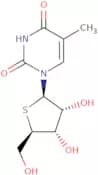
CAS:<p>5-Methyl-4'-thiouridine is a novel, synthetic nucleoside that has antiviral and anticancer activities. It is an activator of ribonucleotide reductase and a substrate for diphosphate reductase. 5-Methyl-4'-thiouridine (also known as 5-methyluridine) is used in the synthesis of DNA, RNA, and phosphoramidites. The CAS number for this compound is 6741-71-5.</p>Purity:Min. 95%1,N6-Ethenoadenosine-5'-monophosphate sodium salt
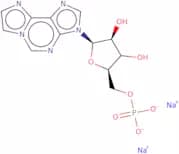
CAS:<p>1,N6-Ethenoadenosine-5'-monophosphate sodium salt is a synthetic nucleoside analog. It serves as an antiviral and anticancer agent by inhibiting viral DNA polymerase and tumor cell proliferation. This drug has been shown to be effective in animal models of cancer. 1,N6-Ethenoadenosine-5'-monophosphate sodium salt also inhibits the enzyme ribonucleotide reductase, which is needed for deoxyribonucleotide synthesis. 1,N6-Ethenoadenosine-5'-monophosphate sodium salt is chemically related to adenosine monophosphate (AMP). However, it is not active against AMP phosphohydrolases that are found in bacteria and some protozoa.</p>Formula:C12H14N5O7PPurity:Min. 95%Molecular weight:371.24 g/molL-Thymidine-5'-triphosphate sodium salt
<p>L-Thymidine-5'-triphosphate sodium salt (L-TTP) is a modified nucleoside that is used as an anticancer agent. L-TTP is phosphorylated by ATP to form L-thymidine 5'-monophosphate (L-TMP). It also inhibits viral replication by inhibiting the synthesis of DNA and RNA, leading to cell death. L-TTP has been shown to be active against herpes simplex virus type 1, herpes simplex virus type 2, and cytomegalovirus.</p>Purity:Min. 95%3',5'-Bis-O-(tert-butyldimethylsilyl)-2'-deoxyuridine
CAS:<p>3',5'-Bis-O-(tert-butyldimethylsilyl)-2'-deoxyuridine is a synthetic nucleoside that is used in antiviral and anticancer research. It is an activator of the monophosphate form of DNA and RNA, leading to their synthesis. 3',5'-Bis-O-(tert-bulyldimethylsilyl)-2'-deoxyuridine has been shown to have antitumour activity against cancer cells.</p>Formula:C21H40N2O5Si2Purity:Min. 95%Molecular weight:456.72 g/mol2'-O-(tert-Butyldimethylsilyl)-3'-O-(phenoxythioncarbonyl)-5'-O-trityluridine
CAS:<p>2'-O-(tert-Butyldimethylsilyl)-3'-O-(phenoxythioncarbonyl)-5'-O-trityluridine (TBS-PTU) is a modified nucleoside that has antiviral activity. TBS-PTU inhibits viral replication by interfering with the synthesis of viral RNA and DNA. The antiviral activity of TBS-PTU is increased in the presence of ribonucleotide reductase, an enzyme that converts ribonucleotides to deoxyribonucleotides. TBS-PTU is used as a building block for DNA synthesis and as a precursor to other modified nucleosides.</p>Formula:C41H44N2O7SSiPurity:Min. 95%Molecular weight:736.95 g/molN6-Benzoyl-9-(2'-deoxy-2'-fluoro-b-D-arabinofuranosyl)adenine
CAS:<p>N6-Benzoyl-9-(2'-deoxy-2'-fluoro-b-D-arabinofuranosyl)adenine is a novel nucleoside analogue that inhibits HIV, Herpes simplex virus type 1 and 2, Hepatitis C virus, and influenza A virus. It is structurally similar to adenosine but has a benzoyl group at the 6 position on the ribose moiety. N6-Benzoyl-9-(2'-deoxy-2'-fluoro-b-D-arabinofuranosyl)adenine is phosphoramidite, which means it can be synthesized by chemical means or enzymatically. It has high purity and quality with a CAS number of 1446113-65-0. This product also has antiviral activity against several viruses.</p>Formula:C17H16FN5O4Purity:Min. 95%Molecular weight:373.35 g/mol5-Methylcytidine
CAS:<p>5-Methylcytidine is a methyltransferase enzyme that catalyzes the transfer of a methyl group from S-adenosylmethionine to 5-methylcytosine. This reaction is essential for DNA replication and repair. 5-Methylcytidine has been shown to be an important factor in the regulation of mitochondrial functions, as well as other cellular processes such as protein synthesis, nuclear DNA replication, and tumor suppression. It also has been shown to inhibit the replication of murine sarcoma virus and Toll-like receptor. 5-Methylcytidine can be used in chemotherapy treatment against mouse tumors and murine sarcoma virus by preventing viral RNA synthesis with monoclonal antibodies.</p>Formula:C10H15N3O5Molecular weight:257.24 g/molRef: 3D-W-201877
25gTo inquire50gTo inquire100gTo inquire250gTo inquire500gTo inquire-Unit-ggTo inquire7-Benzyl-4-chloro-5,6,7,8-tetrahydropyrido[3,4-d]pyrimidine
CAS:<p>7-Benzyl-4-chloro-5,6,7,8-tetrahydropyrido[3,4-d]pyrimidine is a nucleoside analog that is used as an antiviral and anticancer drug. It has also been shown to have antimalarial activity. 7-Benzyl-4-chloro-5,6,7,8-tetrahydropyrido[3,4-d]pyrimidine inhibits the replication of HIV by blocking the viral reverse transcriptase enzyme. This drug is a phosphoramidite monophosphate with a purity of 99%.</p>Formula:C14H14ClN3Purity:Min. 95%Molecular weight:259.73 g/mol2',3',5-Tri-O-acetyl-N1-tritylinosine
<p>2',3',5-Tri-O-acetyl-N1-tritylinosine is a novel nucleoside with antiviral and anticancer activities. It is a modified deoxyribonucleoside, which is synthesized by the acetylation of N1-tritylinosine. It has high purity and high quality.</p>Purity:Min. 95%Uracil Sodium salt
CAS:<p>Pyrimidine nucleobase; allosteric regulator and coenzyme for reactions</p>Purity:Min. 95%5'-Deoxy-5-fluoro-5'-iodo-2',3'-O-isopropylidenecytidine
CAS:<p>5'-Deoxy-5-fluoro-5'-iodo-2',3'-O-isopropylidenecytidine is a nucleoside with antiviral and anticancer activity. It is an activator of phosphoramidites, and is used in the production of DNA and RNA. 5'-Deoxy-5-fluoro-5'-iodo-2',3'-O-isopropylidenecytidine also has a high purity, which makes it suitable for use in the synthesis of oligonucleotides and ribonucleotides.</p>Formula:C12H15FIN3O4Purity:Min. 95%Molecular weight:411.17 g/molN6-Benzoyl-2'-deoxy-3'-O-DMT-adenosine
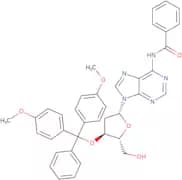
CAS:<p>N6-Benzoyl-2'-deoxy-3'-O-DMT-adenosine is a novel nucleoside analog that is structurally related to the natural nucleotide adenosine. It is an activator of ribonucleotide reductase, which converts ribonucleosides to deoxyribonucleosides. This product has antiviral and anticancer properties. N6-Benzoyl-2'-deoxy-3'-O-DMT-adenosine can be used in research or as an intermediate for the manufacture of other pharmaceuticals.</p>Purity:Min. 95%8,5'-(S)-Cycloadenosine
CAS:<p>8,5'-(S)-Cycloadenosine is a radiosensitizer that is used in the treatment of cancer. It is an adenosine derivative that has been shown to increase the sensitivity of cells to radiation. 8,5'-(S)-Cycloadenosine has been used in clinical trials as a radiosensitizer for the treatment of non-small cell lung cancer and myeloma. It can be used with other chemotherapeutic agents or irradiation to reduce tumor size and improve survival rates. The compound binds to DNA and increases the formation of hydrogen peroxide by inhibiting DNA repair enzymes such as topoisomerase II, which are responsible for breaking down hydrogen peroxide. 8,5'-(S)-Cycloadenosine also prevents the production of reactive oxygen species (ROS) from azobisisobutyronitrile (AIBN), which is often used as a radical initiator during polymerization reactions.</p>Formula:C10H11N5O4Purity:Min. 95%Color and Shape:White to off-white solid.Molecular weight:265.23 g/mol3',5'-Di-O-acetyl-5-chloro-2'-deoxyuridine
CAS:<p>3',5'-Di-O-acetyl-5-chloro-2'-deoxyuridine (3,5'-diacetyl-2'-deoxyuridine) is a modified nucleoside with antiviral and anticancer properties. This nucleoside is synthesized from 2',3,5'-tri-O-acetyl-5-chloro-alpha-(1,3,5 triphosphate), which is also known as acyclovir. 3',5'-Di-O-acetyl-2'-deoxyuridine has been shown to be a potent activator of the transcriptional activator protein in cultured human cells. 3',5'-Di-O acetyl 2' deoxyuridine is also a novel phosphoramidite monomer that can be used in the synthesis of DNA and RNA. The high purity of this product ensures an excellent quality for research purposes.</p>Formula:C13H15ClN2O7Purity:Min. 95%Molecular weight:346.73 g/mol9-(5'-O-t-Butyldimethylsilyl-2',3'-O-isopropylidene-b-D-ribofuranosyl)-6-chloro-7-deazaguanine
CAS:<p>9-(5'-O-t-Butyldimethylsilyl-2',3'-O-isopropylidene-b-D-ribofuranosyl)-6-chloro-7-deazaguanine is a novel nucleoside phosphoramidite. It is an analogue of the nucleoside 7-(4,4'-dimethoxytrityl)guanine and 9-(4,4'-dimethoxytrityl)guanine. This product has been shown to have anticancer activity and antiviral activity against HIV in vitro. 9-(5'-O-t-Butyldimethylsilyl-2',3'-O-isopropylidene b -D ribofuranosyl)-6 chloro -7 deazaguanine has also been shown to inhibit DNA synthesis in cells. The purity of this product is over 98%. It is a novel compound that</p>Formula:C20H33ClN4O4SiPurity:Min. 95%Molecular weight:457.04 g/molN4-Benzoyl-2'-deoxy-5'-O-DMT-cytidine 3'-phosphonate triethylammonium salt
CAS:<p>N4-Benzoyl-2'-deoxy-5'-O-DMT-cytidine 3'-phosphonate triethylammonium salt (BENZYT) is a novel nucleoside analogue that is phosphorylated to the monophosphate (BENZYTP). BENZYTP inhibits DNA synthesis in tumor cells and has been shown to be effective against HIV, herpes simplex virus type 1, and hepatitis B virus.</p>Formula:C37H35N3O9P·C6H16NPurity:Min. 95%Molecular weight:798.86 g/molCyclic di-adenosine monophosphate sodium salt
CAS:<p>Cyclic di-adenosine monophosphate sodium salt (c-di-AMP) is a cyclic nucleotide that is structurally similar to its natural counterpart, Adenosine 5'-triphosphate. It binds to the Toll-like receptor 4 (TLR4) and blocks the activation of TLR4 by lipopolysaccharide, thereby inhibiting the downstream inflammatory response. c-di-AMP also inhibits the production of proinflammatory cytokines such as TNFα, IL1β, and IL6 in vitro. c-di-AMP has shown anti-inflammatory properties in vivo and can be used for the treatment of infectious diseases.</p>Formula:C20H24N10O12P2·xNaPurity:Min. 95%Molecular weight:658.41 g/molp-Topolin riboside-5'-monophosphate sodium salt
<p>p-Topolin riboside-5'-monophosphate sodium salt is a novel modified nucleotide, which is an activator of the RNA polymerase I and III. It has been shown to be an effective antiviral agent, by inhibiting the synthesis of viral DNA and RNA. p-Topolin riboside-5'-monophosphate sodium salt also inhibits the growth of cancer cells in vitro and in vivo. This drug has been shown to inhibit tumor growth by targeting regulatory proteins that control cell proliferation, such as cyclin D1, CDK4, and CDK6.</p>Formula:C17H18N5Na2O8P·H2OPurity:Min. 95%Molecular weight:515.32 g/molN4-Acetyl-2'-deoxy-5'-O-DMT-cytidine 3'-succinyl CPG 1400 Å
<p>N4-Acetyl-2'-deoxy-5'-O-DMT-cytidine 3'-succinyl CPG 1400 Å is a novel antiviral agent that inhibits the synthesis of viral RNA. This compound has been shown to be effective against influenza A and B, human cytomegalovirus, and herpes simplex virus type 1. N4-Acetyl-2'-deoxy-5'-O-DMT-cytidine 3'-succinyl CPG 1400 Å also has anticancer activity in vitro and in vivo. It has been shown to inhibit the proliferation of tumor cells by interfering with DNA replication, RNA synthesis, and protein synthesis.</p>Purity:Min. 95%2-Chloro-5'-N-ethylcarboxamide-2',3'-O-isopropylidene adenosine
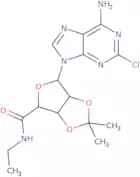
CAS:<p>2-Chloro-5'-N-ethylcarboxamide-2',3'-O-isopropylidene adenosine is an antiviral agent that inhibits the synthesis of deoxyribonucleic acid (DNA) and ribonucleic acid (RNA). It is a synthetic, modified nucleoside. 2-Chloro-5'-N-ethylcarboxamide-2',3'-O-isopropylidene adenosine has been shown to be active against human tumor cell lines in vitro and in vivo. The compound inhibits the activity of DNA polymerase and RNA polymerase by competitive inhibition of the enzyme phosphoramidite. 2CECA has also been shown to have anticancer properties as it induces apoptosis in cancer cells.</p>Formula:C15H19ClN6O4Purity:Min. 95%Molecular weight:382.8 g/mol3'-O-Aminoacetoxy-2'-deoxyadenosine 5'-O-triphosphate triethylammonium salt
<p>Please enquire for more information about 3'-O-Aminoacetoxy-2'-deoxyadenosine 5'-O-triphosphate triethylammonium salt including the price, delivery time and more detailed product information at the technical inquiry form on this page</p>Formula:C13H21N6P3O12•NaxPurity:Min. 98 Area-%Color and Shape:PowderMolecular weight:546.26 g/molO6-Diphenylcarbonyl-N2-isobutyryl-1-(5'-O-DMT-b-D-arabinofuranosyl) guanine
<p>O6-Diphenylcarbonyl-N2-isobutyryl-1-(5'-O-DMT-b-D-arabinofuranosyl) guanine is a synthetic nucleoside. It is an activator of antiviral, anticancer, and antimalarial agents. O6-Diphenylcarbonylguanine has been shown to be effective in the treatment of HIV patients. It also inhibits the replication of herpes simplex virus type 1 (HSV1) and can be used for the treatment of HSV1 encephalitis. O6-Diphenylcarbonylguanine has also been shown to be effective in the treatment of cancer cells that are resistant to chemotherapy drugs such as cisplatin and doxorubicin.</p>Formula:C47H47N5O9Purity:Min. 95%Molecular weight:825.9 g/molAdenosine 5'-diphosphate trilithium salt
CAS:<p>Adenosine 5'-diphosphate trilithium salt is a lithium salt of adenosine 5'-diphosphate. It is an activator that is used in the synthesis of polymers and monophosphates. Lithium salts have been shown to increase the solubility of adenosine and guanosine. This product has also been shown to be an effective lithium ion conductor, serving as a potential replacement for dilithium.</p>Formula:C10H12N5O10P2·Li3Purity:Min. 95%Molecular weight:445 g/mol8-Chloroadenosine 3',5'-cyclic monophosphate dihydrate
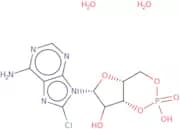
CAS:<p>8-Chloroadenosine 3',5'-cyclic monophosphate dihydrate (8-Cl-cAMP) is an anticancer drug that inhibits the growth of cells in vitro and in vivo. 8-Cl-cAMP is a cytostatic agent that can inhibit the proliferation of cancer cells, especially renal cell cancer cells. It also has synergistic activity with epidermal growth factor, which may be due to its ability to increase the production of reactive oxygen species and decrease mitochondrial membrane potential. 8-Cl-cAMP may have potential as an anticancer agent due to its ability to induce apoptosis and inhibit protein synthesis.</p>Formula:C10H11ClN5O6P·2H2OPurity:Min. 95%Molecular weight:399.69 g/mol4-Amino-6-methyl-8-(2'-deoxy-b-D-ribofuranosyl)-7-pteridone
CAS:<p>4-Amino-6-methyl-8-(2'-deoxy-b-D-ribofuranosyl)-7-pteridone (4AMD) is an adenosine analog that is fluorescent. 4AMD is not hydrolyzed by adenosine deaminase and has a higher affinity for the A1 receptor than for the A2a receptor. This makes it a useful probe for the study of adenosine mediated, yields, and analogs. The fluorescence properties of 4AMD were studied in different solvents at various temperatures to monitor the interaction of 4AMD with catalysis. The monomeric form of 4AMD was used to measure its fluorescence properties.</p>Formula:C12H15N5O4Purity:Min. 95%Molecular weight:293.28 g/mol8-Bromo-9-[3',5'-O-(1,1,3,3-tetraisopropyl-1,3-disiloxanediyl)-2'-deoxy-b-D-ribofuranosyl]guanine
CAS:<p>8-Bromo-9-[3',5'-O-(1,1,3,3-tetraisopropyl-1,3-disiloxanediyl)-2'-deoxy-b-D-ribofuranosyl]guanine is a nucleoside analog that inhibits DNA synthesis in the cancer cells. This agent is an activator of nucleases and can inhibit RNA synthesis by inhibiting the enzyme ribonucleotide reductase. 8-Bromo-9-[3',5'-O-(1,1,3,3-tetraisopropyl-1,3-disiloxanediyl)-2'-deoxy-b-Dribofuranosyl]guanine also has antiviral activity against herpes simplex virus type 1 and 2. The drug is a novel compound with anticancer activity that targets DNA synthesis by binding to the enzyme topoisomerase II. This</p>Formula:C22H38BrN5O5Si2Purity:Min. 95%Molecular weight:588.64 g/mol6-(2-Cyanoethylthio)-2'-deoxy-5'-O-DMT-N2-trifluoroacetylguanosine 3'-CE phosphoramidite
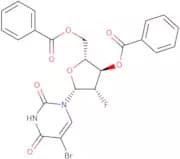
CAS:<p>6-(2-Cyanoethylthio)-2'-deoxy-5'-O-DMT-N2-trifluoroacetylguanosine 3'-CE phosphoramidite is a novel, modified nucleoside with antiviral, anticancer and other potential therapeutic activities. It is synthesized by the reaction of 6-(2-cyanoethylthio)-2'-deoxy-5'-O-DMT nucleoside with 2,4,6-trifluoroacetic anhydride in the presence of N,N'-diisopropylethylamine. The product is purified on a column to yield high quality material. The CAS number for this compound is 146691-59-0.</p>Formula:C45H50N8O7PSPurity:Min. 95%Molecular weight:934.96 g/mol1-(3',5'-Di-O-benzoyl-2'-deoxy-2'-fluoro-b-D-arabinofuranosyl)-5-bromo-uracil
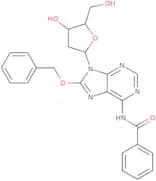
CAS:<p>1-(3',5'-Di-O-benzoyl-2'-deoxy-2'-fluoro-b-D-arabinofuranosyl)-5-bromo-uracil is a novel antiviral and antitumor agent, synthesized by using a new synthetic approach. It has been shown to be effective in vitro against influenza A virus and herpes simplex virus types 1 and 2. This compound is also active against HIV type 1 (HIV) and Kaposi's sarcoma cells. The antiviral activity of this compound may be due to its ability to inhibit viral DNA polymerase activity. The antitumor activity of this compound may be due to its ability to inhibit the proliferation of tumor cells, leading to their death by apoptosis or necrosis.</p>Formula:C23H18BrN2O7Purity:Min. 95%Molecular weight:514.3 g/molN6-Benzoyl-8-benzyloxy-2'-deoxyadenosine
CAS:<p>N6-Benzoyl-8-benzyloxy-2'-deoxyadenosine is a novel nucleoside with anticancer and antiviral properties. It is an antiviral that inhibits the synthesis of viral DNA by blocking the incorporation of ribonucleotide triphosphates into DNA, while leaving intact the synthesis of deoxyribonucleotides and phosphoramidites. In addition, it is a potent inhibitor of cellular DNA polymerases that catalyze synthesis of DNA from deoxyribonucleoside triphosphates. N6-Benzoyl-8-benzyloxy-2'-deoxyadenosine also has antitumor activity in animal models.</p>Formula:C24H23N5O5Purity:Min. 95%Molecular weight:461.5 g/mol3'-Deoxythymidine-5'-triphosphate lithium salt - 100mM aqueous solution
CAS:<p>3'-Deoxythymidine-5'-triphosphate lithium salt - 100mM aqueous solution is a phosphoramidite. It is an antiviral agent that inhibits the replication of DNA and RNA viruses by inhibiting the synthesis of viral nucleic acid. 3'-Deoxythymidine-5'-triphosphate lithium salt - 100mM aqueous solution has been shown to be effective against some cancer cells with high purity and novel properties.</p>Formula:C10H17N2O13P3·xLiPurity:Min. 95%Molecular weight:466.17 g/molFluorous propanol cep
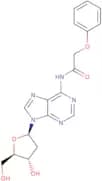
CAS:Controlled Product<p>Fluorous propanol cep is a novel activator of ribonucleosides and deoxyribonucleosides. It is a nucleoside phosphoramidite that can be used to synthesize modified nucleosides, and has anticancer, antiviral and antibacterial properties. Fluorous propanol cep is an excellent activator for the synthesis of ribonuclesides and deoxyribonucleosides from their corresponding monophosphate derivatives. The product has been shown to inhibit replication of the human immunodeficiency virus (HIV-1) in vitro, with IC50 values less than 1 mM.</p>Formula:C20H24F17N2O2PPurity:Min. 95%Molecular weight:678.4 g/mol2'-Deoxy-N6-phenoxyacetyladenosine
CAS:<p>2'-Deoxy-N6-phenoxyacetyladenosine is a cyclic oligonucleotide analog that has been shown to be efficient in inhibiting the replication of RNA. It binds to the RNA polymerase, preventing transcription and replication of the nucleic acid. 2'-Deoxy-N6-phenoxyacetyladenosine is also an effective inhibitor of DNA synthesis and can inhibit the synthesis of proteins by binding to ribosomes. This drug is structurally similar to deoxyadenosine, which is a component of DNA, and it has been shown to be more potent than other analogs.</p>Formula:C18H19N5O5Purity:Min. 97 Area-%Molecular weight:385.38 g/molN6-Benzoyl-2'-deoxy-5'-O-pixyladenosine
<p>N6-Benzoyl-2'-deoxy-5'-O-pixyladenosine is a novel nucleoside that acts as an antiviral and anticancer agent. It inhibits the synthesis of DNA and RNA by binding to the ribonucleotide reductase enzyme. N6-Benzoyl-2'-deoxy-5'-O-pixyladenosine has shown activity against several human cancer cell lines, including leukemia cells. This drug also binds to the viral reverse transcriptase enzyme, preventing viral replication.</p>Formula:C36H29N5O5Purity:Min. 95%Molecular weight:611.66 g/mol8-Bromoadenosine 3',5'-cyclic monophosphorothioate, Sp-isomer sodium salt
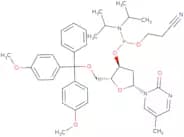
CAS:<p>8-Bromoadenosine 3',5'-cyclic monophosphate is a nucleotide analog that binds to RNA polymerase and blocks the elongation of RNA. It has been shown to stimulate axonal regeneration in the rat spinal cord, by increasing the level of glutamate in the extracellular space. 8-Bromoadenosine 3',5'-cyclic monophosphate also stimulates nerve growth factor (NGF) production and activates protein kinase C (PKC). This drug also inhibits apoptosis by inhibiting the activity of Mcl-1 protein, which is involved in mitochondrial membrane permeability.</p>Formula:C10H10BrN5O5PS·NaPurity:Min. 95%Color and Shape:White to off-white solid.Molecular weight:446.51 g/mol2'-Deoxy-5'-O-DMT-5-methylzebularine 3'-CE phosphoramidite
CAS:<p>2'-Deoxy-5'-O-DMT-5-methylzebularine 3'-CE phosphoramidite is a novel nucleoside that has been modified to contain a 5-methyl group at the 2′ position. It is phosphorylated with a phosphate group at the 3′ position and linked to an oligonucleotide via a 3′-O,O′-dimethoxytrityl (DMT) spacer. This novel nucleoside has antiviral activity against hepatitis C virus and cytomegalovirus, as well as anticancer properties. 2'-Deoxy-5'-O-DMT-5-methylzebularine 3'-CE phosphoramidite has shown antitumour activity in animal models of human breast cancer and melanoma.</p>Formula:C40H49N4O7PPurity:Min. 95%Color and Shape:SolidMolecular weight:728.81 g/molBiotin-16-deoxyuridine-5'-triphosphate, lithium salt - 1 mM aqueous solution
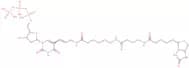
CAS:<p>Biotin-16-deoxyuridine-5'-triphosphate, lithium salt (Biotin-16-dUTP) is a nucleotide analog that is used in the detection of RNA and DNA. It is incorporated into the growing DNA or RNA strand by DNA polymerase and then detected by an enzyme that can detect biotin. Biotin-16-dUTP has been shown to be effective in identifying the occipital cortex during basic protein localization studies. The use of biotin-16-dUTP has also been shown to increase immune response as well as neuronal death in vivo models. This drug has also been shown to cause necrotic cell death in hl-60 cells, which may be due to its ability to inhibit creatine kinase and interfere with cellular ATP production. Biotin-16-dUTP has also been used for the detection of genome dna from HLA class I genes with monoclonal antibodies</p>Formula:C32H52N7O18P3S·xLiPurity:Min. 95%Color and Shape:Colourless liquid.Molecular weight:947.78 g/mol6-Chloro-2-hydroxy-9-(2',3',5'-tri-O-acetyl-b-D-ribofuranosyl)purine
CAS:<p>6-Chloro-2-hydroxy-9-(2',3',5'-tri-O-acetyl-b-D-ribofuranosyl)purine is a novel nucleoside that has been shown to have anticancer activity. It is synthesized by the condensation of 2,6 dichloropurine with 3,5 diacetyl b ribofuranosyl chloride in the presence of triethylamine and pyridine. The compound has been shown to inhibit viral replication and induce apoptosis in cancer cells. 6C2H9(2',3',5'-tri-O-acetylb-D-ribofuranosyl)purine may also be useful for the treatment of human immunodeficiency virus (HIV) infection.</p>Formula:C16H17ClN4O8Purity:Min. 95%Molecular weight:428.78 g/mol2'-Deoxy-2',2'-difluorocytidine 5'-monophosphate triethylammonium salt
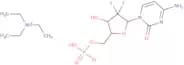
<p>2'-Deoxy-2',2'-difluorocytidine 5'-monophosphate triethylammonium salt is an antiviral nucleotide that inhibits the synthesis of viral DNA by competing with natural substrates. It has been shown to be a potent activator of the phosphoramidite method, which is a synthetic method for the production of oligonucleotides. This nucleotide is synthesized by reacting 2-deoxy-2',2'-difluorocytidine 5'-triphosphate with TEA in DMF. The CAS number for this compound is 62533-81-7 and it has a molecular weight of 298.3 Da.</p>Purity:Min. 95%5-(Trimethylstannyl)-2'-deoxyuridine
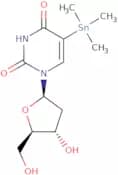
CAS:<p>5-(Trimethylstannyl)-2'-deoxyuridine is a nucleoside analogue that is structurally related to thymidine. It has been shown to be cytotoxic in vitro, with high cytotoxicity for human glioma cells. This drug has been detected in vivo using autoradiography and microspectrophotometry, with a maximum uptake in the brain and detectable levels in the kidneys and liver. 5-(Trimethylstannyl)-2'-deoxyuridine is taken up by cells through an energy transfer process. The drug is demercurated from the cell surface by extracellular enzymes, such as sulfatases and phosphatases, converting it into 5-mercapto-2'-deoxyuridine (MdUrd), which can be detected by its UV-absorption characteristics.</p>Formula:C12H20N2O5SnPurity:Min. 95%Molecular weight:391.01 g/mol2,4,6-Trimethoxy-pyrimidine
CAS:Controlled Product<p>2,4,6-Trimethoxy-pyrimidine is a heterobicyclic compound that contains three methoxy groups. It is a synthetic nucleobase that can be found in the nucleosides uridine and cytidine, as well as in other compounds such as pyrimidines. 2,4,6-Trimethoxy-pyrimidine has been shown to be reactive to nucleophilic solutes and has been used with success in the synthesis of lactams. The isomers of this compound have different efficiencies for reaction with nucleophilic solutes.</p>Purity:Min. 95%3'-Deoxy-3'-fluoroxylocytidine
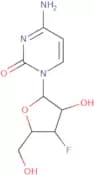
CAS:<p>3'-Deoxy-3'-fluoroxylocytidine is a synthetic phosphate derivative of cytidine. It is an activator for phosphoramidites, deoxyribonucleosides and ribonucleosides. 3'-Deoxy-3'-fluoroxylocytidine is an anticancer agent that has been shown to have activity against various cancer cell lines, including prostate cancer cells. This compound has also been shown to have antiviral activity against herpes simplex virus type 1 (HSV-1) and influenza A virus in the laboratory.</p>Purity:Min. 95%2'-Deoxy-5'-O-DMT-N2-isobutyrylguanosine 3'-H phosphonate triethylammonium salt
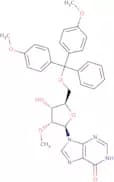
CAS:<p>2'-Deoxy-5'-O-DMT-N2-isobutyrylguanosine 3'-H phosphonate triethylammonium salt is a novel nucleoside analog. It has been shown to be cytotoxic to cancer cells in vitro and in vivo. 2'-Deoxy-5'-O-DMT-N2-isobutyrylguanosine 3'-H phosphonate triethylammonium salt inhibits viral replication, including herpes simplex virus type 1 (HSV1) and human immunodeficiency virus type 1 (HIV1), by inhibiting DNA synthesis.</p>Formula:C35H37N5O9PPurity:Min. 95%Molecular weight:804.89 g/mol5'-O-DMT-2'-O-methylinosine
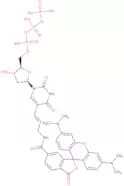
CAS:<p>5'-O-DMT-2'-O-methylinosine is a monophosphate nucleotide that has antiviral effects. It is synthesized from the synthetic nucleoside 5'-O-DMT-2'-deoxyuridine and 2'-O-methylinosine. The synthesis of 5'-O-DMT-2'-O-methylinosine is achieved through phosphoramidite chemistry, which produces a novel antiviral agent with high purity and quality. This compound has been shown to inhibit HIV replication in vitro, but further research is needed to determine its efficacy in vivo.</p>Formula:C32H32N4O7Purity:Min. 95%Molecular weight:584.63 g/mol5-Aminoallyl- 2'-deoxyuridine 5'-triphosphate, labeled with 5/6-TAMRA - 1mM aqueous solution
CAS:<p>5-Aminoallyl-2'-deoxyuridine 5'-triphosphate is a novel chemical compound that is modified with 5/6-TAMRA and has anticancer, antiviral, and antitumor properties. It is an activator of ribonucleosides and deoxyribonucleosides. CAS No. 151345-35-6</p>Formula:C37H40N5O18P3Purity:Min. 95%Molecular weight:935.66 g/mol3',5'-Di-O-acetyl-2'-deoxyguanosine
CAS:<p>3',5'-Di-O-acetyl-2'-deoxyguanosine is a nucleoside that is activated by hypochlorous acid to form a reactive intermediate, which can then react with other molecules. 3',5'-Di-O-acetyl-2'-deoxyguanosine has been shown to be selectively cytotoxic to human tumor cells and may be used as a radiosensitizer for cancer treatment. The reaction products of this compound include hypochlorite and hydrogen peroxide, which are strong oxidizing agents that cause tissue injury. This compound is also an effective reagent for the detection of myeloperoxidase in plasma samples.</p>Formula:C14H17N5O6Purity:Min. 95%Color and Shape:PowderMolecular weight:351.32 g/mol







![7-Benzyl-4-chloro-5,6,7,8-tetrahydropyrido[3,4-d]pyrimidine](/_next/image/?url=https%3A%2Fstatic.cymitquimica.com%2Fproducts%2F3D%2Fthumb-webp%2FNB57451.webp&w=3840&q=75)










![8-Bromo-9-[3',5'-O-(1,1,3,3-tetraisopropyl-1,3-disiloxanediyl)-2'-deoxy-b-D-ribofuranosyl]guanine](/_next/image/?url=https%3A%2Fstatic.cymitquimica.com%2Fproducts%2F3D%2Fthumb-webp%2FNB04668.webp&w=3840&q=75)