


Nucleosides
Nucleosides are fundamental building blocks of nucleic acids, composed of a nitrogenous base attached to a sugar molecule. In this section, you can find a wide variety of nucleosides essential for research in molecular biology, biochemistry, and pharmacology. These compounds play crucial roles in the synthesis of DNA and RNA, and are also vital in various metabolic processes. Nucleosides are used in studying genetic material, developing antiviral and anticancer therapies, and understanding cellular mechanisms. At CymitQuimica, we provide high-quality nucleosides to support your research and development needs, ensuring purity and reliability for your experimental applications.
Found 3567 products of "Nucleosides"
Sort by
Purity (%)
0
100
|
0
|
50
|
90
|
95
|
100
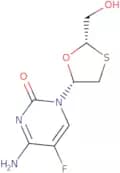
(+)-Emtricitabine
CAS:<p>Emtricitabine is a synthetic nucleoside analog of cytidine. It is used in the treatment of HIV infection and hepatitis B virus infection. Emtricitabine binds to human DNA polymerase, preventing the incorporation of viral DNA into the host cell's genome. This prevents the virus from multiplying and reproducing, thereby inhibiting the spread of HIV in humans. The drug has been shown to inhibit replication at all stages of HIV-1, including reverse transcription and integration into host cell DNA. Emtricitabine also inhibits replication of other viruses such as herpes simplex virus type 1 (HSV-1) and hepatitis C virus (HCV). Emtricitabine is a prodrug that must be activated by phosphorylation before it can be incorporated into DNA. This activation requires tenofovir alafenamide hemifumarate as an activator, which is an experimental drug with improved bioavailability, reduced renal clearance, and</p>Formula:C8H10FN3O3SPurity:Min. 95%Molecular weight:247.25 g/mol2'-Deoxy-5'-O-DMT-2'-fluoro-N6-phenoxyacetyladenosine 3'-CE phosphoramidite
<p>2'-Deoxy-5'-O-DMT-2'-fluoro-N6-phenoxyacetyladenosine 3'-CE phosphoramidite is a modified nucleoside that has been shown to inhibit the growth of cancer cells. It is synthesized by the reaction of 2'-deoxy-5'-O-dimethoxytriphenylmethyl adenosine 3'-chloroethylphosphoramidite and 2',6' -difluoroaniline in an organic solvent. The product is purified by silica gel column chromatography, followed by recrystallization from a mixture of methanol and water. This novel nucleoside may prove to be a useful anticancer agent as it inhibits the growth of cancer cells without producing any apparent toxicity for normal cells.</p>Purity:Min. 95%2'-Deoxy-N2-isobutyryl-3'-O-levulinoylguanosine
CAS:<p>2'-Deoxy-N2-isobutyryl-3'-O-levulinoylguanosine is a monophosphate antiviral agent that inhibits the synthesis of viral RNA by blocking the activity of DNA polymerase. It has been shown to be active against Herpes simplex virus type 1 and 2 (HSV1, HSV2) and cytomegalovirus (CMV). This compound also has anticancer activity due to its ability to inhibit cell proliferation and induce apoptosis in cancer cells. The antiviral activity of 2'-deoxy-N2-isobutyryl-3'-O-levulinoylguanosine is not limited to herpes viruses and also includes HIV, human T lymphotropic virus type I (HTLV1), and human cytomegalovirus. This product is synthesized with high purity, high quality, and high yield.</p>Formula:C19H25N5O6Purity:Min. 95%Molecular weight:419.44 g/molFluorescein-dt cep
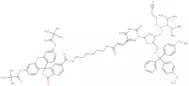
CAS:<p>Fluorescein-dt cep is a monophosphate nucleoside analog that is modified with an activated ester group. It is used as a prodrug for the treatment of influenza in humans. Fluorescein-dt cep has antiviral activity, which may be due to its ability to inhibit viral RNA synthesis. This agent also has anticancer activity and has been shown to kill leukemia cells by interfering with DNA synthesis. The chemical name for fluorescein-dt cep is 1-(2,6-dichloro-4-(5,7-dimethoxy-4-methylpyridiniumyl)phenyl)cytosine monophosphate. Fluorescein-dt cep is also known by the following synonyms: 1-(2,6-Dichloro-4-(5,7-dimethoxyquinoliniumyl)phenyl)-1H-[1,3]diox</p>Formula:C79H89N6O17PPurity:Min. 95%Molecular weight:1,425.6 g/molU-13C10, U-[15N2]-mono-Labelled Thymidylyl-3'-5'-thymidine ammonium (compound A)
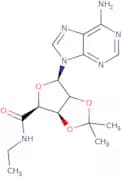
<p>U-13C10, U-[15N2]-mono-Labelled Thymidylyl-3'-5'-thymidine ammonium (compound A) is a novel anticancer drug that is synthesized by phosphoramidite chemistry. It is an activator of DNA synthesis and has been shown to be cytotoxic against cancer cells in vitro. This compound is also a high quality nucleoside analogue. The molecular weight of this compound is 434.4 g/mol and it has a CAS number of 81633-09-9.</p>Formula:C20H30N5O12PPurity:Min. 95%Molecular weight:563.45 g/mol5'-Ethylcarboxamido-2',3'-O-isopropylideneadenosine
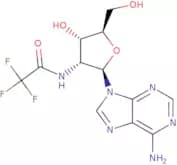
CAS:<p>5'-Ethylcarboxamido-2',3'-O-isopropylideneadenosine is an activator that can be used to treat cancer. It is synthesized from the natural amino acid inosine by replacing the amine group with ethyl carboxamide. The synthesis of this molecule is currently in progress. This product has shown anticancer activity and antiviral effects, as well as high purity and novel properties.</p>Formula:C15H20N6O4Purity:Min. 95%Molecular weight:348.36 g/mol2'-TFA-NH-dA
CAS:<p>2'-TFA-NH-dA is a monophosphate nucleotide. It is a novel and modified ribonucleoside that can be used as an activator to promote the synthesis of diphosphate, deoxyribonucleosides, and phosphoramidites. 2'-TFA-NH-dA has been shown to have anticancer properties in vitro and antiviral properties in vivo. This compound is synthesized from 2'-deoxyadenosine 5'-phosphate (2'-DAP), which is obtained from the amino acid ATP.</p>Formula:C12H13F3N6O4Purity:Min. 95%Molecular weight:362.26 g/molBiotin-11-2-deoxyuridine-5-triphosphate tetralithium salt
CAS:<p>Biotin-11-2-deoxyuridine-5-triphosphate tetralithium salt is a modified nucleoside that is used in antiviral and anticancer treatments. The deoxyribonucleosides are synthesized by coupling biotin to 2'-deoxyuridine 5'-triphosphate, which is then reacted with lithium tetralithium chloride. This product has been shown to be an activator of DNA synthesis and can induce the proliferation of cancer cells. Biotin-11-2-deoxyuridine-5-triphosphate tetralithium salt has been shown to inhibit the growth of both human immunodeficiency virus (HIV) and murine leukemia virus (MLV).<br>Biotin-11-2-deoxyuridine-5-triphosphate tetralithium salt is also used in the synthesis of ribonucleosides for use in DNA research. It</p>Formula:C24H41N6O17P3S·4LiPurity:Min. 95%Molecular weight:886.41 g/molThymidine 5'- triphosphate lithium salt - 100mM aqueous solution
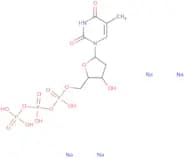
CAS:<p>Thymidine 5’-triphosphate tetralithium salt (dTTP) is a crucial component in chemical biology research. It is a modified form of thymidine, containing three phosphate groups. Important in DNA replication and repair, dTTP acts as a substrate for DNA polymerases during polymerase chain reactions (PCR), facilitating the amplification of specific DNA sequences. In addition, in DNA sequencing, dTTP is incorporated into newly synthesized DNA strands, allowing precise determination of nucleotide sequences.</p>Formula:C10H17N2O14P3·xLiPurity:Min. 95%Molecular weight:482.17 g/mol6-Bromo-4-chloropyrido[2,3-d]pyrimidine
CAS:<p>6-Bromo-4-chloropyrido[2,3-d]pyrimidine is a pyrimidine derivative that has been synthesized using cyclization and condensation techniques. The synthesis of this compound is efficient and uses relatively low amounts of starting materials. It can be made using microwave irradiation in a high yield. 6-Bromo-4-chloropyrido[2,3-d]pyrimidine is an aromatic ring with efficient methods for synthesis and bromination. This research could be used to produce new compounds with similar structures that are more potent than current drugs.</p>Purity:Min. 95%2'-Deoxy-5'-O-DMT-5-D-uridine 3'-CE phosphoramidite
Controlled Product<p>2'-deoxy-5'-O-DMT-5-D-uridine 3'-CE phosphoramidite (2'DMTU) is a synthetic nucleoside with anticancer, antiviral and antiretroviral activity. 2'DMTU is a ribonucleotide monophosphate that can be used to modify RNA in the laboratory. It is a modified nucleoside that prevents RNA polymerase from adding onto the DNA strand and has been shown to activate apoptosis in cells that are resistant to anticancer drugs.</p>Formula:C39H46N4O8PDPurity:Min. 95%Molecular weight:731.81 g/mol5-Fluoro-1-(2',3'-dideoxy-2',3'-didehydro-5'-O-acetyl-b-L-ribofuranosyl)-uracil
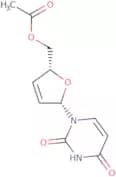
CAS:<p>5-Fluoro-1-(2',3'-dideoxy-2',3'-didehydro-5'-O-acetyl-b-L-ribofuranosyl)-uracil is a modified nucleoside that is phosphorylated and activated to 5'-triphosphate. It has antiviral, anticancer, and antimalarial activities.</p>Formula:C11H12N2O5Purity:Min. 95%Molecular weight:252.22 g/mol5-Methoxyuridine 5′-triphosphate sodium, 85mM/L aqueous solution
CAS:<p>Please enquire for more information about 5-Methoxyuridine 5′-triphosphate sodium, 85mM/L aqueous solution including the price, delivery time and more detailed product information at the technical inquiry form on this page</p>Formula:C10H17N2O16P3•NaxPurity:Min. 95%5-Amino-1-(b-D-ribofuranosyl)imidazole-4-carboxamide-5'-phosphate
<p>5-Amino-1-(b-D-ribofuranosyl)imidazole-4-carboxamide-5'-phosphate is a ribonucleoside monophosphate. It is an antiviral agent that inhibits the synthesis of RNA by preventing the attachment of ribonucleotides to the 5' end of RNA. This drug is also used in anticancer therapy, as it has been shown to inhibit DNA synthesis and induce cell differentiation. 5-Amino-1-(b-D-ribofuranosyl)imidazole-4-carboxamide-5'-phosphate is synthesized from 1-(2'-deoxyribofuranosyl)-5-(2'-deoxyribofuranosyl)imidazole, which can be made from 2,4,6,-triaminopyrimidine and 2,3,-dideoxyribose. This product has CAS number 13</p>Purity:Min. 95%TFA-ap-dU
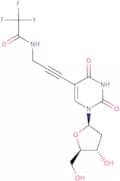
CAS:<p>TFA-ap-dU is a modified, ribonucleosides that are used in DNA synthesis. The polymerase chain reaction (PCR) technique can be used to generate a large number of copies of a specific sequence of nucleotides from the original DNA template. This product is used for antiviral and anticancer research. TFA-ap-dU has been shown to be effective against Hepatitis B virus and Human Immunodeficiency Virus (HIV). It is also an activator of DNA and RNA synthesis.</p>Formula:C14H14F3N3O6Purity:Min. 95%Molecular weight:377.27 g/molN6-Benzoyl-5'-O-DMT-2'-O-(2-Ethoxy-2-oxoethyl)adenosine
<p>N6-Benzoyl-5'-O-DMT-2'-O-(2-Ethoxy-2-oxoethyl)adenosine is a phosphoramidite that is used in the synthesis of oligonucleotides. It is an activator of ribonucleotides and diphosphate for RNA synthesis. Its high purity and quality make it suitable for use in the synthesis of DNA, RNA, or other nucleoside analogues.</p>Purity:Min. 95%3',5'-Di-O-benzoyl-5-fluoro-2'-O-methyluridine
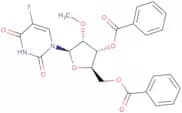
CAS:<p>3',5'-Di-O-benzoyl-5-fluoro-2'-O-methyluridine is a nucleoside that acts as an activator and phosphoramidite. The di-O-benzoyl group is used to protect the 2'-hydroxyl group during the synthesis of oligonucleotides. 3',5'-Di-O-benzoyl-5-fluoro-2'-O-methyluridine has been shown to have anticancer activity against human breast cancer cells. It also inhibits the replication of DNA viruses, such as HIV, hepatitis B virus and herpes simplex virus type 1, and is active against influenza A virus. This compound has also been shown to inhibit the production of inflammatory cytokines in vitro.</p>Formula:C24H21FN2O8Purity:Min. 95%Molecular weight:484.44 g/mol2-Chloro-3-deazaadenosine
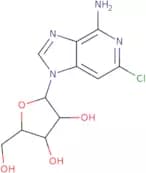
CAS:<p>2-Chloro-3-deazaadenosine is an antiviral drug that inhibits the synthesis of DNA by acting as a competitive inhibitor for adenosine. It has been shown to be effective in the treatment of hepatitis B virus and herpes simplex virus infections. 2-Chloro-3-deazaadenosine prevents the incorporation of the natural nucleoside adenosine into DNA, which leads to inhibition of viral replication and cell division. This drug also has been shown to inactivate liver cells in bovines, which may account for its toxicity. The synthesis of 2-chloroadenosine is difficult and laborious due to its glycosylation, making it more expensive than other analogues that are more easily synthesized.</p>Formula:C11H13ClN4O4Purity:Min. 95%Color and Shape:PowderMolecular weight:300.7 g/mol5'-O-DMT-2'-O-(2-methylacetamido)-5-methyluridine 3'-CE phosphoramidite
<p>5'-O-DMT-2'-O-(2-methylacetamido)-5-methyluridine 3'-CE phosphoramidite is a high purity, diphosphate, Anticancer, Modified, Phosphoramidites, DNA, High quality, Novel, Activator. It is CAS No. 106433-85-6 and has the molecular formula C15H14N4O8P. 5'-O-DMT-2'-O-(2-methylacetamido)-5-methyluridine 3'-CE phosphoramidite is not found in nature. This product is a monophosphate nucleoside that belongs to the group of nucleosides and deoxyribonucleosides. It can be used for synthesis of DNA and RNA, as well as for the treatment of cancer cells.</p>Purity:Min. 95%N6-Benzoyl-3'-O-benzoyl-2'-deoxyadenosine
<p>6-Benzoyl-3'-O-benzoyl-2'-deoxyadenosine (BBD) is a synthetic nucleoside that has antiviral activity. It is an activator of DNA polymerase and also a novel monophosphate nucleotide. BBD has been shown to inhibit the replication of RNA in cells infected with HIV and HSV.</p>Purity:Min. 95%N6-Benzoyl-3'-deoxy-5'-O-DMT-3'-fluoroadenosine
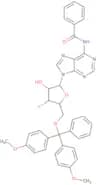
CAS:<p>N6-Benzoyl-3'-deoxy-5'-O-DMT-3'-fluoroadenosine is an activator nucleoside that is used as a phosphoramidite in DNA synthesis. It is also used in antiviral and anticancer therapies. N6-Benzoyl-3'-deoxy-5'-O-DMT-3'-fluoroadenosine has been shown to have high purity and high quality, making it suitable for use in the pharmaceutical industry. This product is not active against bacterial or viral infections, but has proved to be effective in the treatment of leukemia, lymphoma and other cancers.</p>Formula:C38H34FN5O6Purity:Min. 95%Molecular weight:675.71 g/mol5'-O-DMT-4-methoxythymidine 3'-CE phosphoramidite
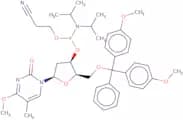
<p>5'-O-DMT-4-methoxythymidine 3'-CE phosphoramidite is a high purity, modified nucleoside with anticancer potential. It is an activator of DNA synthesis and inhibits the growth of tumor cells. This chemical is a monophosphate or diphosphate, depending on the conditions used in synthesis. 5'-O-DMT-4-methoxythymidine 3'-CE phosphoramidite is used to synthesize DNA, RNA, and deoxyribonucleosides. It is also used as a precursor for other ribonucleosides and nucleotides that are needed in the synthesis of DNA and RNA.<br>5'-O-DMT-4-methoxythymidine 3'-CE phosphoramidite can be synthesized from commercially available starting materials such as 4-(2-deoxyribofuranosyl)thymidine, 5-(3,</p>Formula:C41H51N4O8PPurity:Min. 95%Molecular weight:758.86 g/mol2'-Deoxy-5'-O-DMT-N6-phenoxyacetyladenosine 3'-Me phosphoramidite
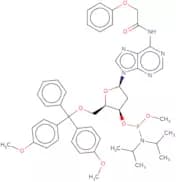
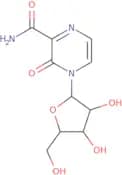
<p>2'-Deoxy-5'-O-DMT-N6-phenoxyacetyladenosine 3'-Me phosphoramidite is a novel nucleoside analog with antiviral and anticancer activities. It inhibits viral replication by inhibiting the viral polymerase and cellular DNA polymerases. 2'-Deoxy-5'-O-DMT-N6-phenoxyacetyladenosine 3'-Me phosphoramidite also inhibits tumor growth by arresting cells in the G2/M phase of the cell cycle. This compound has been shown to be effective against human leukemia, lymphoma, breast cancer, and colon cancer cells.</p>Formula:C46H53N6O8PPurity:Min. 95%Color and Shape:SolidMolecular weight:848.94 g/mol3,4-Dihydro-3-oxo-4-b-D-ribofuranosyl-2-pyrazinecarboxamide
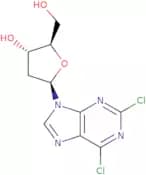
CAS:<p>3,4-dihydro-3-oxo-4-(2-pyrimidinyl)-2,5-dioxopyrrolidine carboxamide is an analog of acyclovir that has antiviral activity against a variety of viruses. It binds to the receptor binding site on the virus and prevents viral replication. 3,4-Dihydro-3-oxo-4-(2-pyrimidinyl)-2,5-dioxopyrrolidine carboxamide is effective against human influenza A virus (H1N1) and hepatitis B virus. This drug also has been shown to inhibit the growth of phlebovirus in cell culture by preventing the synthesis of viral RNA.</p>Formula:C10H13N3O6Purity:Min. 95%Molecular weight:271.23 g/mol2,6-Dichloro-9-(2'-deoxy-b-D-ribofuranosyl)purine
CAS:<p>2,6-Dichloro-9-(2'-deoxy-β-D-ribofuranosyl)purine is a synthetic compound that is used in the treatment of certain types of cancer. It has been shown to be an activator of DNA synthesis and an inhibitor of RNA synthesis. It has also been shown to inhibit tumor growth and prolong the survival time for patients with leukemia. The antiviral activity of 2,6-dichloro-9-(2'-deoxy-β-D-ribofuranosyl)purine may be due to its ability to inhibit viral DNA polymerase. This drug is also known as dideoxyinosine (ddI).</p>Formula:C10H10Cl2N4O3Purity:Min. 95%Molecular weight:305.12 g/mol2-[[4-[2-(tert-Butoxycarbonyl)ethyl]phenylethyl]amino]2',3'-O-isopropylideneadenosine-5'-N-ethylcarboxamide
CAS:<p>2-[[4-[2-(tert-Butoxycarbonyl)ethyl]phenylethyl]amino]2',3'-O-isopropylideneadenosine-5'-N-ethylcarboxamide is a novel nucleoside that inhibits DNA synthesis and viral replication. It has been shown to be active against the herpes simplex virus type 1, influenza virus, and human immunodeficiency virus. 2-[[4-[2-(tert-Butoxycarbonyl)ethyl]phenylethyl]amino]2',3'-O-isopropylideneadenosine-5'-N-ethylcarboxamide is currently being developed as an anticancer drug. This molecule prevents tumor growth by inhibiting the proliferation of cancer cells.</p>Formula:C30H41N7O6Purity:Min. 95%Molecular weight:595.69 g/mol8-Oxo-N2-isobutyryl-2-deoxyguanosine
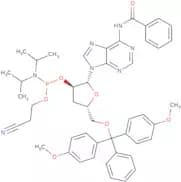
CAS:<p>8-Oxo-N2-isobutyryl-2-deoxyguanosine is a modified synthetic nucleoside. It finds applications in understanding mutagenesis and DNA repair mechanisms.</p>Formula:C14H19N5O6Purity:Min. 95%Molecular weight:353.33 g/molN6-Benzoyl-3'-deoxy-5'-O-DMT-adenosine 2'-CE phosphoramidite
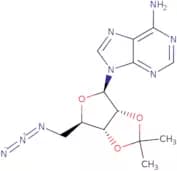
CAS:<p>N6-Benzoyl-3'-deoxy-5'-O-DMT-adenosine 2'-CE phosphoramidite is a novel modified nucleoside that has antiviral, anticancer and antibacterial properties. The chemical name is N6-benzoyl-3'-deoxy-5'-O-DMT-adenosine 2'-CE phosphoramidite. It is a ribonucleotide. It is an activator of the enzyme kinase A which phosphorylates proteins and activates them. This product has not been tested in humans.</p>Formula:C47H52N7O7PPurity:Min. 95%Molecular weight:857.93 g/mol5'-Azido-5'-deoxy-2',3'-O-isopropylideneadenosine
CAS:<p>5'-Azido-5'-deoxy-2',3'-O-isopropylideneadenosine (5ADeA) is a novel nucleoside with antiretroviral and antitumor activity. It is an activator of the innate immune system, which stimulates the production of cytokines such as TNF-α and IL-1β. This agent also inhibits viral replication by inhibiting viral RNA synthesis through its effect on the enzyme ribonucleotide reductase. 5ADeA monophosphate has been shown to be an effective antiviral against HIV and hepatitis C virus, as well as being active against human papilloma virus and Epstein-Barr virus. 5ADeA is synthesized in high purity and has a CAS number of 34245-48-2.</p>Formula:C13H16N8O3Purity:Min. 95%Molecular weight:332.32 g/mol5'-O-(4,4'-Dimethoxy-4''-(1H,1H,2H,2H-perfluorodecyl)trityl)thymidine 3'-CE phosphoramidite
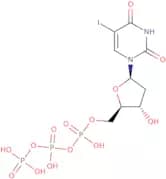
CAS:Controlled Product<p>5'-O-(4,4'-Dimethoxy-4''-(1H,1H,2H,2H-perfluorodecyl)trityl)thymidine 3'-CE phosphoramidite is a novel nucleoside with antiviral activity. It is synthesized through the condensation of 5-bromo-2′-deoxyuridine and 4,4′-dimethoxytrityl chloride. This compound has been shown to inhibit the synthesis of DNA and RNA in vitro. It also has anticancer properties and can be used for the treatment of leukemia.</p>Formula:C50H52F17N4O9PPurity:Min. 95%Molecular weight:1,206.92 g/mol2'-Deoxy-5-iodouridine-5'-triphosphate sodium salt - 10mM aqueous solution
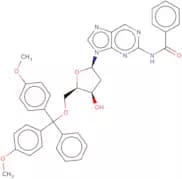
CAS:<p>2'-Deoxy-5-iodouridine-5'-triphosphate sodium salt is a potent inhibitor of thymidylate synthase, an enzyme that catalyzes the conversion of deoxyuridine to thymidylate. 2'-Deoxy-5-iodouridine-5'-triphosphate sodium salt has been found to have a noncompetitive inhibition effect on bacterial DNA replication and is used as a chemotherapeutic agent in the treatment of cancer. It is also used as a radioprotectant during radiation therapy. The optimum concentration for 2'-deoxy-5-iodouridine-5'-triphosphate sodium salt is 10mM, which inhibits bacterial enzymes but does not inhibit mammalian enzymes.</p>Formula:C9H10N2O14P3I·4NaPurity:Min. 95%Molecular weight:681.97 g/molN2-Benzoyl-9-(2'-deoxy-5'-O-DMT-2'-deoxy-b-D-ribofuranosyl)purine
<p>N2-Benzoyl-9-(2'-deoxy-5'-O-DMT-2'-deoxy-b-D-ribofuranosyl)purine is a phosphoramidite that is used as a precursor for the synthesis of modified oligonucleotides. It is also active against cancer and antiviral pathogens. N2-Benzoyl-9-(2'-deoxy-5'-O-DMT-2'-deoxy-b-D ribofuranosyl)purine has been shown to inhibit viral replication in vitro by inhibiting the formation of viral DNA, RNA, and protein. This drug has been shown to inhibit the growth of mouse leukemia cells in vivo. It also inhibits DNA synthesis by binding to the enzyme DNA polymerase, which is required for replication of bacterial and viral DNA.</p>Formula:C38H35N5O6Purity:Min. 95%Molecular weight:657.71 g/mol5'-O-DMT-5-methyl-(2'-O-4'-C-methylene)-uridine 3'-CE-phosphoramidite
<p>5'-O-DMT-5-methyl-(2'-O-4'-C-methylene)-uridine 3'-CE-phosphoramidite is a nucleoside phosphoramidite and an anticancer drug. It is a modified nucleoside that has been synthesized by the chemical reaction of 5'-O-dimethoxytritylthymidine with 5'-O-DMT-5-methyl-(2'-O-4'-C-methylene)uridine 3' chloroformate. 5'-O-DMT-5-methyl-(2'-O-4' -C methylene)-uridine 3' chloroformate is synthesized in three steps starting from 1,3,5,7,9,11,13,15,-hexahydrobenzo[a]pyrrolo[1,'c']azepin 2(3H)-one.</p>Purity:Min. 95%2'-Deoxyuridine-5'-[(a,b)-imido]diphosphate sodium salt - 10mM aqueous solution
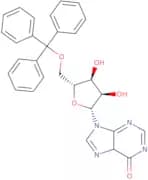
CAS:<p>2'-Deoxyuridine-5'-[(a,b)-imido]diphosphate sodium salt - 10mM aqueous solution is an organic compound that is used as a plant growth regulator. It inhibits the activity of plant enzymes, such as adenylate cyclase and protein kinase C, thereby blocking the production of proteins in plants. 2'-Deoxyuridine-5'-[(a,b)-imido]diphosphate sodium salt - 10mM aqueous solution has been shown to be toxic to muscle tissue and can cause acute toxicity in mammals. However, it has been found to be safe for use on plants when diluted with water.</p>Formula:C9H15N3O10P2Purity:Min. 95%Molecular weight:387.18 g/mol5-O-Tritylinosine
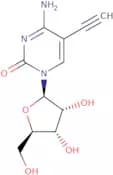
CAS:<p>5-O-Tritylinosine is a modified nucleoside that has shown anticancer and antiviral properties. It is the monophosphate ester of 5-methyluracil and has been shown to inhibit DNA synthesis in vitro. 5-O-Tritylinosine has also been shown to inhibit the replication of herpes simplex virus type 1, which may be due to its ability to inhibit viral DNA polymerase.</p>Formula:C29H26N4O5Purity:Min. 95%Molecular weight:510.54 g/mol5-Ethynylcytidine
CAS:<p>5-Ethynylcytidine is a fluorescent analog of cytosine that has been synthesized for use in biochemical research. It is used to identify cellular sites of RNA synthesis and replication, as well as to study the role of the 5-ethynyl group in the mechanism of DNA methylation. The synthetic route starts with an azide intermediate which is then treated with sodium hydroxide, followed by hydrolysis and demethylation. 5-Ethynylcytidine has been shown to be selective for mammalian cells and tissues, and was incubated with calf thymus DNA for crystallographic data.</p>Formula:C11H13N3O5Purity:Min. 95%Molecular weight:267.24 g/mol4'-a-C-Methyladenosine
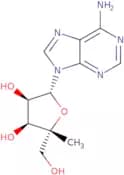
CAS:<p>4'-a-C-Methyladenosine is a nucleoside that has antiviral, anticancer and novel properties. It is a modified nucleoside with a methyl group in the 4' position. This modification prevents the phosphodiester bond from being hydrolyzed by nucleotide kinase enzymes. The methyl group also inhibits the formation of adenosine monophosphate (AMP) during DNA synthesis, which prevents the deactivation of adenosine triphosphate (ATP). 4'-a-C-Methyladenosine is used to synthesize oligonucleotides for use in DNA sequencing and gene mapping.</p>Purity:Min. 95%5’-Azido-2’,5’-dideoxyuridine
CAS:<p>5’-Azido-2’,5’-dideoxyuridine (5ADU) is a pyrimidine nucleoside that has been used to treat cancer. It is converted to 5-azidouracil which inhibits the synthesis of thymidylate, an essential component of DNA. 5ADU is also active against herpes virus and can be used as an antiviral agent. This drug has been shown to protect against radiation damage by inhibiting the formation of free radicals. The protonation of 5ADU leads to a stereochemical rearrangement that prevents the formation of free radicals. 5ADU does not inhibit bacterial enzymes, but it does have some effect on viruses, such as herpes virus, because they contain DNA or RNA similar to human cells.</p>Formula:C9H11N5O4Purity:Min. 95%Molecular weight:253.21 g/mol5-[N(6-(Trifluoroacetamido)hexyl)-3-(E)-acrylamido] -2'-deoxyuridine
CAS:<p>5-[N(6-(Trifluoroacetamido)hexyl)-3-(E)-acrylamido] -2'-deoxyuridine is a synthetic, modified nucleoside that functions as an activator of ribonucleotide reductase. It has been shown to be effective in the treatment of viral infections, including herpes simplex virus type 1 (HSV-1), herpes simplex virus type 2 (HSV-2), and human immunodeficiency virus type 1 (HIV-1). 5-[N(6-(Trifluoroacetamido)hexyl)-3-(E)-acrylamido] -2'-deoxyuridine is also synthesized into DNA or RNA molecules, which are used to study the structure of these compounds. It can also be used for phosphoramidite synthesis.</p>Formula:C20H27F3N4OPurity:Min. 95%Molecular weight:396.45 g/molN4-Benzoyl-2'-deoxy-3'-O-levulinoylcytidine
<p>N4-Benzoyl-2'-deoxy-3'-O-levulinoylcytidine is a nucleoside that is used as an antiviral and anticancer agent. It is a modified deoxyribonucleoside that has antiviral activity against HSV-1, HSV-2, and HIV. N4-Benzoyl-2'-deoxy-3'-O-levulinoylcytidine also has anticancer effects against leukemia cells in mice. This drug is synthesized from 2′,3′,5′triacetyladenosine by the reaction of 4-(1H)-benzoyloxymethyl)phenylacetic acid with triethylamine and levulinic acid chloride.</p>Formula:C21H23N3O7Purity:Min. 95%Molecular weight:429.43 g/mol8-(4-Amino-(2',3',4',5',6'-D5-biphenyl)-2'-deoxyguanosine
Controlled Product<p>8-(4-Amino-(2',3',4',5',6'-D5-biphenyl)-2'-deoxyguanosine is a novel, diphosphate nucleoside with antiviral and anticancer activity. It has been shown to activate the transcription of genes that are involved in cell growth and differentiation. This drug also inhibits the synthesis of viral DNA by binding to the viral DNA polymerase, thereby inhibiting its function. 8-(4-Amino-(2',3',4',5',6'-D5-biphenyl)-2'-deoxyguanosine can be used as a phosphoramidite for the preparation of oligonucleotides for use in gene therapy.</p>Formula:C22H17N6O4D5Purity:Min. 95%Color and Shape:PowderMolecular weight:439.48 g/mol2',3'-Didehydro-2',3'-dideoxy-5'-acetate inosine
CAS:<p>2',3'-Didehydro-2',3'-dideoxy-5'-acetate inosine (ddA) is a prodrug that is activated by hydrolysis to didanosine. The sodium salt of ddA has been shown to be effective in the treatment of HIV infection. Sodium ddA is a crystalline, neutralized salt with an alkaline pH and a pKa of 9.4. It has been crystallized from an alkaline solution using Raney nickel as a catalyst. This product can be used to synthesize intermediates for pharmaceuticals or other chemical products.</p>Formula:C12H12N4O4Purity:Min. 95%Molecular weight:276.25 g/mol4-Methyl-2-(methylsulfanyl)-5-pyrimidinecarboxylic acid
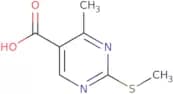
CAS:<p>Ribonucleosides, deoxyribonucleosides, and their activated forms (e.g., 4-methyl-2-(methylsulfanyl)-5-pyrimidinecarboxylic acid) are all important intermediates for the synthesis of DNA and RNA. Ribonucleosides are the key building blocks for the synthesis of DNA. They can be converted to nucleosides by removal of the ribose moiety. Deoxyribonucleosides are synthesized from ribonucleosides by removal of the hydroxyl group from carbon 2' position of ribose. The activated forms (e.g., 4-methyl-2-(methylsulfanyl)-5-pyrimidinecarboxylic acid) are useful in phosphoramidite chemistry as they have a free amine group on one side and a free sulfonyl group on the other side that can be used to react with a growing oligo or polyphosph</p>Formula:C7H8N2O2SPurity:Min. 95%Molecular weight:184.22 g/mol3'-Azido-2'-deoxy-5'-O-DMT-thymidine
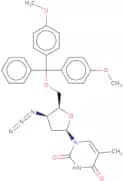
CAS:<p>3'-Azido-2'-deoxy-5'-O-DMT-thymidine is a novel and potent activator of ribonucleotide reductase. It has been shown to be an effective inhibitor of DNA synthesis and antiviral agent, with a low cytotoxicity profile. 3'-Azido-2'-deoxy-5'-O-DMT-thymidine is synthesized from DMT, which is readily available in the form of its monophosphate or diphosphate. The compound has been shown to inhibit viral replication by inhibiting viral reverse transcriptase activity. 3'-Azido-2'-deoxy-5'-O-DMT-thymidine also inhibits DNA synthesis in cancer cells.</p>Formula:C31H31N5O6Purity:Min. 95%Molecular weight:569.61 g/mol2',5'-Dideoxy-2'-fluoro-5'-iodouridine
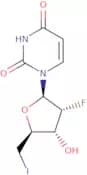
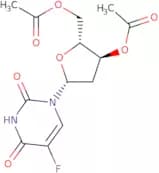
CAS:<p>2',5'-Dideoxy-2'-fluoro-5'-iodouridine is a modified nucleoside that is used in the synthesis of oligonucleotides. It can be used as an antiviral and anticancer agent. The drug has been shown to inhibit the replication of DNA and RNA, which may lead to cell death. 2',5'-Dideoxy-2'-fluoro-5'-iodouridine is also known for its high purity, novel structure and stability.</p>Formula:C9H10FIN2O4Purity:Min. 95%Molecular weight:356.09 g/mol3',5'-Di-O-acetyl-2'-deoxy-5-fluorouridine
CAS:<p>3',5'-Di-O-acetyl-2'-deoxy-5-fluorouridine is an antitumor agent that belongs to the class of heterocyclic ring. It is a pyridinium salt with a benzoic acid residue at position 3 and 5'. The heterocyclic ring is derived from alkylene, which has two double bonds in the chain. This compound has low toxicity and can be synthesized from chloroform, fluorouridine, and pyridine. 3',5'-Di-O-acetyl-2'-deoxy-5-fluorouridine inhibits growth of cancer cells by binding to ribosomes and preventing RNA synthesis. It also acts as an alkylating agent that binds to DNA, leading to crosslinking between strands of DNA. This leads to cell death by apoptosis or necrosis due to interference with DNA replication.</p>Formula:C13H15FN2O7Purity:Min. 95%Molecular weight:330.27 g/mol4’-a-C-Methyluridine
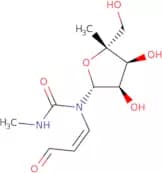
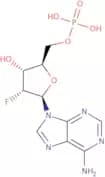
CAS:<p>4' - a-C-Methyluridine is a modified nucleoside that is used as a building block in the synthesis of DNA. It can be used for the treatment of viral infections and cancer. 4' - a-C-Methyluridine has antiviral activity against herpes simplex virus type 1 and cytomegalovirus. 4' - a-C-Methyluridine also has anticancer activity, which may be due to its ability to inhibit proliferation of cells by blocking the synthesis of DNA and RNA.</p>Purity:Min. 95%2'-Deoxy-2'-fluoroadenosine-5'-monophosphate
CAS:<p>2'-Deoxy-2'-fluoroadenosine-5'-monophosphate is a nucleotide that is used as an anthelmintic drug. It inhibits the synthesis of fatty acids and ATP levels in tissue culture cells. This nucleotide has also been shown to have immunomodulatory effects, which may be due to its ability to bind to receptor activity. 2'-Deoxy-2'-fluoroadenosine-5'-monophosphate binds with high affinity to the response elements of transcription factors such as NF-κB and AP1, which are involved in the regulation of gene expression and inflammatory responses.</p>Formula:C10H13FN5O6PPurity:Min. 95%Molecular weight:349.21 g/mol3'-Deoxy-3'-C-methylcytidine
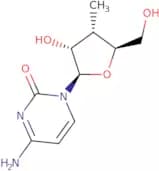
CAS:<p>3'-Deoxy-3'-C-methylcytidine is a monophosphate nucleotide that is used as an activator for DNA synthesis. It is a novel, synthetic nucleoside with high purity and high quality. 3'-Deoxy-3'-C-methylcytidine has been shown to inhibit viral replication, including human immunodeficiency virus type 1 (HIV-1), herpes simplex virus type 1 (HSV-1) and Epstein Barr virus (EBV) in cell culture. It also inhibits the growth of cancer cells in vitro by inhibiting the synthesis of DNA, RNA, and protein.</p>Formula:C10H15N3O4Purity:Min. 95%Molecular weight:241.24 g/mol2'-Deoxy-5'-DMT-5-[3-(trifluoroacetylamino)-1-E-propenyl]-uridine 3-CE phosphoramidite
CAS:<p>2'-Deoxy-5'-DMT-5-[3-(trifluoroacetylamino)-1-E-propenyl]-uridine 3-CE phosphoramidite is a synthetic nucleoside analog that has been modified to contain a triphosphate group. It is used in the synthesis of DNA or RNA. The compound is synthesized from 2,4-dichloro-N-(2,6-dimethoxybenzyl)phenylamine, which was reacted with ethyl (3-[(trifluoroacetyl)amino]propanoate) and deoxythymidine 3'-monophosphate. The CAS number for this product is 851520-76-8.</p>Purity:Min. 95%



![U-13C10, U-[15N2]-mono-Labelled Thymidylyl-3'-5'-thymidine ammonium (compound A)](/_next/image/?url=https%3A%2Fstatic.cymitquimica.com%2Fproducts%2F3D%2Fthumb-webp%2FTM32169.webp&w=3840&q=75)

![6-Bromo-4-chloropyrido[2,3-d]pyrimidine](/_next/image/?url=https%3A%2Fstatic.cymitquimica.com%2Fproducts%2F3D%2Fthumb-webp%2FNB44335.webp&w=3840&q=75)






![2-[[4-[2-(tert-Butoxycarbonyl)ethyl]phenylethyl]amino]2',3'-O-isopropylideneadenosine-5'-N-ethylca…](/_next/image/?url=https%3A%2Fstatic.cymitquimica.com%2Fproducts%2F3D%2Fthumb-webp%2FNB16642.webp&w=3840&q=75)



![2'-Deoxyuridine-5'-[(a,b)-imido]diphosphate sodium salt - 10mM aqueous solution](/_next/image/?url=https%3A%2Fstatic.cymitquimica.com%2Fproducts%2F3D%2Fthumb-webp%2FND45195.webp&w=3840&q=75)

![5-[N(6-(Trifluoroacetamido)hexyl)-3-(E)-acrylamido] -2'-deoxyuridine](/_next/image/?url=https%3A%2Fstatic.cymitquimica.com%2Fproducts%2F3D%2Fthumb-webp%2FNT57552.webp&w=3840&q=75)


![2'-Deoxy-5'-DMT-5-[3-(trifluoroacetylamino)-1-E-propenyl]-uridine 3-CE phosphoramidite](/_next/image/?url=https%3A%2Fstatic.cymitquimica.com%2Fproducts%2F3D%2Fthumb-webp%2FPD138043.webp&w=3840&q=75)