Nucleosides
Nucleosides are fundamental building blocks of nucleic acids, composed of a nitrogenous base attached to a sugar molecule. In this section, you can find a wide variety of nucleosides essential for research in molecular biology, biochemistry, and pharmacology. These compounds play crucial roles in the synthesis of DNA and RNA, and are also vital in various metabolic processes. Nucleosides are used in studying genetic material, developing antiviral and anticancer therapies, and understanding cellular mechanisms. At CymitQuimica, we provide high-quality nucleosides to support your research and development needs, ensuring purity and reliability for your experimental applications.
Found 3567 products of "Nucleosides"
Sort by
Purity (%)
0
100
|
0
|
50
|
90
|
95
|
100
3'-Azido-3'-deoxy-5'-O-tritylthymidine
CAS:<p>An intermediate in the production of Zidovudine, the FDA approved medication for treatment of AIDS.</p>Formula:C29H27N5O4Purity:Min. 98 Area-%Color and Shape:White PowderMolecular weight:509.56 g/mol2',3'-Dideoxyadenosine-5'-monophosphate
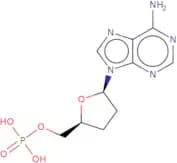
CAS:<p>2',3'-Dideoxyadenosine-5'-monophosphate (ddAMP) is an adenosine analog that is a substrate for the enzyme dideoxyribonucleoside kinase. It is activated by phosphorylation to the 5' ends of DNA molecules and inhibits viral replication. ddAMP has been shown to be effective in treating human immunodeficiency virus (HIV) infection, at least in part, by inhibiting the production of p24 antigen levels and reducing the number of CD4+ lymphocytes. The mechanism of action may involve binding to HIV-1 RNA, which prevents it from interacting with cellular dsDNA and inhibits its transcription into DNA.</p>Formula:C10H14N5O5PPurity:Min. 95%Molecular weight:315.22 g/mol5'-O-DMT-thymidine-3'-lcaa-CPG
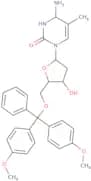
<p>5'-O-DMT-thymidine-3'-lcaa-CPG is a nucleoside, ribonucleoside, and diphosphate that inhibits viral DNA synthesis. It is a novel compound with antiviral properties that has been shown to inhibit the replication of human cytomegalovirus (HCMV) and herpes simplex type 1 virus. 5'-O-DMT-thymidine-3'-lcaa-CPG also functions as an anticancer agent by inhibiting DNA synthesis in tumor cells. This nucleoside analog is phosphoramidite, which can be used for the preparation of modified oligonucleotides. 5'-O-DMT-thymidine-3'-lcaa-CPG has high purity and high quality.</p>Purity:Min. 95%Color and Shape:Powder2'-Deoxyxanthosine ce-phosphoramidite (dx ce-phosphoramidite)
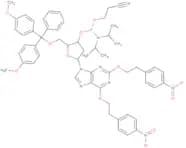
CAS:<p>Please enquire for more information about 2'-Deoxyxanthosine ce-phosphoramidite (dx ce-phosphoramidite) including the price, delivery time and more detailed product information at the technical inquiry form on this page</p>Formula:C56H61N8O12PPurity:Min. 95%Molecular weight:1,069.1 g/molLinoleoyl coenzyme A
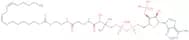
CAS:<p>Linoleoyl coenzyme A (LCA) is a fatty acid that is a component of the cell membrane. LCA is synthesized from linoleic acid and coenzyme A in the mitochondria. In humans, LCA is an important component of the mitochondrial protein. The production of this enzyme can be enhanced by dietary supplementation with linoleic acid. Linoleoyl coenzyme A has been used as a model system to study energy metabolism in mitochondria. It has been shown to be involved in carthamus tinctorius, human mitochondrial, rat liver microsomes, and dietary models. LCAs have also been used as analytical methods for measuring the amount of fatty acids within cells or tissues.</p>Formula:C39H66N7O17P3SPurity:Min. 95%Molecular weight:1,029.97 g/mol2’,3’-Dideoxy-5-fluorocytidine
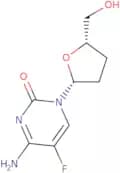
CAS:<p>2’,3’-Dideoxy-5-fluorocytidine is a nucleoside analog that inhibits the growth of tumor cells in animals. It has been shown to inhibit the replication of hepatitis B virus and HIV without affecting normal cell division. 2′,3′-Dideoxy-5-fluorocytidine also has potent antitumor activity against human hematopoietic cells and induces apoptosis.</p>Formula:C9H12FN3O3Purity:Min. 95%Molecular weight:229.21 g/mol7H-Pyrrolo[2,3d]pyrimidine
CAS:<p>7H-Pyrrolo[2,3d]pyrimidine is a pyrimidine compound that has been shown to have potent antitumor activity. It inhibits the enzyme acyl-coenzyme A carboxylase (ACC) and blocks the production of malonyl-CoA, an intermediate in the metabolism of fatty acids. Malonyl-CoA is an allosteric activator of ACC, which is an important enzyme for regulating fatty acid synthesis. 7H-Pyrrolo[2,3d]pyrimidine also inhibits the expression of the gene encoding cb2 receptor, which is involved in inflammatory processes. The compound binds to a hydroxyl group on ACC to inhibit its activity. 7H-Pyrrolo[2,3d]pyrimidine has been shown to be effective against miapaca-2 cells and other cancer cell lines at concentrations as low as 1 nM. This compound also has a</p>Formula:C6H5N3Purity:Min. 95%Molecular weight:119.12 g/molN6-Benzoyl-7-deaza-2'-deoxy-5'-O-tert-butyldimethylsilyl-7-iodoadenosine
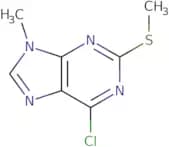
CAS:<p>N6-Benzoyl-7-deaza-2'-deoxy-5'-O-tert-butyldimethylsilyl-7-iodoadenosine is a novel nucleoside that has been shown to have anticancer and antiviral properties. It is a phosphoramidite of 7-iodoadenosine that has been modified to contain a benzoyl group at the 6 position. N6-Benzoyl-7-deaza-2'-deoxy-5'-O-tert-butyldimethylsilyl-(7)iodoadenosine can be used for the synthesis of oligonucleotides and DNA, as well as for the activation of latent HIV genes. This compound is also used in vitro to study the interactions between phosphoramidites and nucleosides.</p>Formula:C24H31IN4O4SiPurity:Min. 95%Molecular weight:594.52 g/mol2-Methylthio-6-chloro-9-methylpurine
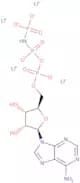
CAS:<p>2-Methylthio-6-chloro-9-methylpurine is an activator that inhibits the enzyme ribonucleotide reductase, which is involved in the synthesis of DNA and RNA. 2-Methylthio-6-chloro-9-methylpurine has been shown to inhibit viral replication and may be used as a antiviral agent. This compound has novel properties and is a potential anticancer drug due to its ability to inhibit the growth of tumor cells.</p>Formula:C7H7CIN4SPurity:Min. 95%Molecular weight:318.14 g/molAMP PNP tetralithium salt
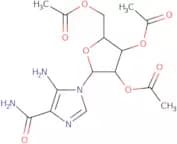
CAS:<p>Non-hydrolyzable AMP analog</p>Formula:C10H13Li4N6O12P3Purity:Min. 95%Molecular weight:529.93 g/mol5-Amino-1-(2',3',5'-tri-O-acetyl-b-D-ribofuranosyl)-imidazole-4-carboxamide
CAS:<p>5-Amino-1-(2',3',5'-tri-O-acetyl-b-D-ribofuranosyl)-imidazole-4-carboxamide (AICAR) is a high purity novel nucleotide analog that has been shown to be an activator of AMPK. AICAR can act as a substitute for ATP, the molecule that drives cellular energy production. AICAR has been shown to inhibit tumor growth and induce apoptosis in cancer cells. This compound also inhibits viral RNA replication by competitively binding to the enzyme polymerase, which is essential for viral replication.</p>Formula:C15H20N4O8Purity:Min. 95%Molecular weight:384.34 g/mol5-Fluoro-1-(2'-deoxy-2'-fluoro-5'-O-trityl-b-L-lyxofuranosyl)-uracil
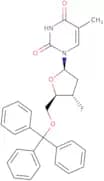
<p>5-Fluoro-1-(2'-deoxy-2'-fluoro-5'-O-trityl-b-L-lyxofuranosyl)-uracil is a phosphoramidite, activator, and synthetic nucleoside that has been modified to contain fluorine atoms. 5-Fluoro-1-(2'-deoxy-2'-fluoro-5'-O-trityl-b-L-lyxofuranosyl)-uracil is an antiviral agent that was developed for the treatment of HIV/AIDS and cancer. It inhibits the synthesis of DNA by inhibiting the enzyme ribonucleotide reductase. This drug also has anticancer properties because it inhibits the synthesis of DNA in tumor cells and activates apoptosis, causing cell death.</p>Purity:Min. 95%3'-Deoxy-3'-fluoro-5'-O-tritylthymidine
CAS:<p>3'-Deoxy-3'-fluoro-5'-O-tritylthymidine is a monophosphate nucleoside that inhibits the viral DNA polymerase. It has antiviral activity against herpes viruses, including HSV-1 and HSV-2. 3'-Deoxy-3'-fluoro-5'-O-tritylthymidine is a synthetic nucleoside with modified phosphate groups to improve stability and purity. This product has shown anticancer effects in vitro and in vivo by inhibiting DNA synthesis and promoting apoptosis of cancer cells.</p>Formula:C29H27FN2O4Purity:Min. 95%Molecular weight:486.53 g/mol1-(2'-Deoxy-5'-O-DMT-2'-fluoro-b-D-arabinofuranosyl)uracil 3'-CE phosphoramidite
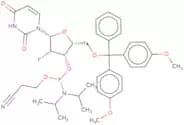
CAS:<p>1-(2'-Deoxy-5'-O-DMT-2'-fluoro-b-D-arabinofuranosyl)uracil 3'-CE phosphoramidite is a novel nucleoside monophosphate that has been modified with fluorine at the 2' position and a deoxyribose sugar. 1-(2'-Deoxy-5'-O-DMT-2'-fluoro-b-D-arabinofuranosyl)uracil 3'-CE phosphoramidite may be useful for antiviral treatment, as it can inhibit human immunodeficiency virus type 1 (HIV1) replication in vitro by inhibiting HIV1 reverse transcriptase. This drug also has anticancer properties, which may be due to its ability to inhibit DNA synthesis or promote apoptosis.</p>Formula:C39H46FN4O8PPurity:Min. 95%Color and Shape:White To Off-White SolidMolecular weight:748.8 g/mol1-(2',3'-Dideoxy-2',3'-didehydro-2'-fluoro-5'-O-trityl-b-L-ribofuranosyl)-uracil
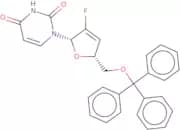
<p>1-(2',3'-Dideoxy-2',3'-didehydro-2'-fluoro-5'-O-trityl-b-L-ribofuranosyl)-uracil is a synthetic nucleoside that is activated by phosphorylation. This nucleoside is an antiviral and anticancer agent, and has been shown to be active against HIV, cytomegalovirus, herpes simplex virus type 1, and lymphocytic leukemia cells. It has also been shown to have anti-inflammatory properties. The compound is a monophosphate and diphosphate, which are more potent than the corresponding ribonucleosides. 1-(2',3'-Dideoxy-2',3'-didehydro-2'-fluoro-5'-O-trityl-b-L-ribofuranosyl)-uracil has CAS number 26582, high purity, high quality.</p>Formula:C28H23FN2O4Purity:Min. 95%Molecular weight:470.49 g/mol2,6-Diamino-9-(2'-deoxy-2'-fluoro-b-D-arabinofuranosyl)purine
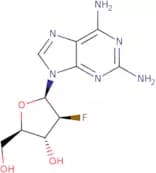
CAS:<p>2,6-Diamino-9-(2'-deoxy-2'-fluoro-b-D-arabinofuranosyl)purine is a synthetic purine nucleoside analog. The fluorine substitution and sugar modification allow it to mimic natural nucleosides but disrupt DNA or RNA synthesis when incorporated. The fluorine makes the molecule more chemically stable and can influence how enzymes interact with it. Like other nucleoside analogs, it has the potential to act as a chain terminator or inhibit key enzymes like polymerases or reverse transcriptases.</p>Formula:C10H13FN6O3Purity:Min. 95%Color and Shape:White PowderMolecular weight:284.25 g/molAcetoacetyl coenzyme A trisodium salt tetrahydrate
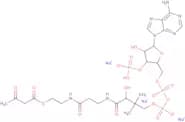
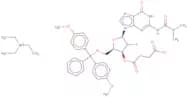
CAS:<p>Acetoacetyl coenzyme A trisodium salt tetrahydrate is a novel antiviral agent that inhibits the synthesis of viral DNA and RNA. Acetoacetyl CoA has been shown to inhibit the replication of HIV, HSV-1 and HSV-2, influenza virus, and cytomegalovirus (CMV). The mechanism of action is not yet known but may be related to its ability to activate cellular DNA polymerase β. Acetoacetyl CoA also has a high purity and quality, as well as being modified for use in phosphoramidites.</p>Formula:C25H37N7Na3O18P3S·4H2OPurity:Min. 96 Area-%Color and Shape:PowderMolecular weight:989.62 g/mol9-(2'-Deoxy-5'-O-DMT-2'-fluoro-b-D-arabinofuranosyl)-N2-isobutyrylguanine 3'-O-succinate triethylammonium salt
<p>9-(2'-Deoxy-5'-O-DMT-2'-fluoro-b-D-arabinofuranosyl)-N2-isobutyrylguanine 3'-O-succinate triethylammonium salt is a modified nucleoside phosphoramidite. It is used as an antiviral and anticancer agent, as well as an activator in DNA synthesis. 9-(2'-Deoxy-5'-O-DMT-2'-fluoro-b-D-arabinofuranosyl)-N2-isobutyrylguanine 3'-O-succinate triethylammonium salt has been shown to be active against HIV, herpes simplex virus type 1, herpes simplex virus type 2, cytomegalovirus, influenza A virus, and human papillomavirus types 16 and 18.</p>Formula:C39H39FN5O10·C6H16NPurity:Min. 95%Molecular weight:858.97 g/mol2'-13CCytidine
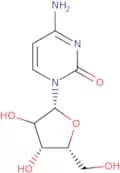
CAS:<p>2'-13CCytidine is a cytidine nucleoside that inhibits the synthesis of RNA and DNA in cells. It is an analog of cytarabine, which is a pyrimidine nucleoside and an antineoplastic agent. 2'-13CCytidine has been shown to be effective as an antiviral agent against HIV-1 and HSV-2, as well as an immunosuppressant for the treatment of autoimmune diseases such as rheumatoid arthritis. This drug is used in chemotherapy to inhibit cell division in leukemia.</p>Formula:CC8H13N3O5Purity:Min. 95%Molecular weight:244.21 g/mol2-Deoxycytidine 3',5'-diphosphate
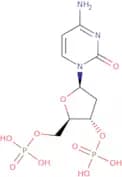
CAS:<p>2-Deoxycytidine 3',5'-diphosphate is an additive that is used in the production of DNA. It is a single-stranded nucleotide with a guanine base. 2-Deoxycytidine 3',5'-diphosphate has been shown to inhibit bacterial growth by reacting with hydrogen peroxide, which is produced during the process of oxidative phosphorylation. This reaction leads to the formation of reactive oxygen species, which damage DNA and cause cell death. The compound also binds to metal ions and prevents them from interacting with cellular components. 2-Deoxycytidine 3',5'-diphosphate can be used as a chromatographic agent for separating DNA fragments according to their size.</p>Formula:C9H15N3O10P2Purity:Min. 95%Molecular weight:387.18 g/mol5'-O-Acetyl-2',3'-dideoxyinosine
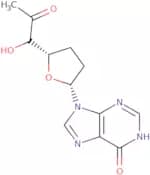
CAS:<p>5'-O-Acetyl-2',3'-dideoxyinosine is a nucleoside analogue that inhibits viral replication. It is a potent activator of the immune system and has been shown to be effective against cancer cells. 5'-O-Acetyl-2',3'-dideoxyinosine was originally synthesized as an antiviral agent, but it was found to be ineffective in this function. The drug binds to the ribonucleotide reductase enzyme, which converts ribonucleotides into deoxyribonucleotides and is essential for the production of DNA. The drug blocks the conversion of ribonucleotides into deoxyribonucleotides, preventing DNA synthesis and replication. This drug has also been shown to have anticancer activity by inhibiting DNA synthesis and cell division.</p>Formula:C12H14N4O4Purity:Min. 95%Molecular weight:278.26 g/molTroxacitabine
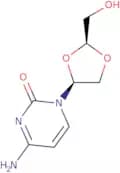
CAS:<p>Troxacitabine is a nucleoside analog that inhibits DNA synthesis by selectively blocking the function of DNA polymerase. It has been shown to have potent antitumor activity in mouse tumor models and in a human breast cancer xenograft model. Troxacitabine has also been shown to inhibit the proliferation of renal cell cancer cells and induce apoptosis in these cells, as well as reduce the viability of cancer cells from other tumor types. Troxacitabine has also been shown to have an effect on body mass index and hematologic response, although it is not currently approved for use in humans.</p>Formula:C8H11N3O4Purity:Min. 95%Color and Shape:White To Off-White SolidMolecular weight:213.19 g/mol2'-Deoxy-5-hydroxymethylcytidine 5'-monophosphate sodium salt
CAS:<p>2'-Deoxy-5-hydroxymethylcytidine 5'-monophosphate sodium salt (2'-dO-5HmcMP) is a nucleoside analogue that inhibits the activity of reverse transcriptase, an enzyme required for replication of HIV. This compound is phosphorylated in vivo to 2'-dO-5HmcMP monophosphate, which then competitively inhibits the binding of dNTPs to the enzyme and prevents DNA synthesis. 2'-dO-5HmcMP also has anticancer activity and has been shown to inhibit the proliferation of cells in vitro.<br>2'-dO-5HmcMP has no significant toxicity to humans or other mammals.</p>Purity:Min. 95%1-(2-Deoxy- 2, 2- difluoro- b- D- xylofuranosyl)cytosine
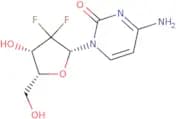
CAS:<p>1-(2-Deoxy-2,2-difluoro-beta-D-xylofuranosyl)cytosine is a nucleoside (a compound consisting of a nucleotide base linked to a sugar). It is a modified form of cytosine that has been phosphorylated at the 2’ position. 1-(2-Deoxy-2,2-difluoro-beta-D-xylofuranosyl)cytosine has antiviral and anticancer activity through its ability to inhibit viral DNA synthesis and activate the immune system. This drug also has antitumor activity due to its ability to inhibit the tumor growth factor beta (TGFB). 1-(2-Deoxy-2,2-difluoro-beta-D -xylofuranosyl)cytosine can be used in cancer treatment as an anticancer agent.</p>Formula:C9H11F2N3O4Purity:Min. 95%Molecular weight:263.2 g/molN2-Isobutyryl-7’-tert-butyldimethylsilyl-N-trityl-morpholino guanosine
<p>N2-Isobutyryl-7’-tert-butyldimethylsilyl-N-trityl-morpholino guanosine is a modified nucleoside that can be used in the synthesis of DNA, RNA, and other nucleic acids. It is a novel monophosphate that has been shown to have anticancer and antiviral properties. N2-Isobutyryl-7’-tert-butyldimethylsilyl-N-trityl-morpholino guanosine is synthesized by reacting 2,4,6 trichlorobenzoyl chloride with morpholine and silylation. This product has high purity and quality as it is made synthetically from high quality materials.</p>Purity:Min. 95%2’-O-(2-Methoxyethyl)guanosine 5’-triphosphate ammonium salt
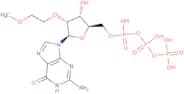
CAS:<p>2’-O-(2-Methoxyethyl)guanosine 5’-triphosphate ammonium salt (2'OMeEtGTP) is an antiviral agent that is used as a component of an antiviral drug. It inhibits the viral enzyme DNA polymerase, which prevents viral replication and transcription. This compound has been shown to have anticancer properties in vitro and in vivo in rat models. 2'OMeEtGTP is synthesized by reacting the nucleoside phosphoramidite 2'OMeEtGTP with triethylammonium phosphate (TEAP).</p>Purity:Min. 95%(5'S)-8,5'-Cyclodeoxyadenosine CE phosphoramidite
CAS:<p>(5'S)-8,5'-Cyclodeoxyadenosine CE phosphoramidite is a nucleoside that is used in the synthesis of DNA. It is an analog of adenosine and has antiviral and anticancer properties. It also has been shown to inhibit the growth of certain types of cancer cells by inhibiting the production of deoxyribonucleosides. (5'S)-8,5'-Cyclodeoxyadenosine CE phosphoramidite can be used as a monophosphate or as a diphosphate for incorporation into DNA strands. This compound belongs to the group of modified nucleosides, which are synthetically produced compounds that are different from naturally occurring nucleosides found in DNA. (5'S)-8,5'-Cyclodeoxyadenosine CE phosphoramidite is purified and has high purity when purchased from us.</p>Formula:C47H50N7O7PPurity:Min. 95%Molecular weight:855.92 g/mol1-(b-D-Arabinofuranosyl)-5-iodouracil
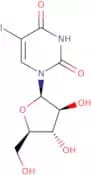
CAS:<p>1-(b-D-Arabinofuranosyl)-5-iodouracil is a synthetic nucleoside that has antiviral and anticancer properties. It is a monophosphate nucleotide that inhibits viral RNA synthesis by inhibiting the enzyme ribonucleotide reductase, which converts ribonucleotides to deoxyribonucleotides. This inhibitor also blocks DNA synthesis by preventing the incorporation of b-D-arabinofuranosyl monophosphate into DNA. 1-(b-D-Arabinofuranosyl)-5-iodouracil has been shown to be effective in treating various types of cancer, including breast, lung, and prostate cancers. It also exhibits antitumor activity against certain human leukemia cells.</p>Formula:C9H11IN2O6Purity:Min. 95%Molecular weight:370.1 g/mol8-Chloroadenosine 3',5'-cyclic monophosphate
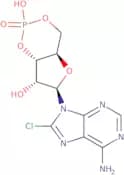
CAS:<p>8-Chloroadenosine 3',5'-cyclic monophosphate (8-CAM) is a potent inducer of the mitochondrial membrane potential. It has been shown to have cytotoxic effects on human myeloma cell line, HL-60 cells, and fetal bovine serum. 8-CAM has shown anticancer properties in solid tumours in mice. It was also found to be toxic to human carcinoma cell lines and synergistic with other pharmacological agents, such as doxorubicin. 8-CAM has been shown to have immunosuppressive effects in animal models and may be a potential therapeutic agent for autoimmune diseases.</p>Formula:C10H11ClN5O6PPurity:Min. 95%Color and Shape:White PowderMolecular weight:363.65 g/mol4'-Azidothymidine 5-triphosphate
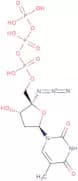
CAS:<p>4'-Azidothymidine 5-triphosphate (4AZTTP) is a deoxyribonucleoside that has been synthesized as an analog to thymidine. It has potent inhibitory activity against human immunodeficiency virus (HIV), and has been shown to be more effective than 2',3'-dideoxyinosine in inhibiting HIV replication. 4AZTTP inhibits the viral enzyme reverse transcriptase, which is crucial for the replication of HIV. This drug is activated by cellular enzymes and phosphorylated to 4'-azidothymidine 5'-triphosphate monophosphate, which can then bind to the viral DNA template and inhibit synthesis of RNA strands. The kinetic properties of 4AZTTP have been studied in detail using human lymphocytes as a model system for HIV infection.</p>Formula:C10H16N5O14P3Purity:Min. 95%Molecular weight:523.18 g/mol5'-O-DMT-2'-O-hexylamino-5-methyluridine
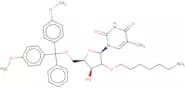
CAS:<p>5'-O-DMT-2'-O-hexylamino-5-methyluridine is a nucleoside analog that is used in cancer treatment. It is synthesized by the chemical modification of uridine, which is converted to 5'-O-DMT-2'-O-hexylamino-5-methyluridine by reacting with 2',3'-dideoxyadenosine and 5,6,7,8,-tetrahydroisoquinoline. The monophosphate form of 5'-O-DMT-2'-O-hexylamino-5-methyluridine may be converted to the diphosphate form by phosphorylation with ATP. In addition to its anticancer effects, 5'-O-DMT-2'-O-hexylamino-5-methyluridine has antiviral and antiretroviral effects due to its inhibition of viral DNA synthesis.</p>Formula:C37H45N3O8Purity:Min. 95%Molecular weight:659.79 g/mol9-(2-C-Methyl-b-D-ribofuranosyl)purine
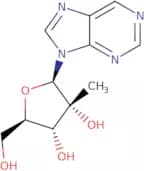
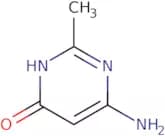
CAS:<p>9-(2-C-Methyl-b-D-ribofuranosyl)purine is a nucleoside that is used as an activator in the synthesis of phosphoramidites. 9-(2-C-Methyl-b-D-ribofuranosyl)purine has antiviral and anticancer properties, and it also inhibits the growth of bacteria. This nucleoside is synthesized from 2,4,6-trichlorophenylisocyanate and 5'-O-(4,4'-dimethoxytrityl)-beta-D-ribofuranose. The chemical name for 9-(2-C methyl b D ribofuranosyl)purine is 690269 - 86 - 4.</p>Formula:C11H14N4O4Purity:Min. 95%Molecular weight:266.25 g/mol4-Amino-6-hydroxy-2-methylpyrimidine
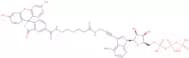
CAS:<p>4-Amino-6-hydroxy-2-methylpyrimidine (4AMMP) is a heterocyclic compound that belongs to the group of pyrimidines. It has been shown to react with morpholine and acrylic acid in an oxidation sequence. The reaction proceeds through an elimination, forming formaldehyde, which condenses with hydrolyzed piperazine to give the final product. 4AMMP can also be alkylated with a variety of reagents such as methyl iodide or dimethyl sulfate.</p>Formula:C5H7N3OPurity:Min. 95%Color and Shape:PowderMolecular weight:125.13 g/molFluorescein alkynylamino-ATP - 1.0 mM solution
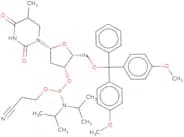
CAS:<p>Fluorescein alkynylamino-ATP is a fluorescent nucleotide analog that is used in molecular biology for the detection of DNA. It is labeled with tetramethylrhodamine, which can be detected using a fluorescence microscope. Fluorescein alkynylamino-ATP is a postsynthetic modification to DNA, which means it is added after the DNA has been synthesized. This molecule can be incorporated into the growing strand by either monoaddition or polymerase extension. Fluorescein alkynylamino-ATP binds to the 3' end of a primer during polymerase chain reaction (PCR) and can be detected using electrophoresis and sequence analysis.</p>Formula:C41H41N6O20P3Purity:Min. 95%Molecular weight:1,030.71 g/mol5,6-Dihydro-5'-O-DMT-thymidine 3'-CE phosphoramidite
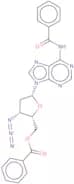
<p>This is a synthetic DNA analogue that is used in the synthesis of oligonucleotides. It is a phosphoramidite in which the 5,6-dihydro-5'-O-DMT group has been modified to allow for incorporation into DNA and RNA. This compound has antiviral and anticancer activities.</p>Formula:C40H51N4O8PPurity:Min. 95%Molecular weight:746.83 g/mol3'-Azido-N6-benzoyl-5'-O-benzoyl-2',3'-dideoxyadenosine
<p>3'-Azido-N6-benzoyl-5'-O-benzoyl-2',3'-dideoxyadenosine is a novel nucleoside analogue with high purity and quality. It is a DNA activator that has been shown to be active against both RNA and DNA viruses. 3'-Azido-N6-benzoyl-5'-O-benzoyl-2',3'-dideoxyadenosine phosphorylates to the corresponding monophosphate, which inhibits viral DNA synthesis by competitive inhibition of diphosphate formation. This compound has also been shown to be an effective inhibitor of HIV replication in vitro.</p>Formula:C24H20N8O4Purity:Min. 95%Molecular weight:484.47 g/mol3'-Azido-5'-O-tert-butyldimethylsilyl-2',3'-dideoxy-N2-isobutyrylguanosine
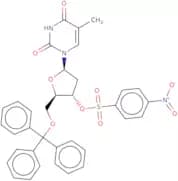
CAS:<p>3'-Azido-5'-O-tert-butyldimethylsilyl-2',3'-dideoxy-N2-isobutyrylguanosine is a novel nucleoside phosphoramidite. The 3'-azido group can be used to protect the 5' hydroxyl group during phosphitylation, which is essential for the synthesis of modified nucleosides. The 2',3'-dideoxy configuration ensures that the sugar moiety is not cleaved from the base during polymerization, and that no undesired side reactions occur during purification. This product has been shown to have antiviral and anticancer activity in vitro.</p>Formula:C20H32N8O4SiPurity:Min. 95%Molecular weight:476.61 g/mol1-(3'-O-Nosyl-5'-O-trityl-2'-deoxy-b-D-lyxofuranosyl)thymine
CAS:<p>Ribonucleosides are nucleosides that contain ribose as their pentose sugar. Ribonuclesides are synthetic, modified ribonucleosides that have been modified to include a 2'-deoxy-b-D-lyxofuranosyl group at the 3' position. Ribonuclesides activate antiviral activity by inhibiting viral DNA synthesis and protein synthesis. They also inhibit cancer cell proliferation by inhibiting DNA synthesis and RNA synthesis.</p>Formula:C35H31N3O9SPurity:Min. 95%Molecular weight:669.7 g/mol2-Amino-6-chloro-9-(2'-deoxy-b-D-ribofuranosyl)purine-5'-triphosphate
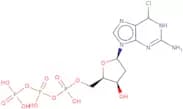
<p>2-Amino-6-chloro-9-(2'-deoxy-b-D-ribofuranosyl)purine-5'-triphosphate is a novel synthetic nucleoside analog with antiviral and anticancer properties. It is an activator of ribonucleotide reductase, which converts ribonucleotides to deoxyribonucleotides. 2-Amino-6-chloro-9-(2'-deoxy-b-D-ribofuranosyl)purine has been shown to be effective against human leukemia cells in vitro and in vivo.</p>Formula:C10H17ClN5O12P3Purity:Min. 95%Molecular weight:527.64 g/molN4-Acetyl-2'-deoxy-2'-fluoro-5'-O-DMT-cytidine 3'-O-succinate
<p>N4-Acetyl-2'-deoxy-2'-fluoro-5'-O-DMT-cytidine 3'-O-succinate is a synthetic nucleoside that has antiviral activity. It is a modification of the natural nucleoside cytidine, where the 4th position of the ribose ring is substituted with an acetyl group and the 2' position of the sugar moiety is substituted with a 2' deoxyribofuranosyl group. N4-Acetyl-2'-deoxy-2'-fluoro-5'-O-DMT-cytidine 3'-O-succinate inhibits viral replication by inhibiting viral RNA synthesis. Its antiviral properties may be due to its ability to inhibit DNA polymerase and reverse transcriptase, which are enzymes that synthesize DNA from RNA.</p>Purity:Min. 95%3',5'-Di-O-acetyl O6-benzyl-2'-deoxyguanosine
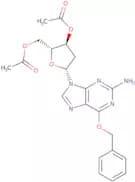
CAS:<p>3',5'-Di-O-acetyl O6-benzyl-2'-deoxyguanosine is a novel antiviral agent that is synthesized as a deoxyribonucleoside monophosphate. It inhibits viral DNA polymerase and RNA synthesis by competitively inhibiting the incorporation of diphosphates into viral DNA. It has been shown to be active against herpes simplex virus type 1 and 2, vaccinia virus, influenza A virus, and Sindbis virus. 3',5'-Di-O-acetyl O6-benzyl-2'-deoxyguanosine has also been shown to have anticancer properties in vitro and in vivo.</p>Formula:C21H23N5O6Purity:Min. 95%Molecular weight:441.44 g/mol8-Amino-2'-deoxy-N6,N8-di-DMF-5'-O-DMT-adenosine 3'-CE phosphoramidite
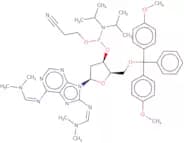
CAS:<p>8-Amino-2'-deoxy-N6,N8-di-DMF-5'-O-DMT-adenosine 3'-CE phosphoramidite is a novel nucleoside analog with antiviral and anticancer properties. It is synthesized by reacting 8-aminoimidazo[2,1-b]thiazole 1,3(2H)-dione (AITD) with N6,N8-diisopropyl dATP to form the aminothiazole phosphate intermediate. This intermediate is then reacted with 5'-O-(4,4'-dimethoxytrityl)-2',3',5' triphosphate (DMTrP) to produce the desired product. The synthesis of 8AAODMTAP has been shown to be more efficient than other synthesized nucleosides due to its high purity and lack of impurities.</p>Formula:C46H59N10O6PPurity:Min. 95%Molecular weight:879 g/mol2',3'-Dideoxyguanosine-5'-O-(1-thiotriphosphate)
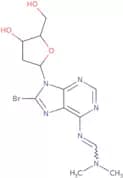
CAS:<p>2',3'-Dideoxyguanosine-5'-O-(1-thiotriphosphate) (2,3'-ddGTP) is a nucleoside that is synthesized using phosphoramidite chemistry. It has antiviral and anticancer activity, as well as the ability to activate cellular transcription. 2,3'-Dideoxyguanosine-5'-O-(1-thiotriphosphate) can be used in the synthesis of modified nucleosides or in the synthesis of novel nucleosides. The compound was found to inhibit DNA replication by binding to the enzyme ribonucleotide reductase. 2,3'-Dideoxyguanosine-5'-O-(1-thiotriphosphate) can also be used for DNA sequencing and as a cytotoxic agent in cancer chemotherapy.</p>Formula:C10H16N5O11P3SPurity:Min. 95%Molecular weight:507.25 g/mol8-Bromo-N6-(dimethylaminomethylidene)-2'-deoxyadenosine
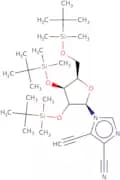
CAS:<p>8-Bromo-N6-(dimethylaminomethylidene)-2'-deoxyadenosine is a phosphoramidite that is used in the preparation of antiviral nucleosides and monophosphate. It has been shown to have anticancer activity. 8-Bromo-N6-(dimethylaminomethylidene)-2'-deoxyadenosine is synthesized by reacting an acid halide with a 2'-deoxyribonucleotide. This reaction produces a 2'-bromo adenosine derivative, which is then reacted with dimethylamine to produce the desired product. The synthesis of 8-bromo-N6-(dimethylaminomethylidene)-2'-deoxyadenosine can be performed on a large scale using an automated process.</p>Formula:C13H17BrN6O3Purity:Min. 95%Molecular weight:385.22 g/mol1-(2',3',5'-Tri-O-tert-butyldimethylsilyl-b-D-ribofuranosyl)-5-ethynylimidazo-4-carbonitrile
CAS:<p>Ribonucleosides are nucleoside derivatives that can be used as antiviral agents. Ribonuclease (RNase) is a type of ribonucleoside that acts as an antiviral agent by inhibiting the synthesis of RNA in cells. Ribonuclease has been shown to inhibit the growth of HIV-1 and HIV-2 in vitro, and may also have therapeutic potential for other viruses such as herpes simplex virus-1 (HSV-1). Ribonuclease is synthetically modified to produce 1-(2',3',5'-tri-O-tert-butyldimethylsilyl-b-D-ribofuranosyl)-5-ethynylimidazo-[4,5,-c]-carbonitrile, an activator ribonucleoside with high purity and novel properties.</p>Formula:C29H53N3O4Si3Purity:Min. 95%Molecular weight:592.01 g/molAdenosine 5'-triphosphate trisodium salt
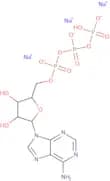
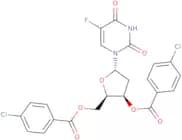
CAS:<p>ATP is an important molecule in the body that is involved in a number of cellular processes, including energy production and transmission. It has been shown to be tumorigenic and is found at high levels in plasma membranes and muscle cells. ATP binds to the adenylate cyclase enzyme in the cell membrane and stimulates its activity, which increases intracellular levels of cyclic AMP (cAMP). Cyclic AMP activates protein kinase A, which phosphorylates proteins, leading to a cascade of reactions that result in cellular changes. ATP also has pharmacological effects on the plasma membrane by increasing its permeability to certain ions such as potassium ions. This leads to an increase in the rate of depolarization of the cell membrane, which causes an influx of calcium ions into the cell.</p>Formula:C10H15N5O13P3Na3Purity:Min. 95%Molecular weight:575.14 g/mol3',5'-Di-O-p-chlorobenzoyl-2'-deoxy a-5-fluorouridine
CAS:<p>3',5'-Di-O-p-chlorobenzoyl-2'-deoxy a-5-fluorouridine is a nucleoside that is used in the antiviral drug Aciclovir. It is an analog of 2'-deoxyadenosine and inhibits viral DNA synthesis by acting as a chain terminator. 3',5'-Di-O-p-chlorobenzoyl-2'-deoxy a-5-fluorouridine has shown some anticancer activity against human tumor cells in culture, but its mechanism of action is not well understood.</p>Formula:C23H17Cl2FN2O7Purity:Min. 95%Molecular weight:523.29 g/molN6-Benzyladenosine 5'-triphosphate triethylammonium salt
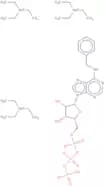
CAS:<p>N6-Benzyladenosine 5'-triphosphate triethylammonium salt is a hydrogen bond donor that is not naturally occurring. It has been shown to be a potent and selective analog of ATP with high specificity for cGMP-dependent protein kinase. This drug has been used to study the function of serotonin receptors, tyrosine kinases, and epidermal growth factor receptors. N6-Benzyladenosine 5'-triphosphate triethylammonium salt has also been shown to increase the sensitivity of cells to epidermal growth factor and to inhibit the reuptake of serotonin.END></p>Formula:C19H26N5O11P3·C18H48N3Purity:Min. 95%Molecular weight:899.95 g/mol3'-Azido-3'-deoxythymidine-5'-triphosphate lithium salt - 100mM aqueous solution
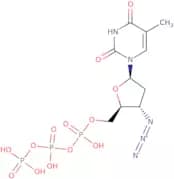
CAS:<p>3'-Azido-3'-deoxythymidine-5'-triphosphate lithium salt - 100mM aqueous solution is an inhibitor of the enzyme kinase. The active form of 3'-Azido-3'-deoxythymidine-5'-triphosphate lithium salt - 100mM aqueous solution inhibits human immunodeficiency virus (HIV) reverse transcriptase, preventing the synthesis of viral DNA. 3'-Azido-3'-deoxythymidine-5'-triphosphate lithium salt - 100mM aqueous solution has been shown to inhibit cancer cell growth in culture and to inhibit cancer cell proliferation in mice. This compound is also active against cancer cells that are resistant to other anti-cancer drugs. 3'-Azido-3'-deoxythymidine-5'-triphosphate lithium salt - 100mM aqueous solution is phosphorylated by cellular kinases, which may be</p>Formula:C10H16N5O13P3·xLiPurity:Min. 95%Color and Shape:Colorless Clear LiquidMolecular weight:507.18 g/mol3'-O-Acetyl-5'-O-tert-butyldiphenylsilyl-2'-deoxy-2'-fluorothymidine
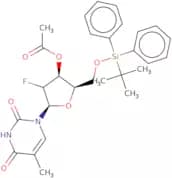
<p>3'-O-Acetyl-5'-O-tert-butyldiphenylsilyl-2'-deoxy-2'-fluorothymidine is an antiviral agent that inhibits the production of virus particles by inhibiting DNA and RNA synthesis. It is a modified nucleoside analog that has been shown to inhibit the proliferation of tumor cells in vitro and in vivo. This drug has also been shown to be effective against leukemia and lymphoma cells, as well as other types of cancer cells. 3'-O-Acetyl-5'-O-tert-butyldiphenylsilyl-2'-deoxy-2'-fluorothymidine is used for the treatment of AIDS, hepatitis B, hepatitis C, herpes zoster (shingles), and other diseases caused by viruses. It can be administered orally or intravenously.</p>Formula:C28H33FN2O6SiPurity:Min. 95%Molecular weight:540.66 g/mol


![7H-Pyrrolo[2,3d]pyrimidine](/_next/image/?url=https%3A%2Fstatic.cymitquimica.com%2Fproducts%2F3D%2Fthumb-webp%2FNP32608.webp&w=3840&q=75)