


Nucleosides
Nucleosides are fundamental building blocks of nucleic acids, composed of a nitrogenous base attached to a sugar molecule. In this section, you can find a wide variety of nucleosides essential for research in molecular biology, biochemistry, and pharmacology. These compounds play crucial roles in the synthesis of DNA and RNA, and are also vital in various metabolic processes. Nucleosides are used in studying genetic material, developing antiviral and anticancer therapies, and understanding cellular mechanisms. At CymitQuimica, we provide high-quality nucleosides to support your research and development needs, ensuring purity and reliability for your experimental applications.
Found 3567 products of "Nucleosides"
Sort by
Purity (%)
0
100
|
0
|
50
|
90
|
95
|
100
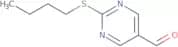
2-(Butylthio)pyrimidine-5-carbaldehyde
CAS:<p>2-(Butylthio)pyrimidine-5-carbaldehyde (BTPCA) is a neutralizing agent that inhibits the proliferation of cancer cells by binding to their cell membranes. It binds to the membrane and blocks the cyclic AMP receptor, thereby inhibiting the growth of cells. BTPCA has been shown to be effective in killing CD4+ T cells and may have therapeutic potential for autoimmune diseases. BTPCA also has diagnostic potential, as it can be used to detect epidermal growth factor receptors on cell membranes.</p>Formula:C9H12N2OSPurity:Min. 95%Molecular weight:196.27 g/mol2'-Cytidylic acid
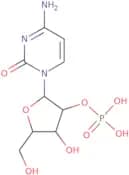
CAS:<p>2'-Cytidylic acid is a nucleoside monophosphate that plays an important role in various biological processes. It has been used in the development of heparin and enoxaparin, which are anticoagulants used to prevent blood clots. 2'-Cytidylic acid has also been found in chitin, xyloglucan, and psyllium, where it acts as a signaling molecule involved in apoptosis and cell differentiation. This compound has been shown to modulate the activity of kinases and ion channels, including potassium channels. However, excessive intake of 2'-Cytidylic acid can cause bleeding due to its anticoagulant properties. Additionally, there is some evidence suggesting that this compound may have anti-cancer effects through its ability to inhibit cell growth and induce apoptosis. Heparin sodium containing 2'-Cytidylic acid is widely used in clinical practice for its anticoagulant properties.</p>Formula:C9H14N3O8PPurity:Min. 95%Molecular weight:323.2 g/molNonadecanoyl coenzyme A
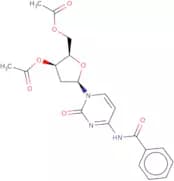
CAS:<p>Nonadecanoyl coenzyme A is a fatty acid that is produced by the bovine liver and has been shown to have anabolic effects. Nonadecanoyl CoA is involved in the synthesis of various lipids, such as phospholipids, cholesterol, and glycolipids. It also plays a role in biosynthesis of fatty acids and in regulating ATP production. Nonadecanoyl CoA is synthesized from acetate by the enzyme acetyl-CoA carboxylase (ACC). ACC catalyzes the conversion of acetyl-CoA to malonyl-CoA, which can then be used for fatty acid synthesis. Nonadecanoyl CoA has been found to play an important role in regulating mitochondrial function through its ability to activate long-chain acyl-CoAs desaturase (LCAD). LCAD converts long-chain acyl-CoAs into their corresponding dicarboxylic acids.</p>Formula:C40H72N7O17P3SPurity:Min. 95%Molecular weight:1,048.02 g/mol3',5'-Di-O-acetyl-N4-benzoyl-2'-deoxycytidine
<p>3',5'-Di-O-acetyl-N4-benzoyl-2'-deoxycytidine is a novel, phosphoramidite monophosphate nucleoside. It is synthesized by reacting deoxydinucleosides with 3',5'-di-O-acetyl-N4-benzoyl-2'-deoxycytidine in the presence of a coupling agent. The product has been shown to be an excellent activator for DNA polymerases and may have antiviral effects. The chemical name of this compound is 2',3'-dideoxyadenosine 5' -triphosphate N4 -(beta, beta, beta, beta,-triethoxypropionyl) benzoyl ester.</p>Formula:C20H21N3O7Purity:Min. 95%Molecular weight:415.41 g/molBiotin-5-deoxycytidine-5'-triphosphate, lithium salt - 1 mM aqueous solution
<p>Biotin-5-deoxycytidine-5'-triphosphate, lithium salt - 1 mM aqueous solution is a modified nucleoside with antiviral activity. It is a phosphoramidite that can be used for the synthesis of DNA, RNA and other nucleic acids. Biotin-5-deoxycytidine-5'-triphosphate, lithium salt - 1 mM aqueous solution is an active ingredient in many research laboratories.</p>Formula:C22H35N6O15P3SPurity:Min. 95%Molecular weight:748.53 g/moldNaM
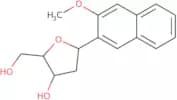
CAS:<p>dNaM is a metabolite of DNA that has been shown to be a potential biomarker for metabolic disorders and autoimmune diseases. dNaM levels are elevated in the blood of pregnant women, which may serve as a marker for preeclampsia. Elevated levels have also been observed in patients with type 2 diabetes, obesity, and cancer. Methylation plays an important role in dNaM metabolism. The enzyme DNA methyltransferase (DNMT) catalyzes the transfer of methyl groups from S-adenosyl methionine to cytosine residues on the DNA molecule. DNMT activity is increased by high body mass index (BMI), low vitamin B12 levels, and HIV infection. This enzyme is also inhibited by valproic acid and deprenyl, which may affect dNaM methylation status.</p>Formula:C16H18O4Purity:Min. 95%Molecular weight:274.31 g/mol2-Amino-4-(4-bromophenyl)pyrimidine
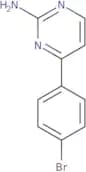
CAS:<p>2-Amino-4-(4-bromophenyl)pyrimidine is a phosphoramidite, modified nucleoside. It is an antiviral and anticancer agent that inhibits DNA synthesis. 2-Amino-4-(4-bromophenyl)pyrimidine is a novel nucleotide analog with the ability to inhibit replication of RNA and DNA in vitro. This compound has been shown to be active against herpes simplex virus type 1 (HSV1), cytomegalovirus (CMV), and HIV in cell culture. Furthermore, this phosphoramidite has been shown to have no detectable toxicity in mice at doses up to 2000 mg/kg.</p>Formula:C10H8BrN3Purity:Min. 95%Molecular weight:250.09 g/mol2-Amino-8-bromo-9-(b-D-ribofuranosyl)purine
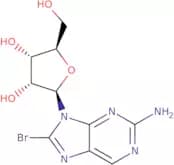
CAS:<p>2-Amino-8-bromo-9-(b-D-ribofuranosyl)purine is a modified nucleoside that inhibits viral DNA and RNA synthesis. It has antiviral properties against influenza, herpes simplex virus type 1, hepatitis B virus, and human immunodeficiency virus type 1. 2-Amino-8-bromo-9-(b-D-ribofuranosyl)purine has been shown to be effective in the treatment of cancers such as leukemia, lymphoma, and breast cancer. This drug is a novel nucleoside analogue that is used for cancer chemotherapy. 2-Amino 8 bromo 9 (b D ribofuranosyl) purine is not active against bacteria or fungi.</p>Formula:C10H12BrN5O4Purity:Min. 95%Molecular weight:346.14 g/mol4-Aminopyrimidine-5-carboxylic acid
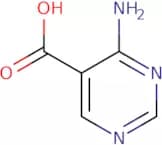
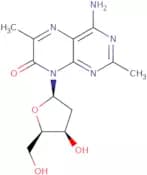
CAS:<p>4-Aminopyrimidine-5-carboxylic acid is an aminopyrimidone that has been synthesized to be used as a new class of antihypertensive agents. It has dose-dependent blood pressure lowering effects, which are likely due to its ability to block angiotensin receptors. 4-Aminopyrimidine-5-carboxylic acid also has antibacterial and antifungal properties. This compound is metabolized in vivo into the pharmacologically active amine 6-aminonicotinamide and excreted in the urine. In vitro studies have shown that 4-aminopyrimidine-5 carboxylic acid inhibits the growth of bacteria by binding to DNA gyrase and topoisomerase IV enzymes required for cell division.</p>Formula:C5H5N3O2Purity:Min. 95%Molecular weight:139.11 g/mol4-Amino-2,6-dimethyl-8-(2'-deoxy-b-D-ribofuranosyl)-7-pteridone
CAS:<p>4-Amino-2,6-dimethyl-8-(2'-deoxy-b-D-ribofuranosyl)-7-pteridone is a fluorescent probe that can be used to monitor nucleic acid synthesis. It is an analog of adenosine and interacts with the enzyme RNA polymerase in a process that is mediated by the adenosine receptor, which leads to termination of transcription. This compound has been shown to yield high fluorescence yields at room temperature and has minimal interaction with other monomers or dimers. 4-Amino-2,6-dimethyl-8-(2'-deoxy-b-D-ribofuranosyl)-7-pteridone can be used as a probe for monitoring DNA synthesis in vitro and in vivo.</p>Formula:C13H17N5O4Purity:Min. 95%Molecular weight:307.31 g/mol3’-O-(2-Methoxyethyl)guanosine
CAS:<p>3’-O-(2-Methoxyethyl)guanosine is a nucleoside analogue of guanosine. It is a modified, deoxyribonucleoside that is synthesized from 2-methoxyethanol and 1,2-dihydroxybenzene. 3’-O-(2-Methoxyethyl)guanosine has antiviral, anticancer, and DNA synthesis inhibitory activities. This nucleoside analogue increases the intracellular concentration of guanosine by inhibiting its degradation. 3’-O-(2-Methoxyethyl)guanosine has been used as an antiviral agent in the treatment of influenza A virus infection in humans and animals.</p>Purity:Min. 95%4-Chloro-7-(2-C-methyl-b-D-ribofuranosyl)-7H-pyrrolo[2,3-d]pyrimidine
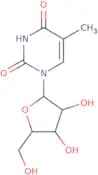
CAS:<p>4-Chloro-7-(2-C-methyl-b-D-ribofuranosyl)-7H-pyrrolo[2,3-d]pyrimidine is a novel anticancer compound that inhibits the synthesis of DNA, RNA and protein. It is a phosphoramidite monophosphate that can be used in the synthesis of oligonucleotides and DNA. 4CHP is effective against Herpes simplex virus type 1 (HSV1) and cytomegalovirus (CMV). 4CHP also has antiviral activity against influenza A virus.</p>Formula:C12H14ClN3O4Purity:Min. 95%Molecular weight:299.71 g/molL-5-methyluridine
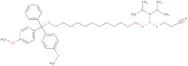
CAS:<p>L-5-methyluridine is a nucleoside that is used as a building block in the synthesis of oligonucleotides. It contains one ribose sugar and one deoxyribose sugar, linked to the base adenine by a phosphate group. L-5-methyluridine can be synthesized from 5-chloro-2'-deoxyadenosine, hypoxanthine, and ammonium chloride. The synthesis starts with condensation reactions between the two sugar molecules to form an intermediate called a nucleoside. This is followed by alkylation of the base and then oxidation of the sugar group to form anomeric esters. The last step involves hydrolysis of the acyloxy ester, which yields L-5-methyluridine after acidification.</p>Formula:C10H14N2OPurity:Min. 95%Molecular weight:178.23 g/molSPACER-C 12 CEP
CAS:<p>Please enquire for more information about SPACER-C 12 CEP including the price, delivery time and more detailed product information at the technical inquiry form on this page</p>Formula:C42H61N2O5PPurity:Min. 95%Molecular weight:704.9 g/mol3-[2'-Deoxy-5'-O-DMT-b-D-ribofuranosyl]pyrido[2,3-d]pyrimidine-2,7(8H)-dione 3'-CE phosphoramidite
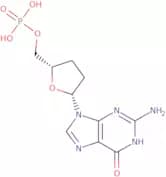
CAS:<p>3-[2'-Deoxy-5'-O-DMT-b-D-ribofuranosyl]pyrido[2,3-d]pyrimidine-2,7(8H)-dione 3'-CE phosphoramidite is a synthetic compound that is a member of the class of brassinosteroids. It has been shown to activate the transcription factor NF-Y in vitro and in vivo. Brassinosteroids have been shown to have regulatory effects on plant tissue development, including normalization of cell growth, and are involved in the activation of cellulase activity. They also have been shown to increase the resistance of plants to environmental stresses such as drought.</p>Formula:C42H48N5O8PPurity:Min. 95%Molecular weight:781.83 g/mol2',3'-Dideoxyguanosine-5'-triphosphate
CAS:<p>2',3'-Dideoxyguanosine-5'-triphosphate (ddGTP) is a nucleotide analog that inhibits the formation of DNA and RNA, which are important for protein synthesis. It is used in clinical studies to assess prognosis and to evaluate drug elimination. ddGTP has been shown to inhibit mitochondrial membrane potential, decrease mitochondrial superoxide, and inhibit cancer growth. It also prevents allergic reactions by preventing the release of histamine. The use of probiotic bacteria containing ddGTP may help in the treatment of inflammatory bowel disease.</p>Formula:C10H14N5O6PPurity:Min. 95%Molecular weight:331.22 g/mol5-Fluoro-2',3'-O-isopropylidenecytidine
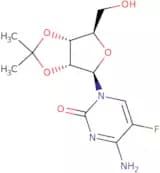
CAS:<p>5-Fluoro-2',3'-O-isopropylidenecytidine is a modified nucleoside that has antiviral and anticancer properties. It is a diphosphate of cytidine, with a fluorine atom in the 2'-position and an isopropyl group in the 3'-position. 5-Fluoro-2',3'-O-isopropylidenecytidine is synthesized by reacting 5-fluorocytidine with isopropylamine. This novel compound has been shown to have high quality, high purity, and improved biological activity as compared to other nucleosides.</p>Formula:C12H16FN3O5Purity:Min. 95%Molecular weight:301.27 g/mol5’-Deoxy-5’-iodouridine
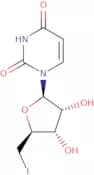
CAS:<p>5’-Deoxy-5’-iodouridine (5DIU) is an antiviral agent that inhibits the synthesis of DNA by interfering with the enzyme thymidine kinase, which converts thymine to uracil. It is used in the treatment of cutaneous herpes simplex virus infections. 5DIU has been shown to inhibit viral replication and yield in vitro. The drug showed no significant toxicity in mice, rats, or hamsters. In addition, it has been observed that 5DIU does not interfere with human cell growth, which may be due to its lack of activity against a wide range of human enzymes.</p>Purity:Min. 95%2-Amino-4-(thien-2-yl)pyrimidine
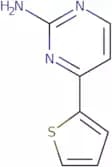
CAS:<p>2-Amino-4-(thien-2-yl)pyrimidine is a bioavailable, water soluble antiallergy drug. 2-Amino-4-(thien-2-yl)pyrimidine has been shown to be effective against allergic asthma and other allergic diseases. It is thought to work by blocking the release of histamine from mast cells, thereby preventing the production of inflammatory prostaglandins and leukotrienes. This drug also blocks the response to allergies by inhibiting the release of IgE antibodies that bind to allergens. The therapeutic effect of 2-amino-4-(thien-2-yl)pyrimidine is repeatable and it does not cause any adverse effects on potassium or carbonate metabolism.</p>Formula:C8H7N3SPurity:Min. 95%Molecular weight:177.23 g/mol8-(2-Amino-1-methyl-6-phenylimidazo[4,5-b]pyridyl)-2'-deoxyguanosine
CAS:<p>8-(2-Amino-1-methyl-6-phenylimidazo[4,5-b]pyridyl)-2'-deoxyguanosine (8-APdG) is a mutagen that induces genotoxic effects and mutations in mammalian cells. It has been shown to react with DNA to form covalent complexes and induce point mutations or transversions. 8-APdG has been found in the environment as a result of environmental pollution by polycyclic aromatic hydrocarbons and tobacco smoke. 8-APdG also induces genetic damage in human lymphoblastoid cells in vitro, including mutations at the HPRT locus.</p>Formula:C23H23N9O4Purity:Min. 95%Molecular weight:489.49 g/mol



![4-Chloro-7-(2-C-methyl-b-D-ribofuranosyl)-7H-pyrrolo[2,3-d]pyrimidine](/_next/image/?url=https%3A%2Fstatic.cymitquimica.com%2Fproducts%2F3D%2Fthumb-webp%2FNC14084.webp&w=3840&q=75)
![3-[2'-Deoxy-5'-O-DMT-b-D-ribofuranosyl]pyrido[2,3-d]pyrimidine-2,7(8H)-dione 3'-CE phosphoramidite](/_next/image/?url=https%3A%2Fstatic.cymitquimica.com%2Fproducts%2F3D%2Fthumb-webp%2FPD09988.webp&w=3840&q=75)
![8-(2-Amino-1-methyl-6-phenylimidazo[4,5-b]pyridyl)-2'-deoxyguanosine](/_next/image/?url=https%3A%2Fstatic.cymitquimica.com%2Fproducts%2F3D%2Fthumb-webp%2FNA04649.webp&w=3840&q=75)