


Nucleosides
Nucleosides are fundamental building blocks of nucleic acids, composed of a nitrogenous base attached to a sugar molecule. In this section, you can find a wide variety of nucleosides essential for research in molecular biology, biochemistry, and pharmacology. These compounds play crucial roles in the synthesis of DNA and RNA, and are also vital in various metabolic processes. Nucleosides are used in studying genetic material, developing antiviral and anticancer therapies, and understanding cellular mechanisms. At CymitQuimica, we provide high-quality nucleosides to support your research and development needs, ensuring purity and reliability for your experimental applications.
Found 3567 products of "Nucleosides"
Sort by
Purity (%)
0
100
|
0
|
50
|
90
|
95
|
100
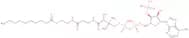
Decanoyl coenzyme A, free acid
CAS:<p>Decanoyl CoA, free acid, is a substrate of the enzyme fatty acid synthetase. This enzyme catalyzes the formation of long-chain fatty acids from acetyl-CoA and malonyl-CoA. The product decanoyl-CoA is then used in other metabolic pathways to synthesize acyl chains for phospholipids, triglycerides, and cholesterol. Decanoyl CoA has been shown to inhibit carnitine acyltransferase activity in rat liver microsomes. It also inhibits mitochondrial beta-oxidation by competing with carnitine at the level of the carnitine acyltransferase reaction. The expression plasmid pET21a was used to express the decanoyl CoA synthetase protein in Escherichia coli cells grown in LB medium with aminotransferase activity as a measure of decanoyl CoA synthetase activity. Decanoyl CoA</p>Formula:C31H54N7O17P3SPurity:Min. 95%Molecular weight:921.78 g/mol2',3'-Dideoxyadenosine-5'-triphosphate lithium salt
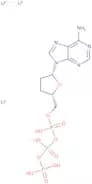
CAS:<p>2',3'-Dideoxyadenosine-5'-triphosphate lithium salt is a nucleoside for use in research applications</p>Formula:C10H16N5O11P3·xLiPurity:Min. 95%Color and Shape:Clear liquid.Molecular weight:475.18 g/molT-705RTP sodium
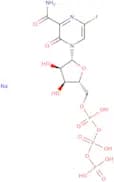
CAS:<p>T-705RTP sodium is a novel, modified diphosphate nucleotide that activates the formation of DNA and RNA. It is used as an antiviral and anticancer agent. T-705RTP sodium has been shown to be more potent than adenosine in inhibiting viral replication and has cytotoxic effects on cancer cells. The chemical formula for T-705RTP sodium is C6H14N5O7P.</p>Formula:C10H15FN3O15P3·xNaPurity:Min. 95%2'-Azido-2'-deoxyuridine-5'-triphosphate
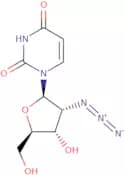
CAS:<p>2'-Azido-2'-deoxyuridine-5'-triphosphate is a nucleotide analog that is inactive in the presence of an intact receptor. It is an allosteric inhibitor of many DNA polymerases and causes cell growth inhibition. 2'-Azido-2'-deoxyuridine-5'-triphosphate binds to the phosphate group of ATP and inhibits protein synthesis. In particular, it inhibits the polymerase activity of herpes simplex virus type 1 by binding to the active site of the enzyme, thereby preventing viral replication. 2'-Azido-2'-deoxyuridine-5'-triphosphate also binds to cytosolic Ca2+ and activates Ca2+ signaling pathways, leading to cell death.</p>Formula:C9H14N5O14P3Purity:Min. 95%Molecular weight:509.15 g/mol9-(b-D-Arabinofuranosyl)adenine 5'-triphosphate triethyammonium salt
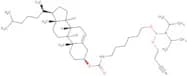
<p>9-(B-D-arabinofuranosyl)adenine 5'-triphosphate triethyammonium salt is a nucleoside analog that inhibits viral replication by inhibiting the DNA polymerase enzyme. It has been shown to be safe and well tolerated in healthy volunteers and patients with cancer, including those with advanced solid tumors. 9-(B-D-arabinofuranosyl)adenine 5'-triphosphate triethyammonium salt is an antiviral agent that has been shown to be active against HIV, herpes simplex virus type 1, herpes simplex virus type 2, cytomegalovirus, and varicella zoster virus. This compound also has anticancer properties and has been shown to inhibit tumor cell proliferation in vitro.</p>Purity:Min. 95%Cholest-5-en-3-ol, 3-(6-(((2-cyanoethoxy)(diisopropylamino)phosphino)oxy)hexyl)carbemate
CAS:<p>Cholest-5-en-3-ol, 3-(6-(((2-cyanoethoxy)(diisopropylamino)phosphino)oxy)hexyl)carbemate, is a novel nucleotide analog that has antiviral and anticancer properties. It is synthesized by the reaction of 2,4,6-trihydroxyacetophenone with 6-(chlorohexyl)-1,3-bis(2-(cyanoethoxy)phosphinooxy)hexane in the presence of tetrakis(triphenylphosphine), palladium chloride, and potassium carbonate. Cholest-5-en-3-ol, 3-(6((2-(cyanoethoxy)(diisopropylamino))(phosphino)oxy)(hexyl))carbamate may be used as a monophosphate or phosphoramidite to make DNA or RNA. This compound has been shown to</p>Purity:Min. 95%2-Cyanoadenosine
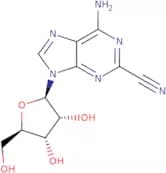
CAS:<p>2-Cyanoadenosine is a derivative of adenosine. It is an inhibitor of the enzyme adenosine deaminase, which converts adenosine to inosine. 2-Cyanoadenosine prevents the conversion of ATP to AMP and may be useful for treating neurological disorders. 2-Cyanoadenosine has been shown to have cardiovascular effects, such as increasing the force of contraction and relaxation in isolated rat hearts.</p>Purity:Min. 95%2,6-Diamino-9-(2'-amino-2'-deoxy-b-D-ribofuranosyl)purine
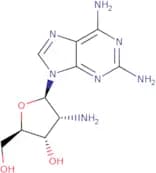
CAS:<p>2,6-Diamino-9-(2'-amino-2'-deoxy-b-D-ribofuranosyl)purine (dAraMP) is a novel nucleoside analogue that was synthesized and characterized. It has been shown to inhibit the growth of cancer cells in vitro. dAraMP is a monophosphate analogue of 2,6-diamino-9-(2'-deoxy-b-D-ribofuranosyl)purine (dAraP). The modified phosphoramidite approach used in its synthesis yielded high purity and yields. This product is also available as a diphosphate analogue of 2,6 diamino 9-(2'-amino 2'-deoxy b D ribofuranosyl) purine (dAMP). The diphosphate form of this product has been shown to be an activator for DNA polymerase.</p>Formula:C10H15N7O3Purity:Min. 95%Color and Shape:White To Off-White SolidMolecular weight:281.28 g/mola,b-Methyleneguanosine 5'-diphosphate sodium salt
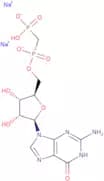
CAS:<p>a,b-Methyleneguanosine 5'-diphosphate sodium salt is a chemical species that binds to the influenza virus neuraminidase. The drug binding site on the influenza virus neuraminidase has been identified in high resolution by NMR and X-ray crystallography. This drug is able to inhibit the release of infectious particles and prevent infection by the influenza virus, which is an important biological weapon in bioterrorism. The compound is not active against other viruses such as HIV and herpes simplex virus type 1. In addition, this chemical species also inhibits the activity of geniculate nucleus neurons and may be effective for treatment of chronic pain caused by nerve injury.</p>Formula:C11H17N5O10P2·xNaPurity:Min. 95%Molecular weight:441.23 g/mol[U-13C10, U-15N2]-Labelled thymidine
<p>Thymidine is a nucleoside that is a component of DNA and RNA. It is also the precursor for thymine, the DNA base in which the thymine ring is derived from. Thymidine has been shown to be an activator of DNA synthesis, as well as being anticancer and antiviral.</p>Purity:Min. 95%N-Benzoyl- 5'- O- DMT- 2'- O-[( triisopropylsilyl oxy)methyl]-adenosine 3'- CE phosphoramidite
CAS:<p>N-Benzoyl- 5'-O-DMT-2'-O-[(triisopropylsilyloxy)methyl]-adenosine 3'-Ce phosphoramidite (Bz-5'-O-DMT-2'-O-[(triisopropylsilyloxy)methyl]-Ado-3'-Ce Phosphoramidite) is a novel nucleoside phosphoramidite. It is an analogue of the natural nucleoside adenosine. This compound has been shown to be an antiviral and anticancer agent in vitro. Bz-5'-O-DMT-2'-O-[(triisopropylsilyloxy)methyl]-Ado-3'-Ce Phosphoramidite can also act as a DNA or RNA activator, which leads to increased levels of transcription, translation, and replication by increasing the number of ribonucleotide tri</p>Purity:Min. 95%3'-Deoxy-N2-DMF-5'-O-DMT-guanosine
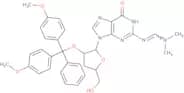
CAS:<p>3'-Deoxy-N2-DMF-5'-O-DMT-guanosine is a modified nucleoside that is phosphorylated to the 3'-deoxyribonucleotide form. It has antiviral and anticancer activities, as well as being an activator of DNA and RNA synthesis. This compound has been shown to inhibit the growth of several cancer cell lines in vitro and in vivo. 3'-Deoxy-N2-DMF-5'-O-DMT-guanosine is also effective against herpes simplex virus type 1 (HSV1) and HSV type 2 in cell culture, although it does not have any effect on HSV type 1 replication in animal models.</p>Formula:C34H36N6O6Purity:Min. 95%Molecular weight:624.69 g/mol2-Bromo-2-deoxy-5-methyluridine-3,5-diacetate
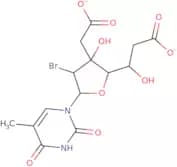
CAS:<p>2-Bromo-2-deoxy-5-methyluridine-3,5-diacetate is a novel synthetic nucleoside analogue. It has been shown to inhibit the proliferation of cancer cells and have antiviral activity. It is phosphorylated by kinase enzymes to form 2'-bromo-2'-deoxyuridine monophosphate (BrDUMP). This compound also inhibits DNA replication, RNA transcription, and protein synthesis.</p>Purity:Min. 95%2'-Deoxy-5'-O-DMT-5-iodocytidine
<p>2'-Deoxy-5'-O-DMT-5-iodocytidine is a modified nucleoside that has antiviral and anticancer properties. 2'-deoxy-5'-O-DMT-5-iodocytidine is able to activate the DNA polymerase, ribonucleotide reductase, and deoxyribonucleotide reductase enzymes. This product can be used as a monophosphate or diphosphate. The CAS number for this compound is 141475-07-4.</p>Purity:Min. 95%5-Fluoro-6-iodouridine
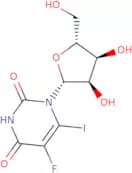
CAS:<p>5-Fluoro-6-iodouridine is a nucleoside that is used as the starting material for synthesizing fluorinated pyrimidine derivatives, which are used in cancer treatment. 5-Fluoro-6-iodouridine is an activator of ribonucleotide reductase and can be used to inhibit the growth of tumor cells. 5-Fluoro-6-iodouridine has been shown to inhibit the proliferation of human leukemia cells in culture, with cytotoxicity that was comparable to that of 5-fluorouracil.</p>Formula:C9H10FIN2O6Purity:Min. 95%Molecular weight:388.09 g/molUridine-2-13C
CAS:<p>Uridine-2-13C is a modified nucleoside that is used as an anticancer agent. It is phosphorylated to uridine-2-13C diphosphate and can be used in DNA synthesis and as a radiolabel.</p>Formula:C9H12N2O6Purity:Min. 95%Molecular weight:245.19 g/mol2'-O-tert-Butyldimethylsilyl-5'-O-DMT-5-methyluridine
<p>2'-O-tert-Butyldimethylsilyl-5'-O-DMT-5-methyluridine is a novel nucleoside that is activated with anhydrous ammonia and then converted to the corresponding 5'-O-DMT derivative. The 2'-O-tert-butyldimethylsilyl group protects the 5'-position of the sugar moiety from attack by phosphodiesterases, allowing for its use as a substrate in DNA synthesis. The ribose moiety is also modified at the 2' position, which prevents the formation of 3',5'-cyclic monophosphate (cMP) during dephosphorylation and thereby inhibits viral replication. This nucleotide analog has been shown to be active against HIV, hepatitis B virus, and influenza A virus.</p>Purity:Min. 95%6-Chloropurine riboside 5'-monophosphate disodium salt
CAS:<p>6-Chloropurine riboside 5'-monophosphate disodium salt is a synthetic nucleoside that is used as an antiviral and anticancer agent. It is a DNA precursor that can be incorporated into DNA by the enzyme thymidylate synthase to form thymine and diphosphate. 6-Chloropurine riboside 5'-monophosphate disodium salt has been shown to inhibit the replication of some viruses, such as HIV, and also inhibits tumor growth in experimental models.</p>Formula:C10H10ClN4Na2O7PH2OPurity:Min. 95%Molecular weight:428.63 g/mol2'-Deoxy-5'-O-DMT-N2-iBu-guanosine-3'-succinyl CPG 500 Å
<p>2'-Deoxy-5'-O-DMT-N2-iBu-guanosine-3'-succinyl CPG 500 Å is an anticancer agent that is used in the synthesis of DNA and RNA. It can be used as a monophosphate or diphosphate, and has been shown to inhibit cancer cells. 2'-Deoxy-5'-O-DMT-N2-iBu-guanosine-3'-succinyl CPG 500 Å is modified to have a long half life in the body. This chemical has been synthesized with high purity and quality, making it suitable for research purposes.</p>Purity:Min. 95%N-Benzoyl-2'-O-[(methylthio)methyl]-3',5'-O-[1,1,3,3-tetrakis(1-methylethyl)-1,3-disiloxanediyl]-cytidine
CAS:<p>N-Benzoyl-2'-O-[(methylthio)methyl]-3',5'-O-[1,1,3,3-tetrakis(1-methylethyl)-1,3-disiloxanediyl]-cytidine is a synthetic nucleoside that is used as an antiviral. It has been shown to be effective against HIV and HSV. N-Benzoyl-2'-O-[(methylthio)methyl]-3',5'-O-[1,1,3,3-tetrakis(1-methylethyl)-1,3-disiloxanediyl]-cytidine prevents the synthesis of DNA by inhibiting the enzyme ribonucleotide reductase. It also inhibits the production of deoxyribonucleotides and DNA by binding to the active site of the enzyme DNA polymerase.</p>Formula:C30H47N3O7SSi2Purity:Min. 95%Molecular weight:649.95 g/mol


![[U-13C10, U-15N2]-Labelled thymidine](/_next/image/?url=https%3A%2Fstatic.cymitquimica.com%2Fproducts%2F3D%2Fthumb-webp%2FNL32196.webp&w=3840&q=75)
![N-Benzoyl- 5'- O- DMT- 2'- O-[( triisopropylsilyl oxy)methyl]-adenosine 3'- CE phosphoramidite](/_next/image/?url=https%3A%2Fstatic.cymitquimica.com%2Fproducts%2F3D%2Fthumb-webp%2FPB157357.webp&w=3840&q=75)


![N-Benzoyl-2'-O-[(methylthio)methyl]-3',5'-O-[1,1,3,3-tetrakis(1-methylethyl)-1,3-disiloxanediyl]-c…](/_next/image/?url=https%3A%2Fstatic.cymitquimica.com%2Fproducts%2F3D%2Fthumb-webp%2FNB148470.webp&w=3840&q=75)