Nucleosides
Nucleosides are fundamental building blocks of nucleic acids, composed of a nitrogenous base attached to a sugar molecule. In this section, you can find a wide variety of nucleosides essential for research in molecular biology, biochemistry, and pharmacology. These compounds play crucial roles in the synthesis of DNA and RNA, and are also vital in various metabolic processes. Nucleosides are used in studying genetic material, developing antiviral and anticancer therapies, and understanding cellular mechanisms. At CymitQuimica, we provide high-quality nucleosides to support your research and development needs, ensuring purity and reliability for your experimental applications.
Found 3567 products of "Nucleosides"
Sort by
Purity (%)
0
100
|
0
|
50
|
90
|
95
|
100
5'-Deoxy-5-fluoro-N-[(2-methylbutoxy)carbonyl]cytidine
CAS:<p>5'-Deoxy-5-fluoro-N-[(2-methylbutoxy)carbonyl]cytidine is an antiviral drug that has been shown to be a potent inhibitor of HIV-1 replication in cell culture. It is an analog of cytidine, and it binds to the viral reverse transcriptase enzyme via phosphoramidite chemistry. 5'-Deoxy-5-fluoro-N-[(2-methylbutoxy)carbonyl]cytidine is a monophosphate, which inhibits the synthesis of DNA by preventing the incorporation of deoxyribonucleotides in the process. This agent does not have any anticancer activity.</p>Formula:C15H22FN3O6Purity:Min. 95%Molecular weight:359.35 g/mol(1S,2S,3S,5S)-5-(2-Amino-6-(benzyloxy)-9H-purin-9-yl)-3-(benzyloxy)-2-(benzyloxymethyl)cyclopentanol
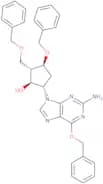
CAS:<p>(1S,2S,3S,5S)-5-(2-Amino-6-(benzyloxy)-9H-purin-9-yl)-3-(benzyloxy)-2-(benzyloxymethyl)cyclopentanol is a synthetic compound that is used to treat patients with chronic myeloid leukemia. It has been shown to inhibit tyrosine kinase and interacts with the guanine binding site of the purine nucleoside phosphorylase. This drug also inhibits the enzyme (deoxy)ribonucleotide reductase and competes with adenosine for binding to adenosine receptors. The stereoisomers of this drug are active against chronic myeloid leukemia cells. The S enantiomer is more potent than the R enantiomer and exhibits greater selectivity for leukemic cells than healthy cells. It has also been shown to inhibit nitric oxide synthase and may have anti-</p>Formula:C32H33N5O4Purity:Min. 95%Color and Shape:White PowderMolecular weight:551.64 g/molThymidylyl-(3′→5′)-thymidine ammonium salt
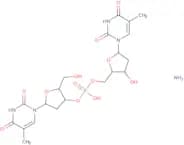
CAS:<p>Thymidylyl-(3′→5′)-thymidine is a modified nucleoside that has antiviral activity. It is synthesized from thymidine, which is the deoxyribonucleotide of thymine and uracil, by phosphorylation with ATP. Thymidylyl-(3′→5′)-thymidine has been shown to be an activator of DNA polymerase in vitro and inhibits replication of human immunodeficiency virus (HIV) in cell cultures. This compound has been studied as a potential treatment for AIDS.</p>Formula:C20H30N5O12PPurity:Min. 95%Molecular weight:563.5 g/mol2'-Deoxy-5'-O-DMT-N2-isobutyryl-3'-xanthylguanosine
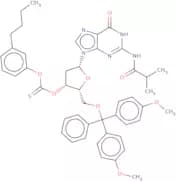
<p>2'-Deoxy-5'-O-DMT-N2-isobutyryl-3'-xanthylguanosine is a diphosphate synthetic activator. It has been shown to be an effective anticancer and antiviral agent.</p>Formula:C46H49N5O8SPurity:Min. 95%Molecular weight:832 g/mol5-Vinylcytidine
CAS:<p>5-Vinylcytidine is a nucleoside analog used in research to study DNA demethylation. It is an orthogonal molecule that can be used in assays to distinguish between different types of methylases. 5-Vinylcytidine is able to oxidize and formylate the N5 position of thymine, which leads to DNA demethylation. The mechanism of this process is not fully understood, but it may involve translocation or homologous recombination. 5-Vinylcytidine has been shown to react with alkyl groups, leading to its use as a probe for biochemical reactions involving methyltransferase enzymes.</p>Purity:Min. 95%2'-Deoxyuridine-5'-[(a,b)-methyleno]triphosphate sodium salt - 10 mM aqueous solution
CAS:<p>2'-Deoxyuridine-5'-[(a,b)-methyleno]triphosphate sodium salt - 10 mM aqueous solution is an activator of nucleoside diphosphates. It is a novel and anticancer nucleoside analog with high purity, high quality and a CAS number of 170428-84-9. This activator has been shown to inhibit the growth of tumor cells by inhibiting DNA synthesis and ribonucleotide reductase activity. The 2'-deoxyuridine-5'-[(a,b)-methyleno]triphosphate sodium salt - 10 mM aqueous solution can be used in the synthesis of deoxyribonucleosides and phosphoramidites as well as modified DNA.</p>Formula:C10H17N2O13P3Purity:Min. 95%Color and Shape:liquid.Molecular weight:466.17 g/mol2'-Bromo-2'-deoxy-3'-O-methanesulfonyluridine
<p>2'-Bromo-2'-deoxy-3'-O-methanesulfonyluridine is a nucleoside analogue that acts as an activator of the human immunodeficiency virus (HIV). It is thought to work by binding to the viral reverse transcriptase enzyme, which converts the RNA genome into DNA. This prevents the virus from replicating and producing new viruses. 2'-Bromo-2'-deoxy-3'-O-methanesulfonyluridine has also been shown to be active against other viruses such as herpes simplex virus type 1 (HSV1) and influenza A virus.</p>Purity:Min. 95%4'-Nitrobenzoyl-6-selenoinosine
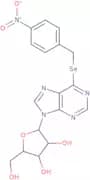
CAS:<p>4'-Nitrobenzoyl-6-selenoinosine is a monophosphate nucleoside that is synthesized by the phosphoramidite method. It has been shown to have antiviral and anticancer activities. The compound inhibits the synthesis of DNA and RNA, which may be due to its ability to inhibit the enzyme ribonucleotide reductase. 4'-Nitrobenzoyl-6-selenoinosine has also been shown to activate cellular transcription factors such as NF-κB and AP-1, resulting in increased expression of genes involved in apoptosis.</p>Formula:C17H15N5O7SePurity:Min. 95%Molecular weight:480.29 g/mol3'-Chloro-3'-deoxy-5'-O-tritylthymidine
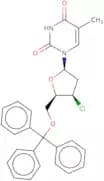
CAS:<p>3'-Chloro-3'-deoxy-5'-O-tritylthymidine (3CT) is an antiviral and anticancer drug that is a modified nucleoside. It is synthesized by reacting 3'-chloro-5'-O-tritylthymidine with trichloroacetonitrile. 3CT inhibits the synthesis of DNA and RNA, which may have antiviral and anticancer effects. It can be used to treat hepatitis B virus, herpes simplex virus, human papillomavirus, Epstein-Barr virus, and Kaposi's sarcoma. 3CT has been shown to be effective in treating cancer cells in culture by inhibiting DNA synthesis.</p>Formula:C29H27ClN2O4Purity:Min. 95%Molecular weight:503 g/mol7-Deaza-7-iodoadenosine
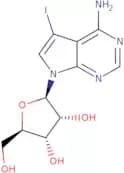
CAS:<p>7-Deaza-7-iodoadenosine is a nucleotide that has been used in experiments to assess the levels of adenosine, a dinucleotide phosphate that is involved in many cellular functions. 7-deaza-7-iodoadenosine has been shown to inhibit locomotor activity in rats and cyclase activity in 3T3-L1 preadipocytes. It also inhibits the release of inflammatory proteins from polymorphonuclear leucocytes and angiogenesis (formation of new blood vessels) in liver cells. Although this nucleotide has not been extensively studied, it has been proposed as an antiinflammatory agent because it inhibits protein synthesis and downregulates proinflammatory proteins.</p>Formula:C11H13IN4O4Purity:Min. 95%Molecular weight:392.15 g/molPyrimidine-5-carbothioic acid amide
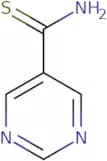
CAS:<p>Pyrimidine-5-carbothioic acid amide (PCA) is an organic compound that contains a pyrimidine ring and a carboxylic acid amide group. PCA forms crystalline solids with the molecular formula C4H10N2O4. The x-ray crystal structure of PCA has been determined, revealing the molecule to have a chair conformation with two hydrogen bonds. The molecule can be considered as stabilized by the base formation between the nitrogen atom in the pyrimidine ring and the oxygen atom in the carboxylic acid amide group. PCA has been used as a building block for other molecules, such as enamines, which are useful for computation studies. PCA is also an intermediate in chemical reactions involving nucleophilic substitution reactions and hydrogen abstraction reactions.</p>Formula:C5H5N3SPurity:Min. 95%Molecular weight:139.18 g/molγ-(BBT)-ATP
<p>gamma-(BBT)-ATP is a novel ATP analog that has been shown to activate the purine nucleotide receptor and cause tumor cell death. It is a deoxyribonucleoside, phosphoramidite, and monophosphate that can be used as an activator for DNA synthesis. gamma-(BBT)-ATP inhibits the growth of tumor cells in culture and has antiviral activity against herpes simplex virus type-1.</p>Formula:C24H22N7O13P3S2·xNaPurity:Min. 95%Color and Shape:PowderMolecular weight:773.52 g/molN4-Benzoyl-2'-deoxy-5-iodocytidine
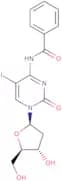
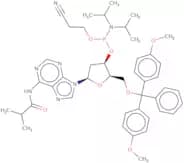
CAS:<p>N4-Benzoyl-2'-deoxy-5-iodocytidine is a nucleoside that is used as an activator for RNA synthesis and in the synthesis of phosphoramidites. It has antiviral and anticancer properties and is novel for its potential use as a therapeutic agent.</p>Formula:C16H18IN3O4Purity:Min. 95%Molecular weight:443.24 g/mol2'-Deoxy-5'-O-DMT-N6-isobutyryladenosine 3'-CE phosphoramidite
<p>2'-Deoxy-5'-O-DMT-N6-isobutyryladenosine 3'-CE phosphoramidite is a novel and high quality anticancer agent that is used in the synthesis of DNA. This compound has shown potent cytotoxic activity against various cancer cell lines, including human leukemia cells, human breast carcinoma cells, and human colon carcinoma cells. 2'-Deoxy-5'-O-DMT-N6-isobutyryladenosine 3'-CE phosphoramidite inhibits DNA synthesis by inhibiting the enzyme DNA polymerase. It also inhibits protein synthesis and has been shown to be toxic to the mitochondria, which may be responsible for its anti-cancer effects.</p>Formula:C44H54N7O7PPurity:Min. 95%Molecular weight:823.94 g/molFluorescein-5(6)-carboxamidocaproyl-(5-[3-aminoallyl]uridine 5'-triphosphate) - 1 mM aqueous solution
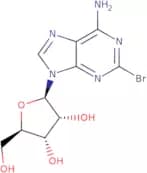
CAS:<p>Fluorescein-5(6)-carboxamidocaproyl-(5-[3-aminoallyl]uridine 5'-triphosphate) is a novel antiviral compound that is an activator of ribonucleoside and deoxyribonucleoside phosphorylation. It has been shown to selectively inhibit the proliferation of cancer cells, and to be cytotoxic to human leukemia cells in vitro. The compound is also able to inhibit HIV replication in vitro. Fluorescein-5(6)-carboxamidocaproyl-(5-[3-aminoallyl]uridine 5'-triphosphate) - 1 mM aqueous solution is a high purity product with CAS No. 134367-01-4 that can be used as a synthetically modified DNA or RNA building block for the production of phosphoramidites. This product has been shown to be cytotoxic against human leukemia cells in</p>Formula:C39H41N4O22P3Purity:Min. 95%Molecular weight:1,010.68 g/mol2-Bromoadenosine
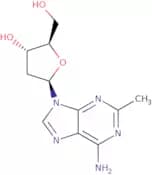
CAS:<p>2-Bromoadenosine is a nucleoside that is structurally similar to adenosine. It has shown to have high resistance against blood pressure and l1210 cells. 2-Bromoadenosine also inhibits kinase activities in microns and spontaneous cell cultures, as well as chemical diversity. This drug has been shown to have high values in neurotransmission, carbonic anhydrase, cardiac muscle, and RNA synthesis. 2-Bromoadenosine blocks the receptor of adenine nucleotides, which causes cell death by inhibiting the production of adenosine. This product may be used for the treatment of cardiac disease or cancer.</p>Formula:C10H12BrN5O4Purity:Min. 95%Color and Shape:PowderMolecular weight:346.14 g/mol2’-Deoxy-2-methyladenosine
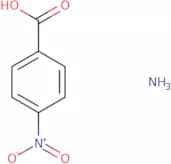
CAS:<p>2’-Deoxy-2-methyladenosine is a nucleoside that is chemically synthesized by the phosphorylation of 2,6-diaminopurine. It has been shown to be an effective activator of RNA polymerase and it also has anticancer properties. 2’-Deoxy-2-methyladenosine can be used as a substitute for thymidine in DNA synthesis. This nucleoside has also been shown to inhibit bacterial growth in culture by inhibiting DNA synthesis and protein synthesis. It is a modified nucleoside that can be used for the synthesis of DNA, RNA, or ribonucleic acids. The CAS number for this compound is 110952-90-4.</p>Purity:Min. 95%Ammonium 4-nitrobenzoate dihydrate
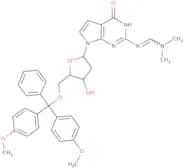
CAS:<p>Ammonium 4-nitrobenzoate dihydrate is a corrosion inhibitor that prevents the corrosion of metal parts and other materials. It is used in the production of plastics, coatings, adhesives, and lubricants. The corrosion inhibition activity of aminobenzoates can be attributed to their ability to form hydrogen phosphate (HPO) anions as well as their ability to complex with metal ions. The hydration process is also important for the corrosion inhibition activity of ammonium 4-nitrobenzoate dihydrate. This process involves the release of water molecules from the ammonium salt, which provide a protective coating around the metal surface. Ammonium 4-nitrobenzoate dihydrate also has additive properties that are beneficial for other industrial applications such as antistatic agents, surfactants, and stabilizers.</p>Purity:Min. 95%5'-o-(Dimethoxytrityl)-N2-(dimethylaminomethylidene)-7-deaza-2'-deoxyguanosine
CAS:<p>Please enquire for more information about 5'-o-(Dimethoxytrityl)-N2-(dimethylaminomethylidene)-7-deaza-2'-deoxyguanosine including the price, delivery time and more detailed product information at the technical inquiry form on this page</p>Formula:C35H37N5O6Purity:Min. 95%Molecular weight:623.7 g/molCerebrosides (brain)
CAS:<p>Cerebrosides are a group of natural and synthetic phospholipids that are found in the brain. They are made from glycerophosphoric acid and sphingosine. Cerebrosides have been shown to be anticancer agents, and may also inhibit the growth of bacteria. They can also promote DNA synthesis and prevent the destruction of DNA by inhibiting some enzymes, such as phosphodiesterase. Cerebrosides are also used to synthesize nucleosides and deoxyribonucleosides, which is important for cell division.</p>Formula:C48H93NO8Purity:Min. 95%Molecular weight:812.25 g/mol
![5'-Deoxy-5-fluoro-N-[(2-methylbutoxy)carbonyl]cytidine](/_next/image/?url=https%3A%2Fstatic.cymitquimica.com%2Fproducts%2F3D%2Fthumb-webp%2FND16526.webp&w=3840&q=75)


![2'-Deoxyuridine-5'-[(a,b)-methyleno]triphosphate sodium salt - 10 mM aqueous solution](/_next/image/?url=https%3A%2Fstatic.cymitquimica.com%2Fproducts%2F3D%2Fthumb-webp%2FND45198.webp&w=3840&q=75)


![Fluorescein-5(6)-carboxamidocaproyl-(5-[3-aminoallyl]uridine 5'-triphosphate) - 1 mM aqueous solut…](/_next/image/?url=https%3A%2Fstatic.cymitquimica.com%2Fproducts%2F3D%2Fthumb-webp%2FNF139015.webp&w=3840&q=75)