


Nucleosides
Nucleosides are fundamental building blocks of nucleic acids, composed of a nitrogenous base attached to a sugar molecule. In this section, you can find a wide variety of nucleosides essential for research in molecular biology, biochemistry, and pharmacology. These compounds play crucial roles in the synthesis of DNA and RNA, and are also vital in various metabolic processes. Nucleosides are used in studying genetic material, developing antiviral and anticancer therapies, and understanding cellular mechanisms. At CymitQuimica, we provide high-quality nucleosides to support your research and development needs, ensuring purity and reliability for your experimental applications.
Found 3568 products of "Nucleosides"
Sort by
Purity (%)
0
100
|
0
|
50
|
90
|
95
|
100
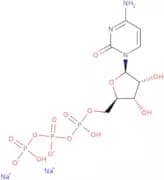
Cytidine-5'-triphosphoric acid disodium salt
CAS:<p>Cytidine-5'-triphosphoric acid disodium salt is an unassigned compound that is a potent inhibitor of protein synthesis. It has been shown to have a specific growth rate of 0.0003, which is significantly lower than the growth rate for other tested compounds. Cytidine-5'-triphosphoric acid disodium salt also inhibits the growth of Klebsiella aerogenes, Escherichia coli, and Enterococcus faecalis at concentrations as low as 1 ppm. The compound has been found to be hydraulically resistant and can be used in polyolefin formulations with high resistance to organic solvents. Cytidine-5'-triphosphoric acid disodium salt is also used as a supplement in the production of proteins such as enzymes, antibodies, hormones, and cytokines because it blocks the formation of proteins by interfering with ribosomes and preventing them from binding to mRNA transcripts.</p>Formula:C9H14N3Na2O14P3Purity:Min. 95%Molecular weight:527.12 g/mol5'-Dimethoxytrityl-1-methyl-pseudoUridine, 2'-O-TBDMS-3'-[(2-cyanoethyl)-(N,N-diisopropyl)]-phosphoramidite
CAS:<p>5'-Dimethoxytrityl-1-methyl-pseudoUridine, 2'-O-TBDMS-3'-[(2-cyanoethyl)-(N,N-diisopropyl)]-phosphoramidite is a nucleoside phosphoramidite that is used in the synthesis of oligonucleotides. It is a novel and high quality chemical compound that has been used in the synthesis of DNA and RNA with anticancer activity. 5'-Dimethoxytrityl-1-methyl-pseudoUridine, 2'-O-[TBDMS]3'[(2-cyanoethyl)-(N,N-diisopropyl)]phosphoramidite (DMTPMP) is an oligonucleotide analog that has shown to help prevent viral replication.</p>Formula:C46H63N4O9PSiPurity:Min. 94 Area-%Color and Shape:PowderMolecular weight:875.07 g/mol3'-O-Azidomethyl 2'-deoxyadenosine 5'-O-triphosphate sodium salt
<p>3'-O-Azidomethyl 2'-deoxyadenosine 5'-O-triphosphate sodium salt (3'AADAP) is a novel nucleotide analog that has been shown to have antiviral and anticancer activities. It is a high-quality, purified nucleotide that can be used as an activator for DNA synthesis. 3'AADAP can also be used to synthesize deoxyribonucleosides, which are modified nucleotides that have the ability to inhibit replication of RNA viruses such as HIV. The CAS number for 3'AADAP is 72295-72-8.</p>Formula:C11H17N8O12P3Purity:Min. 95%Molecular weight:546.22 g/mol2'-Deoxycytidine-5'-O-monophosphorothioate sodium salt
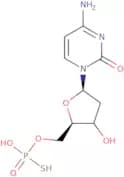
CAS:<p>2'-Deoxycytidine-5'-O-monophosphorothioate sodium salt is a nucleoside that is used in the synthesis of DNA. It is also an activator for the phosphoramidite group. This product has novel chemical properties and is CAS No. 63225-09-2. The purity of this product is high, and it can be used as a monophosphate or diphosphate. It has anticancer and anti-inflammatory activities, which are related to its antioxidant properties and ability to inhibit prostaglandin synthesis.</p>Formula:C9H14N3O6PSPurity:Min. 95%Molecular weight:323.26 g/mol5-[N(2-Trifluoroacetamido)ethyl)-3-(E)-acrylamido]-2-deoxyuridine
CAS:<p>5-[N(2-Trifluoroacetamido)ethyl)-3-(E)-acrylamido]-2-deoxyuridine is an anticancer, antiviral, and phosphoramidite DNA synthesis reagent that is modified by the addition of a trifluoroacetamide group. It has been shown to activate monophosphate nucleotides and nucleosides to their corresponding diphosphates and deoxyribonucleosides. 5-[N(2-Trifluoroacetamido)ethyl]-3-(E)-acrylamido]-2-deoxyuridine is synthesized from 2-deoxyuridine which is derived from uracil and phenol. This novel chemical substance has shown promising results in preclinical testing against human cancers and viral infections.</p>Formula:C16H19F3N4O7Purity:Min. 95%Molecular weight:436.34 g/mol2-Methylthio-6-chloropurine riboside
CAS:<p>2-Methylthio-6-chloropurine riboside is an adenosine derivative that acts as a competitive inhibitor of the enzyme RNA polymerase. It is used in the process of translation to inhibit protein synthesis. 2-Methylthio-6-chloropurine riboside is synthesized by reacting 2-methylthioadenosine with 6-chloropurine riboside and then phosphoramidite chemistry.</p>Formula:C12H15CIN4O5SPurity:Min. 95%Molecular weight:466.25 g/mol6-Carboxyfluorescein diacetate N-Hydroxysuccinimide ester
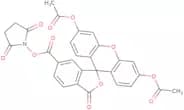
CAS:<p>6-Carboxyfluorescein diacetate N-Hydroxysuccinimide ester is a fluorescence probe that can be used as a marker for biological samples. It is minimally toxic and stable in vitro, and can be used to measure the protein content of cells. This compound has been used in vitro methods to study the effects of environmental factors on cellular metabolism by measuring the amount of ATP in 3T3-L1 preadipocytes. 6-Carboxyfluorescein diacetate N-Hydroxysuccinimide ester has also been used to measure the effectiveness of wastewater treatment processes by analyzing the fluorescence intensity of cells using confocal microscopy. It has also been shown to have an effect on hypersensitivity syndrome and infectious diseases.</p>Formula:C29H19NO11Purity:Min. 95 Area-%Color and Shape:PowderMolecular weight:557.46 g/molEthyl 2-amino-4-(trifluoromethyl)pyrimidine-5-carboxylate
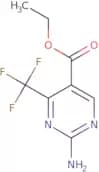
CAS:<p>Ethyl 2-amino-4-(trifluoromethyl)pyrimidine-5-carboxylate is a small molecule that is a potent inhibitor of diacylglycerol acyltransferase. The compound has been shown to be an efficient inhibitor of this enzyme, which is involved in the synthesis of diacylglycerol. Diacylglycerol acyltransferase catalyzes the transfer of an acyl group from an acyl-carrier protein (ACP) to glycerol 3-phosphate, forming lysophosphatidic acid and releasing CoA. The inhibition of this enzyme leads to drastically reduced levels of diacylglycerol, which may have implications for the treatment of metabolic syndrome and diabetes.</p>Formula:C8H8F3N3O2Purity:Min. 95%Molecular weight:235.16 g/mol1,3-Dimethyl-5-[3-(4,4,5,5-tetramethyl-[1,3,2]dioxaborolan-2-yl)-benzyl]-pyrimidine-2,4,6-trione
CAS:<p>1,3-Dimethyl-5-[3-(4,4,5,5-tetramethyl-[1,3,2]dioxaborolan-2-yl)-benzyl]-pyrimidine-2,4,6-trione is a novel nucleoside that is synthesized from 5-(3-(4,4,5,5-tetramethyl-[1,3,2]dioxaborolan-2-yl)benzyl)pyrimidine and dimethoxytrityl chloride. This compound has antiviral and anticancer properties. It can inhibit the replication of DNA by binding to the 3' hydroxyl group of the deoxyribonucleotide triphosphate. It also inhibits cancer cell growth by inhibiting RNA synthesis and protein synthesis. 1,3-Dimethyl-5-[3-(4,4,5,5-tetramethyl-[1,3 , 2]d</p>Purity:Min. 95%2-Fluoro-9-(2'-deoxy-2'-fluoro-b-D-arabinofuranosyl)adenine
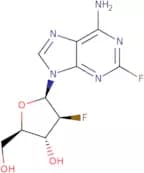
CAS:<p>2-Fluoro-9-(2'-deoxy-2'-fluoro-b-D-arabinofuranosyl)adenine is an antiviral drug that inhibits the synthesis of viral DNA and RNA. It is a synthetic nucleoside analogue with antiviral activity against herpes simplex virus type 1, herpes simplex virus type 2, varicella zoster virus, cytomegalovirus, Epstein Barr virus, and human immunodeficiency virus type 1. This compound is also used as a building block in the preparation of phosphoramidites for chemical synthesis of deoxyribonucleosides. 2-Fluoro-9-(2'-deoxy-2'-fluoro-b-D-arabinofuranosyl)adenine has shown anticancer activity in vitro and can be used to treat various types of cancer.</p>Formula:C10H11F2N5O3Purity:Min. 95%Molecular weight:287.22 g/mol2-Amino-4-hydroxy-6-(trifluoromethyl)pyrimidine
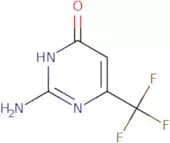
CAS:<p>2-Amino-4-hydroxy-6-(trifluoromethyl)pyrimidine is an activator, which is a substance that activates the enzymes that catalyze chemical reactions. It is a novel material with high purity and high quality. The activator can be used in the synthesis of ribonucleosides, deoxyribonucleosides, nucleosides, and phosphoramidites. 2-Amino-4-hydroxy-6-(trifluoromethyl)pyrimidine has been found to have anticancer and antiviral activities.</p>Purity:Min. 95%2',3'-Dideoxyinosine-5'-monophosphate sodium salt
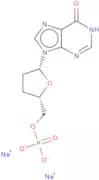
CAS:<p>2',3'-Dideoxyinosine-5'-monophosphate sodium salt (ddI-MP) is an antiviral drug that is effective against HIV. It inhibits the reverse transcriptase enzyme, which is responsible for the conversion of RNA to DNA. ddI-MP has cytotoxic properties and prevents the production of DNA and protein. This agent also has a prophylactic effect against retroviruses, such as HIV, by preventing them from establishing latency in lymphocytes.</p>Formula:C10H11N4O6P·Na2Purity:Min. 95%Molecular weight:360.17 g/mol3-N-(2,4-Dimethylbenzyl)-1-(5-O-DMT-3-O-nitrophenylsulphonyl-2-deoxy-b-D-lyxofuranosyl)thymidine
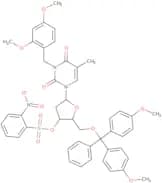
CAS:3-N-(2,4-Dimethylbenzyl)-1-(5-O-DMT-3-O-nitrophenylsulphonyl-2-deoxy-b-D-lyxofuranosyl)thymidine is a modified nucleoside that has antiviral and anticancer properties. It is a synthetic nucleotide with a novel structure that can be phosphorylated to form the corresponding diphosphate, monophosphate, or phosphoramidites. 3N-(2,4-Dimethylbenzyl)-1-(5-O-DMT (3'-O-[(dimethylamino)methyl]oxime)-2'-deoxyribofuranosyl)thymidine is used as an antiviral agent against HIV and other retroviruses.Formula:C46H45N3O13SPurity:Min. 95%Molecular weight:879.93 g/mol2'-Deoxy-5'-O-p-toluenesulfonyluridine
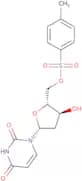
CAS:<p>2'-Deoxy-5'-O-p-toluenesulfonyluridine is a nucleoside that is modified with a p-toluenesulfonyl group on the 2' position. This compound has been shown to be an activator of phosphoramidites. It is also used as an anticancer drug, antiviral agent, and in the synthesis of ribonucleosides and deoxyribonucleosides. 2'-Deoxy-5'-O-p-toluenesulfonyluridine is typically used as a building block for RNA or DNA synthesis. This compound can also be used in the preparation of aminoglycoside antibiotics, as well as for the treatment of cancerous tumors.</p>Formula:C16H18N2O7SPurity:Min. 95%Molecular weight:382.4 g/mol5-(4-Hydroxybutyn-1-yl)uridine
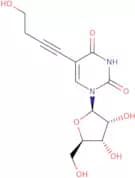
CAS:<p>5-(4-Hydroxybutyn-1-yl)uridine (5-BPU) is a nucleoside that inhibits viral replication. It is synthesized by the phosphoramidite method and modified to produce a 5-(4-hydroxybutyn-1-yl)uridine diphosphate (5-BPUDP). 5-BPUDP can be phosphorylated to form 5-(4-hydoxybutyn-1-yl)uridine monophosphate (5-BPUMP), which is more active than 5-(4-hydoxybutyn-1 -yl)uridine diphosphate. The antiviral activity of this drug has been demonstrated in vitro using human T lymphocytes, Epstein Barr virus, and herpes simplex virus type 1. It has also shown anticancer activity against leukemia cells in mice and rats.</p>Formula:C13H16N2O7Purity:Min. 95%Molecular weight:312.28 g/mol3,5-Di-o-acetyl-5-fluoro-O4-(2,4,6-trimethylphenyl)-2-deoxyuridine
CAS:<p>3,5-Di-o-acetyl-5-fluoro-O4-(2,4,6-trimethylphenyl)-2-deoxyuridine is a novel modified monophosphate nucleoside. It is an antiviral agent and has been shown to have anticancer activity. 3,5-Di-o-acetyl-5-fluoro-O4-(2,4,6-trimethylphenyl)-2-deoxyuridine is synthesized by the reaction of 5'-triphosphates with 2'-deoxyribonucleosides in the presence of a phosphoramidite. This nucleoside has been found to be cytotoxic in vitro and in vivo against cancer cell lines and can be used as a therapeutic agent for the treatment of leukemia.</p>Formula:C22H25FN2O7Purity:Min. 95%Molecular weight:448.40 g/mol5'-O-DMT-N-(dimethylamino)methylidene-2'-deoxypseudoisocytidine
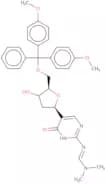
CAS:<p>5'-O-DMT-N-(dimethylamino)methylidene-2'-deoxypseudoisocytidine is a novel antiviral monophosphate nucleoside. It inhibits viral DNA synthesis by competing with natural deoxyribonucleosides in the cell. 5'-O-DMT-N-(dimethylamino)methylidene-2'-deoxypseudoisocytidine is a high purity, modified nucleoside that has been synthesized by chemical phosphoramidite chemistry and modified to allow for efficient polymerase chain reactions. This product has been tested as an anticancer agent in vitro.</p>Formula:C33H36N4O6Purity:Min. 95%Molecular weight:584.66 g/molPseudoisocytidine hydrochloride
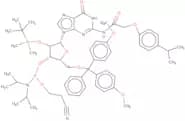
CAS:<p>Pseudoisocytidine is a nucleoside analogue that inhibits bacterial growth by binding to the ribosomal RNA of bacteria. Pseudoisocytidine is synthesized from the reaction of isopropyl alcohol and furan, which produces a reactive intermediate (methyl ester) that can be labeled with an electron-deficient carbonyl group. The pseudoisocytidine molecule binds to the ribosome and prevents it from translating mRNA into protein. This leads to inhibition of bacterial growth. Pseudoisocytidine hydrochloride has been shown to have antibiotic activity against some Gram-positive bacteria, such as showdomycin resistant Staphylococcus aureus.</p>Formula:C9H13N3O5·HClPurity:Min. 95%Molecular weight:279.68 g/mol2'-O-tert-Butyldimethylsilyl-5'-O-DMT-N2-(4-isopropylphenoxyacetyl)guanosine 3'-CE phosphoramidite
<p>2'-O-tert-Butyldimethylsilyl-5'-O-DMT-N2-(4-isopropylphenoxyacetyl)guanosine 3'-CE phosphoramidite is a nucleoside that was synthesized by the reaction of 2'-O-tert-butyldimethylsilyl-5'-O-dimethoxytritylguanosine 3'-CE with 4-isopropylphenoxyacetic acid. This nucleoside has antiviral and anticancer activities. It has been shown to inhibit the growth of human leukemia cells in culture, and also inhibits the replication of human immunodeficiency virus (HIV).</p>Formula:C57H74N7O10PSiPurity:Min. 95%Molecular weight:1,076.33 g/molN-[2-(2,4-Dioxopyrimidin-1-yl)-4-hydroxy-5-(hydroxymethyl)oxolan-3-yl]-2,2,2-trifluoroacetamide
CAS:<p>N-[2-(2,4-Dioxopyrimidin-1-yl)-4-hydroxy-5-(hydroxymethyl)oxolan-3-yl]-2,2,2-trifluoroacetamide is a novel synthetic compound with antiviral and anticancer activities. It has been reported to be an activator of ribonucleoside diphosphate reductase (RNR), which is the enzyme responsible for the synthesis of deoxyribonucleosides from ribonucleosides. N-[2-(2,4-Dioxopyrimidin-1-yl)-4-hydroxy-5-(hydroxymethyl)oxolan-3-yl]-2,2,2 -trifluoroacetamide also inhibits the protein synthesis of human cancer cells by interfering with the function of DNA polymerase and RNA polymerase.</p>Formula:C11H12F3N3O6Purity:Min. 95%Molecular weight:339.22 g/mol

![5'-Dimethoxytrityl-1-methyl-pseudoUridine, 2'-O-TBDMS-3'-[(2-cyanoethyl)-(N,N-diisopropyl)]-phosph…](/_next/image/?url=https%3A%2Fstatic.cymitquimica.com%2Fproducts%2F3D%2Fthumb-webp%2FPD180455.webp&w=3840&q=75)

![5-[N(2-Trifluoroacetamido)ethyl)-3-(E)-acrylamido]-2-deoxyuridine](/_next/image/?url=https%3A%2Fstatic.cymitquimica.com%2Fproducts%2F3D%2Fthumb-webp%2FUJB22269.webp&w=3840&q=75)

![1,3-Dimethyl-5-[3-(4,4,5,5-tetramethyl-[1,3,2]dioxaborolan-2-yl)-benzyl]-pyrimidine-2,4,6-trione](/_next/image/?url=https%3A%2Fstatic.cymitquimica.com%2Fproducts%2F3D%2Fthumb-webp%2FND44286.webp&w=3840&q=75)


![N-[2-(2,4-Dioxopyrimidin-1-yl)-4-hydroxy-5-(hydroxymethyl)oxolan-3-yl]-2,2,2-trifluoroacetamide](/_next/image/?url=https%3A%2Fstatic.cymitquimica.com%2Fproducts%2F3D%2Fthumb-webp%2FBCA98921.webp&w=3840&q=75)