


Nucleosides
Nucleosides are fundamental building blocks of nucleic acids, composed of a nitrogenous base attached to a sugar molecule. In this section, you can find a wide variety of nucleosides essential for research in molecular biology, biochemistry, and pharmacology. These compounds play crucial roles in the synthesis of DNA and RNA, and are also vital in various metabolic processes. Nucleosides are used in studying genetic material, developing antiviral and anticancer therapies, and understanding cellular mechanisms. At CymitQuimica, we provide high-quality nucleosides to support your research and development needs, ensuring purity and reliability for your experimental applications.
Found 3567 products of "Nucleosides"
Sort by
Purity (%)
0
100
|
0
|
50
|
90
|
95
|
100
AFB-guanine
CAS:<p>AFB-guanine is a purine nucleoside that has been found to be an intermediate in the conversion of adenosine to inosine. The toxicity of AFB-guanine was studied using the model system of rat liver microsomes and human liver. It was observed that AFB-guanine is metabolized by glycosylases, which act on purines and pyrimidines. The glycosylase activity was inhibited by dicoumarol, which results in a decrease in the amount of AFB-guanine that is converted to adenosine triphosphate (ATP). The study also showed that histological analysis revealed degenerative diseases and cancer in mice fed with AFB-guanine, suggesting that this compound may be carcinogenic.</p>Formula:C22H17N5O8Purity:Min. 95%Molecular weight:479.4 g/mol5-Methylcytidine HCl
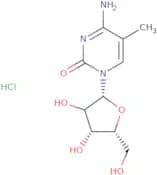
<p>5-Methylcytidine HCl is a novel antiviral and anticancer agent. It possesses two important properties: it is an activator of the enzyme ribonucleotide reductase, which regulates DNA synthesis and repair; and it inhibits the activity of DNA polymerases. It is also chemically modified to allow its use in phosphoramidite synthesis. 5-Methylcytidine HCl has been shown to cause apoptosis in cancer cells, as well as inhibit the growth of bacteria.</p>Formula:C10H15N3O5·HClPurity:Min. 95%Molecular weight:293.7 g/mol2-[2-(4-Fluorophenyl)ethoxy]adenosine
CAS:<p>2-[2-(4-Fluorophenyl)ethoxy]adenosine is a hydrogen-bonded, hydrated, switchable molecule. The techniques used to characterize this compound include vibrational spectroscopy and Raman spectroscopy. 2-[2-(4-Fluorophenyl)ethoxy]adenosine has been shown to have high salt and thermal stability. It has also been shown to undergo conformational changes in the presence of chemists.</p>Formula:C18H20FN5O5Purity:Min. 95%Molecular weight:405.38 g/mol2'-Deoxy-5'-O-DMT-N2-(4-isopropylphenoxyacetyl)guanosine 3'-Me phosphoramidite
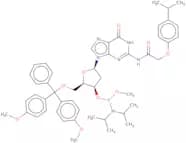
<p>2'-Deoxy-5'-O-DMT-N2-(4-isopropylphenoxyacetyl)guanosine 3'-Me phosphoramidite is a modified nucleoside monophosphate with antiviral and anticancer activity. It is synthesized by the reaction of 2'-deoxyguanosine 5'-O-DMT (dG) with 4-isopropylphenoxyacetic acid in the presence of triethylamine and tetrazole. The product is purified by crystallization.<br>This compound has been shown to inhibit replication of human immunodeficiency virus type 1 (HIV-1) in human lymphocytes, which may be due to its ability to inhibit the synthesis of DNA, RNA, or both.</p>Formula:C49H59N6O9PPurity:Min. 95%Molecular weight:907.03 g/mol2,5'-Anhydro-thymidine
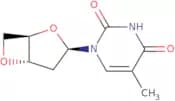
CAS:<p>2,5'-Anhydro-thymidine is an analog of thymidine that is used in the diagnosis of women with suspected acute ischemic brain damage. It is a colony-stimulating factor that can be activated by the presence of inflammatory bowel disease or bowel disease. 2,5'-Anhydro-thymidine has been shown to cause ventricular dysfunction and to increase levels of brain natriuretic peptide in mice undergoing rotarod tests. The use of this compound has been shown to improve outcomes in animal models of acute ischemic brain damage and cancer.</p>Formula:C10H12N2O4Purity:Min. 95%Molecular weight:224.21 g/mol8-Bromo-5'-o-(dimethyoxytrityl)-N2-(dimethyl-aminomethylidene)-2'-deoxyguanosine
CAS:<p>8-Bromo-5'-O-(dimethyoxytrityl)-N2-(dimethyl-aminomethylidene)-2'-deoxyguanosine (8-Bromo-5'-O-(DMT)-dG) is a novel nucleoside that is synthesized by reacting 8-bromo-5'-O-(dimethyoxytrityl)-2'-deoxyguanosine with dimethylaminomethylidene. It has antiviral, anticancer, and ribonucleoside activities. 8-Bromo-5'-O-(DMT)-dG is used as a building block for the synthesis of oligonucleotides, phosphoramidites, and other modified nucleosides. 8-Bromo-5'-O-(DMT)-dG is currently being developed as an anticancer drug.</p>Formula:C34H35BrN6O6Purity:Min. 95%Molecular weight:703.6 g/mol2'-O-tert-Butyldimethylsilyl-5'-O-DMT-adenosine
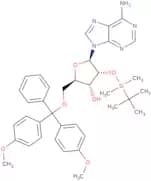
CAS:<p>2'-O-tert-Butyldimethylsilyl-5'-O-DMT-adenosine is a modified nucleoside that is used to synthesize oligonucleotides. It is a phosphoramidite, and can be used in the synthesis of DNA or RNA. 2'-O-tert-Butyldimethylsilyl-5'-O-DMT-adenosine is an antiviral agent that has been shown to have anticancer activity in animal models. It has been shown to inhibit the production of tumor necrosis factor alpha (TNFα) and serum enzymes, such as dismutase activity, in mice with lung cancer. This drug also has a toxic effect on respiratory system cells, which may be due to its ability to induce apoptosis.</p>Purity:Min. 95%2-Methylthio-6-chloropurine
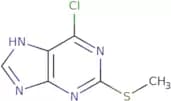
CAS:<p>2-Methylthio-6-chloropurine riboside is a nucleotide analog that is used as a substrate to study the enzymatic modification of RNA. The compound has been synthesized by reacting 2-methylthio-6-chloropurine with ribose and purine bases in a postsynthetic modification. To detect the product, 2-methylthio-6-chloropurine riboside was labeled with 32P and then detected using mass spectrometry. In order to identify the structure of this compound, it was subjected to chromatography and spectroscopy. This process allowed for the identification of 2-methylthio-6-chloropurine riboside as an analog of N6 methyladenosine.</p>Formula:C6H5CIN4SPurity:Min. 95%Molecular weight:304.11 g/mol2-Fluoroinosine
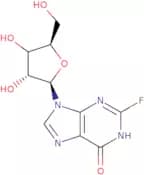
CAS:<p>2-Fluoroinosine is a chemical that inhibits protein synthesis by blocking the attachment of amino acids to their corresponding tRNA molecules. This drug is used in the treatment of cancer, as it inhibits cell growth and prevents tumor cells from dividing. 2-Fluoroinosine has been shown to be effective against human leukaemia cells, with its inhibitory properties being due to its ability to dephosphorylate the enzyme RNA polymerase II. This drug also has anti-malarial properties and can be used for the treatment of Chagas disease. 2-Fluoroinosine is synthesized from xanthosine, which is an intermediate in purine metabolism and can be obtained from naturally occurring sources or chemically through a solid phase synthesis.<br>2-Fluoroinosine is activated by UV light and can be synthesized using single stranded DNA or synthetases such as those found in calf thymus tissue. The catalytic mechanism of this drug has</p>Formula:C10H11FN4O5Purity:Min. 95%Molecular weight:286.22 g/mol5'-Amino-2',5'-dideoxyuridine
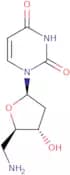
CAS:<p>5'-Amino-2',5'-dideoxyuridine (5-ADU) is a pyrimidine nucleoside that is structurally similar to thymidylate, which it inhibits. 5-ADU is used in the treatment of viral infections and cancers, as well as in the prevention of radiation injury. It has been shown to be an effective antiviral agent against herpes virus and some DNA viruses, such as adenovirus, vaccinia virus, and poliovirus. 5-ADU also enhances the effects of azauridine and other pyrimidine nucleosides in bacterial enzymes such as E. coli. 5-ADU has not been shown to be active against uninfected cells or tissues.</p>Formula:C9H13N3O4Purity:Min. 95%Molecular weight:227.22 g/mol2-Methanesulfonyl-pyrimidine
CAS:<p>2-Methanesulfonyl-pyrimidine is a thiourea that is used as a catalyst in organic synthesis. It can be prepared by reacting phosphorus oxychloride with malonate and hydrochloric acid at temperatures of about 0°C to 150°C. The chloride anion is replaced by the sulfonyl chloride, which has high affinity for the 2-position of thiourea. This reaction leads to an intermediate that can be hydrolyzed with hydrochloric acid to produce 2-methanesulfonyl-pyrimidine. 2-Methanesulfonyl-pyrimidine is soluble in water and can be used as a catalyst in wastewater treatment processes, such as cyclic oxidation or oxychlorination reactions.</p>Purity:Min. 95%2'-Deoxy-N6,N6-dimethyladenosine
<p>2'-Deoxy-N6,N6-dimethyladenosine is a novel nucleoside that has been shown to inhibit the growth of cancer cells. It binds to DNA and inhibits the activity of bacterial RNA polymerase, which prevents transcription and replication. The monophosphate form of 2'-deoxy-N6,N6-dimethyladenosine is an activator for ribonucleotide reductase and an inhibitor for DNA gyrase. This drug also inhibits viral replication by inhibiting viral reverse transcriptase. 2'-Deoxy-N6,N6-dimethyladenosine has been shown to have antiviral activity against influenza virus type A (H1N1) and HIV in cell culture. This drug is chemically synthesized using phosphoramidites as raw materials and purified by high performance liquid chromatography (HPLC). The CAS number is 220763-81-8.</p>Purity:Min. 95%2,6-Diamino-9-(3'-amino-2',3'-dideoxy-β-D-ribofuranosyl)purine
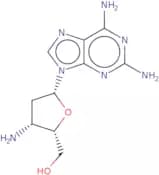
CAS:<p>2,6-Diamino-9-(3'-amino-2',3'-dideoxy-b-D-ribofuranosyl)purine is an antiviral agent that inhibits the replication of the viral DNA by binding to the viral DNA and preventing its transcription into RNA. It has been shown to be active against herpes simplex virus type 1 (HSV-1) and human cytomegalovirus (HCMV). 2,6-Diamino-9-(3'-amino-2',3'-dideoxy-b-D-ribofuranosyl)purine is a modified nucleoside that can be used in various areas of research, including antiviral and anticancer activities.</p>Formula:C10H15N7O2Purity:Min. 95%Molecular weight:265.28 g/mol2,2'-Anhydro-5'-O-tert-butyldiphenylsilylthymidine
<p>2,2'-Anhydro-5'-O-tert-butyldiphenylsilylthymidine is a novel monophosphate nucleoside analog that has antiviral activity against herpes simplex virus type 1 (HSV-1) and herpes simplex virus type 2 (HSV-2). This compound is chemically synthesized by the reaction between thymidine with bis-(2,6-diisopropylphenyl) disilazane in the presence of an activator. The synthesis of 2,2'-anhydro-5'-O-tert-butyldiphenylsilylthymidine is performed by reacting 5'-O-(4,4'-dimethoxytrityl)-thymidine with bis-(2,6-diisopropylphenyl) disilazane in the presence of tetrakis(triphenylphosphine)palladium(0</p>Purity:Min. 95%2,5'-Anhydro-5,6-didehydro-2'-deoxy-2',2'-difluorouridine
<p>2,5'-Anhydro-5,6-didehydro-2'-deoxy-2',2'-difluorouridine is a novel ribonucleoside that has been synthesized as a phosphoramidite. It is an anticancer agent with antiviral and antiretroviral properties. The 2,5'-Anhydro-5,6-didehydro-2'-deoxy-2',2'-difluorouridine is a modified nucleoside that has the potential to be used in the treatment of certain cancers. It can also be used to inhibit viral replication by inhibiting RNA synthesis. This compound inhibits the enzyme diphosphate kinase, which converts ATP into ADP and phosphate. This leads to an accumulation of ADP in cells and inhibition of DNA synthesis.</p>Formula:C9H10F2N2O5Purity:Min. 95%Molecular weight:264.18 g/mol2'-O-Acetyl-5'-O-benzoyl-3'-deoxy-5-methyluridine
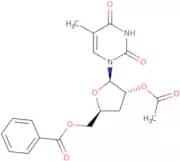
CAS:<p>2'-O-Acetyl-5'-O-benzoyl-3'-deoxy-5-methyluridine (ABT-888) is a nucleoside analog that inhibits DNA synthesis and RNA transcription. It has been shown to induce apoptosis in human cancer cells, including leukemia, lymphoma and breast cancer cells. ABT-888 also has antiviral activity against herpes simplex virus type 1 and 2, vaccinia virus, and vesicular stomatitis virus.</p>Formula:C19H20N2O7Purity:Min. 95%Molecular weight:388.37 g/mol5'-O-DMT-N2-phenylacetylguanosine
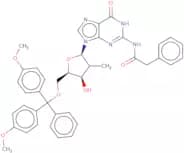
CAS:<p>5'-O-DMT-N2-phenylacetylguanosine is a novel synthetic nucleoside phosphoramidite which can be used for the synthesis of modified oligonucleotides. It has been shown to be an activator, anticancer, and antiviral agent in vitro. 5'-O-DMT-N2-phenylacetylguanosine is also a monophosphate, which can inhibit viral replication by interacting with the ribose sugar moiety of the nucleic acid strand. The antiviral activity has been demonstrated on human immunodeficiency virus type 1 (HIV-1), herpes simplex virus type 2 (HSV-2), and influenza A virus.</p>Formula:C39H37N5O8Purity:Min. 95%Molecular weight:703.76 g/molAdenosine-5'-carboxylic acid
CAS:<p>Adenosine-5'-carboxylic acid is a pharmaceutical compound that is used as an anti-inflammatory agent. It is a synthetic, non-nucleoside adenine nucleotide analog that has been shown to have potent anti-inflammatory activity in vitro. Adenosine-5'-carboxylic acid inhibits the synthesis of prostaglandins and leukotrienes which are mediators of inflammation. It also inhibits the synthesis of protein kinase C, which plays a role in cell proliferation, differentiation and apoptosis. Adenosine-5'-carboxylic acid has also been found to inhibit the growth of glioma cells in tissue culture and human muscle cells in vivo. The mechanism for this effect may be due to its ability to inhibit DNA synthesis and induce apoptosis.</p>Formula:C10H11N5O5Purity:Min. 95%Molecular weight:281.23 g/mol2',3'-O-Isopropylidene-6-thioinosine
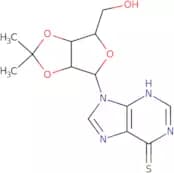
CAS:<p>2',3'-O-Isopropylidene-6-thioinosine is a fluorinated analogue of 6-thioguanine, which is an important precursor in the synthesis of nucleotides. The compound contains a fluorine atom at the 2' position and a sulfur atom at the 3' position of the ribose ring. It is soluble in organic solvents and can be used as a tracer for biochemical studies. The thermal stability of 2',3'-O-Isopropylidene-6-thioinosine has been demonstrated by molecular modelling and thermally induced filtration experiments. Molecular modeling has also shown that 2',3'-O-Isopropylidene-6-thioinosine binds to the active site of uridine phosphorylase, which is involved in pyrimidine salvage pathways in cells.<br>2',3'-O-Isopropylidene-6-thioinos</p>Formula:C13H16N4O4SPurity:Min. 95%Molecular weight:324.36 g/molAdenosine 5'-monophosphate [U-13C10,U-15N5]
CAS:<p>Adenosine 5'-monophosphate (AMP) is a nucleoside that is used in the synthesis of DNA, RNA and other nucleic acids. AMP is also an antiviral and anticancer agent that can be used to activate other drugs. AMP is synthesized from adenosine triphosphate (ATP) by removing one phosphate group, resulting in the formation of adenosine diphosphate (ADP). ADP can then be converted to AMP by adding a phosphate group back on. This synthetic process can be modified to produce novel derivatives of AMP with enhanced properties.</p>Formula:C10H14N5O7PPurity:Min. 95%Molecular weight:362.11 g/mol


![2-[2-(4-Fluorophenyl)ethoxy]adenosine](/_next/image/?url=https%3A%2Fstatic.cymitquimica.com%2Fproducts%2F3D%2Fthumb-webp%2FNF16548.webp&w=3840&q=75)




![Adenosine 5'-monophosphate [U-13C10,U-15N5]](/_next/image/?url=https%3A%2Fstatic.cymitquimica.com%2Fproducts%2F3D%2Fthumb-webp%2FNA31536.webp&w=3840&q=75)