Non Polar Solvents
Non-polar solvents are a class of solvents that dissolve non-polar compounds due to their low dielectric constants and lack of significant partial charges. They are widely used in various chemical processes and applications, including organic synthesis, extractions, and chromatography. Common non-polar solvents include substances with 6-membered rings and building blocks such as hexane and toluene, which are crucial for dissolving hydrophobic compounds. These solvents play an essential role in the preparation of active pharmaceutical ingredients (APIs) and related research compounds. Additionally, non-polar solvents are utilized in NMR spectroscopy, where they help dissolve non-polar analytes without interfering with the spectral analysis. They are also important in processes involving amino acids, organic chlorinated compounds, and various building blocks. Their effectiveness in dissolving organic compounds makes non-polar solvents indispensable in both laboratory and industrial settings.
Found 184 products of "Non Polar Solvents"
Sort by
Purity (%)
0
100
|
0
|
50
|
90
|
95
|
100
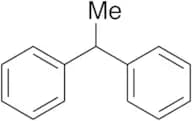
Methyldiphenylmethane
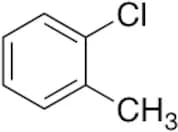
CAS:Controlled ProductFormula:C14H14Color and Shape:NeatMolecular weight:182.262-Chlorotoluene
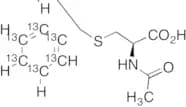
CAS:<p>Applications 2-CHLOROTOLUENE (cas# 95-49-8) is a useful research chemical.<br> Not a dangerous good if item is equal to or less than 1g/ml and there is less than 100g/ml in the package<br></p>Formula:C7H7ClColor and Shape:NeatMolecular weight:126.58N-Acetyl-S-(methylphenyl-13C6)-L-cysteine
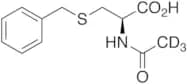
CAS:Controlled ProductFormula:C613C6H15NO3SColor and Shape:NeatMolecular weight:259.27N-(Acetyl-d3)-S-benzyl-L-cysteine
CAS:Controlled Product<p>Applications A labelled metabolite of Toluene.<br>References Gargas, M., et al.: Toxicol. Appl. Pharmacol., 98, 87 (1989), Commandeur, J., et al.: Pharmacol. Rev., 47(2), 271 (1995), Campo, P., et al.: Neurotoxicol. Teratol., 21, 427 (1999), Lohse, C., et al.: J. Agr. Food Chem., 48, 5913 (2000),<br></p>Formula:C122H3H12NO3SColor and Shape:White To Off-WhiteMolecular weight:256.344-Toluenesulfonyl chloride
CAS:<p>4-Toluenesulfonyl chloride is a tosylate that reacts with amines and n-oxide groups to form sulfonamides. It is used as an antimicrobial agent and as an irreversible enzyme inhibitor. 4-Toluenesulfonyl chloride inhibits enzymes in the bowel, which may be due to its ability to form a disulfide bond with cysteine residues. This compound has been shown to have anti-cancer properties in vitro, where it inhibited the growth of carcinoma cells by inhibiting DNA synthesis. 4-Toluenesulfonyl chloride also has inhibitory properties against nitrogen atoms, which are found in the active site of many enzymes.</p>Formula:C7H7ClO2SPurity:Min. 95%Color and Shape:White Clear LiquidMolecular weight:190.65 g/mol2-Methoxybenzene-1,4-diamine sulfate
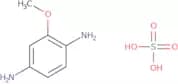
CAS:<p>2-Methoxybenzene-1,4-diamine sulfate (2MBDS) is a chemical that inhibits the synthesis of quinolines and dyes. 2MBDS is used as a control in animal experiments to maintain the level of sulfate in the blood. It is injected into animals and then measured using assays to measure the concentration of sulfate in the blood. 2MBDS has been shown to cause genetic damage and death in animals, as well as brittleness of muscle cells. The effects of 2MBDS on DNA replication and cell division have been studied by observing its effect on meiosis in mice. This chemical also simplifies chromosome structure and reduces chromosome number during meiosis, which may lead to chromosomal aberrations.</p>Formula:C7H10N2O·H2O4SPurity:Min. 95%Color and Shape:Off-White PowderMolecular weight:236.25 g/mol2-Bromo-1,3-diethylbenzene
CAS:<p>2-Bromo-1,3-diethylbenzene is a reactive intermediate that can be used for the synthesis of styrene derivatives. It is also used as an anesthetic agent and has been shown to have cognition-enhancing properties. This compound reacts with electrophiles to form monoadducts, which are useful for protein targetting. The pharmacophore of 2-bromo-1,3-diethylbenzene consists of vinyl groups and halides. Radiation induces substitution reactions on the vinyl groups. Pharmacophores are important in drug design because they help identify specific chemical features that are necessary for binding to a particular protein target or protein targets.</p>Formula:C10H13BrPurity:Min. 95%Color and Shape:Clear LiquidMolecular weight:213.11 g/mol2,4,6-Trinitrobenzenesulfonic acid - 5% Aqueous solution
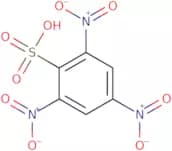
CAS:2,4,6-Trinitrobenzenesulfonic acid (also known as TNBS, TNSBA or picrylsulfonic acid) is a strongly oxidising organic acid that has long been used as a reagent to determine the presence of free primary amine groups. TNBS reacts rapidly with primary amines to form highly coloured N-trinitrophenyl acid products which can then be analysed by colorimetry. The amine can be regenerated by treatment with hydrazine. This analytical technique can also be applied to thiols and hydrazides. As is common with nitrated aromatic compounds, there is a risk of explosion and TNBS is typically commercially available as a solution. We also supply the 1% solution in DMF.Formula:C6H3N3O9SColor and Shape:Colorless Yellow Clear LiquidMolecular weight:293.17 g/molRef: 3D-FT73268
2g334.00€5g453.00€10g607.00€25g955.00€50g1,642.00€200g5,345.00€250g4,404.00€38.69g1,412.00€4-(Bromomethyl)-2-iodo-1-nitrobenzene
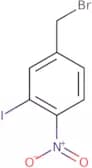
CAS:<p>4-(Bromomethyl)-2-iodo-1-nitrobenzene is a fine chemical that can be used as an intermediate for the synthesis of target molecules. It is a versatile building block with many different reactions and applications, such as research chemicals, reaction components, and speciality chemicals. This compound is also a useful building block for the synthesis of complex molecules. It has high quality and can be used as a reagent in lab experiments.</p>Formula:C7H5BrINO2Purity:Min. 95%Color and Shape:PowderMolecular weight:341.93 g/mol2-Bromo-5-methoxytoluene
CAS:<p>2-Bromo-5-methoxytoluene is a synthetic organic compound that is used as a chemical intermediate for cellulose derivatives. It is generated by the Friedel-Crafts reaction of bromine with toluene in the presence of aluminum chloride. 2-Bromo-5-methoxytoluene has been shown to react with cellulose derivatives and other hydrogen bond acceptors. This reaction is followed by protonation, which yields a chromophore that changes color from yellow to orange. The mechanism of this reaction can be explained by an acid catalysis mechanism, which begins with protonation of the carbonyl group (C=O) and formyl group (HC=O) groups. This causes the formation of an enolate ion, which reacts with a protonated carbonyl group to yield a formyl cation and an enolate ion. The formyl cation then reacts with another proton</p>Formula:C8H9OBrPurity:Min. 95%Color and Shape:PowderMolecular weight:201.06 g/molAzobenzene
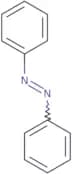
CAS:<p>Azobenzene is an azobenzene that binds to the actin filaments and inhibits their polymerization. It has been shown to inhibit the polymerization of actin filaments in human serum, which may be due to its ability to react with the nitrogen atoms in actin. Azobenzene has also been shown to have a thermal expansion coefficient of 0.015x10⁻⁵/°C, which is much larger than that of most other compounds. The molecular geometry of azobenzene is planar and symmetrical, with two hydrogen atoms on each nitrogen atom on both sides of the molecule. This symmetry leads to a low intramolecular hydrogen bonding energy. The molecule’s photochemical properties are also interesting because it has a long lifetime and can be excited by wavelengths between 400-500 nm.</p>Formula:C12H10N2Purity:Min. 97.5 Area-%Color and Shape:PowderMolecular weight:182.22 g/mol1,3-Benzenedialdehyde
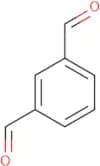
CAS:<p>1,3-Benzenedialdehyde (1,3-BD) is a compound that is formed from the oxidation of benzene by copper chloride in a model system. It can be used as a substrate film to study covalent linkages. The electrochemical impedance spectroscopy (EIS) technique has been used to determine the stability of 1,3-BD in reaction solution. The EIS results show that 1,3-BD is stable and its complexes are relatively stable. This compound also reacts with malonic acid to form 1,2-benzenediol and 2-methylmalonic acid. The molecular structure of 1,3-BD has been determined using X-ray crystallography and it was found that nitrogen atoms are present on the molecule. Chemical reactions have not been observed with 1,3-BD when subjected to heat or light.</p>Formula:C8H6O2Purity:Min. 95%Color and Shape:PowderMolecular weight:134.13 g/mol2,4,6-Trihydroxytoluene
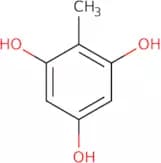
CAS:<p>2,4,6-Trihydroxytoluene is a phenolic compound with an intense yellow color. It is used for the preparation of dryopteris and as a fabric dye. 2,4,6-Trihydroxytoluene is also used in the production of pharmaceuticals and as a chemical intermediate. 2,4,6-Trihydroxytoluene has been shown to inhibit the growth of bacteria by binding to one or more hydroxyl groups on the bacterial cell wall. This binding prevents the formation of an antibiotic-inhibitor complex with the enzyme cell wall synthesis that is required for cell wall biosynthesis, inhibiting protein synthesis and cell division.</p>Formula:C7H8O3Purity:Min. 95%Color and Shape:Red PowderMolecular weight:140.14 g/mol4-Formyl-N-methylbenzenesulfonamide
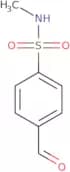
CAS:<p>4-Formyl-N-methylbenzenesulfonamide is a fine chemical that is used as a versatile building block in the synthesis of complex compounds, research chemicals, and reagents. It is highly useful as a reagent or speciality chemical in laboratory experiments involving many different reactions. 4-Formyl-N-methylbenzenesulfonamide has been shown to be an excellent intermediate for the synthesis of high quality products. This product can also be used as a scaffold in complex organic syntheses.</p>Formula:C8H9NO3SPurity:Min. 95%Color and Shape:PowderMolecular weight:199.23 g/mol2-Bromo-6-nitrotoluene
CAS:2-Bromo-6-nitrotoluene is a chemical compound that has been shown to bind to the 5-HT7 receptor of the human protein. It has been shown to have affinity for this receptor and functional assays have found it to be selective for this receptor. The hydrogen bonding interactions between 2-bromo-6-nitrotoluene and the 5-HT7 receptor are stronger than those between 2-bromo-6-nitrotoluene and other receptors, such as the 5-HT1A and 5HT1D receptors. Additionally, molecular modeling studies have shown that 2-bromo-6-nitrotoluene has a higher binding affinity for the 5HT7 receptor than other serotonin receptors. This molecule has been synthesized by researchers in a scalable synthesis process with high yields. The intramolecular hydrogen bonds may also help stabilize this molecule in vivo, as they would not be expected to break downFormula:C7H6BrNO2Purity:Min. 95%Color and Shape:PowderMolecular weight:216.03 g/mol1-Bromo-2,4-dinitrobenzene
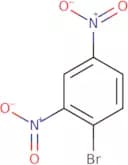
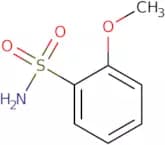
CAS:1-Bromo-2,4-dinitrobenzene, also known as DNB, is a molecule that belongs to the group p2. It has been shown to be a substrate for catalysis in vitro assays. 1-Bromo-2,4-dinitrobenzene is used in cancer research and can inhibit the growth of skin cells. 1-Bromo-2,4-dinitrobenzene does not show any cytotoxic effects on untreated control cells and it has been shown to have limited solubility in water (less than 0.1 g/L). This molecule also shows low reactivity with nucleophilic compounds and has been found to be less reactive than nitro compounds.Formula:C6H3BrN2O4Purity:Min. 95%Color and Shape:Off-White PowderMolecular weight:247 g/mol2-Methoxybenzene sulphonamide
CAS:<p>2-Methoxybenzene sulphonamide is an anti-cancer drug that belongs to the class of hydroxylated aromatic compounds. It has been shown to inhibit the growth of cancer cells in culture and in animals, and to prevent the formation of metastases. 2-Methoxybenzene sulphonamide is also a vasodilator drug used for the treatment of congestive heart failure. This drug binds to dopamine receptors in humans and may inhibit phosphatase activity. It has been shown to act as an antihypertensive by inhibiting angiotensin II mediated hypertrophy of cardiac tissue.</p>Formula:C7H9NO3SPurity:Min. 95%Color and Shape:White PowderMolecular weight:187.22 g/mol1,2,4,5-Tetrabromobenzene
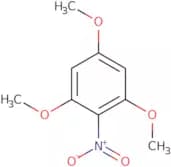
CAS:<p>1,2,4,5-Tetrabromobenzene is a brominated organic compound that forms a palladium complex. It has been studied by chemical ionization with an atmospheric pressure photoionization detector (APPI) and molecular modeling. The debromination reaction of 1,2,4,5-tetrabromobenzene was observed to take place in the liquid phase at room temperature. The detection limit for this reaction was found to be between 0.1 and 5 ppm. The most common form of 1,2,4,5-tetrabromobenzene is the monoclinic polymorph; however it can also exist as a trigonal system or as a hexagonal system when heated above its phase transition temperature. This compound is soluble in water and mercury chloride solutions but insoluble in ethers or chloroform.</p>Formula:C6H2Br4Purity:Min. 95%Color and Shape:White PowderMolecular weight:393.7 g/mol1-Nitro-2,4,6-trimethoxybenzene
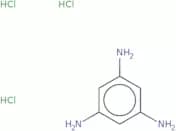
CAS:<p>1-Nitro-2,4,6-trimethoxybenzene is a chemical compound that belongs to the nitro group. It has been found to be an electron donor in bacterial cells, and has been shown to be effective against the growth of bacteria by catalytic reduction. This reaction is highly specific for nitro compounds and does not occur with other classes of compounds. Mass spectrometric analysis of the reaction solution revealed that significant amounts of hydrogen gas were generated during this process. The use of aminoguanidine as a reducing agent resulted in a decrease in the production of hydrogen gas. 1-Nitro-2,4,6-trimethoxybenzene also has been shown to inhibit cytochrome p450 enzymes in rats and humans.</p>Formula:C9H11NO5Purity:Min. 95%Color and Shape:PowderMolecular weight:213.19 g/mol1,3,5-Triaminobenzene trihydrochloride
CAS:<p>1,3,5-Triaminobenzene trihydrochloride (TAT) is a low detection fluorescent probe that can be used as an introducing agent to introduce a triazine skeleton into a variety of heterocyclic amines. TAT has been shown to have the ability to bind with many different functional groups, such as amines and hydroxyls. The fluorescence of TAT is proportional to the amount of hydrogen bonding interactions between the probe and other molecules. TAT can be detected by means of energy-dispersive x-ray spectroscopy.</p>Formula:C6H12Cl3N3Purity:Min. 95%Color and Shape:White PowderMolecular weight:232.54 g/mol