Polysaccharides
Found 505 products of "Polysaccharides"
Xanthan gum
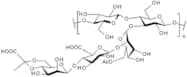
CAS:Xanthan gum is a polysaccharide produced by the Gram negative bacteria Xanthomonas campestris. It has unique rheological and gel forming properties and finds many applications particularly in the food and oil industries. Recently, it has been shown that ternary mixtures of konjac glucomannan, xanthan gum and sodium alginate can form a non-covalently linked complex which exhibits enhanced rheological properties of value in, for example, functional foods. The structure of xanthan is based on a cellulosic backbone of β-(1,4)-linked glucose units which have a trisaccharide side chain of mannose-glucuronic acid-mannose linked to every second glucose unit in the main chain. Some terminal mannose units are pyruvylated and some of the inner mannose units are acetylated.
Purity:Min. 95%Color and Shape:PowderHeparan sulfate sodium salt
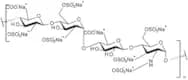
CAS:Heparin is a glycosaminoglycan which occurs in many mammalian tissues and has important anticoagulant and thrombolytic properties. The chemical structure is composed mainly of two disaccharide repeating units A and B. A is L-iduronic acid 2-suplhate linked α-(1,4) to 2-deoxy-2-sulfamido-D-galactose 6-sulphate while B is D-glucuronic acid β-(1,4) linked to 2-deoxy-2-sulfamido-D-glucose 6-sulphate.
Color and Shape:White PowderExopolysaccharide - from Bacillus polymixa
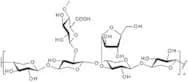
Bacterial exopolysaccharide from gram negative Bacillus polymixa
Formula:C23H36O18Purity:Min. 95%Color and Shape:PowderMolecular weight:600.52 g/molXylan - from corncob, MW 300-900
CAS:In their simplest forms, xylans are linear homopolymers of β-1,4-xylose residues. In nature they are partially substituted by acetyl, 4-O-methyl-D-glucuronosyl and α-1,3 L-arabinofuranosyl residues, forming complex heterogenous and polydispersed glycans. An example of this is in the L-arabino (methyl-D-glucurono) xylan from corn cob.Purity:Min. 95 Area-%Color and Shape:White Yellow PowderOctyl-agarose, contain 20% ethanol solution
CAS:Octyl-agarose is a type of agarose gel that has been modified to contain 20% ethanol solution. It is used in the purification of oligosaccharides and monosaccharides, as well as in the synthesis of complex carbohydrate. Octyl-agarose can be custom synthesized or modified with glycosylation, methylation, sugar, or carbohydrate modifications.Color and Shape:Slightly Turbid LiquidPregelatinized starch
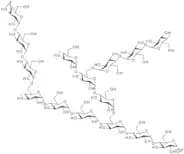
CAS:Starch is a two component polysaccharide mixture of amylose and amylopectin. Amylose is a linear polysaccharide of α (1,4)-linked glucose residues and averages 20 to 30% of the total in most native starches. Amylopectin is a highly branced glucan containing both a (1,4) and a (1,6) linkages. The number of glucose residues in a single starch molecule can vary from five hundred to several hundred thousand, depending on the type of starch. Starch is the major storage form of energy in plants, just as glycogen is the storage form of energy for animals. The plant directs the starch molecules to the amyloplasts, where they are deposited to form granules. Thus, both in plants and in the extracted concentrate, starch exists as granules varying in diameter from 2 to 130 μm.Purity:Min. 95%Color and Shape:Powder(Hydroxypropyl)methyl cellulose - Viscocity 2600-5600 cP
CAS:Hydroxypropyl methylcellulose (HPMC or hypromellose) is a semisynthetic, inert and viscoelastic polymer that is used as eye drops and as semi-synthetic substitute for tear-films. When applied, a hypromellose solution acts to swell and absorb water, by increasing the thickness of the tear-film, resulting in decreased eye irritation. In addition to its use in ophthalmic liquids, hypromellose has been used as an excipient in oral tablet and capsule formulations, where, depending on the grade, it functions as controlled-release agent. It is also used as a binder and as a component of tablet coatings. Hypromellose in aqueous solution, unlike methylcellulose, exhibits thermal gelation properties. HPMC is approved as a food additive, emulsifier, thickening and suspending agent, and as an alternative to animal gelatin (Codex Alimentarius code (E number) is E464).
Color and Shape:White PowderChitosan - Molecular weight 190,000-310,000
CAS:Chitosan is the deacetylated form of chitin. The polysaccharide is deacetylated in order to render it soluble, which is then possible at pH values of less than 7 (normally in dilute acid). This then allows the material to be used in a number of industrial applications as a binder and film former.
Color and Shape:Off-White Powder(Hydroxypropyl)methyl cellulose phthalate
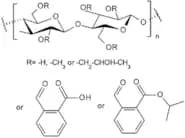
CAS:Hypromellose phthalate (hydroxypropyl methylcellulose phthalate, or HPMCP) is a phthalic acid ester of hydroxypropyl methylcellulose. Hypromellose phthalate was introduced in 1971 as a cellulose derivative for enteric coatings, used to protect drugs from degradation by gastric acid or to prevent them from causing side effects in the stomach. HPMCP is also used in sustained-release preparations, in binders and as microcapsule bases.Color and Shape:White Off-White PowderSchizophyllan
CAS:Schizophyllan is a neutral extracellular polysaccharide produced by the fungus Schyizophyllum commune. Schizophyllan is a β-1,3 beta glucan with β-1,6 branches and a molecular weight of around 450 kDa. It is reported that this polysaccharide can stimulate the immune system, chelate metals, act as an adjuvant in delivering drugs and aid in the production of nanofibres. The image was kindly provided by Dr. Chris Lawson.Color and Shape:White Powderlambda-Carrageenan
CAS:Lambda-Carrageenan is a non-gelling sulphated galactan extracted from red seaweed (typically Gigartina stellata and Chondrus crispus). The structure of all carrageenans consists of a strictly alternating masked repeating unit of 1,3-linked α-D-galactose and 1,4-linked β-D-galactose. λ-Carrageenan has the α-linked unit 2-6-disulphated and the β-linked unit is 2-sulphated. The image was kindly provided by Prof Mike Guiry from Cork who runs ‘The Seaweed Site’.Color and Shape:PowderMolecular weight:1140.92Tragacanth gum
CAS:Gum tragacanth is an exudate gum from species of Astragalus trees mainly grown in Iran and Turkey. Tragacanth finds applications as an effective emulsifying and thickening agent in the food and pharmaceutical industries. The gum is a slightly acidic salt consisting of two fractions namely the water soluble tragacanthin and the fraction bassorin which swells in water to form a gel. Water soluble tragacanthin is reported as a branched arabiogalactan which is soluble in 70% ethanol. The acidic bassorin has a chain of (1,4)-linked a-D-galacturonic acid units some of which are substituted at O-3 with β-D-xylopyranosyl units and some of these being terminated with galactose or fucose.Color and Shape:White PowderAmylopectin - from potato starch
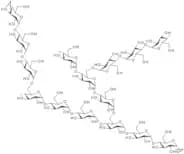
CAS:Starch component; highly branched glucanColor and Shape:White Off-White PowderTamarind gum
CAS:Tamarind gum comes from the seed of the tamarind tree Tamarindus indica and is used in the food industry as a stabiliser and an emulsifier. It has been suggested that the structure is a main chain of cellulose with frequent branching at the O-6 positions with short side chains of one or two D-xylopyranosyl capped with D-xylopyranosyl, D-galactopyranosyl or L-arabinofuranosyl units. In application, tamarind finds use in the sizing of jute and as a stabilizer and thickener in the food industry.Color and Shape:PowderRhodamine B isothiocyanate-dextran - Average MW 70,000
The fluorescence intensity of these Rhodamine B isothiocyanate-dextrans varies much less than with FITC-dextrans.Color and Shape:PowderMolecular weight:7,000 g/molGlycogen - from rabbit liver
CAS:Glycogen is a highly branched polysaccharide of glucose that serves as a form of energy storage in animals and fungi. It is the main storage form of glucose in the body. In humans, glycogen is made and stored primarily in liver and muscle cells and functions as the second most important energy storage molecule to fat, which is held in adipose tissue. Glycogen is analogous to starch and has a structure similar to amylopectin, but is more extensively branched and compact than starch. It occurs as granules in the cytosol/cytoplasm in many cell types, and plays an important role in the glucose cycle.Formula:C24H42O21Purity:Min. 85%Color and Shape:White PowderMolecular weight:666.6 g/molCarboxymethyl cellulose sodium - Viscosity 1000 - 1300 mPa·s
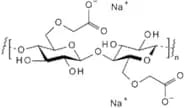
CAS:Carboxymethyl cellulose is used in food as a viscosity modifier, thickener, to stabilise emulsions and are found in gluten-free and reduced-fat products. It is also a constituent of toothpaste, laxatives, diet pills, water-based paints, detergents, textile sizing, and various paper products. In laundry detergents, it is used as a soil suspension polymer. It is also used in pharmaceuticals as a thickening agent and in the oil-drilling industry as a viscosity modifier and water-retaining agent.Purity:Min. 95%Color and Shape:White PowderTara gum
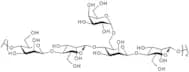
CAS:Tara gum is a galactomannan that is obtained from the seeds of the tara shrub Caesalpinia spinosa which is a native of the northern regions of Africa and South America. The gum is described as having a backbone of (1,4)-linked β-D-mannopyranosyl units one third of which possess a single unit side chain of (1,6)-linked α-D-galactopyranose. The gum forms gels with carrageenan and xanthan in a similar manner to guar and locust bean gum. Currently, only small quantities of tara gum are sold for use as food thickeners and stabilisers.Purity:Min. 95%Color and Shape:PowderHyaluronate fluorescein - MW - 800kDa
Hyaluronic acid, a polysaccharide with alternating β (1,3) glucuronide and β (1,4) glucosamine residues labelled with 5-amino-fluorescein gives a yellow fibrous product, which is soluble in both water and electrolytes. Fluorescein-labelled hyaluronic acid can be used as a probe to follow the fate of hyaluronan in vitro and greatly enhances the visualisation of the permeation of substrates through skin and other tissues. Other applications of fluorescein-labelled hyaluronic acid have been reported in cancer research.Purity:(%) Min. 95%Color and Shape:Yellow Orange PowderFluorescein isothiocyanate-carboxymethyl-dextran - Average MW 40,000
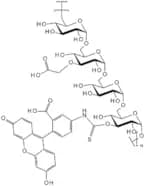
Fluorescein isothiocyanate carboxymethyl dextran (FITC-CM Dextran) has been reported to provide a valuable carrier for nanoparticles of iron oxide. These products provide a potent tool for contrast enhancement in magnetic resonance imaging.Purity:Min. 95%