Polysaccharides
Found 505 products of "Polysaccharides"
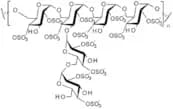
Dextran Sulfate Sodium from Dextran of Mw. Approx. 8000
CAS:Color and Shape:White to Light yellow powder to crystalTamarind Gum from Tamarind seed, Polysaccharide
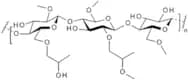
CAS:Color and Shape:White to Light yellow powder to crystalineEthyl Cellulose [90-110mPa·s, 5% in Toluene + Ethanol (80:20) at 25°C]
CAS:Color and Shape:White to Light yellow powder to crystalChitosan (5 cps); ultra low molecular weight, non-animal from fermentation, suitable for biotechnology
CAS:Formula:C6H11NO4nColor and Shape:White powderAlginic acid sodium salt
CAS:Purity:≥ 99.0%Color and Shape:White to off-white powder or beige powderMolecular weight:-Chitosan (300 - 1000 cps); medium molecular weight, non-animal from fermentation, suitable for biotechnology
CAS:Formula:C6H11NO4nColor and Shape:White powderChitosan (2000 - 3500 cps); very high molecular weight
CAS:Formula:C6H11NO4nPurity:≥ 90.0%Color and Shape:White to light-tan powderMolecular weight:1,800,000 (avg.)Chitosan (10 cps); very low molecular weight, non-animal from fermentation, suitable for biotechnology
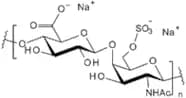
CAS:Formula:C6H11NO4nColor and Shape:White powderChondroitin sulfate sodium, from bovine origin
CAS:Formula:C13H21NO15SColor and Shape:White to off-white powderMolecular weight:463.37Starch (Smithies); for electrophoresis
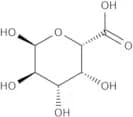
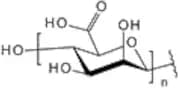
CAS:Formula:(C6H10O5)nColor and Shape:White powderMolecular weight:(162.14)nPolygalacturonic acid
CAS:Formula:(C6H8O6)nPurity:≥ 85.0%Color and Shape:Off-white to beige or yellow powderMolecular weight:-1V209
CAS:1V209 (TLR7 agonist T7) is a Toll-like receptor 7 (TLR7) agonist and has anti-tumor effects.Formula:C16H17N5O5Purity:99.61%Color and Shape:SolidMolecular weight:359.34Chitosan (100 - 300 cps); low molecular weight, non-animal from fermentation, suitable for biotechnology
CAS:Formula:C6H11NO4nColor and Shape:White powderChitosan (30 - 100 cps); low molecular weight, non-animal from fermentation, suitable for biotechnology
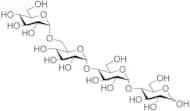
CAS:Formula:C6H11NO4nColor and Shape:White powder6-α-D-Glucopyranosyl Maltotriose
CAS:Stability Hygroscopic
Applications Sugar composition of sake.
References Giri, N.Y., et al.: Arch. Biochem. Biophysics, 145, 505 (1971aFormula:C24H42O21Color and Shape:NeatMolecular weight:666.58Scleroglucan (Technical Grade)
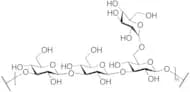
CAS:Controlled ProductApplications Scleroglucan is a natural polymer produced by fungi, especially those of the genus Sclerotium. Scleroglucan fluids have been used to trap and treat Cr(VI) in environmental applications.
References Brigand, G.: Industrial Gums (Third Edition), pp. 461 (1993); Pensini, E.; et al.: Colloids Surf., A, 559, 191 (2018);Formula:C24H40O21Color and Shape:NeatMolecular weight:664.56Hydroxyethyl cellulose, viscosity 1500 ~ 2500
CAS:Hydroxyethyl cellulose (EHEC) is a non-ionic, water-soluble cellulose derivative produced by introduction of ethylene oxide groups to the hydroxyl groups of the cellulose backbone. Hydroxyethyl cellulose is useful as a water thickener, rheological control additive, protective colloid, binder, stabilizer, suspending agent and film former. It is used in many industrial applications including latex paints, emulsion polymerization, petroleum, paper, pharmaceuticals, cosmetics and many other applications.Purity:Min. 95%Color and Shape:PowderLaminaran - from Laminaria cloustoni
CAS:Laminaran is a polysaccharide that co-occurs with fucoidan and alginate in brown seaweeds such as Laminaria digitata, Laminaria cloustoni, Eisenia bicyclis and Thallus laminariae. It is a β-1,3-linked glucan which it is claimed stimulates the immune system in mammals and fish.
The image was kindly provided by Prof Mike Guiry from Cork who runs ‘The Seaweed Site’.Purity:Min. 95%Color and Shape:PowderFucoidan - Sargassum
CAS:A fucan sulphate found in brown marine algae (Phaeophyta-typically Fucus vesiculotus, Sargassum (illustrated), Alaria and Cladosiphon) and has been shown to have anticoagulant activity. The main constituents are α-1,4 and α-1,2 linked L-fucose sulphates although galactose and L-fucose are also present, our product contains approximately 20% L-fucose, and there are many variations of the basic structure found in different species of Phaeophyta. The image was kindly provided by Prof Mike Guiry from Cork who runs ‘The Seaweed Site’.Purity:Min. 95%Color and Shape:PowderNigeran
CAS:Nigeran is a polysaccharide found in the cell wall of lower fungi. In certain Aspergillus and Penicillium spp., nigeran was first isolated from Penicillium expansum and Aspergillus niger (illustrated). The polysaccharide contains unbranched α-D- glucopyranose residues linked 1,3 and 1,4. Nigeran is part of the hyphal cell wall, where it can contribute up to 40 % of the cell dry weight. The polysaccharide occupies several domains or location on the hyphal wall and is highly crystalline in vivo. Deposition of nigeran is primarily at the outer surface of the hyphal wall.
Purity:Min. 95%Color and Shape:PowderChitosan - water soluble
CAS:Chitosan is the deacetylated form of chitin. The polysaccharide is deacetylated in order to render it soluble, which is then possible at pH values of less than 7 (normally in dilute acid). This then allows the material to be used in a number of industrial applications as a binder and film former.MW typically 10-100kDa.Color and Shape:Off-White PowderChitosan - Molecular weight 310,000-375,000
CAS:Chitosan is the deacetylated form of chitin. The polysaccharide is deacetylated in order to render it soluble, which is then possible at pH values of less than 7 (normally in dilute acid). This then allows the material to be used in a number of industrial applications as a binder and film former.Color and Shape:Beige PowderDextran 40 - MW 35,000 to 45,000
CAS:Dextran is α-(1,6)-linked α-D-glucan with α-(1,3)-linked glucose branch points produced by fermentation of Leuconostoc mesenteroides via the action of the enzyme dextransucrase on sucrose. The main use for native dextran is as an extender in blood transfusions and products having a range of sharp cutoff molecular weights are produced commercially for this and other applications. A complex of iron with dextran, known as iron dextran, is used as a source of iron for baby piglets which are often anaemic at birth.
Purity:Min. 95%Color and Shape:White PowderDextran sulfate sodium salt - MW 4500-5500
CAS:Dextran sulphate is a dextran derivative whose ulcer (colitis) -causing properties were first reported in hamsters and extrapolated a few years later to mice and rats. The exact mechanisms through which dextran sulphate induces intestinal inflammation are unclear but may be the result of direct damage of the monolayer of epithelial cells in the colon, leading to the crossing of intestinal contents (for e.g. commensal bacteria and their products) into underlying tissue and therefore induction of inflammation. The dextran sulphate sodium induced ulceration model in laboratory animals has some advantages when compared to other animal models of colitisdue to its simplicity and similarities to human inflammatory bowel disease.Purity:Min. 95%Color and Shape:PowderLaminaran - from Thallus laminariae
CAS:Laminaran is a polysaccharide that co-occurs with fucoidan and alginate in brown seaweeds such as Laminaria digitata, Laminaria cloustoni, Eisenia bicyclis and Thallus laminariae. It is a β-1,3-linked glucan which it is claimed stimulates the immune system in mammals and fish. The image was kindly provided by Prof Mike Guiry from Cork who runs ‘The Seaweed Site’.Color and Shape:PowderAmylopectin - from maize
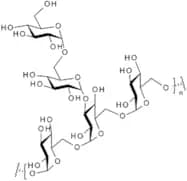
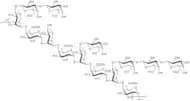
CAS:Amylopectin is composed of between 2,000 to 200,000 glucose residues linked α (1→4) with α (1→6) branching. The molecule is highly branched, every 24 to 30 glucose units, resulting in a soluble molecule with many terminal residues. Starch is made of about 70% amylopectin by weight, though it varies depending on the source (higher in medium-grain rice to 100% in glutinous rice, waxy potato starch, waxy corn, and lower in long-grain rice, amylomaize, and russet potatoes).
Color and Shape:PowderSephadex G50
CAS:Sephadex G-50 is a highly purified, high molecular weight, cellulose-based polymer that is used as a solid support in chromatography. The size of the gel particles can be varied by changing the concentration of the gel solution. It has a number of different uses, such as purification of proteins and other macromolecules, separation of DNA fragments, and the enzymatic synthesis of oligosaccharides. Sephadex G-50 is a synthetic material that is modified with organic or inorganic compounds to increase its chemical reactivity. This product can also be used for glycosylation and methylation reactions.Color and Shape:PowderDextran sulfate sodium salt - MW 40,000
CAS:Dextran sulphate is a dextran derivative whose ulcer (colitis) -causing properties were first reported in hamsters and extrapolated a few years later to mice and rats. The exact mechanisms through which dextran sulphate induces intestinal inflammation are unclear but may be the result of direct damage of the monolayer of epithelial cells in the colon, leading to the crossing of intestinal contents (e.g., commensal bacteria and their products) into underlying tissue and therefore induction of inflammation. The dextran sulphate sodium induced ulceration model in laboratory animals has some advantages when compared to other animal models of colitis, due to its simplicity and has many similarities to human inflammatory bowel disease.
Color and Shape:Off-White PowderDextran 10 - MW 9,000 to 11,000
CAS:Dextran is α-(1,6)-linked α-D-glucan with α-(1,3)-linked glucose branch points produced by fermentation of Leuconostoc mesenteroides via the action of the enzyme dextransucrase on sucrose. The main use for native dextran is as an extender in blood transfusions and products having a range of sharp cutoff molecular weights are produced commercially for this and other applications. A complex of iron with dextran, known as iron dextran, is used as a source of iron for baby piglets which are often anaemic at birth.Color and Shape:White PowderPolyglycoplex
PolyGlycopleX (PGX) is produced from a mixture containing proprietary proportions of three polysaccharides, konjac glucomannan, xanthan gum and sodium alginate. Recent hydrodynamic, rheological and analytical studies have shown that the unexpectedly high viscosity of solutions of PGX is consistent with an interaction between a konjac glucomannan, xanthan gum complex and sodium alginate to form a new, ternary complex in solution. Human and animal feeding studies have shown that PGX can be used to control weight, lower the glycaemic index of foods and postprandial glycaemia.
Purity:Min. 95%Color and Shape:PowderRhamnogalacturonan - from soy bean
CAS:Pectin is a highly complex polysaccharide matrix that is found in the primary walls of dicotyledenous and monocotyledenous plants and gymnosperms, including soy plants. A key fragment of this complex is rhamnogalacturonan I, containing a backbone of the repeating disaccharide [-4)-α-D-GalpA-(1,2)-α-L-Rhap-(1,]. Several applications for RG1 have been described including drug targeting to the colon via the oral administration route for local treatment of e.g. inflammatory bowel disease and colonic cancer. This has several advantages such as needle-free administration and low infection risk and in the gastro-intestinal tract RG-I is only degraded by the action of the colonic microflora. High purity rhamnogalacturonan I is also used in research, biochemical enzyme assays and in vitro diagnostic analysis.Purity:Min. 95%Color and Shape:SolidColominic acid sodium salt
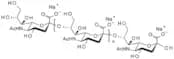
CAS:Colominic acid (polysialic acid) is a linear small polysaccharide containing α-2,8-linked sialic acid (neurominic acid) with (n = 8 to >100) residues. Polysialic acid is an unusual post translational modification polysaccharide that is widely expressed in nature in bacterial capsules, fish, sea urchin eggs, embryonic tissues, amphibians, animal and human brains, and in a various cancers. The major carrier of polysialic acids in mammals is the neural cell adhesion molecule (a glycoprotein that belongs to the immunoglobulin superfamily).Average molecular weight for this product is :50000-60000
Purity:Min. 98 Area-%Color and Shape:White Off-White PowderCarboxymethyl-dextran sodium salt - Average MW 20,000
CAS:Sodium carboxymethyl dextran is a white, odourless and tasteless powder, which is freely soluble in water or electrolyte solutions. Applications that have been described for carboxymethyl dextran include carriers of paramagnetic contrast agents, preparation of conjugates of pharmacologically active compounds and carboxymethyl dextrans in biosensors. A number of other uses in cosmetics, agriculture, foods, paints and textiles have been the subject of patent applications.
Color and Shape:PowderChondroitin sulfate A sodium salt - Average MW 10,000 - 30,000
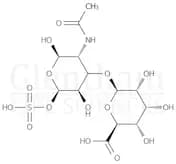
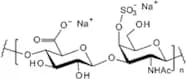
CAS:The disaccharide repeating unit of chondroitin sulphate consists of N-acetyl galactosamine sulphate linked β1,4 to glucuronic acid. Each monosaccharide may be left unsulphated, sulphated once, or sulphated twice. The most common pattern has the hydroxyl groups of the 4 and 6 positions of the N-acetyl-galactosamine sulphated, with some chains having the position 2 of the glucuronic acid sulphated.Purity:Min. 90%Color and Shape:White Off-White PowderChondroitin sulfate A sodium salt - 90%, from Bovine Cartilage
CAS:Food additive, applied in pharmaceuticals and beauty products.
Purity:Min. 90%Color and Shape:White PowderHydroxypropyl cellulose - Average MW 50,000 - 1250,000
CAS:In water, hydroxypropyl cellulose forms liquid crystals with many mesophases depending on concentration. These mesophases include isotropic, anisotropic, nematic and cholesteric, the latter resulting in many colors such as violet, green and red. Pharmaceutical applications include treatments for medical conditions such as dry eye syndrome (keratoconjunctivitis sicca), recurrent corneal erosions, decreased corneal sensitivity, exposure and neuroparalytic keratitis. It is also used as a binder in tablets. Hydroxypropylcellulose is also used as a thickener, a binder and emulsion stabiliser in foods with E number E463. HPC is used as a support matrix for DNA separations by capillary and microchip electrophoresis.Purity:Min. 95%Color and Shape:Clear LiquidRhamnogalacturonan - from Okra
CAS:Rhamnogalacturonan is a natural polysaccharide that is a major component of plant cell walls. It can be synthesized in the laboratory and modified with different functional groups to alter its properties. Rhamnogalacturonan has been shown to have anti-inflammatory, antioxidant, and immunomodulatory activities. It also has the ability to inhibit bacterial growth and stimulate phagocytosis by macrophages. This product has a high purity, is custom synthesized, and can be modified with different functional groups.Purity:Min. 95%Polymannuronic acid sodium salt - Average MW < 5000 Da
CAS:Polymannuronic acid is produced from alginates by partial hydrolysis and chromatography of brown algae such as Laminaria digitata, Ascophyllum nodosum and Fucus spp. The image was kindly provided by Prof Mike Guiry from Cork who runs ‘The Seaweed Site’.Color and Shape:PowderChondroitin sulfate C sodium salt
CAS:The disaccharide repeating unit of chondroitin sulphate consists of N-acetyl galactosamine sulphate linked β1,4 to glucuronic acid. Each monosaccharide may be left unsulphated, sulphated once, or sulphated twice. The most common pattern is that the hydroxyl groups of the 4 and 6 positions of the N-acetyl-galactosamine are sulphated, with some chains having the position 2 of the glucuronic acid sulphated. Average molecular weight of 23,000 to 41,000Color and Shape:White PowderPolymannuronic acid sodium salt - Average MW > 5000 Da
CAS:Sodium polymannuronate is produced from alginates by partial hydrolysis and chromatography of brown algae such as Laminaria digitata, Ascophyllum nodosum and Fucus spp. The image was kindly provided by Prof Mike Guiry from Cork who runs ‘The Seaweed Site’.Purity:Min. 85%Color and Shape:PowderGalactan, from potato
CAS:A linear β-(1,4)-galactan from potato tubers. Other linear β-(1,4)-galactans have been isolated from lemon peel, potato tubers and Norwegian acacia gum.
Color and Shape:White Powder





![Ethyl Cellulose [90-110mPa·s, 5% in Toluene + Ethanol (80:20) at 25°C]](/_next/image/?url=https%3A%2Fstatic.cymitquimica.com%2Fproducts%2F3B%2Fthumb-webp%2FE0290.webp&w=3840&q=75)