Polysaccharides
Found 498 products for "Polysaccharides".
- Lower prices
- Higher prices
- Lower purities
- Higher purities
- Faster estimated delivery
Exopolysaccharide - from Flavobacterium
Bacterial exopolysaccharide from gram negative Flavobacterium spp.Purity:Min. 95%Color and Shape:White To Yellow Or Brown SolidTamarind gum
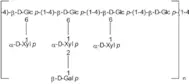
CAS:Tamarind gum comes from the seed of the tamarind tree Tamarindus indica and is used in the food industry as a stabiliser and an emulsifier. It has been suggested that the structure is a main chain of cellulose with frequent branching at the O-6 positions with short side chains of one or two D-xylopyranosyl capped with D-xylopyranosyl, D-galactopyranosyl or L-arabinofuranosyl units. In application, tamarind finds use in the sizing of jute and as a stabilizer and thickener in the food industry.Color and Shape:PowderGellan gum
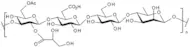
CAS:Gellan is a microbial polysaccharide produced by Pseudomonas elodea and generates gels with similar properties to agar. Gellan gum is a linear tetrasaccharide of (1,4)-β-L-rhamnopyranosyl, (1,3)-α-D-glucopyranosyl, (1,4)-β-D-glucuronopyranosyl, (1,4)-β-D-glucopyranosyl- with O(2) L-glyceryl and O(6) acetyl substituents on the 3-linked glucose. Both substituents are located on the same glucose residue, and on average, there is one glycerate per repeat and one acetate per every two repeats. In low acyl gellan gum, the acyl groups are removed completely. The high acyl form produces soft, elastic, non-brittle gels, whereas the low acyl form produces firm, non-elastic, brittle gels.Purity:(Carbon Dioxide) 3.3 To 6.8%Color and Shape:White Off-White PowderAmylopectin - from potato starch
CAS:Starch component; highly branched glucanColor and Shape:White Off-White PowderTragacanth gum
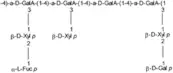
CAS:Gum tragacanth is an exudate gum from species of Astragalus trees mainly grown in Iran and Turkey. Tragacanth finds applications as an effective emulsifying and thickening agent in the food and pharmaceutical industries. The gum is a slightly acidic salt consisting of two fractions namely the water soluble tragacanthin and the fraction bassorin which swells in water to form a gel. Water soluble tragacanthin is reported as a branched arabiogalactan which is soluble in 70% ethanol. The acidic bassorin has a chain of (1,4)-linked a-D-galacturonic acid units some of which are substituted at O-3 with β-D-xylopyranosyl units and some of these being terminated with galactose or fucose.Color and Shape:White Powderlambda-Carrageenan
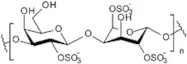
CAS:Lambda-Carrageenan is a non-gelling sulphated galactan extracted from red seaweed (typically Gigartina stellata and Chondrus crispus). The structure of all carrageenans consists of a strictly alternating masked repeating unit of 1,3-linked α-D-galactose and 1,4-linked β-D-galactose. λ-Carrageenan has the α-linked unit 2-6-disulphated and the β-linked unit is 2-sulphated. The image was kindly provided by Prof Mike Guiry from Cork who runs ‘The Seaweed Site’.Color and Shape:PowderMolecular weight:1140.92Carboxymethyl-dextran sodium salt - Average MW 70,000
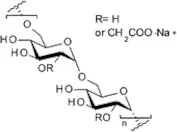
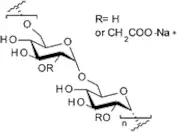
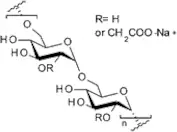
CAS:Sodium carboxymethyl dextran is a white, odourless and tasteless powder, which is freely soluble in water or electrolyte solutions. Applications that have been described for carboxymethyl dextran include carriers of paramagnetic contrast agents, preparation of conjugates of pharmacologically active compounds and carboxymethyl dextrans in biosensors. A number of other uses in cosmetics, agriculture, foods, paints and textiles have been the subject of patent applications.Color and Shape:PowderDextran sulfate sodium - MW 8,000
CAS:Dextran sulphate is a dextran derivative whose ulcer (colitis) -causing properties were first reported in hamsters and extrapolated a few years later to mice and rats. The exact mechanisms through which dextran sulphate induces intestinal inflammation are unclear but may be the result of direct damage of the monolayer of epithelial cells in the colon, leading to the crossing of intestinal contents (for e.g. commensal bacteria and their products) into underlying tissue and therefore induction of inflammation. The dextran sulphate sodium induced ulceration model in laboratory animals has some advantages, when compared to other animal models of colitis, due to its simplicity and similarities to human inflammatory bowel disease.
Color and Shape:White PowderMolecular weight:8000.0Fucoidan, laminaria digitata
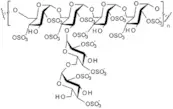
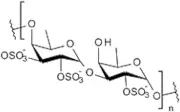
CAS:A fucan sulphate found in brown marine algae (Phaeophyta-typically Fucus serratus, Ascophyllum nodosum, Laminaria digitata (illustrated) and Macrocystis pyrifyra) and has been shown to have anticoagulant activity. The main constituents are α-1,4 and α-1,2 linked L-fucose sulphates although galactose also occurs and there are many variations of the basic structure found in different species of Phaeophyta.
The image was kindly provided by Prof Mike Guiry from Cork who runs ‘The Seaweed Site’.Color and Shape:PowderCarboxymethyl-dextran sodium salt - Average MW 150,000
CAS:Sodium carboxymethyl dextran (CM-dextran) is a white, odourless and tasteless powder, which is freely soluble in water or electrolyte solutions. The product has a pronounced polyanionic character, due to the high degree of carboxyl substitution. Applications that have been described for CM-dextran include carriers of paramagnetic contrast agents, preparation of conjugates of pharmacologically active compounds and CM-dextrans in biosensors. A number of other uses in cosmetics, agriculture, foods, paints and textiles have been the subject of patent applications.Color and Shape:White PowderSchizophyllan
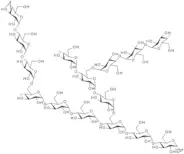
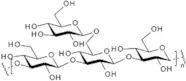
CAS:Schizophyllan is a neutral extracellular polysaccharide produced by the fungus Schyizophyllum commune. Schizophyllan is a β-1,3 beta glucan with β-1,6 branches and a molecular weight of around 450 kDa. It is reported that this polysaccharide can stimulate the immune system, chelate metals, act as an adjuvant in delivering drugs and aid in the production of nanofibres. The image was kindly provided by Dr. Chris Lawson.Color and Shape:White PowderFucoidan, cladosiphon
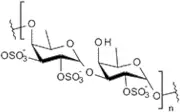
CAS:A fucan sulphate found in brown marine algae (Phaeophyta-typically Fucus vesiculotus, Ascophyllum nodosum, Alaria and Cladosiphon (illustrated) and has been shown to have anticoagulant activity. The main constituents are α-1,4 and α-1,2 linked L-fucose sulphates although galactose also occurs and there are many variations of the basic structure found in different species of Phaeophyta. The image was kindly provided by Prof Mike Guiry from Cork who runs ‘The Seaweed Site’.Purity:(Fucoidan) Reported (%)Color and Shape:White PowderXylan - from beechwood
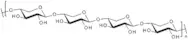
CAS:Xylan is the most abundant noncellulosic polysaccharide present in both hardwoods and annual plants. Xylan is found mainly in the secondary cell wall as part of the hemicellulose fraction and is considered to form an interface between lignin and other polysaccharides. In their simplest forms, xylans are linear homopolymers of β-1,4-xylose residues but can also form complex heterogenous and polydispersed glycans.
Color and Shape:Brown Slightly Brown PowderLichenan - from Cetraria islandica
CAS:Lichenin, the poly β-D-Glucan of Cetraria islandica (Iceland moss), is found by enzymic degradation to differ in fine structure from the poly β-D-glucans of cereal grains. Thus, the basic structure of lichenin is a tetrameric unit in which two adjacent 1,4 linkages alternate with an isolated 1,3 linkage; occasionally four consecutive monomers are linked by 1,4 bonds. The immunomodulatory activity of isolichenan was tested in in vitro phagocytosis and anti-complementary assays, and proved to be active in both cases.
The image was kindly provided by Prof Mike Guiry from Cork who runs ‘The Seaweed Site’.Formula:C6H10O5Purity:(Β-Linked Polysaccharide. 1H-Nmr) Min. 85%Color and Shape:White PowderMolecular weight:162.14Carboxymethyl-dextran sodium salt - Average MW 40,000
CAS:Sodium carboxymethyl dextran is a white, odourless and tasteless powder, which is freely soluble in water or electrolyte solutions. Applications that have been described for carboxymethyl dextran include carriers of paramagnetic contrast agents, preparation of conjugates of pharmacologically active compounds and carboxymethyl dextrans in biosensors. A number of other uses in cosmetics, agriculture, foods, paints and textiles have been the subject of patent applications.Color and Shape:Powder(Hydroxypropyl)methyl cellulose phthalate
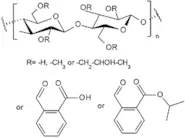
CAS:Hypromellose phthalate (hydroxypropyl methylcellulose phthalate, or HPMCP) is a phthalic acid ester of hydroxypropyl methylcellulose. Hypromellose phthalate was introduced in 1971 as a cellulose derivative for enteric coatings, used to protect drugs from degradation by gastric acid or to prevent them from causing side effects in the stomach. HPMCP is also used in sustained-release preparations, in binders and as microcapsule bases.Color and Shape:White Off-White PowderChitosan - Molecular weight 190,000-310,000
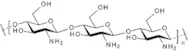
CAS:Chitosan is the deacetylated form of chitin. The polysaccharide is deacetylated in order to render it soluble, which is then possible at pH values of less than 7 (normally in dilute acid). This then allows the material to be used in a number of industrial applications as a binder and film former.
Color and Shape:Off-White PowderHydroxyethyl cellulose, viscosity 1500 ~ 2500
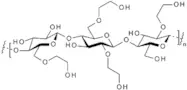
CAS:Hydroxyethyl cellulose (EHEC) is a non-ionic, water-soluble cellulose derivative produced by introduction of ethylene oxide groups to the hydroxyl groups of the cellulose backbone. Hydroxyethyl cellulose is useful as a water thickener, rheological control additive, protective colloid, binder, stabilizer, suspending agent and film former. It is used in many industrial applications including latex paints, emulsion polymerization, petroleum, paper, pharmaceuticals, cosmetics and many other applications.Purity:Min. 95%Color and Shape:Powder(Hydroxypropyl)methyl cellulose - Viscocity 2600-5600 cP
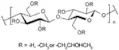
CAS:Hydroxypropyl methylcellulose (HPMC or hypromellose) is a semisynthetic, inert and viscoelastic polymer that is used as eye drops and as semi-synthetic substitute for tear-films. When applied, a hypromellose solution acts to swell and absorb water, by increasing the thickness of the tear-film, resulting in decreased eye irritation. In addition to its use in ophthalmic liquids, hypromellose has been used as an excipient in oral tablet and capsule formulations, where, depending on the grade, it functions as controlled-release agent. It is also used as a binder and as a component of tablet coatings. Hypromellose in aqueous solution, unlike methylcellulose, exhibits thermal gelation properties. HPMC is approved as a food additive, emulsifier, thickening and suspending agent, and as an alternative to animal gelatin (Codex Alimentarius code (E number) is E464).
Color and Shape:White PowderSodium alginate, high viscosity
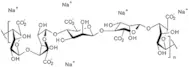
CAS:Sodium salt of a polysaccharide obtained from the brown seaweeds (e.g. Laminaria hyperborea, Fucus vesiculosus, Ascophyllum nodosum). The chemical structure consists of blocks of (1,4) linked-β-D-polymannuronic acid (poly M), (1,4) linked-α-L-polyguluronic acid (poly G) and alternating blocks of the two uronic acids (poly MG). Alginates form strong gels with divalent metal cations and the egg box model has been used to describe this form of gelation. The main use for alginate is in textile printing as a thickener in the printing of cottons with reactive dyes. In the food industry it is used as a thickener and gelling agent. Recently, it has been shown that ternary mixtures of Konjac glucomannan, Xanthan gum and Sodium alginate can form a non-covalently linked complex which exhibits enhanced rheological properties of value in, for example, functional foods. The image was kindly provided by Prof Mike Guiry from Cork who runs ‘The Seaweed Site’.High viscosity (500-500mPa.s).Purity:Min. 95%Color and Shape:White Powder