Beta Blockers
Subcategories of "Beta Blockers"
Found 1502 products of "Beta Blockers"
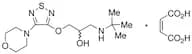
rac Timolol Maleate
CAS:Controlled ProductApplications Antihypertensive; antiarrhythmic (class II); antianginal; antiglaucoma agent.
References Wasson, et al.: J. Med. Chem., 15, 651 (1972), Franciosa, et al.: Clin. Pharmacol. Ther., 13, 138 (1972), Heel, R.C., et al.: Drugs, 17, 38 (1979), Rofman, B.A., et al.: Hypertension, 2, 643 (1980), Mazzo, D.J., et al.: Anal. Profiles Drug Subs., 16, 641 (1987),Formula:C13H24N4O3S·C4H4O4Color and Shape:NeatMolecular weight:432.492-Hydroxy Atorvastatin Lactone
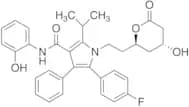
CAS:Controlled ProductImpurity Atorvastatin 2-Hydroxy Lactone
Stability Hygroscopic
Applications A metabolite of Atorvastatin, a selective, competitive HMG-CoA reductase inhibitor. Atorvastatin is the only drug in its class specfically indicated for lowering both elevated LDL-cholesterol and triglycerides in patients with hypercholesterolemia.Formula:C33H33FN2O5Color and Shape:Off White SolidMolecular weight:556.62(S)-4-Hydroxy Propranolol Hydrobromide
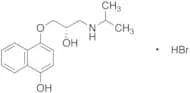
CAS:Controlled ProductApplications (S)-4-Hydroxy Propranolol is the main metabolite of (S)-Propranolol (P831795).
References Shwed, J., et al.: Xenobiotica, 22, 973 (1992), Fujita, K., et al.: Biol. Pharm. Bull., 22, 446 (1999), Walle, U., et al.: Drug Metab. Dispos., 30, 564 (2002),Formula:C16H21NO3·ClHColor and Shape:NeatMolecular weight:311.8Rescinnamine
CAS:Controlled ProductApplications Rescinnamine is an angiotensin-converting enzyme inhibitor used as an antihypertensive drug.
References Fife, R., et al.: Brit. Med. J., 2, 1848 (1960); Balsevich, J., et al.: Planta Med., 44, 91 (1982)Formula:C35H42N2O9Color and Shape:NeatMolecular weight:634.721-Chloro-3-(1H-indol-4-yloxy)-2-propanol
CAS:Controlled ProductApplications 1-Chloro-3-(1H-indol-4-yloxy)-2-propanol, is an impurity of Pindolol (P468000), a mixed β-adrenergic blocker and serotonin 5HT1A-receptor antagonist. Antihypertensive; antianginal; antiarrhythmic; antiglaucoma.
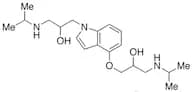
References Dreshfield, L.J., et al.: Neurochem. Res., 21, 557 (1996), Perez, V., et al.: Lancet, 349, 1594 (1997),Formula:C11H12ClNO2Color and Shape:NeatMolecular weight:225.671,1'-[(1-Methylethyl)imino]bis[3-(1H-indol-4-yloxy)-2-propanol
CAS:Controlled ProductApplications Pindolol (P468000) impurity.
Formula:C25H31N3O4Color and Shape:NeatMolecular weight:437.532-(2-Methoxyethyl)phenol
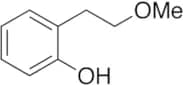
CAS:Controlled ProductApplications 2-(2-Methoxyethyl)phenol is used as a stabilizer in the preparation of polysiloxane based coating compounds with good stability.
Formula:C9H12O2Color and Shape:NeatMolecular weight:152.192,3-Dehydroxy Atorvastatin Sodium Salt(E/Z Mixture)
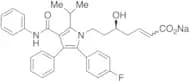
CAS:Controlled ProductStability Hygroscopic
Applications Atorvastatin (A791750) impurity.
References Kearney, A.S., et al.: Pharm. Res., 10, 1461 (1993); Heinonen, T.M., et al.: Clin. Ther., 18, 853 (1996);Formula:C33H32FN2NaO4Color and Shape:NeatMolecular weight:562.61(±)-2'-Methylpropranolol Hydrochloride
CAS:Controlled ProductApplications (±)-2'-Methylpropranolol Hydrochloride, is an impurity of Nadolol (N201050), a β-Adrenergic blocker. Antihypertensive; antianginal.
References Dreyfuss, J., et al.: J. Clin. Pharmacol., 17, 300 (1977); Sibley, P.L., et al.: Toxicol. Appl. Pharmacol., 44, 379 (1978); Slusarek, L., et al.: Anal. Profiles Drug Subs., 9, 455 (1980)Formula:C17H23NO2·ClHColor and Shape:NeatMolecular weight:309.835-Hydroxy Propranolol Hydrochloride
CAS:Controlled ProductApplications A metabolite of Propranolol.
References Otton, S., et al.: Br. J. Clin. Pharmacol., 30, 751 (1990), Fujita, S., et al.: J. Pharmacol. Exp. Ther., 264, 226 (1993), Bichara, N., et al.: Drug Metab. Dispos., 24, 112 (1996), Tasaki, T., et al.: J. Biochem., 123, 162 (1998),Formula:C16H21NO3·HClColor and Shape:NeatMolecular weight:311.804N-[4-(4-Fluorophenyl)-5-formyl-6-(1-methylethyl)-2-pyrimidinyl]-N-methyl-methanesulfonamide
CAS:Controlled ProductImpurity Rosuvastatin Formyl Impurity
Applications Rosuvastatin intermediate.
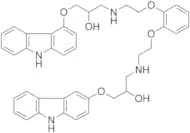
References Watanabe, M., et al.: Bioorg. Med. Chem., 5, 437 (1997),Formula:C16H18FN3O3SColor and Shape:NeatMolecular weight:351.4Carvedilol Bisalkylpyrocatechol Impurity
CAS:Controlled ProductApplications A new known impurity of Carvedilol (C184625), published in Carvedilol USP monograph.
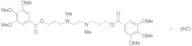
Formula:C40H42N4O6Color and Shape:NeatMolecular weight:674.78Hexobendine Dihydrochloride
CAS:Controlled ProductApplications Hexobendine is used as vasodilator (coronary).
References Rdudolph, et al.: Arzneim.-Forsch., 20, 637 (1970), Kolassa, P., et al.: Biochem. Pharmacol., 20, 490 (1971), Zommer-Urbanska, S., et al.: Pharmazie, 40, 419 (1985),Formula:C30H44N2O10·2ClHColor and Shape:NeatMolecular weight:665.6De(2,3-dihydroxy) Nadolol Hydrochloride
CAS:Controlled ProductApplications De(2,3-dihydroxy) Nadolol Hydrochloride is an impurity of Nadolol (N201050), a β-Adrenergic blocker. Antihypertensive; antianginal.
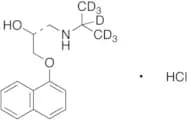
References Dreyfuss, J., et al.: J. Clin. Pharmacol., 17, 300 (1977); Sibley, P.L., et al.: Toxicol. Appl. Pharmacol., 44, 379 (1978); Slusarek, L., et al.: Anal. Profiles Drug Subs., 9, 455 (1980)Formula:C17H27NO2·ClHColor and Shape:NeatMolecular weight:313.86(R)-Propranolol-d7 Hydrochloride
CAS:Controlled ProductApplications The labelled R-enantiomer of Propranolol (P831800). β−Adrenergic blocker. Antihypertensive; antianginal; antiarrhythmic (class II).
References Bond, et al.: Nature, 213, 721 (1967), Hansteen, V., et al.: Br. Med. J., 284, 155 (1982), Diamond, S., et al.: J. Clin. Pharmacol., 28, 193 (1988),Formula:C16H15D7ClNO2Color and Shape:NeatMolecular weight:302.853-(1H-Indol-4-yloxy)-1,2-propanediol
CAS:Controlled ProductApplications Pindolol (P468000) impurity.
References Ohia, S., et al.: Pharmacol. Exp. Ther., 255, 11 (1990), Juteau, H., et al.: Bioorg. Med. Chem., 9, 1977 (2001),Formula:C11H13NO3Color and Shape:NeatMolecular weight:207.23Atorvastatin Lactam Phenanthrene Calcium Salt Impurity (mixture of diastereomers)
CAS:Controlled ProductImpurity Atorvastatin lactam phenanthrene calcium salt impurity
Applications Atorvastatin (A791750) impurity. A stable Atorvastatin formulation.Formula:C33H32FN2O6·CaColor and Shape:NeatMolecular weight:1183.31Dehydro Clevidipine
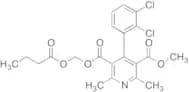
CAS:Controlled ProductFormula:C21H21Cl2NO6Color and Shape:NeatMolecular weight:454.3(S)-Hydroxy Timolol
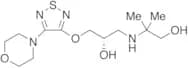
CAS:Controlled ProductApplications (S)-(-)-Hydroxy Timolol is a metabolite of the non-selective beta-adrenergic receptor blocker, Timolol (T443710).
References Volotinen, M. et al.: Basic Clin. Pharmacol. Toxicol., 106, 302 (2010);Formula:C13H24N4O4SColor and Shape:NeatMolecular weight:332.42N-(3-Isopropylamino-2-hydroxypropyl) Pindolol
CAS:Controlled ProductApplications Pindolol (P468000) impurity.
Formula:C20H33N3O3Color and Shape:NeatMolecular weight:363.49



![1,1'-[(1-Methylethyl)imino]bis[3-(1H-indol-4-yloxy)-2-propanol](/_next/image/?url=https%3A%2Fstatic.cymitquimica.com%2Fproducts%2FTR%2Fthumb-webp%2FM304895.webp&w=3840&q=75)
![N-[4-(4-Fluorophenyl)-5-formyl-6-(1-methylethyl)-2-pyrimidinyl]-N-methyl-methanesulfonamide](/_next/image/?url=https%3A%2Fstatic.cymitquimica.com%2Fproducts%2FTR%2Fthumb-webp%2FF595365.webp&w=3840&q=75)