Others
Found 6310 products of "Others"
4-Nitrophenyl b-D-cellobioside heptaacetate
4-Nitrophenyl b-D-cellobioside heptaacetate is a chromogenic substrate for enzymes that catalyze the hydrolysis of glycosidic bonds. This product is used as a diagnostic tool for identifying and characterizing glycosidases and other enzymes that degrade glycosidic bonds. 4-Nitrophenyl b-D-cellobioside heptaacetate is also used in culture media to measure the activity of cellulase enzymes by measuring the release of reducing sugars. The color change of this substrate can be detected at 405 nm, 490 nm, or 550 nm.Purity:Min. 95%Molecular weight:757.65 g/mol4-Nitrophenyl b-D-celloheptaoside
CAS:Chromogenic substrate targeting cellulasePurity:Min. 95%Molecular weight:1,274.09 g/mol5-Bromo-4-chloro-3-indolyl 5-O-feruloyl a-L-arabinofuranoside
5-Bromo-4-chloro-3-indolyl 5-O-feruloyl a-L-arabinofuranoside is a chemiluminescent ligand that is used in the detection of DNA, RNA, and proteins. It has been shown to be an efficient fluorescence substrate for DNA and RNA polymerases. 5-Bromo-4-chloro-3-indolyl 5-O-feruloyl a-L-arabinofuranoside is suitable for use in diagnostic tests for bacteria, fungi, viruses, parasites, and toxins. This compound has been extensively tested for toxicity and carcinogenicity.Purity:Min. 95%Abiraterone dimer impurity
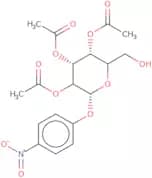
CAS:Controlled ProductAbiraterone dimer impurity is a drug product that is used as an analytical standard for HPLC, as well as in research and development of drugs. It is also a metabolite of abiraterone and has been detected in the urine of patients receiving the drug. Abiraterone dimer impurity is found in trace amounts in abiraterone acetate but its pharmacological significance is not known. This impurity has been detected in the urine of patients receiving abiraterone acetate therapy.Formula:C43H57NO2Purity:Min. 95%Molecular weight:619.92 g/mol4-Nitrophenyl 2,3,4-tri-O-acetyl-a-D-glucopyranoside
4-Nitrophenyl 2,3,4-tri-O-acetyl-a-D-glucopyranoside is a high quality chemical used in the development of various diagnostic and research applications. It is also used in the production of enzymatic substrates for enzyme activity assays. 4NPTAG is a chromogenic substrate that produces chemiluminescence when it reacts with an oxidizing agent and has been shown to be very effective as a fluorogenic substrate for protein kinases. This compound has been shown to bind to ligands and can be used as a bioluminescent reporter for molecular biology applications. The CAS number for this product is 54973-14-0.Purity:Min. 95%Molecular weight:427.36 g/molAldol® 470 L-alanine ester, hydrochloride, Biosynth Patent: EP 2427431 and US 8940909
CAS:Controlled ProductAldol® 470 L-alanine ester, hydrochloride is a chromogenic substrate that is used as a food testing reagent and enzyme substrate in diagnostics. It is also used to detect the presence of ligands in an environment. Aldol® 470 L-alanine ester, hydrochloride is used in chemiluminescence and bioluminescence reactions.Formula:C26H25ClN2O5Purity:Min. 95.0 Area-%Molecular weight:480.95 g/mol4-Chloro-2-nitrophenyl b-D-galactopyranoside
4-Chloro-2-nitrophenyl b-D-galactopyranoside is a fluorogenic substrate that is used in diagnostic testing, such as food and environmental testing. 4-Chloro-2-nitrophenyl b-D-galactopyranoside is an enzyme substrate that can be used to measure the activity of beta galactosidase. This substrate is also chromogenic, which means that it will change color when exposed to the enzyme. 4CNPGalA has been shown to be an excellent ligand for beta galactosidase and can be used in conjugation reactions with other molecules.Purity:Min. 95%Molecular weight:335.69 g/mol4-Nitrophenyl b-D-cellopentaoside hexadecaacetate
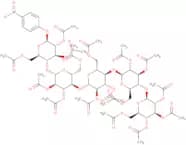
CAS:4-Nitrophenyl b-D-cellopentaoside hexadecaacetate is a fluorogenic substrate that is used to study the activity of various enzymes. It reacts with hydrolytic enzymes in the presence of hydrogen peroxide to produce light, and it can be used for food testing, environmental testing, and diagnostics. 4-Nitrophenyl b-D-cellopentaoside hexadecaacetate is a conjugate of 4-nitrophenol and cellobiose pentaacetate that has a high purity and high quality. The CAS number for this compound is 129411-66-1.Purity:Min. 95%Molecular weight:1,622.4 g/mol4-Nitrophenyl phosphate potassium salt
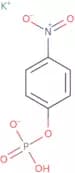
CAS:4-Nitrophenyl phosphate potassium salt is a high quality, non-radioactive chemiluminescence substrate that is used in the detection of oxidase activity. This product can be used to measure the activity of peroxidase and catalase enzymes, as well as the accumulation of hydrogen peroxide. It also has been shown to be a ligand for some sulfhydryl groups and an inhibitor of phosphatases. 4-Nitrophenyl phosphate potassium salt has been tested for its ability to inhibit bacterial growth and fluorescence by staining cells. This product has also been shown to have bioluminescent properties and can be used for diagnostics or culture media.Purity:Min. 95%Molecular weight:257.18 g/molAldol® 491 acetate, Biosynth Patent: EP 2427431 and US 8940909
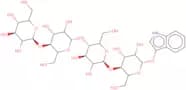
CAS:Aldol 491 acetate is a food and environmental testing chemical, which can be used for the detection of bacteria. Aldol 491 acetate provides a chromogenic substrate for the detection of enzymes and can be used as a substrate in enzyme-linked immunosorbent assay (ELISA) procedures. Aldol 491 acetate also has chemiluminescent properties and can be used as a fluorogenic substrate.Formula:C22H17NO4Purity:Min. 95 Area-%Molecular weight:359.37 g/mol3-Indolyl b-D-cellotetraoside
3-Indolyl b-D-cellotetraoside is a chemiluminescent substrate that is used as an indicator in the detection of aminoglycosides. The ligand is a cell wall component that has been shown to bind specifically to the active site of bacterial β-lactamases, which are enzymes that catalyze the hydrolysis of β-lactam antibiotics. 3-Indolyl b-D-cellotetraoside can be used for bacterial identification and enumeration, food testing, and enzyme substrate for diagnostics. It fluoresces in response to electron excitation with a wavelength of about 590 nm.Purity:Min. 95%Molecular weight:781.71 g/mol2,4-Dinitrophenyl b-L-arabinofuranoside
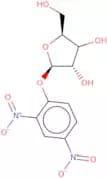
2,4-Dinitrophenyl b-L-arabinofuranoside is a high quality chromogenic substrate for dinitrophenylase. It is a ligand that reacts with an enzyme to form a product that can be detected by various methods, including colorimetry and fluorimetry. 2,4-Dinitrophenyl b-L-arabinofuranoside has shown to be useful for the detection of organic contaminants in water and air. 2,4-Dinitrophenyl b-L-arabinofuranoside is also used as a reagent for the preparation of conjugates for immunoassays.Purity:Min. 95%Molecular weight:628.54 g/mol4-Nitrophenyl 2,3-di-O-(b-D-glucopyranosyl)-b-D-glucopyranoside
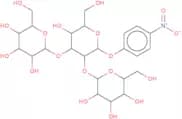
4-Nitrophenyl 2,3-di-O-(b-D-glucopyranosyl)-b-D-glucopyranoside is a chromogenic substrate that can be used to detect the presence of β-glucuronidase in human and animal tissue. The compound is also a fluoroquinolone substrate for the detection of β-lactamase activity. 4NPBG is used in diagnostics as well as food testing, due to its ability to detect bacteria in both food and water samples. 4NPBG is a chemiluminescent substrate that emits light upon hydrolysis by β-glucuronidase or β-lactamase. The compound has been shown to be an excellent ligand for binding to protein A or protein G and can be used for immunoassays such as ELISA or Western blotting.Purity:Min. 95%Molecular weight:625.53 g/mol4-Nitrophenyl 2,3,4-tri-O-levulinoyl-a-D-mannopyranoside
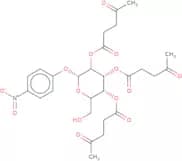
4-Nitrophenyl 2,3,4-tri-O-levulinoyl-a-D-mannopyranoside is a fluorogenic substrate that contains a reactive group of 2,3,4-tri-O-levulinoyl. This compound can be used to measure the activity of enzymes such as beta-glucosidase and alpha-galactosidase. 4NP2OMP is an excellent ligand for metal ions and has been shown to bind to copper in the presence of ATP. 4NP2OMP can also be used as a diagnostic agent for measuring the activity of bacterial beta-glucosidase and alpha galactosidase.Purity:Min. 95%Molecular weight:595.55 g/mol4-Nitrophenyl phosphate bis(tris) salt
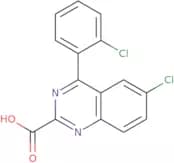
CAS:Please enquire for more information about 4-Nitrophenyl phosphate bis(tris) salt including the price, delivery time and more detailed product information at the technical inquiry form on this pageFormula:C14H28N3O12PMolecular weight:461.36 g/mol6-Chloro-4-(2-chlorophenyl)-2-quinazolinecarboxylic acid
CAS:6-Chloro-4-(2-chlorophenyl)-2-quinazolinecarboxylic acid (CA) is an impurity found in the drug lorazepam. It is a chemical intermediate that is not active as a pharmaceutical agent, but has been studied for use in treating epilepsy and other neurological disorders. CA is an excipient used to manufacture other drugs such as salicylic acid and the surfactant sodium lauryl sulfate. It has been shown to have acidic properties and can be used as a surfactant, which is helpful in chromatographic methods to separate molecules by size. CA also binds to chloride ions, which are necessary for the proper functioning of many cellular processes. CA's molecular weight is 322 daltons and it exhibits no pharmacological activity.
Formula:C15H8Cl2N2O2Purity:Min. 95%Color and Shape:White PowderMolecular weight:319.14 g/mol2-Chloro-4-nitrophenyl a-D-fucopyranoside
CAS:2-Chloro-4-nitrophenyl a-D-fucopyranoside (CNPF) is a chromogenic enzyme substrate used primarily to detect fucosidase activity. CNPF is cleaved by the enzyme, which results in the release of a colored product that can be measured spectrophotometrically. Fucosidases are important enzymes that catalyze the hydrolysis of fucose-containing oligosaccharides, and CNPF is a commonly used substrate for the detection and quantification of these enzymes in various research studies.
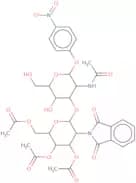
Purity:Min. 95%Molecular weight:319.69 g/mol4-Nitrophenyl 2-acetamido-3-O-(3,4,6-tri-O-acetyl-2-deoxy-2-phthalimido-b-D-glucopyranosyl)-2-deoxy-a-D-galactopyranoside
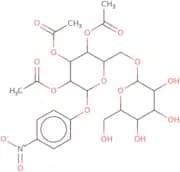
4-Nitrophenyl 2-acetamido-3-O-(3,4,6-tri-O-acetyl-2-deoxy-2-phthalimido-b-D-glucopyranosyl)-2-deoxy -a -D -galactopyranoside is a Fluorogenic substrate that is used in the detection of beta glucuronidase activity. It can be used for food testing, staining, environmental testing and chromogenic substrate for diagnostic purposes. It has a CAS number of 184840–55–9 and is available in high purity and quality. 4NPPAG is an enzyme substrate that is used to measure the amount of beta glucuronidase activity in culture media by chemiluminescence or bioluminescence.Purity:Min. 95%Molecular weight:759.67 g/mol4-Nitrophenyl 2,3,4-tri-O-acetyl-6-O-(a-D-glucopyranosyl)-a-D-glucopyranoside
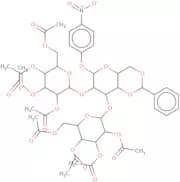
The 4-Nitrophenyl 2,3,4-tri-O-acetyl-6-O-(a-D-glucopyranosyl)-a-D-glucopyranoside is a fluorogenic substrate for β-galactosidase. This product has high purity and quality and is an enzyme substrate for β-galactosidase. The 4NPG2,3,4TRA can be used as a diagnostic tool in the diagnosis of bacterial infections. It is also used in the food testing industry and environmental testing industry. This product has CAS No.: 51743-71-1. This product is also a ligand that reacts with the enzyme β-galactosidase to produce light in chemiluminescence reactions. This product can be used for staining or bioluminescence applications.Purity:Min. 95%Molecular weight:589.51 g/mol4-Nitrophenyl 2,3-di-O-(2,3,4,6-tetra-O-acetyl-b-D-glucopyranosyl)-4,6-benzylidene-b-D-glucopyranoside
4-Nitrophenyl 2,3-di-O-(2,3,4,6-tetra-O-acetyl-b-D-glucopyranosyl)-4,6-benzylidene-b-D-glucopyranoside is a high purity, high quality 4nitrophenol derivative that is used as a food testing substrate. It is also used for the detection of fluorescence in environmental testing. This product can be conjugated with ligands for use in diagnostic assays.Purity:Min. 95%Molecular weight:1,049.93 g/mol