Others
Found 6295 products of "Others"
Aldol® 535 myo-inositol-1-phosphate, ammonium salt, Biosynth Patent: EP 2427431 and US 8940909
CAS:Aldol 535 is a chemiluminescent substrate for the detection of myo-inositol-1-phosphate. It has been shown to have high purity and high quality, and is suitable for use in diagnostics, food testing, and as a bioluminescence substrate. Aldol 535 is also used as a ligand in various enzyme assays. It has been tested for its ability to react with the fluorogenic substrates: 4-methylumbelliferyl phosphate and 4-methylumbelliferone phosphate. The CAS number is 2484872-80-0.Formula:C29H32BrClN3O10PPurity:Min. 95%Color and Shape:PowderMolecular weight:728.91 g/mol5-Bromo-4-chloro-3-indoxyl-alpha-D-N-acetylneuraminic acid, cyclohexylammonium salt
5-Bromo-4-chloro-3-indoxyl-alpha-D-N-acetylneuraminic acid, cyclohexylammonium salt is a chemiluminescent substrate that provides a significant increase in light emission. It has a CAS number of 59820-92-0 and is supplied in high purity and high quality. This product is used for the detection of various biological reactions, including diagnostics, enzyme substrates, food testing, and more.Purity:Min. 95%5-Bromo-4-chloro-3-indoxyl-α-D-N-acetylneuraminic acid, cyclohexylammonium salt
5-Bromo-4-chloro-3-indoxyl-alpha-D-N-acetylneuraminic acid, cyclohexylammonium salt is a Fluorogenic substrate used for the detection of an enzyme that converts sialic acid to fluorescein. This product has a high quality and purity with a CAS number. It is used in Culture media as a conjugate, Enzyme substrate, Food testing, High purity, Diagnostics, ligand, Chromogenic substrate, Environmental testing. The product has been tested and found to be safe for use with animals and humans.Formula:C25H35BrClN3O9Purity:Min. 99.5 Area-%Molecular weight:636.92 g/mol2-Chloro-4-nitrophenyl 4-O-b-D-galactopyranosylmaltoside
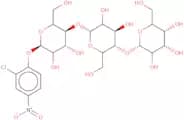
CAS:2-Chloro-4-nitrophenyl 4-O-b-D-galactopyranosylmaltoside, also known as Gal-G2-CNP, is a high quality, water soluble, chromogenic substrate that is used as an enzyme substrate and can be used in bioluminescence and chemiluminescence assays. This product is designed for use in diagnostics, culture media, food testing, environmental testing, and other research applications. 2-Chloro-4-nitrophenyl 4-O-b-D-galactopyranosylmaltoside has been tested in chromogenic assays with alpha-amylases.Formula:C24H34ClNO18Purity:(Hplc) Min. 90%Color and Shape:PowderMolecular weight:659.98 g/mol2-Naphthyl-Beta-D-Glucuronide Sodium Salt
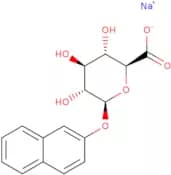
CAS:2-Naphthyl-beta-D-glucuronide sodium salt is an enzyme substrate to detect beta-glucuronidase. The enzyme cleaves the glycosidic bond in 2-naphthyl-beta-D-glucuronide to release 2-naphtol and glucuronic acid. Beta-glucuronidase activity assays are important in many fields such as cancer research, as the enzyme is expressed in some tumors and its activity can be targeted for cancer therapy. The enzyme has also an important role in drug metabolism as it recognizes and binds to drug glucuronide conjugate (as 2-naphthyl-beta-D-glucuronide) facilitating its hydrolysis to release the active part. 2-Naphthyl-beta-D-glucuronide sodium salt has a higher solubility as it is in its salt form.Formula:C16H15NaO7Purity:Min. 95%Color and Shape:PowderMolecular weight:342.28 g/mol4-Nitrophenyl-alpha-D-maltohexaoside
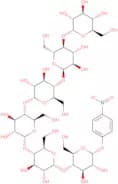
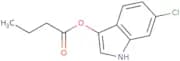
CAS:Chromogenic substrate for α-amylase yielding a yellow solution upon cleavage.Formula:C42H65NO33Purity:Min. 97.0 Area-%Molecular weight:1,111.97 g/mol6-Chloro-3-indoxyl butyrate
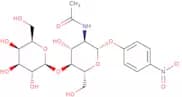
CAS:6-Chloro-3-indoxyl butyrate is a chemiluminescent substrate that is used in diagnostics and research. It has been shown to be an excellent ligand for the detection of DNA and protein. 6-Chloro-3-indoxyl butyrate can also be used as a chromogenic substrate for the detection of alkaline phosphatase, acid phosphatase, or beta-galactosidase. This product is also used in food testing, enzyme substrates, and fluorogenic substrates.Formula:C12H12ClNO2Purity:Min. 99.0 Area-%Molecular weight:237.69 g/mol4-Nitrophenyl 2-acetamido-2-deoxy-4-O-(β-D-galactopyranosyl)-β-D-glucopyranoside
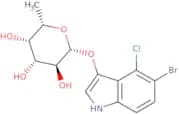
CAS:4-Nitrophenyl 2-acetamido-2-deoxy-4-O-(b-D-galactopyranosyl)-b-D-glucopyranoside is an efficient chromogenic pNP enzyme substrate ideal for monitoring enzyme activity and understanding carbohydrate metabolism. This galacto-glucoside compound is designed specifically for use with glycosidases such as hexosaminidases and delivers unparalleled performance in your enzymatic assays.Formula:C20H28N2O13Purity:Min. 95%Color and Shape:White PowderMolecular weight:504.44 g/mol5-Bromo-4-chloro-3-indoxyl-β-L-fucopyranoside
CAS:This product is a chromogenic substrate that is used in the detection of alkaline phosphatase and other enzymes. It is also used in food testing, staining, and diagnostics. This product has high purity with a CAS number of 125328-84-9.Formula:C14H15BrClNO5Purity:Min. 99 Area-%Molecular weight:392.63 g/molRef: 3D-B-7138
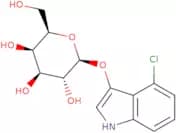
10mgTo inquire25mgTo inquire50mgTo inquire100mgTo inquire250mgTo inquire-Unit-ggTo inquire4-Chloro-3-indolyl β-D-galactopyranoside
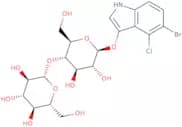
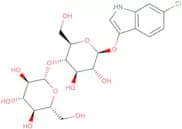
CAS:2-Chloro-4-nitrophenyl b-D-lactoside is a chromogenic enzyme substrate used to study the activity of enzymes. It produces a color when hydrolyzed, which makes it a valuable tool in screening for enzyme activity and studying enzyme kinetics.Formula:C14H16ClNO6Purity:Min. 95%Color and Shape:SolidMolecular weight:329.73 g/mol5-Bromo-4-chloro-3-indoxyl-beta-D-cellobioside
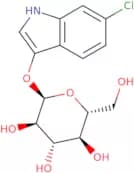
CAS:Chromogenic substrate for β-D-Cellobiosidase yielding a blue precipitate.Formula:C20H25BrClNO11Purity:Min. 99.0 Area-%Molecular weight:570.78 g/mol6-Chloro-3-indoxyl-beta-D-glucuronic acid, cyclohexylammonium salt
CAS:6-Chloro-3-indoxyl-beta-D-glucuronic acid (cyclohexylammonium salt) is a chromogenic substrate for beta-glucuronidase yielding a salmon colored precipitate upon cleavage.Formula:C20H27ClN2O7Purity:Min. 98.0 Area-%Molecular weight:442.90 g/molAldol® 515 caprylate hydrochloride
CAS:Aldol 515 caprylate hydrochloride is a high-quality fluorogenic substrate that is used for the detection of enzymes in culture media and enzyme substrates. The product has a CAS number of 2484873-14-3 and can be used for food testing, diagnostics, and environmental testing. Aldol 515 caprylate hydrochloride can also be used as a ligand or chromogenic substrate to measure bioluminescence.Formula:C31H35ClN2O3Purity:Min. 95 Area-%Molecular weight:519.08 g/mol2-Nitrophenyl 2-acetamido-2-deoxy-a-D-glucopyranoside
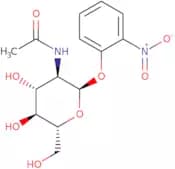
CAS:2-Nitrophenyl 2-acetamido-2-deoxy-alpha-D-glucopyranoside is a chromogenic substrate used to assay the activity of enzymes that cleave N-acetyl-alpha-D-glucosaminide, such as chitinases and lysozymes. Upon cleavage by the enzyme of interest, the substrate releases a yellow-colored 2-nitrophenol that can be measured spectrophotometrically. This substrate is widely used in the food industry to monitor the activity of lysozyme in cheese, as well as in biomedical research for studying cellular and molecular mechanisms involved in conditions such as inflammation and cancer.Purity:Min. 95%Color and Shape:PowderMolecular weight:342.3 g/mol4-Nitrophenyl-N-acetyl-beta-D-galactosaminide
CAS:4-Nitrophenyl-N-acetyl-beta-D-galactosaminide is a synthetic substrate that is used in enzyme kinetics. It is a beta-galactosidase substrate that reacts with the enzyme to form a product. The rate of reaction can be measured by following the change in absorbance over time. This product will react with an acceptor, such as chondroitin sulfate, to produce an observable reaction product. 4NPBGA has been shown to be an effective carbon source for plant physiology studies and has been shown to have optimal activity at pH 6.5.Formula:C14H18N2O8Purity:Min. 98 Area-%Molecular weight:342.31 g/molAldol® 455 alpha-D-maltopyranoside, Biosynth Patent: EP 2427431 and US 8940909
Aldol® 455 alpha-D-maltopyranoside is a chromogenic substrate developed by Cymit Quimica, designed for the detection of maltosidases.Formula:C33H34ClNO12Purity:Min. 95.0 Area-%Molecular weight:672.08 g/molAldol® 515 beta-D-xylopyranoside, Biosynth Patent: EP 2427431 and US 8940909
CAS:Aldol® 515 beta-D-xylopyranoside is a chemiluminescent ligand that can be used for the detection of beta-xylosidase activity to yield a red color.
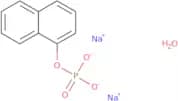
Formula:C28H34N2O6Purity:Min. 95%Color and Shape:PowderMolecular weight:494.59 g/mola-Naphthyl phosphate disodium salt hydrate
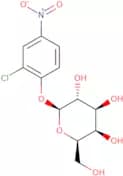
CAS:a-Naphthyl phosphate disodium salt hydrate is a highly water-soluble chromogenic substrate used to determine phosphatase activity in research and analytical applications, particularly for staining and differentiating acid and alkaline phosphatases.Purity:Min. 95%Color and Shape:White PowderMolecular weight:268.11 g/mol2-Chloro-4-nitrophenyl b-D-galactopyranoside
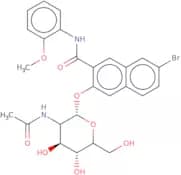
CAS:2-Chloro-4-nitrophenyl-beta-D-galactopyranoside is a chromogenic substrate used to test enzyme activities. It is commonly used in molecular biology research for the detection and measurement of beta-galactosidase activity.Formula:C12H14ClNO8Purity:Min. 95%Color and Shape:White PowderMolecular weight:335.69 g/molNaphthol AS-BI N-acetyl-b-D-galactosaminide
CAS:Modified naphtol AS substrate used in histochemical and cytochemical stainingFormula:C26H27BrN2O8Purity:Min. 95%Color and Shape:PowderMolecular weight:575.41 g/molAldol® 470 acetate, Biosynth Patent: EP 2427431 and US 8940909
CAS:Controlled ProductAldol 470 acetate is a chromogenic substrate for carboxylesterases yielding a yellow precipitate. Furthermore it shows some fluorescence(excitation at 320 nm to 490 nm). In contrast to classical indoxylsubstrates, Aldol substrates work not only under aerobic but also under anaerobic conditions.Formula:C25H21NO5Purity:Min. 95.0 Area-%Molecular weight:415.44 g/molAldol® 470 beta-D-galactopyranoside, Biosynth Patent: EP 2427431 and US 8940909
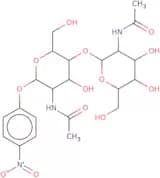
CAS:Aldol® 470 beta-D-galactopyranoside is a chromogenic and fluorogenic enzyme substrate used for detection of beta-galactosidase activity. The colorless enzyme substrate is cleaved by lactose-utilizing bacteria grown in liquid or solid media, yielding yellow coloration and green fluorescence. Aldol® 470 beta-D-galactopyranoside can also be used in beta-galactosidase gene reporter assays or immunoassay applications (ELISA). Aldol® 470 beta-D-galactopyranoside can be used under aerobic and anaerobic conditions.Formula:C29H29NO9Purity:Min. 95 Area-%Color and Shape:PowderMolecular weight:535.54 g/mol4-Nitrophenyl 2-acetamido-4-O-(2-acetamido-2-deoxy-b-D-glucopyranosyl)-2-deoxy-a-D-galactopyranoside
4-Nitrophenyl 2-acetamido-4-O-(2-acetamido-2-deoxy-b-D-glucopyranosyl)-2-deoxy-a-D-galactopyranoside is an enzyme substrate that is used in the detection of phenylalanine, tyrosine, and tryptophan. It is also used for environmental testing, bioluminescence, culture media, chemiluminescence, fluorogenic substrate, food testing, diagnostics and other applications.Purity:Min. 95%Color and Shape:Off-White PowderMolecular weight:545.49 g/mol4-Nitrophenyl α-L-fucopyranoside
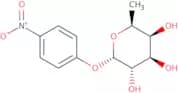
CAS:Chromogenic substrate for alpha-L-fucosidaseFormula:C12H15NO7Purity:(%) Min. 98.0%Color and Shape:PowderMolecular weight:285.25 g/molCalcium 2-naphthylphosphate
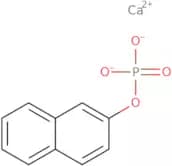
CAS:Calcium 2-naphthylphosphate, which is the calcim salt of 2-naphthylphosphate, is a chromogenic substrate to measure alkaline phosphatase activity. After enzymatic cleavage, the product yielded (2-naphthol) generates a red-colored complex upon reaction with a diazonium salt like Fast Blue RR or Fast Garnet GBC.
Purity:(%) Min. 95%Color and Shape:PowderMolecular weight:282.24 g/mol2-Naphthyl-beta-D-galactopyranoside
CAS:2-Naphthyl-β-D-galactopyranoside is a substrate for β-galactosidase. 2-Naphthol is released upon hydrolyzation. By simultaneous coupling with a suitable staining reagent, such as hexazonium p-rosaniline, the corresponding reddish-brown azo-dye is formed. Naphthols can also be detected by fluorescence analysis.Formula:C16H18O6Purity:Min. 99 Area-%Molecular weight:306.32 g/mol4-Chloro-1-naphthol
CAS:Substrate for horseradish peroxidase
Formula:C10H7ClOPurity:Min. 96.0 Area-%Color and Shape:Brown PowderMolecular weight:178.61 g/mol4-Nitrophenyl-α-D-maltopyranoside
CAS:Chromogenic α-maltosidase substrate yielding a yellow solution upon cleavage.Formula:C18H25NO13Purity:Min. 98.0 Area-%Molecular weight:463.40 g/mol4-Nitrophenyl 2-O-(β-D-glucopyranosyl)-β-D-glucopyranoside
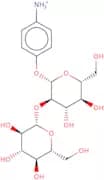
CAS:4-Nitrophenyl 2-O-(beta-D-glucopyranosyl)-beta-D-glucopyranoside is a chromogenic substrate for beta-glucosidase. Upon hydrolysis, para-nitrophenol is released yielding a yellowish colour. 4-Nitrophenyl 2-O-(beta-D-glucopyranosyl)-beta-D-glucopyranoside is used in different applications such as the Cellulose degradation studies, biofuel researchFormula:C18H25NO13Purity:Min. 95%Color and Shape:White solid.Molecular weight:463.39 g/molChlorophenol red-b-D-galactopyranoside sodium salt
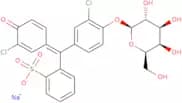
CAS:Chlorophenol red-b-D-galactopyranoside sodium salt is the salt from of CPRG (chlorophenol red-b-D-galactopyranoside), that has a higher solubility. It is a chromogenic substrate for beta-galactosidases that, after enzymatic cleavage, releases chlorophenol red, a dark red compound quantified by absorbance at 570 nm.Formula:C25H21Cl2O10SNaPurity:Min. 96 Area-%Color and Shape:PowderMolecular weight:607.4 g/mol6-Chloro-3-indoxyl-alpha-D-glucopyranoside
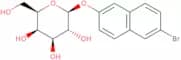
CAS:Chromogenic substrate for α-glucosidase yielding a salmon-colored precipitate.Formula:C14H16ClNO6Purity:Min. 98 Area-%Molecular weight:329.74 g/mol6-Bromo-2-naphthyl b-D-glucuronide
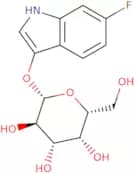
CAS:6-Bromo-2-naphthyl beta-D-glucuronide is a substrate for beta-glucuronidase, an enzyme involved in detoxification and bacterial metabolism. Upon enzymatic hydrolysis, it releases 6-bromo-2-naphthol, which forms a detectable dye when reacted with diazonium salts. This compound is widely used in microbiology to detecting E. coli in water testing and histochemical staining. 6-Bromo-2-naphthyl beta-D-glucuronide is also been used in cancer research studies. It has been found that some tumors are related to a high activity of beta-glucuronidase, responsible to reactivate the carcinogens and promote tumor progression, developing a drug resistance to chemotherapy.Formula:C16H15BrO7Purity:Min 97%Color and Shape:White Off-White PowderMolecular weight:399.2 g/mol6-Fluoro-3-indoxyl-beta-D-galactopyranoside
CAS:6-Fluoro-3-indoxyl-beta-D-galactopyranoside is a fluorescent chromogenic substrate that is commonly used for the detection and quantification of beta-galactosidase activity. When this substrate is hydrolyzed by beta-galactosidase, it produces a fluorescent blue product that can be easily detected and measured using a fluorometer or spectrophotometer. This substrate is often used in microbiology and molecular biology research to study gene expression and enzyme kinetics, and is also used in medical diagnostics as a marker for specific diseases and conditions.Formula:C14H16FNO6Purity:Min. 98.0 Area-%Molecular weight:313.29 g/mol2-Naphthyl a-D-glucopyranoside
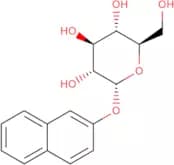
CAS:2-Naphthyl-lpha-D-glucopyranoside is a substrate for α-glucosidase. 2-Naphthol is released upon hydrolyzation. By simultaneous coupling with a suitable staining reagent, such as hexazonium p-rosaniline, the corresponding reddish-brown azo-dye is formed. Naphthols can also be detected by fluorescence analysis.Formula:C16H18O6Purity:Min. 98 Area-%Color and Shape:PowderMolecular weight:306.31 g/molAldol® 470 β-D-galactopyranoside, Biosynth Patent: EP 2427431 and US 8940909
CAS:Aldol® 470 beta-D-galactopyranoside is a chromogenic and fluorogenic enzyme substrate used for detection of ?-galactosidase activity. The colorless enzyme substrate is cleaved by lactose-utilizing bacteria grown in liquid or solid media, yielding yellow coloration and green fluorescence. Aldol® 470 beta-D-galactopyranoside can also be used in ?-galactosidase gene reporter assays or immunoassay applications (ELISA). Aldol® 470 beta-D-galactopyranoside can be used under aerobic and anaerobic conditions.
Formula:C29H29NO9Purity:Min. 95.0 Area-%Molecular weight:535.54 g/mol6-Nitro-3-indolyl-b-D-galactopyranoside
6-Nitro-3-indolyl-b-D-galactopyranoside is a chemiluminescent substrate that reacts with horseradish peroxidase to produce light. 6NIGP is used in the diagnostic field as a fluorogenic or chromogenic substrate for enzymes such as alkaline phosphatase, and as a staining agent for cells, tissues, and other biological materials. 6NIGP has been used in the detection of bacteria, fungi, parasites, and viruses. It is also used in food testing as an enzyme substrate. 6NIGP is purified by recrystallization from water or acetone and can be stored at −20°C.Purity:Min. 95%6-Bromo-2-naphthyl β-D-galactopyranoside
CAS:6-Bromo-2-naphthyl β-D-galactopyranoside is a chromogenic substrate commonly used for the detection of the enzymatic activity of β-galactosidase. It can produce a yellow precipitate upon hydrolysis by β-galactosidase, indicating the presence of the enzyme. It is often used in molecular biology applications to detect gene expression or to monitor cloning efficiency.Formula:C16H17BrO6Purity:Min. 98 Area-%Color and Shape:PowderMolecular weight:385.21 g/mol5-Bromo-6-chloro-3-indoxyl butyrate
CAS:5-Bromo-6-chloro-3-indoxyl butyrate is an enzyme substrate that is used for the detection of bacteria and fungi in environmental testing, food testing, and diagnostics. It is also used as a fluorogenic substrate in bioluminescence and chemiluminescence assays. 5-Bromo-6-chloro-3-indoxyl butyrate binds to proteins on the cell surface, causing an increase in fluorescence when excited by light of a specific wavelength. The conjugate can be detected using a variety of methods, including staining with dyes such as safranin or methylene blue. This product has high purity and high quality.Formula:C12H11BrClNO2Purity:Min. 98 Area-%Molecular weight:316.59 g/molRef: 3D-B-7060
1gTo inquire5gTo inquire10gTo inquire500mgTo inquire2500mgTo inquire-Unit-ggTo inquire4-Nitrophenyl phosphate mono(2-amino-2-ethyl-1,3-propanediol) salt monohydrate
CAS:4-Nitrophenyl phosphate mono(2-amino-2-ethyl-1,3-propanediol) salt monohydrate is a chromogenic substrate that can be used to detect the presence of alkaline phosphatase. It is also used in food testing and diagnostics. 4NPPMD is a substrate for the enzyme alkaline phosphatase, which has been shown to play a role in the inflammatory response. The production of 4NPPMD by bacteria in the environment can be detected with chemiluminescence or bioluminescence. This product has been shown to react with both horseradish peroxidase and alkaline phosphatase, as well as other enzymes that are involved in metabolic pathways. This substrate also has high purity and fluorescence properties.Formula:C11H21N2O9PPurity:Min. 95 Area-%Molecular weight:356.26 g/molAldol® 458 beta-D-galactopyranoside, Biosynth Patent: EP 2427431 and US 8940909
CAS:Aldol® 458 beta-D-galactopyranoside is a chromogenic and fluorogenic enzyme substrate used for detection of beta-galactosidase activity. The colorless enzyme substrate is cleaved by lactose utilizing bacteria grown in liquid or solid media, yielding yellow coloration and green fluorescence. Aldol® 458 beta-D-galactopyranoside can also be used in beta-galactosidase gene reporter assays or immunoassay applications (ELISA). Aldol® 458 beta-D-galactopyranoside can be used under aerobic and anaerobic conditions.Formula:C22H23NO8Purity:Min. 95 Area-%Color and Shape:PowderMolecular weight:429.42 g/mol2-Chloro-4-nitrophenyl b-D-maltoheptaoside
CAS:2-Chloro-4-nitrophenyl b-D-maltoheptaoside is a fluorescent compound that is used in medical research for the visualization of muscle glycogen. It is also used to study the binding of molecules to proteins, as well as to measure enzyme activity. The compound has been shown to be insensitive to changes in pH and temperature, so it can be used at different pH levels and temperatures without affecting its function. 2-Chloro-4-nitrophenyl b-D-maltoheptaoside can be detected by titration calorimetry due to its high molecular weight. The molecule's affinity for carbohydrates also allows it to be used in optimization studies of carbohydrate molecules.Purity:Min. 95%Molecular weight:1,308.54 g/mol4-Chloro-1-naphthol
CAS:Substrate for horseradish peroxidase (HRP). HRP catalyzes oxidation of 4-chloro-1-naphthol in the presence of peroxide to the blue insoluble product 4-chloro-1-naphthon. It is used for both blotting and immunohistochemical staining but is less sensitive than other precipitating HRP substrates.Formula:C10H7ClOPurity:Min. 97.0 Area-%Molecular weight:178.62 g/molRef: 3D-C-5180
1kgTo inquire100gTo inquire250gTo inquire500gTo inquire2500gTo inquire-Unit-ggTo inquire2-Nitrophenyl a-D-galactopyranoside
CAS:2-Nitrophenyl alpha-D-galactopyranoside is a chromogenic substrate used to detect the enzymatic activity of alpha-galactosidase. After cleavage, the nitrophenyl moiety is released exhibiting a light yellowish color. 2-Nitrophenyl alpha-D-galactopyranoside is used in Fabry disease screening.Formula:C12H15NO8Purity:Min. 95%Color and Shape:White Off-White PowderMolecular weight:301.25 g/mol6-Chloro-3-indolyl β-D-cellobioside
CAS:6-Chloro-3-indolyl b-D-cellobioside is a chromogenic substrate that produces a salmon-pink color after enzymatic cleavage. It is used for detecting the activity of beta-D-cellobiosidase in enzyme assays.
Purity:Min. 95%Color and Shape:White To Off-White SolidMolecular weight:491.87 g/molAldol® 518 choline phosphate, Biosynth Patent: EP 2427431 and US 8940909
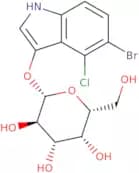
Aldol® 518 choline phosphate is a fluorogenic substrate that is used in the detection of enzyme activity. It has been shown to be an effective substrate for enzymes such as beta-galactosidase and phosphatases, and can be used in the detection of bacterial growth. Aldol® 518 choline phosphate is also a chromogenic substrate for the detection of alkaline phosphatase. It has been shown to have high purity and bioluminescence properties, making it useful for detecting bacteria in culture media or environmental testing. The conjugate of Aldol® 518 choline phosphate with various ligands can be used to detect specific proteins or antibodies.Formula:C28H31ClN3O5PPurity:Min. 95 Area-%Molecular weight:556 g/mol5-Bromo-4-chloro-3-indoxyl-β-D-galactopyranoside
CAS:X-Gal is a chromogenic substrate for β-galactosidase, yielding a blue precipitate. X-Gal is an indicator for coliforms in culture media, as well as for the detection of coliforms (E. coli) in municipal water supplies and food products. X-Gal can be used in conjunction with the inducer IPTG, which binds and inhibits the lac repressor thus inducing β-galactosidase expression. X-Gal is the substrate of choice for blue-white selection of recombinant bacterial colonies with the lac+ genotype. Upon hydrolysis, X-Gal yields a localized, insoluble, blue precipitate, making it exceptionally useful in blotting, immunocytochemical, and ELISA assays. 5-Bromo-4-chloro-3-indoxyl-beta-D-galactopyranoside (X-beta-D-galactoside, X-Gal) is a chromogenic indicator for beta-galactosidase activity. The colorless product is cleaved by lactose-utilizing bacteria in liquid media or on agar plates and yields a blue-green colored precipitate. X-Gal can also be used as a detecting agent for beta-galactosidase activity in reporter gene assays or for identification of positive transformants on agar plates when using the α-complementation approach. Color formation is due to dimerization and oxidation of 5-bromo-4-chloro-3-hydroxyindole which results from enzymatic cleavage of X-Gal. The reaction proceeds only in the presence of oxygen, i.e. in aerobic cultures. Well detectable color bacterial colonies or liquid cultures is obtained within 16-48 h. In the presence of purified beta-galactosidase, color develops within minutes to a few hours.Formula:C14H15BrClNO6Purity:Min. 99.0 Area-%Molecular weight:408.64 g/mol6-Chloro-4-(2-chlorophenyl)-2-quinazolinecarboxaldehyde
CAS:6-Chloro-4-(2-chlorophenyl)-2-quinazolinecarboxaldehyde is a colorimetric reagent that can be used to detect Cl. It has been shown to react with Cl in the presence of an acidic solution and produce a red color. The reagent is stable in organic solvents, such as chloroform, but decomposes in water. 6-Chloro-4-(2-chlorophenyl)-2-quinazolinecarboxaldehyde is also used to detect chloride by titrimetric or polarographic methods.Formula:C15H8Cl2N2OPurity:Min. 95%Color and Shape:Off-White PowderMolecular weight:303.14 g/mol3,4-Cyclohexenoesculetin beta-D-galactopyranoside
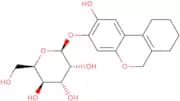
CAS:Chromogenic substrate for beta-galactosidaseFormula:C19H22O9Purity:Min. 95 Area-%Color and Shape:PowderMolecular weight:394.37 g/mol2-Nitrophenyl b-D-xylopyranoside
CAS:Chromogenic substrates targeting beta-xylosidasePurity:Min. 95%Color and Shape:PowderMolecular weight:271.22 g/mol