Aminoacids and derivatives
Amino acids are compounds with a structure based on an amino group (-NH₂) and a carboxyl group (-COOH), both attached to a central carbon atom. This structure makes them essential for the synthesis of proteins and other biomolecules. Their derivatives can have regulatory properties over metabolic processes and biological systems, with applications in nutrition, health, and regenerative medicine.
At CymitQuimica, we offer a wide range of amino acids and their derivatives, ideal for research and the formulation of bioactive products.
Found 12270 products of "Aminoacids and derivatives"
Sort by
Purity (%)
0
100
|
0
|
50
|
90
|
95
|
100
2-Hydroxy L-Tryptophan Hydrochloride
CAS:Controlled Product<p>Applications 2-Hydroxy L-Tryptophan is a metabolic intermediate in the biosynthesis of the neurotransmitters serotonin and melatonin from Tryptophan.<br>References Southan, M.D., et al.: Med. Chem. Res., 6, 343 (1996);<br></p>Formula:C11H13ClN2O3Color and Shape:Off-WhiteMolecular weight:256.69Iminodiacetic Acid
CAS:Controlled Product<p>Applications Iminodiacetic Acid is used as a reagent in the synthesis of poly(N-isopropylacrylamide) (PNIPAM) microgel particles for metal affinity binding of peptides.<br>References Tsai, H., et al.: Colloids Surf. B, 114, 104 (2014)<br></p>Formula:C4H7NO4Color and Shape:White To Off-WhiteMolecular weight:133.104-(Piperazin-1-yl)furo[3,2-c]pyridine hydrochloride
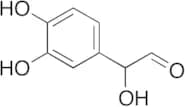
CAS:Purity:97.0%Molecular weight:239.69999694824223,4-Dihydroxyphenylglycolaldehyde (Dopegal)
CAS:<p>Stability Very Hygroscopic, Moisture Sensitive<br>Applications 3,4-Dihydroxyphenylglycolaldehyde (Dopegal) is the monoamine oxidase metabolite of dopamine which is toxic of in a concentrated amount and may be a target for Alzheimer or Parkinson’s therapy.<br>References Burke, W. et al.: Neurotoxical., 25, 101 (2004);<br></p>Formula:C8H8O4Color and Shape:NeatMolecular weight:168.151-Boc-4-[4-(methylsulfonyl)-2-nitrophenyl]piperidin-4-amine
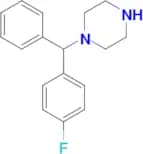
CAS:Formula:C17H25N3O6SPurity:95.0%Color and Shape:SolidMolecular weight:399.461-(4-Fluoro-a-phenylbenzyl)piperazine
CAS:Purity:98.0%Color and Shape:SolidMolecular weight:270.35101318359375L-Glutamic Acid Magnesium Salt Hydrobromide
CAS:Controlled Product<p>Stability Hygroscopic<br>Applications L-Glutamic Acid, Magnesium Salt Hydrobromide is an metabolite of L-Glutamic acid, a non-essential amino acid. Its salt form (glutamate) is an important neurotransmitter that plays a key role in long-term potentiation and is important for learning and memory. It is also a key molecule in cellular metabolism. L-Glutamic Acid, Magnesium Salt Hydrobromide has also been investigated for sedative properties as a tranquilizer.<br>References McEntee, W., et al.: Psychopharmacology, 111, 391 (1993), Manev, H., et al.: Mol. Pharmacol., 36, 106 (1989), Hamanaka, T., et al.: Toho. Igakkai. Zasshi., 20, 663 (1973);<br></p>Formula:C5H8BrMgNO4Color and Shape:NeatMolecular weight:250.33L-Glutamine-2,3,3,4,4-d5
CAS:Controlled Product<p>Applications L-Glutamine-2,3,3,4,4-d5 is the isotope labelled analog of L-Glutamine (G597000); an essential amino acid that is a crucial component of culture media that serves as a major energy source for cells in culture. L-Glutamine is very stable as a dry powder and as a frozen solution. In liquid media or stock solutions, however, L-glutamine degrades relatively rapidly. Optimal cell performance usually requires supplementation of the media with L-glutamine prior to use.<br>References Rivett, A., et al.: J. Biol. Chem., 260, 300 (1985); Watford, M., et al.: Metabolism, 49, 141 (2000); Wilmore, D., et al.: J. Nutr., 131, 2543S (2001)<br></p>Formula:C5D5H5N2O3Color and Shape:NeatMolecular weight:151.18N-(4-(AMINOMETHYL)PHENYL)BENZO[D]ISOXAZOL-3-AMINE HCL
CAS:Purity:95.0%Molecular weight:275.7399902343751,1'-Ethylidenebis[L-tryptophan]
CAS:Controlled Product<p>Stability Decomposes under acidic condition, Hygroscopic<br>Applications 1,1’-Ethylidenebis[L-tryptophan] is a L-tryptophan (T947210) contaminant found in the peripheral blood mononuclear cells from patients with functional somatic syndromes.<br>References Barth, H., et al.: Clin. Experiment. Inmmunol., 126, 187 (2001); Simat, T.J., et al.: Adv. Experi. Med. Biol., 467, 469 (1999);<br></p>Formula:C24H26N4O4Color and Shape:White To Light Yellow BrownMolecular weight:434.49N1,N1-Bis(4-(diethylamino)phenyl)-N4,N4-diethylbenzene-1,4-diamine
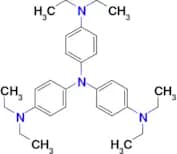
CAS:Purity:95+%Molecular weight:458.6940002441406Glycine-13C2
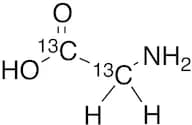
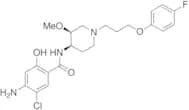
CAS:Controlled Product<p>Applications Isotope labelled Glycine is a non-essential amino acid for human development. Glycine is an inhibitory neurotransmitter in spinal cord, allosteric regulator of NMDA receptors.<br>References Scott, D., et al.: J. Neurosci., 21, 3063 (2001), Laube, B., et al.: Neuropharmacology, 47, 994 (2004), Papadakis, M., et al.: J. Biol. Chem., 279, 14703 (2004), Chen, P., et al.: Mol. Pharmacol., 67, 1470 (2005), Wolosker, H., et al.: Mol. Neurobiol., 36, 152 (2007),<br></p>Formula:C2H5NO2Color and Shape:NeatMolecular weight:77.052-O-Desmethyl Cisapride
CAS:Controlled Product<p>Applications Minor Cisapride (C496400) metabolite.<br>References Meuldermans, W., et al.; Drug Metab. Disposition, 16, 410 (1988), Lowry J., et al.; Clin. pharmacol. ther., 73, 209 (2003), Shao L., et al.: Bioorg. Med. Chem. Lett., 19, 5679 (2009),<br></p>Formula:C22H27ClFN3O4Color and Shape:NeatMolecular weight:451.92Tert-Butyl 7-(aminomethyl)-6-oxa-2-azaspiro[3.4]octane-2-carboxylate
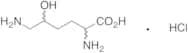
CAS:Purity:98%Molecular weight:242.31900024414062DL-5-Hydroxy-DL-lysine Hydrochloride
CAS:<p>Applications Amino acid substitute tumor growth.<br>References Villiers, C.L., et al.: Eur. J. Biochem., 140, 421 (1984);<br></p>Formula:C6H14N2O3·ClHColor and Shape:Beige PowderMolecular weight:198.65Betaine Aldehyde Chloride
CAS:Controlled Product<p>Applications Intermediate in the enzymatic oxidation of choline to betaine.<br>References J. Biol. Chem., 234, 1171 (1959)<br></p>Formula:C5H12NO·ClColor and Shape:Off WhiteMolecular weight:137.61



![4-(Piperazin-1-yl)furo[3,2-c]pyridine hydrochloride](/_next/image/?url=https%3A%2Fstatic.cymitquimica.com%2Fproducts%2F10%2Fthumb-webp%2FF544205.webp&w=3840&q=75)
![1-Boc-4-[4-(methylsulfonyl)-2-nitrophenyl]piperidin-4-amine](/_next/image/?url=https%3A%2Fstatic.cymitquimica.com%2Fproducts%2F10%2Fthumb-webp%2FF023662.webp&w=3840&q=75)


![N-(4-(AMINOMETHYL)PHENYL)BENZO[D]ISOXAZOL-3-AMINE HCL](/_next/image/?url=https%3A%2Fstatic.cymitquimica.com%2Fproducts%2F10%2Fthumb-webp%2FF306211.webp&w=3840&q=75)
![1,1'-Ethylidenebis[L-tryptophan]](/_next/image/?url=https%3A%2Fstatic.cymitquimica.com%2Fproducts%2FTR%2Fthumb-webp%2FE919880.webp&w=3840&q=75)
![Tert-Butyl 7-(aminomethyl)-6-oxa-2-azaspiro[3.4]octane-2-carboxylate](/_next/image/?url=https%3A%2Fstatic.cymitquimica.com%2Fproducts%2F10%2Fthumb-webp%2FF609058.webp&w=3840&q=75)