Aminoacids and derivatives
Amino acids are compounds with a structure based on an amino group (-NH₂) and a carboxyl group (-COOH), both attached to a central carbon atom. This structure makes them essential for the synthesis of proteins and other biomolecules. Their derivatives can have regulatory properties over metabolic processes and biological systems, with applications in nutrition, health, and regenerative medicine.
At CymitQuimica, we offer a wide range of amino acids and their derivatives, ideal for research and the formulation of bioactive products.
Found 12278 products of "Aminoacids and derivatives"
Sort by
Purity (%)
0
100
|
0
|
50
|
90
|
95
|
100
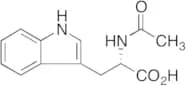
N-Acetyl-L-Tryptophan
CAS:Controlled Product<p>Applications N-Acetyl-L-Tryptophan, is a derivative of L-Tryptophan (T947210), that can be used as competitive inhibitor to identify and characterize tryptophanases. It can also be used as an NK1 tachykinin receptor antagonist, that may help to develop a novel therapeutic intervention for the treatment of reperfusion injury in acute ischemic stroke.<br>References Turner, R. J., et al.: Neuroscience, 220, 1 (2012);<br></p>Formula:C13H14N2O3Color and Shape:White To Off-WhiteMolecular weight:246.26Imidazole-15N2
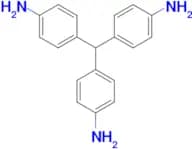
CAS:Controlled Product<p>Applications A labelled imidazole, a versatile heterocycle used in the preparation of various biologically active compounds such as the amino acid histidine and is present in many antifungal medication. It is also used extensively as a corrosion inhibitor on transition metals such as copper.<br> Not a dangerous good if item is equal to or less than 1g/ml and there is less than 100g/ml in the package<br>References Arispe, N. et al.: Biophys. J., 95, 4879 (2008); Troesken, E.R. et al.: Endo. Res., 30, 387 (2004); Otmacic Curkovic, H. et al.: Corr. Sci., 51, 2342 (2009);<br></p>Formula:C3H415N2Color and Shape:NeatMolecular weight:70.064,4′,4”-Methanetriyltrianiline
CAS:Formula:C19H19N3Purity:95%Color and Shape:SolidMolecular weight:289.3825-Hydroxy L-Tryptophan-d4 (Major)
CAS:Controlled Product<p>Applications A labelled metabolite of Tryptophan.<br> Not a dangerous good if item is equal to or less than 1g/ml and there is less than 100g/ml in the package<br>References Gartside, S., et al.: Eur. J. Pharmacol., 179, 103 (1990), Gijsman, H., et al.: J. Clin. Psychopharmacol., 22, 183 (2002), Schruers, K., et al.: Psychiatry Res., 113, 237 (2002),<br></p>Formula:C11H8D4N2O3Color and Shape:Beige To GreyMolecular weight:224.25Des-hydrazino Carbidopa
CAS:<p>Applications A metabolite of Carbidopa (C175915).<br>References Vickers, S., et al.: Drug Metab. Dispos., 2, 6 (1974), Vickers, S., et al.: J. Med. Chem., 18, 134 (1975),<br></p>Formula:C10H12O4Color and Shape:NeatMolecular weight:196.20O-Acetyl Lacosamide
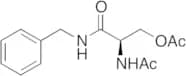
CAS:Controlled Product<p>Stability Hygroscopic<br>Applications O-Acetyl Lacosamide is an impurity of Lacosamide (L098500) which is a potent anticonvulsant.<br>References Lees, G., et al.: Brain Res., 612, 190 (1993), Kuo, C., et al.: Mol. Pharmacol., 51, 1077 (1997), Barton, M., et al.: Epilepsy Res., 47, 217 (2001), Beyreuther, B., et al.: Eur. J. Pharmacol., 539, 64 (2006), Beyreuther, B., et al.: CNS Drug Rev., 13, 21 (2007),<br></p>Formula:C14H18N2O4Color and Shape:NeatMolecular weight:278.3037cis-9-Hexadecenoylcarnitine Inner
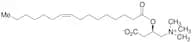
CAS:Controlled Product<p>Applications cis-9-Hexadecenoylcarnitine Inner Salt is an L-carnitine metobolite which are often used to diagnose specific inherited metabolic diseases.<br>References Yang, S. et l.: J. Chrom. B., Anal. Tech. Biomed. Life Sci., 857, 251 (2007); Minkler, P. et al.: J. Chrom. B., Anal. Tech. Biomed. Life Sci. 1061, 128 (2017);<br></p>Formula:C23H43NO4Color and Shape:NeatMolecular weight:397.592Glycine-15N,d2
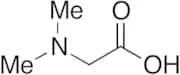
CAS:Controlled Product<p>Applications Glycine-15N,d2, is the labeled analogue of Glycine (G615990), a non-essential amino acid for human development. Glycine is an inhibitory neurotransmitter in spinal cord, allosteric regulator of NMDA receptors.<br>References Scott, D. et al.: J. Neurosci., 21, 3063 (2001); Laube, B. et al.: Neuropharmacology, 47, 994 (2004); Papadakis, M. et al.: J. Biol. Chem., 279, 14703 (2004); Chen, P. et al.: Mol. Pharmacol., 67, 1470 (2005); Wolosker, H. et al.: Mol. Neurobiol., 36, 152 (2007);<br></p>Formula:C2D2H315NO2Color and Shape:NeatMolecular weight:78.0726-Aminohexanoic Acid
CAS:Controlled Product<p>Applications 6-Aminohexanoic Acid is a reagent commonly used for the extraction of aldehydes from reaction mixtures. 6-Aminohexanoic Acid has also been shown to improve solubilization of membrane proteins in electrophoresis. Studies suggest that 6-Aminohexanoic Acid inhibits the activation of the first component of the complement system.<br>References Ohta ,S. et al.: Chem. Pharm. Bull., 28, 1917 (1980); Shagger, H. et al.: Anal. Biochem., 199, 223 (1991); Soter, N.A. et al.: J. Immunol., 114, 928 (1975);<br></p>Formula:C6H13NO2Color and Shape:WhiteMolecular weight:131.173-(Carboxymethyl-methyl-amino)-pyrrolidine-1-carboxylic acid tert-butyl ester
CAS:Purity:95.0%Molecular weight:258.31799316406255-cis-Tetradecenoyl Carnitine
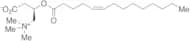
CAS:<p>Stability Hygroscopic<br>Applications One of the metabolites found in the lymph fluid collected from dietary stressed rats.<br>References Ardawi, M., et al.: Biochem. J., 212, 835 (1983), Otton, R., et al.: J. Endocrinol., 174, 55 (2002), Gu, H., et al.: Anal. Chem., 79, 89 (2007),<br></p>Formula:C21H39NO4Color and Shape:NeatMolecular weight:369.54


acetic acid](/_next/image/?url=https%3A%2Fstatic.cymitquimica.com%2Fproducts%2F10%2Fthumb-webp%2FF300210.webp&w=3840&q=75)