Aminoacids and derivatives
Amino acids are compounds with a structure based on an amino group (-NH₂) and a carboxyl group (-COOH), both attached to a central carbon atom. This structure makes them essential for the synthesis of proteins and other biomolecules. Their derivatives can have regulatory properties over metabolic processes and biological systems, with applications in nutrition, health, and regenerative medicine.
At CymitQuimica, we offer a wide range of amino acids and their derivatives, ideal for research and the formulation of bioactive products.
Found 12278 products of "Aminoacids and derivatives"
Sort by
Purity (%)
0
100
|
0
|
50
|
90
|
95
|
100
2-Hydroxy L-Tryptophan Hydrochloride
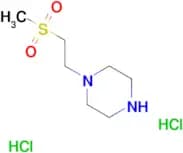
CAS:Controlled Product<p>Applications 2-Hydroxy L-Tryptophan is a metabolic intermediate in the biosynthesis of the neurotransmitters serotonin and melatonin from Tryptophan.<br>References Southan, M.D., et al.: Med. Chem. Res., 6, 343 (1996);<br></p>Formula:C11H13ClN2O3Color and Shape:Off-WhiteMolecular weight:256.691-(2-Methanesulfonyl-ethyl)piperazine dihydrochloride
CAS:Formula:C7H18Cl2N2O2SPurity:95.0%Color and Shape:SolidMolecular weight:265.192-(4-(Benzo[d][1,3]dioxol-5-ylmethyl)piperazin-1-yl)pyrimidine
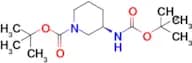
CAS:Purity:95.0%Color and Shape:SolidMolecular weight:298.34600830078125(2S)-2-{[1-(tert-butoxycarbonyl)piperidin-4-yl]amino}-3-methylbutanoic acid, methyl ester hydrochloride
Molecular weight:350.8800048828125Epi-Lacosamide
CAS:<p>Applications Epi-Lacosamide is an impurity of Lacosamide (L098500), a medication used for the adjunctive treatment of partial-onset seizures and diabetic neuropathic pain. Lacosamide is a potent anticonvulsant.<br> Not a dangerous good if item is equal to or less than 1g/ml and there is less than 100g/ml in the package<br>References Choi, D., et al.: J. Med. Chem., 39, 1907 (1996), Morieux, P., et al.: Bioorg. Med. Chem., 16, 8968 (2008),<br></p>Formula:C13H18N2O3Color and Shape:WhiteMolecular weight:250.295-Fluoroanthranilic Acid
CAS:Controlled Product<p>Applications Used for the counterselection of TRP1, a commonly used genetic marker in the yeast Saccharoyces Cerevisiae. An antimetabolite for the tryptophan pathway in yeast, and is toxic by virtue of its antimetabolite conversion to 5-Fluorotryptophan. It can be used for the selection of tryptophan auxotroophs.<br>References Toyn, J.H., et al.: Yeast, 16, 553, 560 (2000)<br></p>Formula:C7H6FNO2Color and Shape:NeatMolecular weight:155.13Stearoyl L-a-Lysolecithin
CAS:<p>Stability Hygroscopic, moisture sensitive<br>Applications Stearoyl L-α-Lysolecithin is an bioactive lysophosphatidylcholine derived compound found to be released by bronchial epithelial cells. Stearoyl L-α-Lysolecithin have also been utilized in the development of liposomes and michelles by drug transdermal delivery devices.<br>References Zhuge, Y., et al.: Allergy Asthma Immunol Res., 6, 66 (2014)<br></p>Formula:C26H54NO7PColor and Shape:NeatMolecular weight:523.68GPC- glycerophosphorylcholine
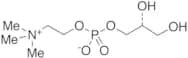
CAS:Controlled Product<p>Applications sn-Glycero-3-phosphocholine (Choline Alfoscerate) is a phospholipid; precursor in choline biosynthesis. sn-Glycero-3-phosphocholine is an intermediate in catabolic pathway of phosphatidylcholine. sn-Glycero-3-phosphocholine is used as an Nootropic.<br>References Schmidt, G., et al.: J. Biol. Chem., 161, 523 (1945), Frattola, L., et al.: Curr. Ther. Res., 49, 683 (1991), Olson, D., et al.: Science, 270, 1967 (1995),<br></p>Formula:C8H20NO6PColor and Shape:NeatMolecular weight:257.222-(4-amino-1-piperidinyl)acetamide dihydrochloride
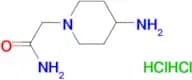
CAS:Purity:95.0%Molecular weight:230.1300048828125Acetic acid, 2-[2-[4-[(R)-(4-chlorophenyl)phenylmethyl]-1-piperazinyl]ethoxy]-, hydrochloride (1:2)
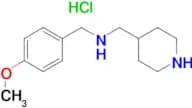
CAS:Purity:98%Molecular weight:461.80999755859375(4-Methoxy-benzyl)-piperidin-4-ylmethyl-amine hydrochloride
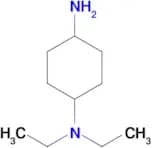
CAS:Purity:95.0%Molecular weight:270.79998779296875N1,N1-DIETHYLCYCLOHEXANE-1,4-DIAMINE
CAS:Purity:95.0%Color and Shape:LiquidMolecular weight:170.3000030517578L-Carnitine-d3 Chloride
CAS:Controlled Product<p>Stability Hygroscopic<br>Applications L-Carnitine-d3 Chloride is the isotope labelled analog of L-Carnitine (C184110); a vitamin (enzyme cofactor). It is an essential cofactor of fatty acid metabolism and is required for the transport of fatty acids through the inner mitochondrial membrane. Synthetized primarily in the liver and kidney with the highest concentrations found in heart and skeletal muscle. Dietary sources include red meat, dairy products, beans, avocado.<br>References Mitchell, M.E., et al.: Am. J. Clin. Nutr., 31, 293 (1978); Lango, R., et al.: Cardiovasc. Res., 51, 21 (2001); Vaz, F.M., et al.: Biochem. J., et al.: 361, 417 (2002); Karlic, H., et al.: Nutrition, 20, 709 (2004)<br></p>Formula:C7D3H13NO3·ClColor and Shape:White To BeigeMolecular weight:200.6782-Methylbutyrylglycine-d9
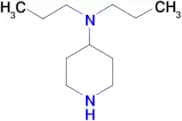
CAS:Controlled Product<p>Applications Labelled 2-Methylbutyrylglycine (M294340). 2-Methylbutyrylglycine is one of the acylglycines, an important class of metabolites that have been used in the diagnosis of several inborn errors of metabolism (IEM).<br>References Costa, C., et al.: J. Pharmaceut. Biomed. Anal., 21, 1215 (2000), Garcia-Villoria, J., et al.: Clin. Biochem., 42, 2 (2009), Scalbert, A., et al.: Metabolomics, 5, 435 (2009),<br></p>Formula:C72H9H4NO3Color and Shape:Off-WhiteMolecular weight:168.244-Di-n-propylamino-piperidine
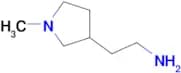
CAS:Formula:C11H24N2Purity:98.0%Color and Shape:No data available.Molecular weight:184.3272-(1-Methylpyrrolidin-3-yl)ethylamine
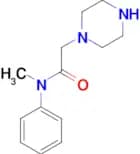
CAS:Formula:C7H16N2Purity:95.0%Color and Shape:LiquidMolecular weight:128.219N-(2-Piperazino-acetyl)-N-methylaniline
CAS:Formula:C13H19N3OPurity:97.0%Color and Shape:Solid, PowderMolecular weight:233.315



![2-(4-(Benzo[d][1,3]dioxol-5-ylmethyl)piperazin-1-yl)pyrimidine](/_next/image/?url=https%3A%2Fstatic.cymitquimica.com%2Fproducts%2F10%2Fthumb-webp%2FF241812.webp&w=3840&q=75)
![(2S)-2-{[1-(tert-butoxycarbonyl)piperidin-4-yl]amino}-3-methylbutanoic acid, methyl ester hydrochl…](/_next/image/?url=https%3A%2Fstatic.cymitquimica.com%2Fproducts%2F10%2Fthumb-webp%2FF300274.webp&w=3840&q=75)



![Acetic acid, 2-[2-[4-[(R)-(4-chlorophenyl)phenylmethyl]-1-piperazinyl]ethoxy]-, hydrochloride (1:2)](/_next/image/?url=https%3A%2Fstatic.cymitquimica.com%2Fproducts%2F10%2Fthumb-webp%2FF861700.webp&w=3840&q=75)