Natural and semi-synthetic antibiotics
Natural and semisynthetic antibiotics are characterised by chemical structures with heterocyclic rings and active functional groups that inhibit the growth of microorganisms. Their structures allow them to interact with vital bacterial processes, making them useful treatments for bacterial infections. Semisynthetic antibiotics can be modified to enhance their spectrum of activity or resistance to degradation.
At CymitQuimica, we offer high-quality natural and semisynthetic antibiotics for research in microbiology and pharmaceutical development.
Found 6347 products of "Natural and semi-synthetic antibiotics"
Sort by
Purity (%)
0
100
|
0
|
50
|
90
|
95
|
100
Clindamycin phosphate EP impurity G
<p>Clindamycin phosphate EP impurity G is a metabolite of clindamycin that can be found in the urine of patients taking clindamycin. It is a white to off-white crystalline solid with a melting point of about 205°C. Clindamycin phosphate EP impurity G has been used as an analytical reference standard for clindamycin, and it is also used as a synthetic intermediate in the drug development process. The CAS number for this compound is 719-72-4.</p>Formula:C18H33N2O8PSPurity:Min. 95%Molecular weight:468.5 g/mol7 S-Cefdinir
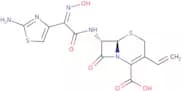
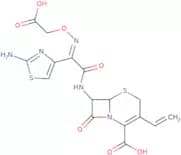
CAS:<p>7 S-Cefdinir is an oral cephalosporin antibiotic that binds to penicillin-binding proteins in the bacterial cell wall by competitive inhibition. This binding prevents the formation of an antibiotic-inhibitor complex with transpeptidase and transpeptidase, which are enzymes involved in peptidoglycan synthesis. 7 S-Cefdinir also inhibits pentapeptide cross-linking, which is necessary for the formation of peptidoglycan chains. 7 S-Cefdinir has bactericidal activity against a wide range of bacteria and acts as an antibacterial agent. It is active against erythromycin-resistant strains of Streptococcus pneumoniae and Mycoplasma pneumoniae, but not against methicillin-resistant Staphylococcus aureus (MRSA).</p>Formula:C14H13N5O5S2Purity:Min. 95%Molecular weight:395.42 g/molCiprofloxacin impurity D hydrochloride
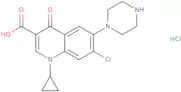
CAS:<p>Ciprofloxacin impurity D hydrochloride is a drug product that is an analytical standard. It is also a natural impurity found in Ciprofloxacin. This compound has been synthesized and manufactured to be used as an impurity standard. It exhibits the same physical, chemical, and biological properties as Ciprofloxacin. The CAS number for this substance is 526204-10-4. Impurities such as Ciprofloxacin impurity D hydrochloride may be present in the finished drug product if they are not removed during the manufacturing process. Chemical reactions may also lead to the formation of these substances. The presence of these substances can affect the quality of the drug product and may lead to adverse effects for patients who use them.<br>CAS No.: 526204-10-4<br>Molecular Weight: 258.25<br>Formula: (C8H6ClF2NOS)</p>Formula:C17H18ClN3O3·HClPurity:Min. 95%Molecular weight:384.26 g/mol3-HABA kanamycin A sulfate
CAS:<p>Please enquire for more information about 3-HABA kanamycin A sulfate including the price, delivery time and more detailed product information at the technical inquiry form on this page</p>Formula:C22H43N5O13•(H2SO4)xPurity:Min. 95%Piperacillin impurity N
CAS:<p>Please enquire for more information about Piperacillin impurity N including the price, delivery time and more detailed product information at the technical inquiry form on this page</p>Formula:C46H54N10O14S2Purity:Min. 95%Molecular weight:1,035.11 g/molN-Desmethyl azithromycin B
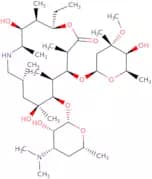
CAS:<p>N-Desmethyl azithromycin B is a metabolite of the macrolide antibiotic azithromycin. It is an impurity in the drug product, and is present as an analytical standard for HPLC. N-Desmethyl azithromycin B can be found in the urine of patients taking azithromycin, but at much lower concentrations than the parent drug. This impurity is not toxicologically relevant, but may interfere with some analytical methods.</p>Formula:C37H70N2O11Purity:Min. 95%Molecular weight:718.96 g/molCefixiMe EP IMpurity A
CAS:<p>Cefixime is a broad-spectrum oral antibiotic used to treat bacterial infections, including respiratory tract and ear infections. Cefixime is the prodrug of cefixime acid, which is hydrolyzed in vivo to cefixime. This impurity is an analytical standard that can be used for research and development, high purity drug product, API impurity, HPLC standard and niche drugs. It can also be used as a metabolite and an impurity standard. The CAS number for this compound is 1335475-08-5. This chemical has natural or synthetic origins but is not specified.</p>Formula:C16H17N5O8S2Purity:Min. 95%Molecular weight:471.47 g/molMonic acid A
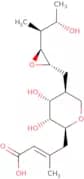
CAS:<p>Metabolite of mupirocin</p>Formula:C17H28O7Purity:Min. 95%Molecular weight:344.4 g/molN-[(2R)-3-{[3-Fluoro-4-(4-morpholinyl)phenyl]amino}-2-hydroxypropyl]acetamide
CAS:<p>N-[(2R)-3-{[3-Fluoro-4-(4-morpholinyl)phenyl]amino}-2-hydroxypropyl]acetamide is an impurity in a high purity analytical reference standard of 3-fluoro-4-(4-morpholinyl)aniline. It is also a metabolite that may be present in drug products containing 3-fluoro-4-(4-morpholinyl)aniline as the active ingredient, such as fluoroquinolones. N-[(2R)-3-{[3-Fluoro-4-(4-morpholinyl)phenyl]amino}-2-hydroxypropyl]acetamide has been shown to inhibit DNA gyrase and topoisomerase IV, which are enzymes that maintain the integrity of bacterial DNA. It binds to bacterial 16S ribosomal RNA and inhibits protein synthesis, leading to cell death by inhib</p>Formula:C15H22FN3O3Purity:Min. 95%Molecular weight:311.35 g/mol(9Z)-Roxithromycin
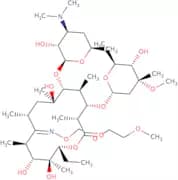
CAS:<p>Roxithromycin is a macrolide antibiotic that inhibits protein synthesis in bacteria. It binds to the 50S ribosomal subunit, thereby inhibiting bacterial growth. Roxithromycin has been used to diagnose intestinal and esophageal diseases, inflammatory diseases, and cancer. There are some cardiac effects associated with Roxithromycin that may be related to its ability to inhibit serotonin reuptake. This drug also has anti-inflammatory properties and has been shown to be effective against influenza virus infections as well as other infectious diseases such as tuberculosis and HIV/AIDS.</p>Formula:C41H76N2O15Purity:Min. 95%Molecular weight:837.05 g/molCeftazidime t-butyl ester
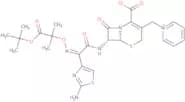
CAS:<p>Ceftazidime t-butyl ester is a prodrug of ceftazidime. It is a crystalline, stable form of the drug that can be dissolved in an organic solvent. Ceftazidime t-butyl ester has an average UV detection wavelength with a linear range of 200-600 nm and can be detected at a wavelength of 220 nm. This drug is used to treat infections caused by bacteria, including those that are resistant to other antibiotics, such as penicillin or ampicillin. Ceftazidime t-butyl ester has been shown to be effective against methicillin-resistant Staphylococcus aureus (MRSA) and Clostridium perfringens, although is not active against acid-fast bacteria such as Mycobacterium tuberculosis or Mycobacterium avium complex.</p>Formula:C26H30N6O7S2Purity:Min. 95%Molecular weight:602.68 g/molErythromycin impurity K
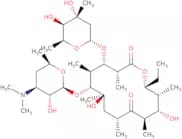
CAS:<p>Erythromycin impurity K is a synthetic impurity of erythromycin, which is an antibiotic drug product. It is typically found in pharmaceutical products that are made from natural sources and is used as a research and development (R&D) standard for the pharmacopoeia. Erythromycin impurity K can be purified by HPLC or other means to create high purity standards for analytical purposes. The chemical name of this compound is 3-[[[3-(2-Amino-4-thiazolyl)-1,2,4-triazol-5-yl]amino]methyl]-1H-indole.</p>Formula:C36H65NO12Purity:Min. 95%Molecular weight:703.9 g/mol(trans)-4-Propyl-1-methyl-L-proline
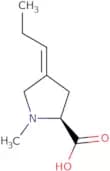
CAS:<p>(trans)-4-Propyl-1-methyl-L-proline is a synthetic compound that has been used in the past as an impurity standard in the synthesis of several drugs, including metaxalone and aminopyrine. It is also found to have pharmacological effects on its own and was used as a drug product for the treatment of rheumatoid arthritis. (trans)-4-Propyl-1-methyl-L-proline is not listed in any pharmacopoeia or international list of approved drugs.</p>Formula:C9H17NO2Purity:Min. 95%Color and Shape:White/Off-White SolidMolecular weight:171.24 g/molCefonicid (free base)
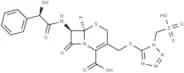
CAS:<p>Cefonicid: second-gen cephalosporin, IV/IM, treats UTIs, respiratory, bone, and soft tissue infections by blocking cell wall formation.</p>Formula:C18H18N6O8S3Color and Shape:SolidMolecular weight:542.57Cefmenoxime
CAS:<p>Cefmenoxime: IV/IM cephalosporin antibiotic, resists beta-lactamase, targets Enterobacteriaceae, gram-positive/negative bacteria.</p>Formula:C16H17N9O5S3Purity:98%Color and Shape:Almost White Or Almost Yellow Crystalline PowderMolecular weight:511.558Dapaconazole
CAS:<p>Dapaconazole is used as a drug candidate for antifungals.</p>Formula:C19H15Cl2F3N2OColor and Shape:SolidMolecular weight:415.24Cefonicid monosodium
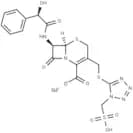
CAS:<p>Cefonicid monosodium, a second-gen cephalosporin, treats UTIs, respiratory, soft tissue, and bone infections by blocking cell wall synthesis.</p>Formula:C18H17N6NaO8S3Color and Shape:SolidMolecular weight:564.54Flomoxef sodium
CAS:<p>Flomoxef sodium, an antibiotic belonging to the oxacephem group, exhibits excellent activity against a broad spectrum of Gram-positive bacteria.</p>Formula:C15H17F2N6NaO7S2Purity:97.88%Color and Shape:SolidMolecular weight:518.44(S)-Tedizolid
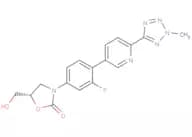
CAS:<p>(S)-Tedizolid is the S-enantiomer of Tedizolid. Tedizolid is a novel oxazolidinone with activity against Gram-positive pathogens.</p>Formula:C17H15FN6O3Purity:98%Color and Shape:SolidMolecular weight:370.34Penflufen
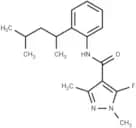
CAS:<p>Penflufen, a broad-spectrum succinate dehydrogenase inhibitor (SDHI), serves effectively as a fungicide.</p>Formula:C18H24FN3OColor and Shape:SolidMolecular weight:317.4

![N-[(2R)-3-{[3-Fluoro-4-(4-morpholinyl)phenyl]amino}-2-hydroxypropyl]acetamide](/_next/image/?url=https%3A%2Fstatic.cymitquimica.com%2Fproducts%2F3D%2Fthumb-webp%2FIF58040.webp&w=3840&q=75)