Natural and semi-synthetic antibiotics
Natural and semisynthetic antibiotics are characterised by chemical structures with heterocyclic rings and active functional groups that inhibit the growth of microorganisms. Their structures allow them to interact with vital bacterial processes, making them useful treatments for bacterial infections. Semisynthetic antibiotics can be modified to enhance their spectrum of activity or resistance to degradation.
At CymitQuimica, we offer high-quality natural and semisynthetic antibiotics for research in microbiology and pharmaceutical development.
Found 6347 products of "Natural and semi-synthetic antibiotics"
Sort by
Purity (%)
0
100
|
0
|
50
|
90
|
95
|
100
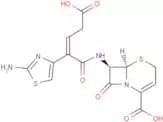
Ceftibuten
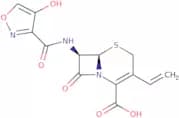
CAS:<p>Ceftibuten is a third-generation cephalosporin antibiotic.</p>Formula:C15H14N4O6S2Purity:98%Color and Shape:SolidMolecular weight:410.42Penflufen
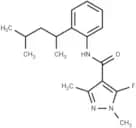
CAS:<p>Penflufen, a broad-spectrum succinate dehydrogenase inhibitor (SDHI), serves effectively as a fungicide.</p>Formula:C18H24FN3OColor and Shape:SolidMolecular weight:317.4Besifloxacin
CAS:<p>Besifloxacin is the fourth generation of fluoroquinolones, which can be used to treat bacterial conjunctivitis</p>Formula:C19H21ClFN3O3Purity:98%Color and Shape:SolidMolecular weight:393.84Cefmenoxime
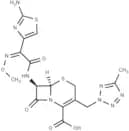
CAS:<p>Cefmenoxime: IV/IM cephalosporin antibiotic, resists beta-lactamase, targets Enterobacteriaceae, gram-positive/negative bacteria.</p>Formula:C16H17N9O5S3Purity:98%Color and Shape:Almost White Or Almost Yellow Crystalline PowderMolecular weight:511.558Fosravuconazole
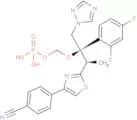
CAS:<p>Fosravuconazole is a ravuconazole prodrug. It has antifungal activity.</p>Formula:C23H20F2N5O5PSPurity:98%Color and Shape:SolidMolecular weight:547.47Caspofungin
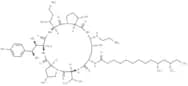
CAS:<p>Caspofungin is a cyclic lipopeptide echinocandin and beta-(1,3)-D-glucan synthase inhibitor that is used to treat internal or systemic mycoses.</p>Formula:C52H88N10O15Color and Shape:SolidMolecular weight:1093.31Piperacilloic acid
CAS:<p>Piperacilloic acid is a synthetic compound that exhibits antibacterial activity. It has been shown to be effective against human pathogens, including urothelial carcinoma and human serum. Piperacilloic acid binds to the amino acids lysine and arginine in bacterial proteins and inhibits protein synthesis by inhibiting the function of enzymes that require these amino acids for their activity. The potency of piperacillin is low, but it is activated by hydrolysis in the acidic environment of the stomach or intestinal tract. Piperacilloic acid also has potential as a contraceptive agent because it may inhibit transcriptional regulation of genes that are involved in sperm production.</p>Formula:C23H29N5O8SPurity:(Elemental Analysis) Min. 90 Area-%Color and Shape:PowderMolecular weight:535.57 g/molClarithromycin EP impurity B
CAS:<p>Clarithromycin EP impurity B is a natural impurity in clarithromycin. Clarithromycin EP impurity B is synthesized by the metabolism of clarithromycin, and its chromatographic retention time is 13.5 minutes. It has been shown to have anti-inflammatory and immuno-suppressive effects, which may be due to its inhibition of prostaglandin synthesis. Clarithromycin EP impurity B has been shown to inhibit the growth of bacteria that are resistant to penicillin, ampicillin, and erythromycin.</p>Formula:C37H67NO13Purity:90%NmrColor and Shape:White PowderMolecular weight:733.93 g/molOxacyclohexane open ring tacrolimus
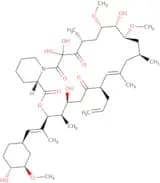
CAS:<p>Please enquire for more information about Oxacyclohexane open ring tacrolimus including the price, delivery time and more detailed product information at the technical inquiry form on this page</p>Formula:C44H71NO13Purity:Min. 95%Molecular weight:822.04 g/molClindamycin-B2-phosphate
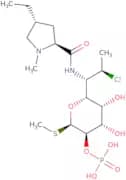
CAS:<p>Clindamycin-B2-phosphate is a drug product with CAS No. 54887-31-9 that is used as an analytical reference standard. It is metabolized in animals and humans to form clindamycin, which has been shown to bind to ribosomes and inhibit protein synthesis. Clindamycin-B2-phosphate also binds to DNA gyrase and topoisomerase IV, inhibiting their activity. This drug product has been shown to be effective against methicillin resistant Staphylococcus aureus (MRSA) and Clostridium perfringens, although it is not active against acid-fast bacteria such as Mycobacterium tuberculosis or Mycobacterium avium complex.</p>Formula:C17H32ClN2O8PSPurity:Min. 95%Color and Shape:White PowderMolecular weight:490.94 g/molCefdinir impurity F
CAS:<p>Cefdinir impurity F is an impurity of cefdinir that has been identified in some batches. It is a triethylamine derivative and has been found to be ultralow. Cefdinir impurity F has been studied for its use in laboratories.</p>Formula:C13H11N3O6SPurity:Min. 95%Molecular weight:337.31 g/molN-Succinyl-L-tyrosine
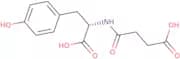
CAS:<p>N-Succinyl-L-tyrosine is a synthetic compound that is used as an impurity standard for the determination of the purity and quality of drug products. It is also used in research and development to study metabolism. N-Succinyl-L-tyrosine is a metabolite of tyrosine, which has been shown to be an important intermediate in the biosynthesis of some neurotransmitters and hormones. This product can be used in HPLC assays to provide a standard curve for quantification.</p>Formula:C13H15NO6Purity:Min. 95%Color and Shape:Light Blue To Blue SolidMolecular weight:281.26 g/molClarithromycin EP Impurity A
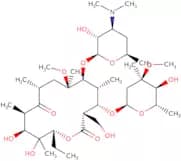
CAS:<p>Clarithromycin EP Impurity A is an analytical standard for clarithromycin. Clarithromycin EP Impurity A is a white to off-white powder that is soluble in methanol, acetone, and chloroform. It has a molecular weight of 459.23 Da and the chemical formula C18H26N2O5S. Clarithromycin EP Impurity A is an impurity found in clarithromycin that has been isolated from the product by high-performance liquid chromatography (HPLC) and confirmed by nuclear magnetic resonance spectroscopy (NMR). Clarithromycin EP Impurity A can be used as a reference standard for pharmacopoeia testing or as a research and development sample for drug development. It can also be synthesized from natural or synthetic sources.</p>Formula:C38H69NO14Purity:90%NmrColor and Shape:PowderMolecular weight:763.95 g/molPseudomonic acid D sodium
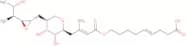
CAS:<p>Pseudomonic acid D sodium is a chemical compound that is found in coal tar. It has antimicrobial properties and can be used to inhibit the growth of bacteria and fungi. Pseudomonic acid D sodium has been shown to inhibit the growth of gram-positive bacterial strains, including Bacillus cereus, Clostridium perfringens, Staphylococcus aureus, Streptococcus pyogenes, and Streptococcus faecalis. It also inhibits the growth of yeast such as Candida albicans. Pseudomonic acid D sodium is soluble in water at low concentrations and insoluble in water at high concentrations. This chemical exhibits acidic properties with an acidic pH range from 2-4. Pseudomonic acid D sodium does not dissolve calcium carbonate or hydroxide solution due to its weakly acidic nature.</p>Formula:C26H41NaO9Purity:Min. 95%Molecular weight:520.59 g/molDurlobactam
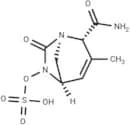
CAS:<p>Durlobactam is a drug candidate for beta-lactamase inhibitor.</p>Formula:C8H11N3O6SColor and Shape:SolidMolecular weight:277.25Cefteram
CAS:<p>Cefteram (T-2525), an orally active ester of the cephalosporin class, is the free acid form of Cefteram pivoxil.</p>Formula:C16H17N9O5S2Color and Shape:SolidMolecular weight:479.49Calicheamicin
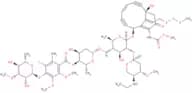
CAS:<p>Calicheamicin (Calicheamicin γ1) is an antitumor antibiotic and is a DNA synthesis inhibitor. It also is a cytotoxic agent that causes double-strand DNA breaks.</p>Formula:C55H74IN3O21S4Purity:98.22% - 98.78%Color and Shape:SolidMolecular weight:1368.35Valnemulin
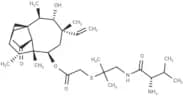
CAS:<p>Valnemulin, a broad-spectrum pleuromutilin antibiotic, targets peptidyl transferase within the 50S ribosomal subunit, effectively used in veterinary medicine to address swine diseases such as B. hyodysenteriae and M. hyopneumoniae.</p>Formula:C31H52N2O5SColor and Shape:SolidMolecular weight:564.83Pradofloxacin
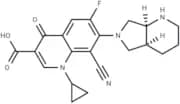
CAS:<p>Pradofloxacin is a fluoroquinolone antibioticthat exerts its bactericidal effect by inhibiting bacterial DNA gyrase and topoisomerase IV.</p>Formula:C21H21FN4O3Purity:98.76%Color and Shape:SolidMolecular weight:396.41Desfluoro ciprofloxacin hydrochloride
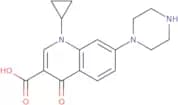
CAS:<p>Fluoroquinolones are a class of antibiotics that are used to treat bacterial infections. Desfluoro ciprofloxacin hydrochloride is a fluorinated derivative of ciprofloxacin and is an ultra-fast synthetic compound. It has been shown to be more potent than the parent molecule. This drug is considered to be impure because it contains other chemical compounds, such as isomers and back-pressure products. The particle size distribution of desfluoro ciprofloxacin hydrochloride is usually very broad with diameters ranging from 5 nm to 1 micron. It can be separated by particle size in a phase liquid chromatography column because the particles have different hydrodynamic diameters. Desfluoro ciprofloxacin hydrochloride can also be separated by phase chromatography on an oligosaccharide column, which produces more efficient separation than traditional high-performance liquid chromatography (HPLC).</p>Formula:C17H19N3O3·HClPurity:Min. 95%Color and Shape:Off-White PowderMolecular weight:349.81 g/mol