Carbohydrates and glycoconjugates
Carbohydrates are organic compounds composed of carbon, hydrogen, and oxygen, with a basic structure formed by monosaccharides. These can combine to form disaccharides, oligosaccharides, or polysaccharides, depending on the number of monomeric units. Carbohydrates play a fundamental role in energy storage, cell structure, and cellular communication. Their derivatives are used in pharmaceutical products, such as sweeteners and excipients.
At CymitQuimica, we offer a wide range of carbohydrates and their derivatives for research and industrial applications.
Found 5013 products of "Carbohydrates and glycoconjugates"
Sort by
Purity (%)
0
100
|
0
|
50
|
90
|
95
|
100
Methyl syringate 4-O-β-D-gentiobiose
<p>Methyl syringate 4-O-beta-D-gentiobiose is a modification, which is an oligosaccharide carbohydrate complex. It is synthesized by custom synthesis and has a high purity. It is a CAS number and has the molecular formula C12H20O9. This compound can be found in nature as a monosaccharide or polysaccharide sugar. The methylation of this compound can produce methyl syringate 4-O-beta-D-gentiobiose.</p>Formula:C22H22O15Molecular weight:526.4 g/molLacto-N-fucopentaose I
CAS:<p>Milk oligosaccharide; expressed on human induced pluripotent cells</p>Formula:C32H55NO25Purity:Min. 95%Color and Shape:White PowderMolecular weight:853.77 g/molHuman milk neutral di- to -tetrasaccharides
<p>This mixture contains some of the lower oligosaccharides found in human milk. There are small amounts of lactose but the bulk of the mixture are tri- and tetrasaccharides. 3-Fucosyllactose, 3'-Sialyllactose, 6'-Sialyllactose, Lacto-N-tetraose, Sialyllacto-N-tetraose b, Sialyllacto-N-tetraose b and Blood Group A tetrasaccharide type V are the major components that have been found in the mixture by chromatography but there may be other minor components not mentioned here.</p>Purity:Min. 95%4-O-(β-D-Mannopyranosyl)-D-glucose
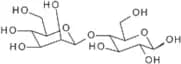
CAS:<p>4-O-(b-D-Mannopyranosyl)-D-glucose is a metabolite of D-mannose. It is a bacterial metabolite produced by Streptococcus pneumoniae that has been shown to inhibit the growth of bacteria by binding to the 50S ribosomal subunit. 4-O-(b-D-Mannopyranosyl)-D-glucose inhibits bacterial growth by binding to DNA dependent RNA polymerase, thereby preventing transcription and replication. The high frequency of human activity has been shown using a patch clamp technique on human erythrocytes. This active form is metabolized through a number of metabolic transformations, including hydrolysis by esterases or glucuronidases, oxidation by cytochrome P450 enzymes, reduction by glutathione reductase, or conjugation with glucuronic acid. Rifapentine also specifically binds to markers expressed at high levels in Mycobacter</p>Formula:C12H22O11Purity:Min. 98 Area-%Color and Shape:PowderMolecular weight:342.3 g/molSucrose stearate - 70% monostearate
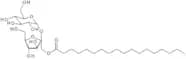
CAS:<p>The "tallowate" esters are probably the best known derivatives of sucrose and many attempts have been made to commercialise them in order to exploit their excellent surfactant functionalities. The most functional products are the mono- and diesters of the tallow acids (stearic, palmitic, oleic) with hydrophile-lipophile balance (HLB) values that lend themselves to surfactant applications in foods and cosmetics. They also have other uses, for example in coating fruits with a semipermeable membrane that acts as a preservative. Manufacturing economics have prevented these products from mass production and they remain in niche applications.</p>Formula:C30H56O12Purity:Min. 90 Area-%Color and Shape:White Off-White PowderMolecular weight:608.77 g/molMaltodextrin oligosaccharides - DP10 to DP40
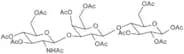
<p>Produced from starch; white hygroscopic spray-dried powder; easily digestible</p>Color and Shape:Powder1,2,3,6-Tetra-O-acetyl-4-O-[2,4,6-tri-O-acetyl-3-O-(2-acetamido-3,4,6-tri-O-acetyl-2-deoxy-b-D-glucopyranosyl)-b-D-galactopyranosyl] -b-D-glucopyranose
<p>Tetracose is a complex carbohydrate that is composed of 1,2,3,6-tetra-O-acetyl-4-O-[2,4,6-tri-O-acetyl-3-O-(2 acetamido)-β-D-galactopyranosyl]-β-D-glucopyranose and β--D--galactopyranosyl. Tetracose is a high purity custom synthesis sugar. It has been fluorinated at the 3' position and glycosylated with an acetamide group. Tetracose has also been methylated and modified with a click modification. Tetracose has CAS No.: 145925-75-5</p>Formula:C40H55NO26Purity:Min. 95%Molecular weight:965.86 g/molStachyose - 70%
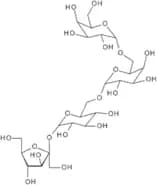
CAS:<p>Non-reducing storage and transport sugar in woody plants; used as a sweetener</p>Formula:C24H42O21Purity:Min. 70 Area-%Color and Shape:White PowderMolecular weight:666.59 g/molBlood Group A trisaccharide, N-aminoethyl nonanamide
CAS:<p>Blood group antigen derivative for biochemical research</p>Formula:C31H57N3O16Purity:Min. 95 Area-%Color and Shape:PowderMolecular weight:727.79 g/molD-Panose
CAS:<p>Used to determine composition and sequence of glucan-containing mixed linkages</p>Formula:C18H32O16Purity:(%) Min. 95%Color and Shape:White PowderMolecular weight:504.44 g/molGlycyl-asialo, galactosylated fucosylated biantennary
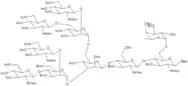
<p>Glycyl-asialo, galactosylated fucosylated biantennary is a synthetic glycosylated oligosaccharide that is fluorinated at the 6-position. It has been shown to have high purity and good chemical stability. The carbohydrate is made from a complex of saccharides, which are linked together by glycosidic bonds. This product is available for custom synthesis with methylation and monosaccharide modifications. CAS No.: 128868-20-2</p>Formula:C70H118N6O50Purity:Min. 95%Molecular weight:1,843.7 g/molBenzyl 2-acetamido-4-O-{2-acetamido-4-O-[[2,4-Di-O-acetyl-3-O-[2,4-di-O-(2-acetamido-3,4,6-tri-O-acetyl-2-deoxy-b-D-glucopyranosyl)- 3,6-di-O-benzyl-a-D-mannopyranosyl]-6-O-[3,4-di-O-acetyl-2,6-di-O-(2-acetamido-3,4,6-tri-O-acetyl-2-deoxy-b-D-glucopyr
CAS:<p>The carbohydrate is a saccharide that is a modification of the monosaccharide. It is synthesized from D-mannose and D-glucose and has a fluorination at the C4 position. The carbohydrate has been custom synthesized for high purity, methylation, glycosylation, and click modification.</p>Formula:C167H206N6O65SPurity:Min. 95%Molecular weight:3,369.49 g/molD-Maltose monohydrate
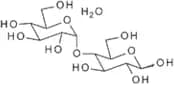
CAS:<p>Maltose (or malt sugar) is produced by the action of alpha- and beta-amylase on starch. Maltose is an intermediate in the intestinal digestion (i.e. hydrolysis) of glycogen and starch and is found in germinating grains (and other plants and vegetables). Maltose-containing syrups are used in the brewing, baking, soft drink, canning, confectionery, and other food industries (Collins, 2006). Maltose is also used in affinity purification of proteins using MBP-fused protein constructs. Herein, maltose is added to an elution buffer causing release of the MBP-fused protein from the resin.</p>Formula:C12H22O11·H2OColor and Shape:White PowderMolecular weight:360.31 g/molMonosialyllacto-N-hexaose
<p>Monosialyllacto-N-hexaose is a high purity, custom synthesis sugar that belongs to the group of oligosaccharides. This carbohydrate is modified with fluorination and glycosylation, which are Click modifications. Monosialyllacto-N-hexaose has a CAS number of 68638-04-3. This product is available for purchase in bulk quantities.</p>Formula:C51H85N3O39Purity:Min. 95%Molecular weight:1,364.22 g/mol3-O-(a-D-Mannopyranosyl)-D-mannopyranose 1-O-propylamine acetate salt
<p>3-O-(a-D-Mannopyranosyl)-D-mannopyranose 1-O-propylamine acetate salt is a methylated saccharide. It is an oligosaccharide that can be synthesized from D-mannose and pyruvic acid, with the addition of a proton donor. This product is used in the synthesis of polysaccharides due to its high purity and low cost. The methyl group on this molecule reacts with the carbonyl group on the sugar to form an ester, which makes it resistant to hydrolysis by enzymes. 3-O-(a-D-Mannopyranosyl)-D-mannopyranose 1-O-propylamine acetate salt is also fluorinated and can be used as a click modification in proteins or carbohydrates.</p>Formula:C17H33O13NPurity:Min. 95%Color and Shape:Colourless To White SolidMolecular weight:459.44 g/molChitooctaose octahydrochloride
CAS:<p>Chitooctaose 8HCl is an antiviral agent that inhibits the replication of viruses. It blocks the virus from entering and infecting cells by binding to its receptor, which prevents cell-to-cell transmission. Chitooctaose 8HCl has a hydrolysable form and can be acetylated to increase its potency. This drug also interacts with ligands such as oligosaccharides, which are molecules consisting of several monomers linked together in a chain. The structural changes in these oligosaccharides are important for the interaction with chitooctaose 8HCl. Chitooctaose 8HCl has been shown to inhibit the replication of RNA viruses such as influenza A virus, human immunodeficiency virus type 1 (HIV-1), and rotavirus. This antiviral agent also inhibits the replication of DNA viruses such as herpes simplex type 2 (HSV-2) and hepatitis B virus (</p>Formula:C48H90N8O33•(HCl)8Purity:Min. 85 Area-%Color and Shape:White PowderMolecular weight:1,598.95 g/mol3-O-(2-Acetamido-2-deoxy-a-D-galactopyranosyl)-D-galactopyranose
CAS:<p>3-O-(2-Acetamido-2-deoxy-a-D-galactopyranosyl)-D-galactopyranose is an endothelial cell growth factor that is generated by the enzymatic activity of galactosyltransferase. It binds to lectin, glycan, and monoclonal antibodies. This molecule has been shown to have biological properties that are related to cancer and immunology. 3-O-(2-Acetamido-2-deoxy-a-D-galactopyranosyl)-D-galactopyranose may be used as a glycolipid marker in blood group typing and in the detection of cervical cancer cells.</p>Formula:C14H25NO11Purity:Min. 95%Color and Shape:White PowderMolecular weight:383.33 g/mol3-O-(a-L-Fucopyranosyl)-D-galactopyranose
CAS:<p>3-O-(a-L-fucopyranosyl)-D-galactopyranose is a glycosidic residue that is part of the β-D-Galactoside. It is an amino acid that is used to form carbohydrates. The chemical formula for 3-O-(a-L-fucopyranosyl)-D-galactopyranose is C 12 H 18 O 11 . The molecular weight of 3-O-(a-L-fucopyranosyl)-D-galactopyranose is 308.</p>Formula:C12H22O10Purity:Min. 95 Area-%Color and Shape:PowderMolecular weight:326.3 g/molD-Melibiose monohydrate
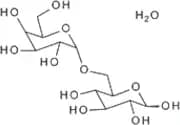
CAS:<p>D-Melibiose monohydrate is a type of sugar that can be found in the extracellular space. It is also a component of fatty acids and has been shown to act as a growth factor for some cell types. D-Melibiose monohydrate has been characterized using tissue culture, growth factor profiles, and fluorescence detector. This sugar can be used as an alternative to trehalose in vitro assays, where it has been shown to have similar biological properties. D-Melibiose monohydrate may also be used for the manufacture of solid dispersions due to its solubility in organic solvents.</p>Formula:C12H24O12Purity:Min. 98 Area-%Color and Shape:White PowderMolecular weight:360.31 g/mol2-Acetamido-2-deoxy-4-O-(6-sulfo-β-D-galactopyranosyl)-β-D-glucopyranose sodium
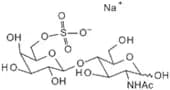
<p>2-Acetamido-2-deoxy-4-O-(6-sulfo-b-D-galactopyranosyl)-b-D-glucopyranose sodium salt (6F3G) is a synthetic, fluorinated monosaccharide that has been used as a probe for the study of glycosylation and polysaccharide synthesis. 6F3G has been shown to be an effective inhibitor of the enzyme D-glycerate kinase, which catalyzes the conversion of D-glycerate to phosphoenolpyruvate. This inhibition leads to a decrease in the formation of ATP and NADH, which provides evidence that 6F3G binds to the active site of this enzyme.</p>Formula:C14H25NO14S•NaPurity:Min. 95%Color and Shape:White PowderMolecular weight:486.39 g/mol