Carbohydrates and glycoconjugates
Carbohydrates are organic compounds composed of carbon, hydrogen, and oxygen, with a basic structure formed by monosaccharides. These can combine to form disaccharides, oligosaccharides, or polysaccharides, depending on the number of monomeric units. Carbohydrates play a fundamental role in energy storage, cell structure, and cellular communication. Their derivatives are used in pharmaceutical products, such as sweeteners and excipients.
At CymitQuimica, we offer a wide range of carbohydrates and their derivatives for research and industrial applications.
Found 5010 products of "Carbohydrates and glycoconjugates"
Sort by
Purity (%)
0
100
|
0
|
50
|
90
|
95
|
100
D-Maltitol
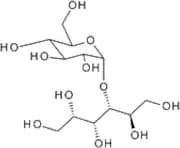
CAS:<p>Bulk sweetener; viscosity/bodying agent; humectant; cryoprotectant</p>Formula:C12H24O11Purity:Min. 95%Color and Shape:White PowderMolecular weight:344.31 g/molN-Acetylneuraminic acid tetramer sodium salt
<p>N-Acetylneuraminic acid tetramer sodium salt is a synthetic carbohydrate that belongs to the group of complex carbohydrates. It is a glycosylation product of N-acetylneuraminic acid and has been modified with fluorine, methylation, and click chemistry. N-Acetylneuraminic acid tetramer sodium salt is used as a reagent in the synthesis of oligosaccharides and has been shown to be useful for structural analysis. The CAS number for this compound is:</p>Formula:C44H66N4O33Na4Purity:Min. 95%Color and Shape:PowderMolecular weight:1,270.96 g/molLactose-6'-phosphate
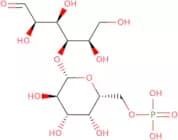
CAS:<p>Lactose-6'-phosphate is a sugar phosphate</p>Formula:C12H23O14PPurity:Min. 95%Molecular weight:422.28 g/molLewis B pentasaccharide
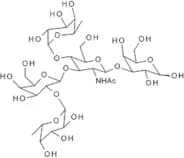
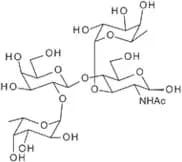
CAS:<p>Lewis B pentasaccharide is a custom-synthesized carbohydrate that belongs to the Modification, saccharide, Oligosaccharide, sugar category. It is an oligosaccharide with a non-reducing end and a reducing end. Lewis B pentasaccharide is a complex carbohydrate that is synthesized from monosaccharides by glycosylation and methylation reactions. This product has high purity and it can be used in research for its fluoroquinolone resistance properties.</p>Formula:C32H55NO24Purity:Min. 95%Color and Shape:White SolidMolecular weight:837.79 g/molIsomaltohexaose
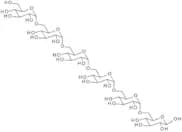
CAS:<p>Produced from high maltose syrup by treatment with transglucosidase</p>Formula:C36H62O31Purity:Min. 90 Area-%Color and Shape:White PowderMolecular weight:990.9 g/mol3'-Sialyl Lewis A
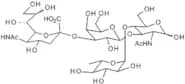
CAS:<p>Tetrasaccharide; tumor-associated antigen; prognostic factor</p>Formula:C31H52N2O23Purity:Min. 95%Color and Shape:White PowderMolecular weight:820.74 g/mol1,3-α-1,6-α-D-Mannotriose 1-O-propylamine acetate
<p>1,3-a-1,6-a-D-Mannotriose 1-O-propylamine acetate salt is a modified oligosaccharide. It has been synthesized by the reaction of 1,3-a-1,6-a-D-mannopyranosyl bromide with proline amine acetate. This product is 98% pure and can be used as a complex carbohydrate in research or as a food additive. The CAS number for this product is 712092-14-8.</p>Formula:C23H43O18NPurity:Min. 95%Color and Shape:PowderMolecular weight:621.58 g/molLewis Y tetrasaccharide
CAS:<p>Lewis Y tetrasaccharide is a type of antigen that is used as a pharmacological agent. It has been shown to be effective in treating carcinoma cell lines and primary sclerosing cholangitis. Lewis Y tetrasaccharide has also been shown to be an antigen for the mouse monoclonal antibody, which is used in cancer research. The Lewis Y tetrasaccharide stimulates the immune system by interacting with certain cells called dendritic cells and macrophages, which are responsible for activating T-cells. This interaction promotes the production of chemoattractant proteins, which are proteins that attract white blood cells to fight infection and promote healing. Lewis Y tetrasaccharide has also been shown to cause cancer cell death by lysing cells through apoptosis or necrosis depending on the tissue type.</p>Formula:C26H45NO19Purity:(%) Min. 95%Color and Shape:PowderMolecular weight:675.64 g/molFructooctasaccharide
<p>Fructo-octasaccharide (FOS) is a synthetic, high-purity carbohydrate that is used in the production of various food and beverage products. FOS is produced by enzymatic synthesis from sucrose and has been modified to include a fluorination step. FOS can be used as a sugar substitute and is found in many foods such as breads, beverages, yogurt, ice cream, candy, and chewing gum. FOS has been shown to stimulate the growth of beneficial bacteria in the gastrointestinal tract and may help promote healthy digestion.</p>Formula:C48H82O41Purity:Min. 95%Color and Shape:PowderMolecular weight:1,315.14 g/molInulin lauryl carbamate - 25% in glycerol
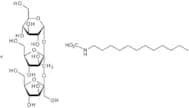
CAS:<p>Emulsifier used in the cosmetic industry</p>Color and Shape:PowderLewis Y-PAA-biotin
<p>Lewis Y-PAA-biotin is a complex carbohydrate which is synthesized using Click chemistry. This compound has been modified to include a biotin moiety. Lewis Y-PAA-biotin has been shown to be resistant to enzymatic degradation and can be used as a saccharide in the synthesis of polysaccharides. Lewis Y-PAA-biotin is synthesized by attaching poly(acrylamide) (PAA) chains to the sugar moieties of Lewis Y. The carbonyl group on the PAA chains can be fluorinated, which makes it useful for click modification reactions with fluorinated compounds.</p>Purity:Min. 95 Area-%Color and Shape:White PowderMolecular weight:732.7 g/molFructodecasaccharide
<p>Fructodecasaccharide is a methylated, custom-synthesized oligosaccharide that is a polysaccharide with the molecular formula C10H17O11. Fructodecasaccharide is a complex carbohydrate that consists of a monosaccharide and two disaccharides. It has been modified to include fluorine atoms in the glycosidic linkages between the sugar residues. This modification can alter the physical properties of fructodecasaccharide, such as increasing its solubility and stabilizing its structure. Fructodecasaccharide is used in many industries as a high-purity, synthetic product for use in medical applications, including pharmaceuticals and cosmetics.</p>Formula:C60H102O51Purity:Min. 95%Color and Shape:PowderMolecular weight:1,639.42 g/mol6'-Sialyllactose-sp-biotin
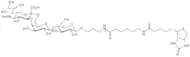
CAS:<p>6'-Sialyllactose-sp-biotin is a custom synthesis of a 6'-sialyllactose with a biotin moiety attached to the reducing end. The modification was done through fluorination, methylation, and monosaccharide synthesis. This product has CAS No. 1384441-62-6 and is an oligosaccharide saccharide that is polysaccharide containing glycosylated sugar. It is also a complex carbohydrate that contains many sugars in one molecule.</p>Formula:C42H71N5O22SPurity:Min. 95%Color and Shape:White PowderMolecular weight:1,030.1 g/mol1,6-α-D-Mannotriose
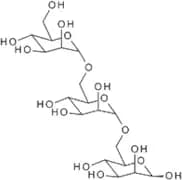
CAS:<p>Produced by the reverse hydrolysis of a mannose substrate</p>Formula:C18H32O16Purity:Min. 94 Area-%Color and Shape:PowderMolecular weight:504.44 g/molMonofucosyl (1-2)-iso-lacto-N-octaose I
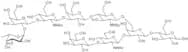
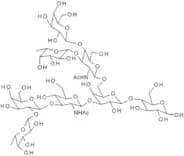
<p>Monofucosyl (1-2)-iso-lacto-N-octaose I is an oligosaccharide found in human milk</p>Purity:Min. 95%Difucosyllacto-N-hexaose (a)
CAS:<p>Neutral octasasaccharide naturally present in human breast milk</p>Formula:C52H88N2O39Purity:Min. 95%Color and Shape:PowderMolecular weight:1,365.25 g/molBlood group H pentaose type II
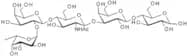
CAS:<p>Blood group H pentaose type II is a carbohydrate. It is a saccharide with the molecular formula C5H11O4. The saccharide can be modified, for example by fluorination, methylation and glycosylation. The CAS number for this compound is 30517-76-1. This product is custom synthesized and has high purity and good quality.</p>Formula:C32H55NO25Purity:Min. 90%Color and Shape:PowderMolecular weight:853.77 g/molMaltodextrin - dextrose equivalent 4.0-7.0
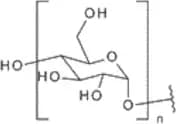
CAS:<p>Ex starch-partial hydrolysis,food ingredient, moderatly sweet, easily digested</p>Purity:Min. 95%Color and Shape:White PowderGlycosaminoglycans
CAS:<p>Glycosaminoglycans (GAGs) are polysaccharides that are found in the extracellular matrix and on the surface of cells. GAGs consist of a linear chain of repeating disaccharide units, with one or more sugar molecules linked by a glycosidic bond. They have been shown to be important for the function and structure of tissues, including those in the gastrointestinal tract. GAGs have been shown to stimulate cellular growth, regulate inflammatory responses, and promote wound healing. They have also been shown to inhibit activity of polymorphonuclear leucocytes (PMN), which play an important role in inflammation. One type of GAG is dextran sulfate, which has been used as a biological scaffold for tissue engineering applications. Glycosaminoglycans may also play a role in regulating immune responses through interaction with toll-like receptor 4 (TLR4).</p>Purity:Min. 95%Tri-guluronic acid sodium salt
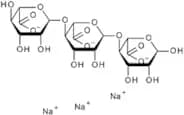
CAS:<p>Tri-guluronic acid sodium salt (1,4-linked α-L-sodium guluronotriose) is one of a number of oligosaccharides obtained from alginate which is a polysaccharide in brown seaweeds containing: blocks of repeating mannuronic acid sequences (M-M-M-M etc), repeating guluronic acid sequences (G-G-G-G etc), and alternating M-G-M-G sequences. This oligosaccharide can be released by acid hydrolysis (Shimokawa, 1996) and a number of biological activities have been discussed in a recent review (Xing, 2020).</p>Formula:C18H23O19Na3Purity:Min. 98 Area-%Color and Shape:White PowderMolecular weight:612.33 g/mol