Carbohydrates and glycoconjugates
Carbohydrates are organic compounds composed of carbon, hydrogen, and oxygen, with a basic structure formed by monosaccharides. These can combine to form disaccharides, oligosaccharides, or polysaccharides, depending on the number of monomeric units. Carbohydrates play a fundamental role in energy storage, cell structure, and cellular communication. Their derivatives are used in pharmaceutical products, such as sweeteners and excipients.
At CymitQuimica, we offer a wide range of carbohydrates and their derivatives for research and industrial applications.
Found 5012 products of "Carbohydrates and glycoconjugates"
Sort by
Purity (%)
0
100
|
0
|
50
|
90
|
95
|
100
a1,3-Mannobiose-BSA
<p>Methylation is the addition of a methyl group to a molecule. The mannobiose-BSA is a methylated derivative of mannobiose, which has been modified by adding BSA. The modification of mannobiose-BSA with BSA facilitates its use in glycosylation reactions and as an intermediate in the synthesis of other complex carbohydrates. Methylation is also used to modify saccharides, polysaccharides, and oligosaccharides. Methyl groups are typically added using an organic chemical called dimethylamine or using an enzymatic reaction with SAM-dependent methyltransferases.</p>Purity:Min. 95%GM1-Lysoganglioside sodium
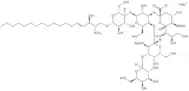
CAS:<p>GM1-Lysoganglioside (sodium salt) has the core tetrasaccharide structure (Galβ1,3GalNAcβ1,4Galβ1,4Glc) with sialic acid linked α2,3 to the inner galactose residue and sphingosine linked β to position 1 on the reducing terminal glucose residue (Ledeen, 2009). GM1 lysoganglioside has been shown that it is capable of binding amyloid-β proteins and can act as a seed for amyloid fibril formation, in early stages of Alzheimerâs disease (Chiricozzi, 2020).</p>Formula:C55H97N3O30·xNaPurity:Min. 95%Color and Shape:White PowderMolecular weight:1,280.36 g/mola1,6-Mannobiose-BSA
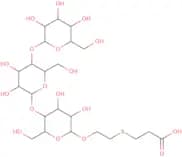
<p>a1,6-Mannobiose-BSA is a fluorinated monosaccharide that has been synthesized from mannose. It is a synthetic oligosaccharide that is used in glycosylation and polysaccharide modification. The compound has been modified with methyl groups and has undergone click chemistry to produce a reactive site on the sugar ring. This product has been synthesized using high purity reagents and has CAS No. 73978-99-2.</p>Purity:Min. 95%Globotriose 2-(2-carboxyethylthio)ethane
<p>Globo series antigen</p>Formula:C23H40O18SPurity:Min. 95%Molecular weight:636.62 g/molLacto-N-difucohexaose I-APD-KLH
<p>Lacto-N-difucohexaose I-APD-KLH is a synthetic, high purity, custom synthesis carbohydrate that has been fluorinated with APD and KLH. The carbohydrate is methylated and glycosylated. Lacto-N-difucohexaose I-APD-KLH has a CAS number of 73387-87-8.</p>Purity:Min. 95%4-O-b-(2,3,4,6-Tetra-O-acetyl-D-galactopyranosyl)-1,6-anhydro-D-mannopyranoside
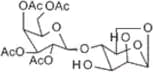
<p>This high purity, custom synthesis, sugar and Click modification, fluorination, Glycosylation, Synthetic, Methylation, Modification is a CAS No. 4-O-b-(2,3,4,6-Tetra-O-acetyl-D-galactopyranosyl)-1,6-anhydro-D-mannopyranoside. This is an Oligosaccharide and Monosaccharide that is a Carbohydrate. This complex carbohydrate has been synthesized from the following monosaccharides: D-mannose (CAS No. 5914) and D-galactose (CAS No. 5632). The molecular weight of this carbohydrate is 591. The chemical formula of this carbohydrate is C36H60O24.</p>Formula:C20H28O14Purity:Min. 95%Molecular weight:492.43 g/molA2 N-Glycan
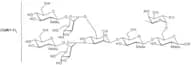
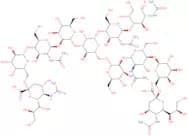
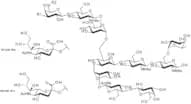
CAS:<p>A2 N-glycan is a complex carbohydrate that is found in invertebrates and mammals. The A2 N-glycan was found to be the most abundant of all glycoproteins in invertebrates, with a relative abundance of over 50%. It has been shown that the A2 N-glycan can be modified by covalent linking to proteins, differentiating it from other glycans. These modifications may have an effect on the structural stability of the molecule and its susceptibility to environmental degradation. The A2 N-glycan also plays an important role in immunity, as it is immunogenic and can stimulate antibody production. This carbohydrate is uniquely found in humans, which suggests that it may have some importance in human physiology.</p>Formula:C84H138N6O62Purity:Min. 95%Color and Shape:SolidMolecular weight:2,224 g/molMan-7D1 N-Glycan
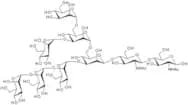
CAS:<p>Man-7D1 N-glycan is a synthetic, fluorinated, monosaccharide oligosaccharide that is custom synthesized for glycosylation. It has been shown to be an effective substrate for glycosylation and can be used in the synthesis of complex carbohydrates. The modification of Man-7D1 N-glycan includes fluorination, methylation, and click chemistry. This product is available in high purity and with a CAS number 83178-05-6.</p>Formula:C58H98N2O46Purity:Min. 95%Color and Shape:White to off-white solid.Molecular weight:1,559.38 g/mol3-O-(2,3,4,6-Tetra-O-benzyl-a-D-glucopyranosyl)-1,2,4,6-tetra-O-acetyl-b-D-glucopyranose
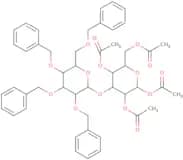
CAS:<p>3-O-(2,3,4,6-Tetra-O-benzyl-a-D-glucopyranosyl)-1,2,4,6-tetra-O-acetyl-b-D-glucopyranose is an oligosaccharide that has been modified with a click modification. This compound is a complex carbohydrate and it is synthesized from a monosaccharide. 3-O-(2,3,4,6-Tetra-O-benzyl-a-D--glucopyranosyl)-1,2,4,6-- tetra--O--acetyl--b--D--glucopyranose is used in methylation reactions.</p>Formula:C48H54O15Purity:Min. 95%Molecular weight:870.93 g/molCellobiuronic acid
CAS:<p>Cellobiuronic acid is a polysaccharide that contains glucose and uronic acids. It is found in the cell walls of gram-positive bacteria, where it may play an important role in maintaining the structural integrity of the cell wall. Cellobiuronic acid has been shown to be a potent antigen for pneumococcus. Cellobiuronic acid has also been shown to be conjugated with proteins and used as a vaccine adjuvant for inducing antibody responses against pneumococcal antigens. Cellobiuronic acid is synthesized from glucose by bacterial cells, which use it as a carbon source. The biosynthesis of cellobiuronic acid is poorly understood because it does not occur in mammalian cells.</p>Formula:C12H20O12Purity:Min. 95%Molecular weight:356.28 g/molDecasaccharide dp10
<p>Decasaccharide dp10 is a complex carbohydrate that is made up of ten monosaccharides. It is a synthetic oligosaccharide that has been fluorinated and glycosylated. The decasaccharide has been synthesized using click chemistry and methylation, before being purified to produce a high-purity product. Decasaccharide dp10 can be used in the modification of complex carbohydrates, as well as for the synthesis of glycans with customized structures.</p>Formula:C60H155N25O95S15Purity:Min. 95%Molecular weight:3,227.97 g/molb-D-Fructofuranosyl-a-D-galactopyranoside
CAS:<p>The b-D-Fructofuranosyl-a-D-galactopyranoside is a sugar molecule that is a carbohydrate. It contains sugar phosphates and an aldehyde group. The hydroxyl groups on the molecule can be found on the hydroxyl, ketone, and alcohols that are present. This carbohydrate also has hemiketal and sugar alcohol groups. These molecules have six carbon atoms in their molecular structure with one oxygen atom and one hydrogen atom attached to each of them. The deoxy form of this molecule is not active for DNA synthesis or protein synthesis but it can be used as an intermediate in the production of other sugars such as maltose, cellobiose, and sucrose.</p>Formula:C12H22O11Purity:Min. 95%Molecular weight:342.3 g/molCellotrionic acid
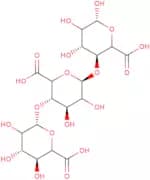
CAS:<p>Cellotrionic acid is a biochemical that is found in the cell walls of bacteria. It is also known as Cellotriose, which is a type of sugar molecule. Cellotriose is composed of three molecules of glucose and it has reactive hydroxy groups. Hydroxy groups are reactive because they can form hydrogen bonds with other molecules. Cellotrionic acid has been shown to have a redox potential, which means that it can either accept or donate electrons. The crystalline structure of cellotrionic acid is similar to that of glucose and can be represented by the formula C6H8O6. Cellotrionic acid has been shown to have aerobic properties, meaning it requires oxygen for metabolism. One example of an aerobic process where cellotrionic acid participates in is the transfer of electrons during the oxidation-reduction reactions in photosynthesis. This biochemical also participates in glycolysis, which occurs during cellular respiration when sugars are broken down into smaller fragments</p>Formula:C18H32O17Purity:Min. 95%Molecular weight:520.44 g/molHeparin disaccharide I-S, tetrasodium salt
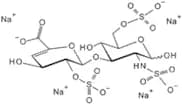
CAS:<p>Heparin disaccharide I-S, tetrasodium salt is a sodium salt of heparin that has been modified to contain two sulfate groups. The chemical modification of heparin disaccharide I-S, tetrasodium salt alters the molecule's charge and surface properties. This modification increases the molecule's ability to bind with cell surface markers and inhibits the activity of proteases. Heparin disaccharide I-S, tetrasodium salt is able to inhibit leukaemia proliferation in thp-1 cells by binding with cytoskeletal proteins such as vimentin and actin. This chemical also prevents PMA induced morphological changes in thp-1 cells. Heparin disaccharide I-S, tetrasodium salt is used as an anticoagulant in therapeutic settings. It is used to prevent blood clotting by inhibiting the activation of factors Xa and IIa. Heparin disaccharide</p>Formula:C12H15NO19S3·4NaPurity:Min. 98 Area-%Color and Shape:White PowderMolecular weight:665.4 g/molLacto-N-difucohexaose I-BSA
<p>Lacto-N-difucohexaose I-BSA is a high purity, custom synthesis sugar that is fluorinated, glycosylated, and methylated. It has been modified to be an oligosaccharide or monosaccharide with saccharides. Lacto-N-difucohexaose I-BSA is a complex carbohydrate that is made up of several different sugars. This product can be used for many purposes such as Click modification and Fluorination.</p>Purity:Min. 95%Color and Shape:PowderMethyl 2-O-allyl-3-O-(2,3,4,6-tetra-O-acetyl-a-D-mannopyranosyl)-a-D-mannopyranoside
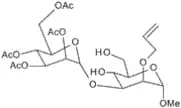
CAS:<p>Methyl 2-O-allyl-3-O-(2,3,4,6-tetra-O-acetyl-a-D-mannopyranosyl)-a-D-mannopyranoside is a modification of the carbohydrate that is synthesized by an acetylation of the mannose residue. It has been synthesized as a potential therapeutic agent for cancer treatment. Methyl 2-O-allyl 3,4,6 tetra O acetyl a D mannoside (MAA) is an oligosaccharide which consists of three monosaccharides: mannose (1), allose (2) and glucose (3). The modification of MAA involves the addition of methyl groups to the allyl group on position 1. This modification can be done through fluorination or methylation. Methylated derivatives have shown anti tumor activity in vivo and in vitro studies. The complex carbohydrate has high purity and</p>Formula:C24H36O15Purity:Min. 95%Molecular weight:564.53 g/molNeocarratetraose-41-O-sulfate sodium salt
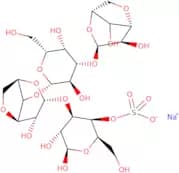
CAS:<p>Neocarratetraose-41-O-sulfate sodium salt is a high purity, synthetic oligosaccharide with a CAS number of 108321-78-4. It is an oligosaccharide that has been modified with methylation, saccharide, and Click modification. Neocarratetraose-41-O-sulfate sodium salt is used in the synthesis of complex carbohydrates and glycosylations. <br>Neocarratetraose-41-O-sulfate sodium salt is synthesized by reacting the sugar neocarratetraose with sulfuryl chloride to form the corresponding sulfonic acid chloride. The resulting compound is then treated with sodium hydroxide to produce its sodium salt form.</p>Formula:C24H37NaO22SPurity:Min. 95%Color and Shape:PowderMolecular weight:732.59 g/molA1F Glycan, 2-AB labelled
<p>2-AB labelled A1F Glycan is a complex carbohydrate. It is custom synthesized and high purity. The CAS number for this compound is 12863-00-8.</p>Purity:Min. 95%Di-a-D-galactosyl-mannopentaose
<p>Di-a-D-galactosyl-mannopentaose is a mannopentaose derivative that has been modified with a methyl group at the C2 position and fluorinated at the C6 position. This compound can be used as an intermediate in the production of oligosaccharides and polysaccharides, which are complex carbohydrates that contain many sugar molecules. The product is of high purity, with no detectable impurities. It was synthesized using a custom synthesis approach, which allows for modification of the chemical structure to produce desired properties. This product is stable when stored at room temperature and does not require refrigeration. It does not contain any organic solvents or volatile compounds and is free from endotoxins or heavy metals.</p>Purity:Min. 95%Molecular weight:1,153 g/molBlood Group B type III/IV tetrasaccharide
CAS:<p>The blood group B type III/IV tetrasaccharide is a synthetic, fluorinated carbohydrate that has been custom synthesized for glycosylation and methylation. The monosaccharide of the tetrasaccharide is a hexose, which can be modified with fluorine and click chemistry. The product is a complex carbohydrate with high purity and can be used in pharmaceuticals as an antigen for immunoglobulin G (IgG) production.</p>Formula:C26H45NO20Purity:Min. 95%Molecular weight:691.63 g/molGM1a-Oligosaccharide
<p>GM1a pentasaccharide (ammonium salt) has a core tetrasaccharide structure (Galβ1,3GalNAcβ1,4Galβ1,4Glc) with a single sialic acid residue linked α2,3 to the inner galactose residue (Ledeen, 2009). GM1a pentasaccharide is the carbohydrate moiety in GM1a ganglioside which interacts and modulates tyrosine kinases, such as, neural tropomyosin receptor kinase A (TrkA), by inducing the release of neurotrophins from fibroblast cells and the epidermal growth factor receptor (EGFR) (Higuero, 2009). Oligosaccharide domain of monosialylated glycosphingolipid GM1 of a-series that specifically interacts with cholera toxin B subunit (CBT) fromâ¯V. cholerae, heat-labile toxin B subunit (LTB) fromâ¯E. coliâ¯and alpha toxin fromâ¯C. perfrigens. This ganglioside is abundant in nervous system as well as in other peripheral tissues (Chiricozzi, 2020).</p>Formula:C37H61N2O29NaPurity:Min. 95%Color and Shape:PowderMolecular weight:1,020.87 g/molRhodionin
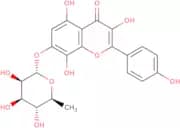
CAS:<p>Rhodionin is a natural product that has been shown to be effective as a food preservative. It is produced through the extraction of usnic acid from Rhodiola rosea and has been used in the study of amyloid protein. Rhodionin is an extractant that has been shown to be able to control analysis of sodium citrate in food composition. The use of rhodionin for this purpose was found to be practical and effective, with no significant changes in the quality or quantity of citric acid. This extractant also shows promise as an analytical method for the detection of ganoderma lucidum, human liver cancer cells, and flavonol glycosides.</p>Formula:C21H20O11Purity:Min. 95%Molecular weight:448.38 g/molLacto-N-fucopentaose III-APD-HSA
<p>Lacto-N-fucopentaose III-APD-HSA is a custom synthesis, complex carbohydrate that has been modified with methylation and glycosylation. It is an oligosaccharide that is found in human serum albumin. Lacto-N-fucopentaose III-APD-HSA has been shown to have antitumor activity. It also inhibits the growth of bacteria by binding to bacterial DNA gyrase and topoisomerase IV, which are enzymes that maintain the integrity of bacterial DNA. This compound binds to two sites on the 16S ribosomal RNA of bacteria and can inhibit protein synthesis, leading to cell death by inhibiting production of proteins vital for cell division. Lacto-N-fucopentaose III-APD-HSA has undergone fluorination and click modification.<br>Methylation: A process whereby a methyl group (-CH3) is added to an organic molecule via a chemical</p>Purity:Min. 95%Lactulose - liquid
CAS:<p>Lactulose is a non-absorbable sugar used in the treatment of constipation and hepatic encephalopathy. It is used by mouth for constipation and either by mouth or in the rectum for hepatic encephalopathy. It generally begins working after 8-12 hours, but may take up to 2 days to improve constipation.</p>Formula:C12H22O11Purity:Min. 95%Molecular weight:342.3 g/mol1,3:1,4-b-Glucotetraose (A)
CAS:<p>1,3:1,4-B-glucotetraose (A) is a high purity and custom synthesis of Oligosaccharide. It is an oligosaccharide sugar derived from glucose. The chemical structure contains an alpha-(1,4)-linked 1,4-alpha-D-glucopyranosyl residue with a glycosylation at the 3 position. 1,3:1,4-B-glucotetraose (A) is synthesized by methylation of 1,3:1,4-B-glucotetraose (B), followed by fluorination and then click modification. This compound has CAS No. 58484-04-1 and can be used in applications such as Fluorination or Click Modification.</p>Formula:C24H42O21Purity:Min. 95%Molecular weight:666.58 g/molChondroitin disaccharide di-diSE trisodium
CAS:<p>Chondroitin is a complex carbohydrate that consists of repeating disaccharides of glucuronic acid and N-acetylgalactosamine. Chondroitin di-diSE trisodium salt is a synthetic chondroitin with the same chemical structure as natural chondroitin, but it has been modified to increase its solubility in water. This product is available as a white powder in bulk or as a custom synthesis, which is available in any desired quantity. It has high purity, methylation, glycosylation, and click modification.</p>Formula:C14H21NO17S2•Na3Purity:Min. 95%Color and Shape:White PowderMolecular weight:608.42 g/molGlycyl-lacto-N-neotetraose
<p>Glycyl-lacto-N-neotetraose is a complex carbohydrate that is custom synthesized and has high purity. It is an Oligosaccharide, Carbohydrate, and Polysaccharide that can be modified with methylation and glycosylation. This product can be used in the synthesis of other monosaccharides or saccharides to form complex carbohydrates. Glycyl-lacto-N-neotetraose is also fluorinated on one of its hydroxyl groups to produce an active water soluble compound for use in research.</p>Formula:C28H49N3O21Purity:Min. 95%Molecular weight:763.7 g/mol1-D-a-Galactopyranosyl-4-O-[1-(2-octadecylthioethyl)-(b-D-galactopyranoside)]
<p>1-D-a-Galactopyranosyl-4-O-[1-(2-octadecylthioethyl)-(b-D-galactopyranoside)] is a complex carbohydrate that contains a fluorinated sugar. It is synthesized from a monosaccharide and an oligosaccharide and glycosylated with a polysaccharide. The compound has been modified to include methylation and click modification. 1-D-a-Galactopyranosyl-4-O-[1-(2-octadecylthioethyl)-(b-D-galactopyranoside)] can be purchased in high purity from the CAS registry number of 538570–75–6.</p>Purity:Min. 95%Blood group B trisaccharide-APE-Biotin-BSA
<p>Gala1-3(Fuca1-2)Gal Conjugated to BSA via Biotin & an aminophenyl ethyl spacer</p>Purity:Min. 95%6,1',6'-Tri-O-tertbutyldiphenylsilyl-sucrose
CAS:<p>6,1',6'-Tri-O-tertbutyldiphenylsilyl-sucrose is a high purity, custom synthesis chemical. It is an oligosaccharide and complex carbohydrate that is a Click modification of sucrose. This chemical has been fluorinated, glycosylated, and methylated.</p>Purity:Min. 95%Lewis X trisaccharide methyl glycoside
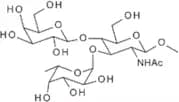
CAS:<p>Lewis X is a glycoprotein found on the surface of red blood cells and is composed of a trisaccharide that is covalently attached to the protein. It is expressed in the cells of all individuals, but at different levels depending on their blood group. Lewis X is an antigen for monoclonal antibody, which recognizes it by binding to its sugar residues. The antibody can be used to detect Lewis X-expressing cells in the blood and for cancer diagnosis. Antibodies against Lewis X can also be used to inhibit tumor growth by enhancing natural killer cell activity and killing tumor cells.</p>Formula:C21H37NO15Purity:Min. 95%Color and Shape:PowderMolecular weight:543.52 g/molBlood Group B type I tetrasaccharide
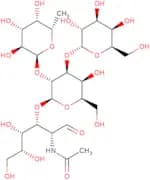
CAS:<p>Gala1-3(Fuca1-2)Galb1-3GlcNAc</p>Formula:C26H45NO20Purity:Min. 95%Color and Shape:White/Off-White SolidMolecular weight:691.63 g/molHyaluronic acid decasaccharide
<p>Hyaluronic acid is a polysaccharide containing repeating disaccharide units of β-1,3-N-acetyl glucosamine and β-1, 4-glucuronicâ¯acid. A series of unsaturated oligosaccharides (oligouronic acids) are released from hyaluronic acid by the action of hyaluronidase on the umbilical cord (Weissman, 1954). This decasaccharide and other enzymatically produced polymer homologs have been of value in the study of hyaluronic acid metabolism in both healthy and diseased tissues (Hascall, 2019).</p>Formula:C70H107N5O56Purity:Min. 95%Color and Shape:White PowderMolecular weight:1,914.6 g/molb-D-Lactosyltrichloroacetimidate heptaacetate
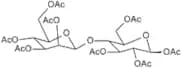
CAS:<p>b-D-Lactosyltrichloroacetimidate heptaacetate is a glycosylation product of the b-D-lactose and trichloroacetic anhydride. This compound is used in the synthesis of oligosaccharides and polysaccharides. It has been shown to be a fluorinated, methylated, or click modified monosaccharide or disaccharide which can be prepared through custom synthesis, or by modification of existing saccharides. This compound has been found to have high purity with a CAS number of 1142022-76-1.</p>Formula:C28H36Cl3NO18Purity:Min. 95%Molecular weight:780.94 g/mol1,2,3,6-Tetra-O-acetyl-4-O-(2,3,4,6-tetra-O-acetyl-b-D-mannopyranosyl)-D-glucopyranose
CAS:<p>1,2,3,6-Tetra-O-acetyl-4-O-(2,3,4,6-tetra-O-acetyl-b-D-mannopyranosyl)-D-glucopyranose is a synthetic sugar that has been modified by the methylation of the hydroxyl groups at C1 and C6 with acetaldehyde. This sugar is used in glycosylation reactions to modify proteins and other biomolecules. The product is a white crystalline solid that has a CAS number of 132341-46-9. It can be custom synthesized for research purposes or as a high purity material for commercial use.</p>Formula:C28H38O19Purity:Min. 95%Molecular weight:678.59 g/molFA2G1 N-Glycan
CAS:<p>FA2G1 N-glycan is a custom synthesis that can be modified with fluorination, methylation and click modification. It is a monosaccharide that belongs to the group of saccharides and polysaccharides. Carbohydrates are complex carbohydrates. This glycoprotein is synthesized by the addition of a sugar to an amino acid.</p>Formula:C62H104N4O45Purity:Min. 95%Color and Shape:Solid.Molecular weight:1,625.49 g/molN,N'-Diacetylchitobiosyl allosamizoline
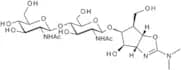
CAS:<p>N,N'-Diacetylchitobiosyl allosamizoline is an analog of the insect-inhibiting allosamidin. It has been shown to have inhibitory activity against chitinases and it is a stereoselective inhibitor of chitin synthase. N,N'-Diacetylchitobiosyl allosamizoline is used as a substrate in coupling reactions to produce disaccharides that contain the chitobiose unit. This type of enzyme inhibition may be useful in combating insects that feed on plants or other organisms with exoskeletons made up of chitin.</p>Formula:C25H42N4O14Purity:Min. 95%Molecular weight:622.62 g/molLacto-N-neotetraosa-APD-HSA
<p>Lacto-N-neotetraosa-APD-HSA is a synthetic monosaccharide that is structurally similar to tetrasaccharide and pentasaccharide. It can be synthesized by click chemistry and has been modified by fluorination and acetylation. Lacto-N-neotetraosa-APD-HSA has a high purity and is an excellent candidate for applications in the food industry, such as sugar substitutes.</p>Purity:Min. 95%Linear B-6 trisaccharide 1-O-n-pentylamine
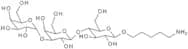
<p>Linear B-6 trisaccharide 1-O-n-pentylamine is a glycosylated, fluorinated, saccharide that can be custom synthesized. This compound can be modified with methyl groups, click chemistry, or fluorination. It has a CAS number of 188768-84-0 and is soluble in methanol, ethanol, and water. Linear B-6 trisaccharide 1-O-n-pentylamine is a monosaccharide with a molecular weight of 258.</p>Formula:C23H43NO16Purity:Min. 95%Molecular weight:589.58 g/molGala1-2Gal-BSA
<p>Gala1-2Gal-BSA is a modified oligosaccharide with the chemical formula of C(3)H(6)O(4)n. It is a carbohydrate that can be synthesized from galactose and alpha-galactosyltransferase. Gala1-2Gal-BSA has been shown to have anti-cancer properties in vitro, but its mechanism of action is not known.</p>Purity:Min. 95%1,3,6-Tri-O-acetyl-4-O-(2,3,4,6-tetra-O-acetyl-b-D-galactopyranosyl)-2-azido-2-deoxy-D-glucopyranose
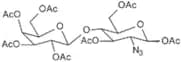
<p>1,3,6-Tri-O-acetyl-4-O-(2,3,4,6-tetra-O-acetyl-b-D-galactopyranosyl)-2-azido-2-deoxy--D--glucopyranose is a modification of a natural sugar. It is an oligosaccharide that is composed of one monosaccharide and two disaccharides. The triacetate group on the first saccharide provides protection against hydrolysis and methylation reactions. This compound has been shown to be synthesized chemically in high purity and with high yield.</p>Formula:C26H35N3O17Purity:Min. 95%Molecular weight:661.57 g/molMethyl 2-acetamido-2-deoxy-6-O-(b-D-galactopyranosyl)-a-D-glucopyranoside
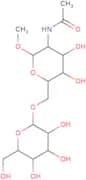
CAS:<p>Methyl 2-acetamido-2-deoxy-6-O-(b-D-galactopyranosyl)-a-D-glucopyranoside is a custom synthesis, modification and fluorination of a monosaccharide. The saccharide is modified with methylation and click modification at the 6th carbon position. This product is designed for use in the synthesis of complex carbohydrates.</p>Formula:C15H27NO11Purity:Min. 95%Molecular weight:397.38 g/mol2,3,6,2',3',4',6'-Hepta-O-benzoyl-D-lactose
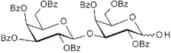
CAS:<p>2,3,6,2',3',4',6'-Hepta-O-benzoyl-D-lactose is a custom synthesis that can be modified in a variety of ways. It has a high degree of fluorination and methylation to provide protection against degradation by enzymes. The monosaccharide units are synthesized and then assembled into oligosaccharides with glycosylations. Modifications can include glycosylation at any position on the molecule as well as the addition of complex carbohydrates.<br>2,3,6,2',3',4',6'-Hepta-O-benzoyl-D-lactose is an example of a polysaccharide consisting of glucose units with other hexoses such as galactose or mannose.</p>Formula:C61H50O18Purity:Min. 95%Molecular weight:1,071.04 g/molb-Lactosyl ureide dihydrate
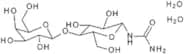
<p>b-Lactosyl ureide dihydrate is a white crystalline powder that is soluble in water. It has a molecular weight of 598.7 and was synthesized by the reaction of b-lactosyl chloride with urea. The compound has been used as a fluoro-protecting group for nucleophilic substitution reactions, and glycosylation reactions.</p>Formula:C13H24N2O11·2H2OPurity:Min. 95%Color and Shape:White/Off-White SolidMolecular weight:420.37 g/molHyaluronate biotin - Molecular Weight - 2500kDa
<p>Hyaluronate biotin is a complex carbohydrate that consists of a saccharide with a terminal sugar and methylated N-acetylglucosamine. The molecular weight of Hyaluronate biotin is 2500kDa. It can be synthesized by reacting the appropriate monosaccharides under the presence of an enzyme, such as glucose oxidase. This product has high purity and is modified using Fluorination and Click modification.</p>Purity:Min. 95%Man6GlcNAc (I)
CAS:<p>Man6GlcNAc (I) is a synthetic, fluorinated, monosaccharide that can be modified to produce a wide range of products. This product has been shown to have high purity and can be customized for specific applications. It is used in the production of complex carbohydrates with click modification and methylation. Man6GlcNAc (I) is often used as an intermediate in the synthesis of oligosaccharides such as glycosylated proteins or glycans.</p>Formula:C44H75NO36Purity:Min. 95%Color and Shape:PowderMolecular weight:1,194.05 g/molGM3-Ganglioside ammonium
CAS:<p>Ganglioside GM3 (ammonium salt) has a core disaccharide structure (Galβ1,4Glc) with sialic acid linked a2,3 to the galactose residue and ceramide linked β to position 1 on the reducing terminal glucose residue (Ledeen, 2009). Ganglioside GM3 is strongly associated with human tumors, such as, lung, brain and melanomas where it is over expressed. It is seen as a possible tumor-associated carbohydrate antigen for cancer immunotherapy (Changping, 2019). GM3 ganlioside is implicated in various other diseases involving chronic inflammation, such as, insulin resistance, leptin resistance, T-cell function and immune disorders (e.g. allergic asthma). GM3 ganglioside has also been shown to play an essential role in murine and human auditory systems, and a common pathological feature of GM3S deficiency is deafness (Inokuchi, 2018).</p>Formula:C59H111N3O21xNH4Purity:Min. 95%Molecular weight:1,198.52 g/mol4-O-(b-D-Galactopyranosyl)-D-glucosamine
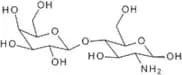
CAS:<p>4-O-(b-D-Galactopyranosyl)-D-glucosamine is a sugar that is found in the human body. It has been shown to have anti-cancer properties and is being studied as a potential therapeutic agent for squamous cell carcinoma. Basic structural analysis of 4-O-(b-D-Galactopyranosyl)-D-glucosamine has been performed on methyl glycosides, oligosaccharides, and bovine serum albumin. The sugar can be used to inhibit transcriptional regulation through its interactions with DNA. 4-O-(b-D-Galactopyranosyl)-D-glucosamine has also been found to inhibit the activities of enzymes involved in methyl glycoside synthesis, which may be related to its effects on cancer cells.</p>Formula:C12H23NO10Purity:Min. 95%Color and Shape:White PowderMolecular weight:341.31 g/mol





![1-D-a-Galactopyranosyl-4-O-[1-(2-octadecylthioethyl)-(b-D-galactopyranoside)]](/_next/image/?url=https%3A%2Fstatic.cymitquimica.com%2Fproducts%2F3D%2Fthumb-webp%2FOG12060.webp&w=3840&q=75)