Carbohydrates and glycoconjugates
Carbohydrates are organic compounds composed of carbon, hydrogen, and oxygen, with a basic structure formed by monosaccharides. These can combine to form disaccharides, oligosaccharides, or polysaccharides, depending on the number of monomeric units. Carbohydrates play a fundamental role in energy storage, cell structure, and cellular communication. Their derivatives are used in pharmaceutical products, such as sweeteners and excipients.
At CymitQuimica, we offer a wide range of carbohydrates and their derivatives for research and industrial applications.
Found 5010 products of "Carbohydrates and glycoconjugates"
Sort by
Purity (%)
0
100
|
0
|
50
|
90
|
95
|
100
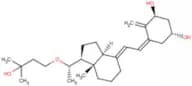
Maxacalcitol
CAS:<p>Maxacalcitol (22-Oxacalcitriol) is a ligand of VDR-like receptors and a non-serum calcium vitamin D3 analogue.</p>Formula:C26H42O4Purity:≥98%Color and Shape:SolidMolecular weight:418.61DL-Glyceric Acid
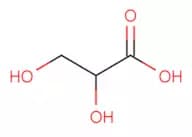
CAS:<p>DL-Glyceric Acid is an endogenous metabolite that serves as a substrate for Pseudomonas aeruginosa's 3-hydroxyisobutyrate dehydrogenase (PA0743),</p>Formula:C3H6O4Purity:98%Color and Shape:LiquidMolecular weight:106.08Remogliflozin
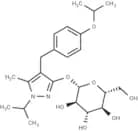
CAS:<p>Remogliflozin is an effective sodium-glucose transporter 2 inhibitor (Kis = 12.4 and 26 nM for human and rat SGLT2, respectively).</p>Formula:C23H34N2O7Color and Shape:SolidMolecular weight:450.53Methyl 2-hydroxyethyl cellulose
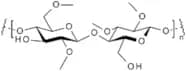
CAS:Controlled Product<p>Methyl 2-hydroxyethyl cellulose (MEC) is a synthetic substance that is used as a thickening and emulsifying agent in many products, including foods, pharmaceuticals, and cosmetics. MEC has been shown to inhibit the activity of certain enzymes, such as amylase, lipase, and protease. In addition to these properties, MEC is also known for its high degree of thermal stability and light resistance. This product can be used in a wide range of applications due to its versatility and low cost.</p>Formula:C34H66O24Purity:Min. 95%Color and Shape:White/Off-White SolidMolecular weight:858.87 g/molLacto-N-neofucopentaose
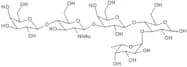
<p>Neutral pentasasaccharide naturally present in human breast milk</p>Formula:C32H55NO25Purity:Min. 90 Area-%Color and Shape:PowderMolecular weight:853.77 g/molD-Melibiose anhydrous
CAS:<p>D-Melibiose anhydrous is a disaccharide that is used as an excipient in the pharmaceutical industry. It has been shown to be an active enzyme, which may be due to its ability to sequester galactose. D-Melibiose anhydrous has a redox potential of -0.2 V, indicating that it has a high number of oxidizable groups. The molecular weight of this sugar is 324.14 g/mol, and it has a polarizability of 0.16 D, which classifies it as a polyol with hydrogen bonding properties. This sugar is not soluble in water but can be dissolved in ethanol or propylene glycol. D-Melibiose anhydrous also has carbohydrate properties and may be considered a sugar alcohol because it contains six carbon atoms and one oxygen atom.</p>Formula:C12H22O11Purity:Min. 95%Color and Shape:PowderMolecular weight:342.3 g/molMan-3 Glycan, 2-AB labelled
<p>2-AB labeled core pentasaccharide found in most N-linked oligosaccharides. Purified from the oligosaccharide pool released from bovine serum by hydrazinolysis using a combination of HPLC and glycosidase digestion.</p>Purity:Hplc.Color and Shape:Powder6-deoxy-6-mercapto-γ-cyclodextrin,octakis
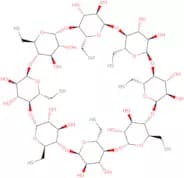
CAS:<p>6-Deoxy-6-mercapto-gamma-cyclodextrin, octakis (Methyl 6DG) is a novel and unique sugar with two methyl groups on the C6 hydroxyl position. It has been synthesized from glucose by a click modification reaction and can be used as an alternative to 6DG for the production of oligosaccharides and polysaccharides. The high purity of Methyl 6DG makes it suitable for use in analytical research, such as fluorescence resonance energy transfer measurements.</p>Formula:C48H80O32S8Purity:Min. 95%Molecular weight:1,425.66 g/molMethyl cellulose - viscosity 40000 cP
CAS:<p>Cellulose derivative, food thickener and emulsifier, bulk forming laxative</p>Purity:Min. 95%Color and Shape:PowderL-Hexaguluronic acid hexasodium
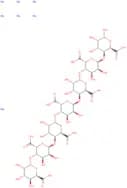
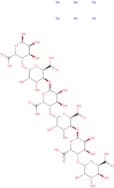
CAS:<p>Please enquire for more information about L-Hexaguluronic acid hexasodium including the price, delivery time and more detailed product information at the technical inquiry form on this page</p>Formula:C36H50O37•Na6Purity:Min. 95%Molecular weight:1,212.7 g/mol(5aS,10aS)-Tetrahydrodipyrrolo[1,2-a:1',2'-d]pyrazine-3,5,8,10(2H,5aH)-tetraone
CAS:<p>The objective of this project is to design a microcontroller-based system that can monitor and diagnose the level of damage in a composite material. The system will consist of an array of sensors, actuators, and microcontrollers that are connected by a wireless network. The sensors will measure the levels of damage at each point within the composite material. The actuators will provide feedback to the sensors, adjusting their frequency and amplitude based on the level of damage detected. Microcontrollers will be responsible for analyzing data from the sensors and diagnosing any faults in the system. A miniaturized dry skin patch could be used as an alternative to traditional wet skin tests for monitoring skin health.</p>Formula:C10H10N2O4Purity:Min. 95%Molecular weight:222.2 g/molSucrose cocoate
CAS:<p>Blend of sucrose esters with fatty acid esters from coconut oil used in Cosmetic industry applications.</p>Purity:Min. 95%3'-b-Sialyl-N-acetyllactosamine
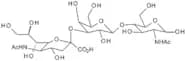
CAS:<p>3'-b-Sialyl-N-acetyllactosamine is an oligosaccharide that is synthesized from L-arabinose and 3'-phosphoadenosine 5'-phosphosulfate. It has a high degree of purity and is custom synthesized to order. The CAS number for this product is 210418-18-1.</p>Formula:C25H42N2O19Purity:Min. 95%Color and Shape:White PowderMolecular weight:674.6 g/molDifucosyl-para-lacto-N-hexaose II
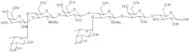
CAS:<p>Difucosyl-para-lacto-N-hexaose II is a blood group oligosaccharide</p>Formula:C52H88N2O39Purity:Min. 95%Color and Shape:White Off-White PowderMolecular weight:1,365.25 g/molLipid IVa
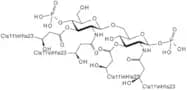
CAS:<p>Lipid IVA is a tetra-acylated precursor molecule of lipid A which is a component of lipopolysaccharides (LPS) on the outer membrane of gram-negative bacteria. On the innate immune cells of hosts there are toll-like receptor 4 (TLR4) and MD-2 which recognize LPS. This recognition event ultimately leads to the activation of NFκB which in turn results in pro-inflammatory cytokine production. Studies have suggested lipid A in Escherichia coli to be an agonist for both mouse and human TLR4, while lipid IVA can induce species specific TLR4 responses. For example for horse and mouse TLR4 and MD-2, Lipid IVA is an agonist where as it is an antagonist for TLR4 and MD-2 in humans.</p>Formula:C68H130N2O23P2Purity:One Main SpotColor and Shape:White PowderMolecular weight:1,405.7 g/molD-Maltose monohydrate
CAS:<p>Please enquire for more information about D-Maltose monohydrate including the price, delivery time and more detailed product information at the technical inquiry form on this page</p>Formula:C12H24O12Purity:Min. 98 Area-%Color and Shape:White PowderMolecular weight:360.31 g/molHeparin derived dp6 saccharide ammonium salt
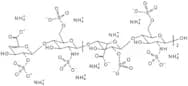
<p>Heparin derived dp6 saccharide ammonium salt is a glycosylation product of heparin. It is a synthetic glycosaminoglycan consisting of alternating units of N-acetylglucosamine and glucuronic acid. This compound is highly water soluble and has been shown to be stable at pH 3-7 for up to 6 hours. The compound has also been subjected to a number of modifications, including methylation, click modification, fluorination, saccharide modification, sugar modification, and oligosaccharide synthesis. The structural formula of this compound can be found in the Chemical Abstracts Service (CAS) number: 234764-56-2 with a molecular weight of 735.81 g/mol. Custom synthesis is available on request.</p>Purity:Approx.75%Color and Shape:PowderMolecular weight:~1800 (Average)Blood Group H type II trisaccharide-PAA-biotin
<p>Blood group antigen conjugated to spacer and biotin</p>Purity:Min. 95 Area-%Color and Shape:PowderMolecular weight:586.6 g/molSafflor Yellow A
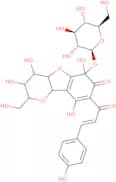
CAS:<p>Safflor Yellow A is a natural drug that has been shown to have hypoglycemic effects. It is a potent inhibitor of glucose-6-phosphatase and glucose-6-phosphate dehydrogenase, which are enzymes involved in the conversion of glucose to glycogen. Safflor Yellow A also inhibits neuronal death, as it blocks the enzyme activities that lead to neuronal cell death. This drug has also shown antitumor activity, as it induces apoptosis in tumor cells. Safflor Yellow A also has antihyperlipidemic effects and can be used for the treatment of coronary heart disease. Low doses of this drug have been shown to reduce systolic pressure in rats and improve blood coagulation. The mechanism of action for this drug is not yet known but may involve toll-like receptor 4 signaling pathways or polymerase chain reaction (PCR).</p>Formula:C27H30O15Purity:Min. 95%Color and Shape:PowderMolecular weight:594.52 g/molMethyl 4,6-O-benzylidene-3-O-(b-D-glucopyranoside)-a-D-glucopyranoside
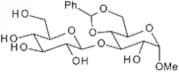
CAS:<p>Methyl 4,6-O-benzylidene-3-O-(b-D-glucopyranoside)-a-D-glucopyranoside is a synthetic oligosaccharide. It is an important building block of polysaccharides and glycoconjugates. This compound is used in the synthesis of complex carbohydrates, such as glycosylation, polysaccharides, and click modification. It can be custom synthesized for research purposes and has been shown to be high purity.</p>Formula:C20H28O11Purity:Min. 95%Molecular weight:444.43 g/molSodium alginate, viscosity 300 - 600 mPa.s
CAS:<p>Sodium alginate is the sodium salt of a polysaccharide obtained from brown seaweeds. The main use for alginate is in textile printing as a thickener in the printing of cottons with reactive dyes. In the food industry it is used as a thickener and gelling agent. The chemical structure consists of blocks of (1,4) linked-β-D-polymannuronic acid (poly M), (1,4) linked-α-L-polyguluronic acid (poly G) and alternating blocks of the two uronic acids (poly MG).</p>Color and Shape:PowderBlood group B trisaccharide 8-methoxycarbonyloctyl ester
CAS:<p>8-methoxycarbonyl ester of Gal-a1-3(Fuc-a1-2)Gal</p>Formula:C28H50O17Purity:Min. 95%Color and Shape:PowderMolecular weight:658.69 g/molTrehalose 6-octanoate
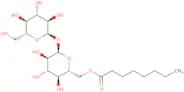
CAS:<p>Trehalose 6-octanoate is a modified form of trehalose that has been synthesized and fluorinated. It is a monosaccharide, which means it is one of the simplest forms of sugar. Trehalose 6-octanoate is an oligosaccharide, which means it is a sugar molecule made up of several smaller sugar molecules. This sugar can be modified to include methyl groups, making it a polysaccharide. Polysaccharides are complex carbohydrates that can often be found in plants or animals. Trehalose 6-octanoate is used in the modification of proteins and lipids for the production of pharmaceuticals and other products.</p>Formula:C20H36O12Purity:Min. 95%Molecular weight:468.49 g/molBlood Group B type II linear trisaccharide
CAS:<p>Core antigen fragment in ABO blood group system</p>Formula:C20H35NO16Purity:Min. 95%Color and Shape:PowderMolecular weight:545.49 g/molDigalactosyldiacylglycerol - 10mg/ml in Chloroform-Methanol
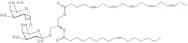
CAS:<p>In plants and algae, the two main galactolipids, monogalactosyldiacyglycerol (MGDG) and digalactosyldiacyglycerol (DGDG), are synthesized by galactosyltransferases in the plastid envelope. They have been linked to the anti-inflammatory and cancer benefits of a green leafy vegetable diet in humans due to their ability to regulate the levels of free radicals like nitric oxide (NO)</p>Formula:C51H84O15Purity:Min. 95%Color and Shape:PowderMolecular weight:937.2 g/molGlobotriose-sp-biotin
<p>Globotriose-sp-biotin is a custom synthesis that contains a fluorinated, methylated, and modified monosaccharide. It is a synthetic oligosaccharide with glycosylation at the reducing end. Globotriose-sp-biotin can be used in the modification of polysaccharides and complex carbohydrates to improve their bioactivity. This product has a CAS number of 127798-73-5 and is listed as an Oligosaccharide under Glycosylations in the Carbohydrate section.</p>Purity:Min. 95%Color and Shape:Powder1,2,4,6-Tetra-O-acetyl-3-O-(2,3,4,6-tetra-O-acetyl-a-D-galactopyranosyl)-D-galactopyranose
CAS:<p>1,2,4,6-Tetra-O-acetyl-3-O-(2,3,4,6-tetra-O-acetyl-aDgalactopyranosyl)-Dgalactopyranose is a modified sugar that can be synthesized by the Click chemistry reaction. It has been used in the modification of saccharides and polysaccharides. This product is CAS No. 123809-61-0 and is available for custom synthesis. 1,2,4,6 tetra O acetyl 3 O-(2 3 4 6 tetra O acetyl a D galactopyranosyl) D galactopyranose is a high purity carbohydrate with glycosylation and fluorination.<br>END> END></p>Formula:C28H38O19Purity:Min. 95%Molecular weight:678.59 g/molMaltotridecaose
CAS:<p>Maltotridecaose is a sugar alcohol with an acceptor group that can be introduced into a cavity in a molecule. It is a sweetener that has been shown to have oligosaccharide properties, which are the molecules that comprise dietary carbohydrates. Maltotridecaose can be found as an unlabeled ingredient in foods such as sugar-free chewing gum, chocolate, and ice cream. The debranching of maltotridecaose occurs by way of glucans and licheniformis.</p>Formula:C78H132O66Purity:Min. 95%Color and Shape:White/Off-White SolidMolecular weight:2,125.84 g/molL-Heptaguluronic acid heptasodium
CAS:<p>Please enquire for more information about L-Heptaguluronic acid heptasodium including the price, delivery time and more detailed product information at the technical inquiry form on this page</p>Formula:C42H58O43•Na7Purity:Min. 95%Molecular weight:1,411.81 g/molTetragalacturonic acid
CAS:<p>Tetragalacturonic acid (α-1,4 galacturonotetraose) is derived from pectin or pectic acid by enzymatic or partial acid hydrolysis (Combo, 2012). It is used inâ¯galacturonic acidâ¯metabolism research as a substrate to identify, differentiate, and characterize endo- and exopolygalacturonase(s), and gluconase(s) (Jayani, 2005). The addition of very short fragments of homogalacturonan, tri-galacturonate, and tetra-galacturonate oligosaccharides restores development in dark-grown, de-etiolated seedling mutants, suggesting that they are unable to generate de-methylesterified pectin fragments. A model of spatiotemporally separated photoreceptive and signal-responsive cell types has been proposed, that contains overlapping subsets of the regulatory network of light-dependent seedling development (Sinclair, 2017).</p>Formula:C24H34O25Purity:(%) Min. 95%Color and Shape:White PowderMolecular weight:722.51 g/mol2-Acetamido-3-O-(2-acetamido-2-deoxy-b-D-glucopyranosyl)-2-deoxy-D-galactopyranose
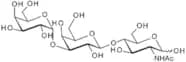
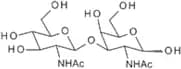
CAS:<p>2-Acetamido-3-O-(2-acetamido-2-deoxy-b-D-glucopyranosyl)-2-deoxy-D-galactopyranose is a methylated, saccharide, Polysaccharide. It is a custom synthesis of a carbohydrate sugar. It is fluorinated to increase its bioavailability. 2 Acetamido 3 O 2 acetamido 2 deoxy b D glucopyranosyl 2 deoxy D galactopyranose has CAS No. 95673 98 6 and the molecular weight is 524.87 g/mol. It has a purity of >99% and comes in powder form.</p>Formula:C16H28N2O11Purity:Min. 95%Color and Shape:White PowderMolecular weight:424.4 g/mol6'-Sialyllactose-BSA
<p>Sialyllactose-BSA is a complex carbohydrate that is used in the synthesis of saccharides. It has been modified with fluorination to create a 6'-sialyllactose-BSA, which is a monosaccharide. This product can be custom synthesized and it's purity is high. The product can be methylated or glycosylated, and it has been click-modified for fluorescence labeling.</p>Purity:Min. 95%Color and Shape:PowderMolecular weight:72,318 g/molLacto-N-neodifucohexaose
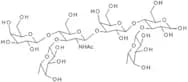
<p>Neutral difucosylated hexasasaccharide naturally present in human breast milk</p>Formula:C38H65NO29Purity:Min. 75%Color and Shape:PowderMolecular weight:999.93 g/molLactose-PAA-biotin
<p>Lactose-PAA-biotin is a biotin linked to lactose by a polyacrylamide linker</p>Purity:Min. 95%Color and Shape:PowderGT3-Oligosaccharide
<p>GT3 oligosaccharide (free acid) is a disaccharide (Galβ1,4Glc) with three sialic acid residues (NeuAc) linked α2,8/α2,8/α2,3 to the galactose residue (Ledeen, 2009). The GT3 ganglioside is the carbohydrate moiety in the GT3 ganglioside, which is implicated in type 1 diabetes. GT3 ganglioside is expressed on pancreatic cells and is the target antigen of anti-GM3-antibodies, which contribute to the autoimmune destruction of pancreatic beta cells (Misasi, 1997). GT3 ganglioside is also abundant in lung tissues and the nervous system.</p>Formula:C45H70N3O35Na3Purity:Min. 90%Color and Shape:PowderMolecular weight:1,282.01 g/molChondroitin sulphate
CAS:<p>Chondroitin sulphate is an inhibitor that has been extensively studied in human and animal models. This active agent has been shown to have a protein inhibitory effect on epithelial cells, as well as an inhibitory effect on cell growth in Chinese medicine and Chinese medicinal plants. Chondroitin sulphate has been found to exhibit inhibitory activity against endothelial cells, which may be due to its ability to inhibit the nuclear translocation of NF-κB. This compound can be detected by liquid chromatography and has been shown to have a significant inhibitory effect on the proliferation of HepG2 cells. Overall, chondroitin sulphate shows great potential for use in healthcare products aimed at regulating cell growth and inflammation.</p>Purity:ReportedColor and Shape:PowderDFP00173
CAS:<p>DFP00173: Potent, selective AQP3 inhibitor; IC50 ~0.1-0.4 μM; less effective on AQP7, AQP9.</p>Formula:C11H7Cl2N3O3SPurity:99.53% - 99.53%Color and Shape:SolidMolecular weight:332.16N-Acetylneuraminic acid hexamer disodium salt
<p>N-Acetylneuraminic acid hexamer disodium salt is a custom synthesis of a fluorinated, methylated and acetylated N-acetylneuraminic acid. This molecule is an oligosaccharide with three sugar rings. It has been modified by click chemistry and glycosylation to create a complex carbohydrate. The CAS number for this compound is 156587-48-2.</p>Formula:C66H98N6O49Na6Purity:Min. 95%Color and Shape:White PowderMolecular weight:1,897.43 g/molHeparin derived disaccharide sodium salt
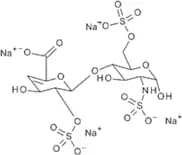
CAS:<p>Heparin derived disaccharide sodium salt is a salt form of heparin. It is a heterogenous mixture of low molecular weight compounds that are composed of sugar residues and sulfation. Heparin derived disaccharide sodium salt has been used for the treatment of thrombocytopenic purpura, thrombotic thrombocytopenic purpura, and other bleeding disorders. This drug also has been used to prevent blood coagulation in patients undergoing surgery.</p>Formula:C12H15NO19S3·Na4Purity:Min. 95%Color and Shape:PowderMolecular weight:665.4 g/molMonofucosyllacto-N-hexaose II
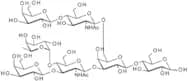
CAS:<p>Monofucosyllacto-N-hexaose II is a tetraol that is used as a reagent in the synthesis of enantioenriched and synthetically tetrasaccharidic products. Monofucosyllacto-N-hexaose II can be obtained by the reaction of Grignard reagents with glucose or by stereoselective reduction of an alpha, beta unsaturated ketone. The presence of the glucose residue in Monofucosyllacto-N-hexaose II makes it an acceptor for esterification reactions. This compound has chiral centers due to its two stereogenic centers at C2 and C3, which are both beta positions on the glucose residue. Monofucosyllacto-N-hexaose II also has a free hydroxyl group at C5 that can be esterified to produce chiral esters.</p>Formula:C46H78N2O35Purity:Min. 95%Molecular weight:1,219.1 g/molChondroitin disaccharide di-6S
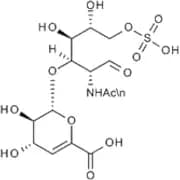
CAS:<p>Chondroitin disaccharide di-6S (CDD6S) is a synthetic, fluorinated oligosaccharide that is used for glycosylation and modification of proteins, polysaccharides, and other biomolecules. It has been shown to be effective in inhibiting the growth of cancer cells by targeting the sugar moiety on cell surface receptors. CDD6S has been modified with methyl groups at various positions on the sugar chain to increase its activity against certain cancers.</p>Formula:C14H21NO15SPurity:Min. 95%Molecular weight:475.38 g/mol3,6-Di-O-acetyl-4-O-(2,3,4,6-tetra-O-acetyl-b-D-galactopyranosyl)-D-glucal
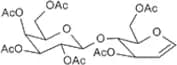
CAS:<p>3,6-Di-O-acetyl-4-O-(2,3,4,6-tetra-O-acetyl-b-D-galactopyranosyl)-D-glucal is a nacetyllactosamine that is structurally similar to the natural substrate for lactohexosaminidase. This compound inhibits the enzyme activity of this enzyme and other related enzymes. 3,6-Di-O-acetyl-4,6 D -glucal has been shown to inhibit endothelial cell growth in vitro. It also binds to the receptor on endothelial cells and blocks the signal pathways involved in cell growth. The glucose moiety of 3,6 Di O acetyl 4,6 D glucal inhibits lipases by binding to their active sites.</p>Formula:C24H32O15Purity:Min. 95%Color and Shape:White PowderMolecular weight:560.5 g/molNeoagarooctaose
CAS:<p>Agarose is a polysaccharide found in red algae, typically Gelidium and Gracilaria. It is a strictly alternating polysaccharide of α-1,3 linked D-galactose and β-1,4 linked L-3,6 anhydrogalactose with occasional sulfation at position 6 of the anhydrogalactose residue. Agaro-oligosaccharides result from cleavage at galactose residues and neoagaro-oligosaccharides from cleavage at 3,6-anhydro residues. Neoagarooctaose is reported to have potential for novel cosmeceuticals.</p>Formula:C48H74O37Purity:Min. 98 Area-%Color and Shape:White PowderMolecular weight:1,243.08 g/molGlobotriaosylsphingosine
CAS:<p>Globotriaosylsphingosine is dramatically increased in plasma of classically affected male Fabry patients and plasma and tissues of Fabry mice. Globotriaosylsphingosine was shown to be an inhibitor of α-galactosidase A activity. Furthermore, exposure of smooth muscle cells, but not fibroblasts, to globotriaosylsphingosine at concentrations observed in plasma of patients promotes proliferation. It was suggested that measurement of circulating globotriaosylsphingosine would be useful to monitor Fabry disease and may contribute to a better understanding of the disorder.</p>Formula:C36H67NO17Purity:Min. 95%Color and Shape:PowderMolecular weight:785.91 g/molAcarbose Impurity E
CAS:<p>Acarbose Impurity E is an impurity found in acarbose. It is a natural, API impurity and is a synthetic impurity standard. Acarbose Impurity E has been used in drug development research and development, as well as in the HPLC analysis of acarbose to generate a pharmacopoeia-grade purity standard.</p>Purity:Min. 95%Zopolrestat
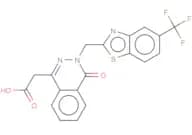
CAS:<p>Zopolrestat (CP 73850) is a potent inhibitor of aldose reductase (IC50 = 3.1 nM).</p>Formula:C19H12F3N3O3SPurity:99.74%Color and Shape:SolidMolecular weight:419.38COR659
CAS:<p>COR659: suppresses alcohol/chocolate intake in rats; enhances GABAB receptor, blocks CB1 receptor.</p>Formula:C16H16ClNO3SPurity:99.75%Color and Shape:SolidMolecular weight:337.82Miglustat hydrochloride
CAS:<p>Miglustat hydrochloride (N-Butyldeoxynojirimycin hydrochloride) is an inhibitor of glucosylceramide synthase and can be used for studies about Type I Gaucher</p>Formula:C10H22ClNO4Purity:99.85%Color and Shape:SolidMolecular weight:255.74Acarbose EP Impurity H
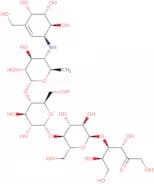
CAS:<p>Acarbose EP Impurity H is an impurity of acarbose, a drug product used in the treatment of type II diabetes. Acarbose is a natural product and its synthesis starts from a chemical called alpha-D-glucopyranosyl-3-O-[2,4,6-trichloro-3-(trifluoromethyl)phenyl]pyridine. Acarbose is metabolized by the liver to form Acarbose EP Impurity H. The metabolism studies of this impurity have shown that it has niche pharmacological properties. Acarbose EP Impurity H can be used as an analytical or API impurity for HPLC standard or as a synthetic intermediate for pharmaceutical research and development.</p>Formula:C25H43NO17Purity:Min. 95%Molecular weight:629.61 g/molb-D-Gentiotriose
CAS:<p>b-D-Gentiotriose is a synthetic fluorinated monosaccharide that is used in the synthesis of oligosaccharides and polysaccharides. This product can be customized for glycosylation, methylation, or click modification. The purity level of this product is greater than 99%, making it suitable for use in pharmaceuticals, food additives, and other applications.</p>Formula:C18H32O16Purity:Min. 95%Molecular weight:504.44 g/mol



![(5aS,10aS)-Tetrahydrodipyrrolo[1,2-a:1',2'-d]pyrazine-3,5,8,10(2H,5aH)-tetraone](/_next/image/?url=https%3A%2Fstatic.cymitquimica.com%2Fproducts%2F3D%2Fthumb-webp%2FIT145577.webp&w=3840&q=75)