Carbohydrates and glycoconjugates
Carbohydrates are organic compounds composed of carbon, hydrogen, and oxygen, with a basic structure formed by monosaccharides. These can combine to form disaccharides, oligosaccharides, or polysaccharides, depending on the number of monomeric units. Carbohydrates play a fundamental role in energy storage, cell structure, and cellular communication. Their derivatives are used in pharmaceutical products, such as sweeteners and excipients.
At CymitQuimica, we offer a wide range of carbohydrates and their derivatives for research and industrial applications.
Found 5010 products of "Carbohydrates and glycoconjugates"
Sort by
Purity (%)
0
100
|
0
|
50
|
90
|
95
|
100
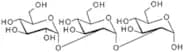
Kojitriose
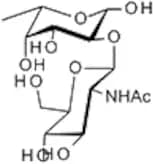
CAS:<p>Kojitriose is a disaccharide composed of two glucose molecules. It has been shown to have insulin-sensitizing effects in animals and humans. Kojitriose binds to the surface of Streptococcus faecalis and prevents the growth of this bacteria. Kojitriose also has an inhibitory effect on mesenteroides, which are a type of bacterium found in the human gut. This disaccharide is enzymatically hydrolyzed to produce hydrogen fluoride, which inhibits the growth of Streptococcus faecalis and mesenteroides. The enzyme trehalase is responsible for this hydrolysis reaction, while hydroxyl groups act as nucleophiles that react with chloride ions to form hydrogen fluoride.</p>Formula:C18H32O16Purity:Min. 95%Color and Shape:PowderMolecular weight:504.44 g/molBlood Group H disaccharide, spacer-biotin conjugate
<p>The blood group H disaccharide is a custom synthesis, complex carbohydrate with an Oligosaccharide and CAS No. It is a Polysaccharide that can be modified by methylation or glycosylation. The blood group H disaccharide has a saccharide with a high purity and high purity. It is fluorinated at the 2' position of the sugar moiety in the backbone. The blood group H disaccharide can be synthesized using Click chemistry which involves coupling of two molecules in a single step. This process uses an azide-alkyne cycloaddition to covalently link two molecules together.</p>Formula:C31H54N4O13SPurity:Min. 95%Molecular weight:722.85 g/mol1,4-D-Xylobiose
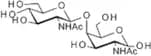
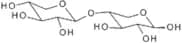
CAS:<p>1,4-D-Xylobiose, also called 4-O-(b-D-Xylopyranosyl)-D-xylopyranose, is a beta 1-4 linked disaccharide made of 2 xylose monomers. 1,4-D-Xylobiose is a low-calories sweetener that can be used as an alternative or additive to sucrose. Supplementing a high fat diet with 1,4-D-xylobiose has been shown to prevent and treat obesity in mice.</p>Formula:C10H18O9Purity:Min. 95 Area-%Color and Shape:White PowderMolecular weight:282.25 g/molMan-4 N-Glycan
<p>Man-4 N-glycan is an oligosaccharide that is modified with a methyl group at the 4th carbon atom. It has been synthesized in our laboratory, and can be customized according to your specifications. Man-4 N-glycan is highly pure and has a purity of 98% or higher. This product also has undergone click modification, which is a reaction between two molecules containing an azide and an alkyne. The resulting product contains a fluorine atom on the 4th carbon atom. Contact us for more information about this product.</p>Formula:C40H68N2O31Purity:Min. 95%Molecular weight:1,072.96 g/mol3-O-(2-Acetamido-2-deoxy-b-D-glucopyranosyl)-D-mannopyranose
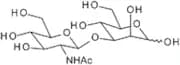
CAS:<p>3-O-(2-Acetamido-2-deoxy-b-D-glucopyranosyl)-D-mannopyranose is a disaccharide that is part of the glycosaminoglycan family. It has an antigenic epitope that is recognized by antibodies, which are found in patients with rheumatoid arthritis and other autoimmune diseases. 3-O-(2-Acetamido-2-deoxy-b-D-glucopyranosyl)-D-mannopyranose is also known as glucosamine.</p>Formula:C14H25NO11Purity:Min. 95 Area-%Color and Shape:PowderMolecular weight:383.35 g/molThiocellobiose
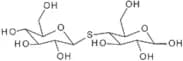
CAS:<p>Competitive inhibitor of β-glucosidase from Streptomyces sp. and Paenibacillus polymyxa, occupying enzyme’s aglycone-binding site. The compound is also a potent inducer of cellulase and other lignin-degrading enzymes in Schizophyllum commune.</p>Formula:C12H22O10SPurity:Min. 95%Color and Shape:Off-White PowderMolecular weight:358.36 g/molα1,3-Galactobiosyl β-methyl glycoside
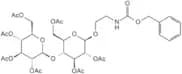
<p>a1,3-Galactobiosyl b-methyl glycoside is a fluorinated saccharide that possesses the same chemical structure as N-acetylgalactosamine. It has been synthesized by click modification with methyl iodide and methyl bromoacetate. The synthesis of this compound was achieved by glycosylation of galactose with 1,3-diiodo-2,2'-bithiopropane followed by methylation of the resulting glycosylation product with methyl bromoacetate to form the desired compound. This carbohydrate can be used in a variety of applications including anti-inflammatory drugs, antibiotics, and cancer treatments.</p>Formula:C13H24O11Purity:Min. 95%Color and Shape:White/Off-White SolidMolecular weight:356.32 g/mol[2-[[2,3,6-Tri- O- acetyl- 4- O- (2, 3, 4, 6- tetra- O- acetyl- b- D- glucopyranosyl) - b- D- glucopyranosyl] oxy] ethyl] - carbamic acid phenylmethyl ester
CAS:<p>The conformation of the 2-[[2,3,6-tri-O-acetyl-4-O-(2,3,4,6-tetra-O-acetyl-βDglucopyranosyl)-βDglucopyranosyl]oxy]ethyl]carbamic acid phenylmethyl ester molecule has been studied by X-ray crystallography. The molecule adopts a chair conformation with the two acetyl groups occupying equatorial positions. The molecule is planar with an angle of 110° between the NH and CO axes. The calculated electron diffraction pattern was in good agreement with the experimental data. The analysis yielded a set of independent amplitudes for each reflection that were analysed to give structure constants and electron distributions.</p>Purity:Min. 95%Kojitetraose
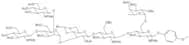
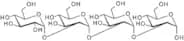
CAS:<p>Kojitetraose is a nutrient that is synthesised in the human body and found in foods such as dairy products, meat, eggs, and vegetables. Kojitetraose is a phosphorylase substrate and can be used to study thermophilic phosphorylases. It has been shown that the stereoselectivity of phosphorylases can be determined by the configuration of the glycosidic bond in the reactant or product. Structural studies have also shown that Kojitetraose binds to teichoic acid and trehalose, which are components of bacterial cell walls. Kojitetraose has been shown to stimulate intestinal contractions in rats and increase salivary secretion.</p>Formula:C24H42O21Purity:Min. 95%Molecular weight:666.58 g/mol4-Methoxyphenyl 4-O-{4-O-[[3-O-(2,4-di-O-[3,4,6-tri-O-Ac-2-PhthN-β-D-Glc)-3,6-di-O-Bn-α-D-Man]-4,6-O-benzylidene-β-D-Glc]]-3,6-di-O- Bn-2-PhthN-β-D-Glc}-3-O-Bn-6-O-(tri-O-Bn-α-L-Fuc)-2-PhthN-β-D-Glc
<p>4-Methoxyphenyl 4-O-[4-O-(3,4,6-tri-O-acetyl-2,4,6-trimethylbenzoyl)-b-D-glucopyranosyl]-3,6-di-O-[α-(1→2)-bromoacetamido]-b-D-glucopyranoside is a complex carbohydrate which belongs to the group of glycosides. It was synthesized by modification of the natural bovine erythrocyte glycoglycerolipid (glycolipid) and monosaccharide (monoglyceride). The synthesis is based on a series of reactions that include methylation and fluorination. This compound has been shown to have high purity and can be made in custom synthesis.</p>Formula:C156H154N4O46Purity:Min. 95%Molecular weight:2,820.89 g/molDi-N-acetyl-D-lactosamine
<p>Di-N-acetyl-D-lactosamine (DNL) is a sugar that is found in the mammalian tissues and can be used as a lectin to specifically bind to glycoproteins. It has been shown to have specificities for enteritis, and can be used to detect or analyze the sequences of oligosaccharides. DNL has been immobilized on silica gel, which was then reacted with lectins, such as concanavalin A, wheat germ agglutinin, and soybean agglutinin. This process allows for the detection of high-mannose-type oligosaccharides.</p>Formula:C28H48N2O21Purity:Min. 95%Color and Shape:PowderMolecular weight:748.68 g/mol3'-Sialyl-N-acetyllactosamine sodium salt
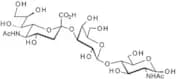
CAS:<p>Component of glycoproteins and glycolipids expressed in antigens and receptors of proteins, bacteria and viruses. Found in the free form in human biofluids, including urine and milk - preventing adhesion of bacteria to urinary epithelium and inhibiting enteric pathogens respectively. An efficient inhibitor of neutrophil-activating protein of H.pylori (HPNAP)-mediated neutrophil activation.</p>Formula:C25H42N2O19·NaPurity:Min. 95%Color and Shape:White Off-White PowderMolecular weight:697.59 g/molSucralose
CAS:<p>Sucralose, an artificial sweetener, was discovered in a research programme supported by Tate & Lyle to halogenate sucrose. The majority of ingested sucralose is not broken down by the body, so it is noncaloric. In the European Union, it has been given the E number E955. Sucralose is about 320 to 1,000 times sweeter than sucrose, three times as sweet as both aspartame and acesulfame potassium, and twice as sweet as sodium saccharin. It is stable under heat and over a broad range of pH conditions. Therefore, it can be used in baking or in products that require a long shelf life. The commercial success of sucralose-based products stems from its favorable comparison to other low-calorie sweeteners in terms of taste profile, stability, and safety.</p>Formula:C12H19Cl3O8Purity:Min. 98 Area-%Color and Shape:White PowderMolecular weight:397.63 g/mol1-(3'-Azidopropyl)-2-deoxy-4-O-[3-O-(p-phenoxybenzyl)-b-D-galactopyranosyl]-2-phthalimido-b-D-glucopyranoside
<p>1-(3'-Azidopropyl)-2-deoxy-4-O-[3-O-(p-phenoxybenzyl)-b-D-galactopyranosyl]-2-phthalimido-b-D-glucopyranoside is a modification of an oligosaccharide. It is synthesized by the methylation and glycosylation of a monosaccharide, then fluorinated and saccharified. 1-(3'-Azidopropyl)-2-deoxy-4-O-[3-O-(p-phenoxybenzyl)-b -D -galactopyranosyl]-2 -phthalimido b -D -glucopyranoside is a white powder that can be used in the synthesis of complex carbohydrates.</p>Purity:Min. 95%3-(b-D-Mannopyranosyl)-D-rhamnose
<p>3-(b-D-Mannopyranosyl)-D-rhamnose is a custom synthesized carbohydrate that is modified by fluorination. It is also a complex carbohydrate with an Oligosaccharide, sugar, and a Monosaccharide. 3-(b-D-Mannopyranosyl)-D-rhamnose has high purity and can be used for methylation, glycosylation, or Click modifications. Click modification is an organic chemistry technique that uses a copper ion to add chemical groups to the surface of molecules. This provides access to new functionalities, such as increased solubility or stability in organic solvents.</p>Purity:Min. 95%2-O-(2-Acetamido-2-deoxy-b-D-glucopyranosyl)-L-fucopyranose
<p>This is a custom synthesis of 2-O-(2-acetamido-2-deoxy-b-D-glucopyranosyl)-L-fucopyranose, which is an oligosaccharide that has been modified by methylation and glycosylation. This product is a white solid with a molecular weight of 671.87 and a melting point of 137°C. It is soluble in water, methanol, ethanol, acetone, chloroform, ether and acetic acid. The purity of this product is more than 99%.</p>Formula:C14H25NO10Purity:Min. 95%Molecular weight:367.35 g/mol2-Acetamido-4-O-(2-acetamido-2-deoxy-b-D-glucopyranosyl)-2-deoxy-D-galactopyranose
CAS:<p>2-Acetamido-4-O-(2-acetamido-2,3-dideoxy-b-D-glucopyranosyl)-2,3,6,7-tetraaminopyranose (1) is a custom synthesis that has been modified by fluorination of the C5 and C6 hydroxyl groups and methylation of the C2 hydroxy group. It has also been shown to be effective in inhibiting the growth of bacteria such as Staphylococcus aureus and Clostridium perfringens. 2-Acetamido-4-O-(2,3,6,7,-tetraaminopyranose) (1) is an oligosaccharide with four sugar units that can be glycosylated to produce complex carbohydrates.</p>Formula:C16H28N2O11Purity:Min. 95%Molecular weight:424.4 g/molD-Lactose monohydrate
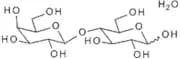
CAS:<p>Lactose is the principal sugar in human and most other mammalian milks, ( 4-O-(β-d-galactopyranosyl)-d-glucopyranose) (Collins, 2006). Lactose undergoes mutarotation; it is a reducing sugar and is significantly less soluble in water than sucrose. Lactose is much less sweet than sucrose (at ~1% about 0.15 (sucrose=1). The enzyme lactase (β-galactosidase), which is present in the small intestine, catalyzes hydrolysis of lactose to form glucose and galactose. Anhydrous lactose is an excipient, filler, diluent, and bulking agent in a wide variety of pharmaceutical tablets, capsules, powders and other preparations. Lactose also has applications as a nutrient and multi-functional ingredient in infant formulae, geriatric, dietetic and health foods (Linko, 1982).</p>Formula:C12H22O11·H2OPurity:Min. 96 Area-%Color and Shape:White Off-White PowderMolecular weight:360.31 g/mol4-Methoxyphenyl 4-O-{4-O-[[3-O-[2,4-di-O-(3,4,6-tri-O-acetyl-2-deoxy-2-phthalimido-β-D-glucopyranosyl)-3,6-di-O-benzyl-α-D-mannopyra nosyl]-4,6-O-benzylidene-2-O-levulinoyl-β-D-glucopyranosyl]]-3,6-di-O-benzyl-2-deoxy-2-phthalimido-β-D-glucopyranosyl}
<p>4-Methoxyphenyl 4-O-{4-O-[3,6-di-O-(3,4,6-tri-O-acetyl-2-deoxy-2-phthalimido-bDglucopyranosyl)-2,4,6-trihydroxybenzylidene]-aDmannopyra nosyl} -3,6diO(benzyl) -2deoxy2phthalimido -bDglucopyranoside is a high purity synthetic oligosaccharide. It is a complex carbohydrate with a high degree of polymerization. This product has been synthesized by Click modification and fluorination. The product contains an acetate group at the reducing end of the sugar chain and may be glycosylated. The CAS number for this product is</p>Formula:C161H160N4O48Purity:Min. 95%Molecular weight:2,918.99 g/mola,a-D-Trehalose dihydrate - high purity
CAS:<p>Non-reducing disaccharide; mildly sweet energy source; protein stabilizer</p>Formula:C12H22O11·2H2OPurity:Min. 99 Area-%Color and Shape:PowderMolecular weight:378.33 g/mol



![4-Methoxyphenyl 4-O-{4-O-[[3-O-(2,4-di-O-[3,4,6-tri-O-Ac-2-PhthN-β-D-Glc)-3,6-di-O-Bn-α-D-Man]-4,6…](/_next/image/?url=https%3A%2Fstatic.cymitquimica.com%2Fproducts%2F3D%2Fthumb-webp%2FOM11013.webp&w=3840&q=75)

![1-(3'-Azidopropyl)-2-deoxy-4-O-[3-O-(p-phenoxybenzyl)-b-D-galactopyranosyl]-2-phthalimido-b-D-gluc…](/_next/image/?url=https%3A%2Fstatic.cymitquimica.com%2Fproducts%2F3D%2Fthumb-webp%2FOA74915.webp&w=3840&q=75)