Carbohydrates and glycoconjugates
Carbohydrates are organic compounds composed of carbon, hydrogen, and oxygen, with a basic structure formed by monosaccharides. These can combine to form disaccharides, oligosaccharides, or polysaccharides, depending on the number of monomeric units. Carbohydrates play a fundamental role in energy storage, cell structure, and cellular communication. Their derivatives are used in pharmaceutical products, such as sweeteners and excipients.
At CymitQuimica, we offer a wide range of carbohydrates and their derivatives for research and industrial applications.
Found 5013 products of "Carbohydrates and glycoconjugates"
Sort by
Purity (%)
0
100
|
0
|
50
|
90
|
95
|
100
Glycyl-Oligosaccharidesmannose 3(a)
<p>Glycyl-Oligosaccharidesmannose 3(a) (GL3(a)) is a complex carbohydrate that is composed of mannose and glycyl chains. It has been modified with methyl, click, fluorination, and saccharide modifications. GL3(a) has been synthesized using custom synthesis methods that yield high purity.</p>Formula:C36H62N4O26Purity:Min. 95%Molecular weight:966.89 g/molG1F Glycan, 2-AB labelled
<p>G1F Glycan, 2-AB labelled is a complex carbohydrate that is modified by the addition of fluorine and saccharide. It can be custom synthesized to order with a purity of >98% and is available from Sigma-Aldrich.</p>Purity:Min. 95%GD3-Ganglioside ammonium
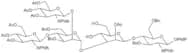
CAS:<p>GD3 ganglioside (shown as sodium salt) has a core disaccharide structure (Gal-1,4-Glc) with two sialic acids linked to the non-reducing galactose residue, and ceramide linked to position 1 on the reducing terminal glucose residue (Ledeen, 2009). GD3 ganglioside is a minor ganglioside in most normal tissues but plays a crucial role in the development of the brain; its presence is significantly reduced in adults. However, expression of GD3 ganglioside is increased in pathological conditions, such as, cancers and neurodegenerative disorders (Malisan, 2002). GD3 ganglioside was the first cancer-associated ganglioside discovered, that promotes adhesion and invasion of cancers. GD3 ganglioside and GD2 ganglioside are highly expressed in a various malignant cancers and have become potential targets for next-generation cancer therapy (Liu, 2018).</p>Formula:C70H125N3O29·xNH4Purity:Min. 95%Color and Shape:Powder4-Methoxyphenyl 4-O-{2-O-acetyl-4-O-[2,4-di-O-(3,4,6-tri-O-acetyl-2-deoxy-2-phthalimido-β-D-glucopyranosyl)-3,4-di-O-benzyl-α-D-mann opyranosyl]-β-D-mannopyranosyl}-3,6-di-O-benzyl-2-deoxy-2-phthalimido-β-D-glucopyranoside
<p>4-Methoxyphenyl 4-O-{2-O-acetyl-4-O-[2,4-di-O-(3,4,6-tri-O-acetyl-2,3,5,6 -tetra-O-[(triisopropylsilyl)oxy]-2,5 -dideoxyglucan]-b-(D)-glucopyranosyl)-3,4di O-[benzyl]-a-(D)-mannopyranosyl}b-(D)-mannopyranoside is a high purity custom synthesis sugar. It can be fluorinated and glycosylated with methylation and modification. This compound is an oligosaccharide that can be used as a monosaccharide or complex carbohydrate.</p>Formula:C103H105N3O37Purity:Min. 95%Molecular weight:1,976.93 g/molMycothione
<p>Please enquire for more information about Mycothione including the price, delivery time and more detailed product information at the technical inquiry form on this page</p>Formula:C34H58N4O24S2Purity:Min. 95%Molecular weight:970.97 g/mol4-Aminobutyl 3-O-(a-D-mannopyranosyl)-a-D-mannopyranoside
<p>4-Aminobutyl 3-O-(a-D-mannopyranosyl)-a-D-mannopyranoside is a fluorescent, water soluble, and hydrophilic glycoside. This compound is synthesized through the condensation of 4-aminobutyric acid with 3-(2,3,4,6-tetraacetyl glucosamine) to form an aminobutyl ester. The aminobutyl ester is then reacted with a D-mannose derived from 2,3,4,6-tetraacetyl glucosamine. This product is used in glycoprotein analysis and can be modified for various purposes.</p>Purity:Min. 95%6-Deoxy-6-fluoro-D-lactosylamine
<p>6-Deoxy-6-fluoro-D-lactosylamine (6DFDLA) is a Custom synthesis, Modification, Fluorination, Methylation, Monosaccharide, Synthetic, Click modification, Oligosaccharide, saccharide. It is a polysaccharide that contains a glycosyl linkage between two or more monosaccharides. The carbons of 6DFDLA are derived from glucose and galactose. 6DFDLA is a carbohydrate that can be classified as either simple or complex carbohydrates.</p>Purity:Min. 95%a1-3[a1-6]a1-6[a1-3]Mannopentaose
CAS:<p>Found in glycoproteins including ovalbumin and human immunoglobulin M</p>Formula:C30H52O26Purity:Min. 95 Area-%Color and Shape:White PowderMolecular weight:828.72 g/molβ-Gentiobiose octaacetate
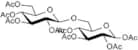
CAS:<p>Beta-gentiobiose octaacetate is a macrocyclic structure that is glycosidated with an antigen. It has a neutralizing effect on the biological properties of the antigen. Beta-gentiobiose octaacetate has shown antitumour activity in animals, which may be due to its ability to inhibit tumor cell proliferation. Beta-gentiobiose octaacetate also has high fluidity and can be used as an oligosaccharide antigen in biological research. The molecule has a constant molecular weight of 400 Da and is conjugated with proton, which makes it useful for electron microscopy.</p>Formula:C28H38O19Purity:Min. 95%Color and Shape:White PowderMolecular weight:678.59 g/molMan-5 Glycan, 2-AB labelled
<p>Man-5 Glycan, 2-AB labelled is a synthetic oligosaccharide that contains a mannose and a galactose moiety. It has been synthesized by click chemistry with the use of 2-aminobenzaldehyde and glycosylation with methylated and fluorinated mannose. This compound is used as a standard for the detection of carbohydrate binding proteins.</p>Purity:Min. 95%3'-(N-Glycolyl-a-neuraminosyl)lactose
CAS:<p>3'-(N-Glycolyl-a-neuraminosyl)lactose is a carbohydrate that is synthesized from lactose, which is a disaccharide composed of glucose and galactose. It is synthesized by the modification of the terminal hydroxyl group on the galactose moiety with glycolyl chloride. 3'-(N-Glycolyl-a-neuraminosyl)lactose has been shown to inhibit the growth of bacteria and fungi. It also has the potential to be used as an anti-cancer drug candidate due to its ability to inhibit protein synthesis in cells. This carbohydrate can also be modified by methylation, glycosylation, or click chemistry.</p>Formula:C23H39NO20Purity:Min. 95%Molecular weight:649.55 g/mol4-Aminophenyl 2,3,6-tri-O-acetyl-4-O-(2,3,4,6-tetra-O-acetyl-b-D-glucopyranosyl)-b-D-thioglucopyranoside
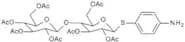
CAS:<p>4-Aminophenyl 2,3,6-tri-O-acetyl-4-O-(2,3,4,6-tetra-O-acetyl-b-D-glucopyranosyl)-b-D-thioglucopyranoside is a custom synthesis that has been fluorinated and methylated. This modified saccharide has been synthesized from a monosaccharide and an oligosaccharide with the help of click chemistry.<br>The CAS number for this product is 60515-61-9.</p>Formula:C32H41NO17SPurity:Min. 95%Color and Shape:PowderMolecular weight:743.73 g/molNeu5GcAc[1Me,4789Ac]a(2-6)Gal[24Bz,3Bn]-b-MP
<p>Neu5GcAc[1Me,4789Ac]a(2-6)Gal[24Bz,3Bn]-b-MP is a custom synthesis of an oligosaccharide. This complex carbohydrate has a CAS No. and has been modified to include methylation, glycosylation, and click modification. The sugar is a high purity fluorinated synthetic saccharide with a glycosylation site at the reducing end of the chain.</p>Formula:C56H61NO23Purity:Min. 95%Molecular weight:1,116.08 g/molb-D-(2-Acetamido-2-deoxy-D-glucopyranosyl)-2-acetamido-2-deoxy-b-D-thioglucopyranoside
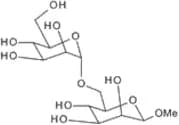
<p>b-D-(2-Acetamido-2-deoxy-D-glucopyranosyl)-2-acetamido-2-deoxy-b-D-thioglucopyranoside is an oligosaccharide that belongs to the carbohydrate class. It is a fluorinated monosaccharide with a high purity and custom synthesis. This compound is methylated and glycosylated, making it a complex carbohydrate with click modification.</p>Formula:C16H28N2O10SPurity:Min. 95%Color and Shape:Off-white to light brown crystals.Molecular weight:440.47 g/molMethyl 6-O-(a-D-mannopyranosyl)-b-D-mannopyranoside
CAS:<p>Methyl 6-O-(a-D-mannopyranosyl)-b-D-mannopyranoside is a carbohydrate that has been modified with fluorination. It is synthesized by the methylation of glucose and mannose residues, followed by glycosylation. Methyl 6-O-(a-D-mannopyranosyl)-b-D-mannopyranoside is a custom synthesis and can be ordered in high purity.</p>Formula:C13H24O11Purity:Min. 95%Color and Shape:White To Off-White SolidMolecular weight:356.32 g/mol2-O-(a-D-Galactopyranosyl)-b-D-fucopyranosyl propylamine
CAS:<p>2-O-(a-D-Galactopyranosyl)-b-D-fucopyranosyl propylamine is a glycosylated synthetic compound with a molecular weight of 726.2. It is an excellent substrate for the glycosylation of proteins and nucleic acids, as well as an excellent candidate for Click modification, fluorination, saccharide modification and custom synthesis. 2-O-(a-D-Galactopyranosyl)-b-D-fucopyranosyl propylamine is a high purity product available in bulk quantities.</p>Formula:C15H29NO10Purity:Min. 95%Molecular weight:383.39 g/molLactose 6'-sulfate
CAS:<p>Lactose 6'-sulfate is a custom synthesis of a complex carbohydrate and an oligosaccharide. It is modified by methylation and glycosylation, which can be altered to create other saccharides such as galactose. Lactose 6'-sulfate has been fluorinated in the alpha position and contains a sulfate group that is attached with a click chemistry reaction. Lactose 6'-sulfate has CAS number 1015758-24-3 and is high purity.</p>Formula:C12H22O14SPurity:Min. 95%Color and Shape:PowderMolecular weight:422.36 g/mol6'-(D-[UL-13C6]Galactosyl)lactose
CAS:<p>Galactosyllactose attenuated NF-κB inflammatory signaling in human intestinal epithelial cells and in human immature intestine. Thus, galactosyllactoses are strong anti-inflammatory agents in human colostrum and early milk, contributing to innate immune modulation. This product has a 13C heavy-label and so can be used in applications such as metabolic tracing and quantitative mass spectrometry.</p>Formula:C6C12H32O16Purity:Min. 90 Area-%Molecular weight:510.39 g/molGlobo-N-tetraose GEL
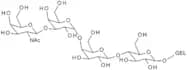
<p>Immobilised on Fractogel with glycosylamine formation of the monosaccharide</p>Purity:Min. 95%Methyl protodioscin
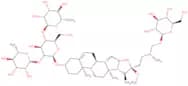
CAS:<p>Methyl protodioscin is a natural compound that has been shown to have a promising therapeutic effect on autoimmune diseases. Methyl protodioscin is derived from soybean extract and it is known to inhibit the translocation of bacteria across the gut wall, which could be due to its ability to regulate mucin gene expression. In vitro assays show that methyl protodioscin has an effect on mitochondrial membrane potential, which may be related to its anti-inflammatory properties. The effects of methyl protodioscin on mitochondrial functions were studied in C. glabrata, and it was shown that this compound can be used as a therapeutic agent for balloon injury.<br>Methyl protodioscin also inhibits the growth of Candida albicans and other fungi in vivo, suggesting that this compound might have antifungal activity.</p>Formula:C52H86O22Purity:Min. 95%Molecular weight:1,063.23 g/mol


![a1-3[a1-6]a1-6[a1-3]Mannopentaose](/_next/image/?url=https%3A%2Fstatic.cymitquimica.com%2Fproducts%2F3D%2Fthumb-webp%2FOM05332.webp&w=3840&q=75)
![Neu5GcAc[1Me,4789Ac]a(2-6)Gal[24Bz,3Bn]-b-MP](/_next/image/?url=https%3A%2Fstatic.cymitquimica.com%2Fproducts%2F3D%2Fthumb-webp%2FON60601.webp&w=3840&q=75)



![6'-(D-[UL-13C6]Galactosyl)lactose](/_next/image/?url=https%3A%2Fstatic.cymitquimica.com%2Fproducts%2F3D%2Fthumb-webp%2FOG15067.webp&w=3840&q=75)