


Benzimidazole and Imidazole Derivatives
Benzimidazole is a compound consisting of a benzene ring fused to an imidazole ring, a five-membered structure containing two nitrogen atoms. Benzimidazole derivatives, such as albendazole, are known for their antiparasitic and antifungal activity, used in the treatment of parasitic infections and certain parasitic diseases in animals and humans. Imidazole, on the other hand, is a five-membered structure with two nitrogen atoms found in various biologically active compounds. Imidazole derivatives, such as metronidazole, have antimicrobial and antiparasitic properties. These compounds are also used in the pharmaceutical industry for treating bacterial infections, parasitic diseases, and some fungal infections, as well as in organic chemistry as catalysts.
At CymitQuimica, we offer high-purity benzimidazoles and imidazoles for research in medicinal chemistry, pharmacology, and biotechnology.
Found 10376 products of "Benzimidazole and Imidazole Derivatives"
Sort by
Purity (%)
0
100
|
0
|
50
|
90
|
95
|
100
2-[[[(4-Methoxypropoxy)-3-methyl-2-pyridinyl]methyl]sulfonyl]-1H-benzimidazole
CAS:<p>2-[[[(4-Methoxypropoxy)-3-methyl-2-pyridinyl]methyl]sulfonyl]-1H-benzimidazole is a protonated sulfonamide that is used as an analytical method to detect the presence of other drugs in human liver tissue. It has been shown to inhibit the activity of cytochrome P450 3A4 (CYP3A4), one of the enzymes responsible for metabolizing many drugs. Bromoenol lactone and powder diffraction spectrum are two additional analytical methods that can be used to detect 2-[([(4-methoxypropoxy)-3-methyl-2-pyridinyl]methyl]sulfonyl]-1H-benzimidazole.</p>Formula:C18H21N3O4SPurity:Min. 95%Color and Shape:White/Off-White SolidMolecular weight:375.44 g/mol2,3-Dichlorobenzoic acid
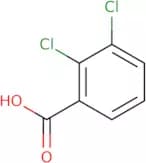
CAS:<p>2,3-Dichlorobenzoic acid is an organic compound that belongs to the class of carboxylates. It is used as a drug substance in the treatment of mycobacterial infections. 2,3-Dichlorobenzoic acid has been shown to have antimicrobial activity against Mycobacterium tuberculosis and other mycobacteria. The sensitivity index for this compound was determined using a chromatographic method with human erythrocytes as the test organism. 2,3-Dichlorobenzoic acid displays its antibacterial activity by inhibiting protein synthesis and cell division. This drug also forms crystalline solids that are soluble in organic solvents such as chloroform or benzene.</p>Formula:C7H4Cl2O2Purity:Min. 95%Color and Shape:PowderMolecular weight:191.01 g/mol5,6-Dimethoxy-2-(4-piperidinyl)methyleneindan-1-one (donepezil impurity)
CAS:<p>5,6-Dimethoxy-2-(4-piperidinyl)methyleneindan-1-one (donepezil impurity) is an analytical standard used as a reference in HPLC assays for donepezil. It is also a metabolite of donepezil and has been found to have pharmacological activity similar to that of the parent compound. This impurity is present in donepezil drug products at levels up to 0.5%.</p>Formula:C17H21NO3Purity:Min. 95%Molecular weight:287.35 g/mol4-Isobutyl-2-pyrrolidinone
CAS:<p>4-Isobutyl-2-pyrrolidinone is a colorless liquid that belongs to the category of phosphites. It has a high boiling point, which makes it suitable for use in organic solvents and as a heat transfer agent. The thermodynamic properties of 4-Isobutyl-2-pyrrolidinone have been evaluated using the protonation theory. It can be protonated at either the nitrogen or the methyl group, and both forms are present in solution. This means that 4-Isobutyl-2-pyrrolidinone is acidic and can react with other compounds to form salts called lactams. There are two isomers of this compound: cis and trans. Both isomers exist in equilibrium; however, the cis isomer predominates at room temperature. The most common impurities of 4-Isobutyl-2-pyrrolidinone are dehydration products formed during synthesis or</p>Formula:C8H15NOPurity:Min. 95%Color and Shape:White PowderMolecular weight:141.21 g/mol6-(2,3-Dichlorophenyl)-1,2,4-triazine-3,5(2H,4H)-dione
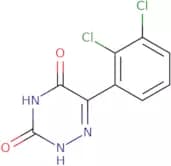
CAS:<p>6-(2,3-Dichlorophenyl)-1,2,4-triazine-3,5(2H,4H)-dione is a chlorinating agent that converts alcohols to alkyl chlorides. It is used for the conversion of diazotizable aromatic compounds to diazo compounds. This compound has been shown to be neuroprotective in animal models and provides protection against glutamate excitotoxicity. 6-(2,3-Dichlorophenyl)-1,2,4-triazine-3,5(2H,4H)-dione also reacts with nitrite ions to form the corresponding nitroso derivatives. These derivatives can cause DNA damage and are mutagenic. 6-(2,3-Dichlorophenyl)-1,2,4-triazine-3,5(2H,4H)-dione has been shown to react with aminoguanidine to produce a chromat</p>Formula:C9H5Cl2N3O2Purity:Min. 95%Color and Shape:PowderMolecular weight:258.06 g/mol2-Hydroxybenzimidazole
CAS:<p>2-Hydroxybenzimidazole is a benzimidazole compound that is used in the treatment of nervous system diseases. It has been shown to have anti-inflammatory properties and can be used in the treatment of syncytial virus infection. 2-Hydroxybenzimidazole inhibits the production of reactive oxygen species and nitric oxide, which are involved in neurodegenerative disorders. The mechanism of action for 2-Hydroxybenzimidazole involves the formation of hydrogen bonds with hydroxyl groups on proteins. It also has been shown to reduce locomotor activity and increase sleep time in mice, which may be due to inhibition of acetylcholine release from cholinergic neurons.</p>Formula:C7H6N2OPurity:Min. 97.5 Area-%Color and Shape:Off-White PowderMolecular weight:134.14 g/mol5-Methoxy-2-[[(4-methoxy-3,5-dimethyl-2-pyridinyl)methyl]sulfinyl]-1H-benzimidazole N-oxide
CAS:<p>5-Methoxy-2-[[(4-methoxy-3,5-dimethyl-2-pyridinyl)methyl]sulfinyl]-1H-benzimidazole N-oxide is an ammonium salt of a sulfoxide with a chloride. It is also known as esomeprazole magnesium. This drug is used in the preparation of pharmaceutical preparations and is used to treat gastroesophageal reflux disease (GERD), peptic ulcers, and other conditions. The magnesium salt form is a polymorphic substance that has a crystalline form that occurs in nature, called alpha form, and a synthetic form that occurs in laboratory experiments and has been designated beta form. The alpha form exhibits enantioselectivity when it binds to the enzyme pepsin, which causes the drug to have an antiulcer effect.</p>Formula:C17H19N3O4SPurity:Min. 95%Color and Shape:PowderMolecular weight:361.42 g/mol2-Hydroxy-2,2-bis(2-thienyl) acetic acid
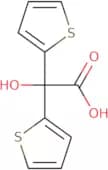
CAS:<p>2-Hydroxy-2,2-bis(2-thienyl) acetic acid is a long-acting bronchodilator that can be administered by inhalation. It has been used in the clinical development of medicines for the treatment of asthma and chronic obstructive pulmonary disease. 2-Hydroxy-2,2-bis(2-thienyl) acetic acid is chemically related to pyridinium compounds. It is a potent inhibitor of muscarinic receptors and has an anticholinergic profile similar to atropine. The safety profile of this drug seems to be favourable in humans with no major side effects reported so far.</p>Formula:C10H8O3S2Purity:Min. 95%Color and Shape:Yellow PowderMolecular weight:240.3 g/molN-Desmethyl galanthamine
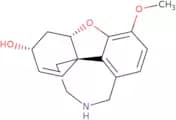
CAS:Controlled Product<p>N-Desmethyl galanthamine is a plant alkaloid that is found in the Huperzia serrata plant. It has been shown to have cholinergic activity and calcium binding properties. N-Desmethyl galanthamine inhibits acetylcholinesterase, an enzyme responsible for the breakdown of acetylcholine, which is a neurotransmitter. This inhibition leads to increased levels of acetylcholine, which results in increased neuron stimulation and improved memory function. N-Desmethyl galanthamine also binds to β2 nicotinic receptor sites and blocks the binding of nicotine, leading to decreased nicotine dependence.</p>Formula:C16H19NO3Purity:Min. 95%Molecular weight:273.33 g/molPantoprazole sulfide N-oxide
CAS:<p>Pantoprazole sulfide N-oxide is a metabolite of pantoprazole, which is a proton pump inhibitor used to reduce stomach acid production. Pantoprazole sulfide N-oxide is an impurity in pantoprazole that can be detected by HPLC. It has been shown to have about the same biological activity as pantoprazole when given orally.</p>Formula:C16H15F2N3O4SPurity:Min. 95%Color and Shape:Off-White To Yellow SolidMolecular weight:383.37 g/mol(1S)-1-Phenyl-1,2,3,4-tetrahydroisoquinoline
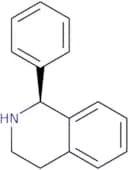
CAS:<p>(1S)-1-Phenyl-1,2,3,4-tetrahydroisoquinoline is a drug used to treat depression. It is an antidepressant drug that inhibits the reuptake of serotonin and norepinephrine in the brain by blocking their transport into the nerve cells. The drug acts as a weak inhibitor of monoamine oxidase (MAO). It also has an effect on bladder function. This compound is synthesized from 1-phenyl-2,5-dihydrothiazole by way of a sequence of reactions that includes the formation of an amine salt via reaction with phosphorus pentoxide and chloroacetic acid followed by conversion to the chloride with thionyl chloride.</p>Formula:C15H15NPurity:Min. 95%Color and Shape:White PowderMolecular weight:209.29 g/molLansoprazole N-oxide
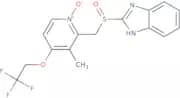
CAS:<p>Lansoprazole N-oxide is a prodrug that is converted to lansoprazole sulfone in vivo. Lansoprazole N-oxide is used as a diluent in chromatographic experiments. It has been shown to be more sensitive than the parent compound, lansoprazole, for the diagnosis of reflux oesophagitis. Lansoprazole N-oxide also has a validation wavelength of 240 nm and can be detected by liquid chromatography. The active form of lansoprazole, lansoprazole sulfone, can be detected by gas chromatography mass spectrometry (GCMS).</p>Formula:C16H14F3N3O3SPurity:Min. 95%Color and Shape:White PowderMolecular weight:385.36 g/molN-(2-Phenethyl)benzamide
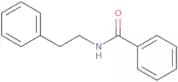
CAS:<p>N-(2-Phenethyl)benzamide (NPEB) is a molecule that belongs to the group of reactive molecules. It has been shown to be toxic to gram-positive bacteria, such as Staphylococcus aureus and Bacillus subtilis, but not gram-negative bacteria such as Escherichia coli. NPEB also has been shown to have locomotor activity in animals, which may be due to its ability to inhibit the mitochondrial electron transport chain and inhibit ATP production. NPEB's biological properties are well characterized. FTIR spectroscopy showed that this molecule has an amide functional group and is a small molecule with a molecular weight of 176.4 g/mol. This molecule was also found to be able to bind to mitochondria in animals.</p>Formula:C15H15NOPurity:Min. 97 Area-%Color and Shape:PowderMolecular weight:225.29 g/mol3-Amino-6-(2,3-dichlorophenyl)-1,2,4-triazin-5(4H)-one
CAS:<p>3-Amino-6-(2,3-dichlorophenyl)-1,2,4-triazin-5(4H)-one is a triazine derivative that is used as an analytical reagent and intermediate. It has been used as a wastewater analysis method to measure the concentration of carbamazepine. 3-Amino-6-(2,3-dichlorophenyl)-1,2,4-triazin-5(4H)-one has also been shown to be useful in developing analytical methods for clinical trials. 3DCTKP has also been used to test the matrix effect of carbamazepine by analyzing it in different matrices such as water and human plasma.</p>Formula:C9H6Cl2N4OPurity:Min. 95 Area-%Color and Shape:PowderMolecular weight:257.08 g/mol2-[[[3-Methyl-4-(methylthio)-2-pyridinyl]methyl]sulfinyl]-1H-benzimidazole
CAS:<p>2-[[[3-Methyl-4-(methylthio)-2-pyridinyl]methyl]sulfinyl]-1H-benzimidazole is a synthetic, nonsteroidal anti-inflammatory drug. It is soluble in methanol and ethanol, not soluble in water. The impurity standard of 2-[[[3-Methyl-4-(methylthio)-2-pyridinyl]methyl]sulfinyl]-1H-benzimidazole is 3-[2-[(3,4,5-trimethoxyphenyl)amino]-1H-benzimidazolium methyl sulfate].</p>Formula:C15H15N3OS2Purity:Min. 95%Molecular weight:317.43 g/mol2-Mercaptobenzimidazole
CAS:<p>2-Mercaptobenzimidazole is a chemical compound that can be used for the treatment of infectious diseases. It has been shown to have antioxidative properties and inhibit the growth of bacteria. 2-Mercaptobenzimidazole also has an effect on human serum, which may be due to its ability to bind with proteins in serum and form hydrogen bonds. 2-Mercaptobenzimidazole is stable at high temperatures and has been shown as an effective antimicrobial agent against gram positive and gram negative bacteria.</p>Formula:C7H6N2SPurity:Min. 99 Area-%Color and Shape:White/Off-White SolidMolecular weight:150.19 g/molDi-2-thienylmethanone
CAS:<p>Di-2-thienylmethanone is a pyrazole with an activation energy of about 10.5 kcal/mol. It has been found to be toxic and can cause cell lysis. This molecule has been used in the synthesis of a number of drugs, including thiopental, a barbiturate that is used as an anaesthetic. Di-2-thienylmethanone is also the precursor for the synthesis of fluoroquinolones, which are potent antibacterial agents. The Friedel-Crafts reaction is one way this molecule is synthesized, and it involves the addition of an alkyl halide to an unsaturated double bond. This reaction is named after Charles Friedel and James Crafts who first discovered it in 1877.</p>Formula:C9H6OS2Purity:Min. 95%Color and Shape:White PowderMolecular weight:194.28 g/molRabeprazole Impurity 2
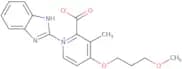
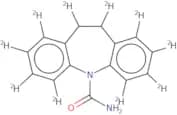
CAS:<p>Rabeprazole Impurity 2 is a research and development impurity standard that is used for qualitative analysis. It can be custom synthesized to meet specific needs, and it can also be used in drug product synthesis. Rabeprazole Impurity 2 is a high purity synthetic compound that has been pharmacopoeia-qualified. It can also be used as a metabolite or analytical standard, and it has been studied for its metabolism studies with HPLC-MS. Rabeprazole Impurity 2 has CAS No. 1807988-36-8.</p>Formula:C18H19N3O4Purity:Min. 95%Molecular weight:341.36 g/mol10,11-Dihydroxy-d10 Carbamazepine
Controlled Product<p>10,11-Dihydroxy-d10 Carbamazepine is a drug product that is used as an analytical reference standard. It is natural and synthetic impurity in the API (active pharmaceutical ingredient) Carbamazepine. The CAS number for 10,11-Dihydroxy-d10 Carbamazepine is 513-81-5. This compound has been synthesized by custom synthesis and is an impurity standard for HPLC analysis of carbamazepine. 10,11-Dihydroxy-d10 Carbamazepine is also a research and development chemical for the drug development industry. It has been classified as a niche chemical due to its high purity and pharmacopoeia grade.</p>Purity:Min. 95%(R)-5-Hydroxymethyl tolterodine
CAS:<p>(R)-5-Hydroxymethyl tolterodine is a prodrug that is metabolized by cytochrome P450 3A4 (CYP3A4) in the liver to its active form, tolterodine. This drug can be used as an alternative for gabapentin in the treatment of detrusor muscle overactivity associated with neurogenic bladder dysfunction. The pharmacokinetic properties of (R)-5-hydroxymethyl tolterodine are similar to those of gabapentin, including the elimination half-life and volume of distribution. However, unlike gabapentin, which has been shown to increase the glomerular filtration rate (GFR) and renal blood flow, there is no evidence that this drug has any effect on GFR or renal blood flow. There is also no evidence that (R)-5-hydroxymethyl tolterodine causes any symptoms that may be attributed to</p>Formula:C22H31NO2Purity:Min. 98 Area-%Color and Shape:Off-White PowderMolecular weight:341.49 g/mol5-Methoxy-2-[[(4-methoxy-3,5-dimethyl-2-pyridinyl)methyl]thio]-1H-benzimidazole
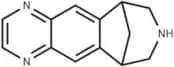
CAS:<p>Omeprazole is a drug that belongs to the class of benzimidazole compounds. It is an inhibitor of gastric acid secretion in the stomach, reducing the production of hydrochloric acid and pepsin. Omeprazole has been shown to have greater chemical stability than other proton pump inhibitors (PPIs), with a higher solubility in water and a longer shelf life. Omeprazole also has anti-inflammatory properties, which may be due to its inhibition of prostaglandin synthesis. Omeprazole also exhibits pharmacokinetic properties that are different from other PPIs. Omeprazole is rapidly absorbed following oral administration and has a high bioavailability, which can be attributed to its hydroxyl group. This hydroxyl group allows for esomeprazole (a prodrug) to be formed by hydrolysis in the gut or liver, increasing omeprazole's absorption and bioavailability.</p>Formula:C17H19N3O2SPurity:Min. 95%Color and Shape:PowderMolecular weight:329.42 g/molVarenicline
CAS:<p>Varenicline (CP 526555) is a selective partial agonist of the α4β2 nAChR and a full agonist of the α3β4 nAChR and α7 nAChR.</p>Formula:C13H13N3Purity:99.76%Color and Shape:SolidMolecular weight:211.266-BROMO-1-CYCLOPENTYL-4-FLUORO-2-METHYL-1H-BENZO[D]IMIDAZOLE
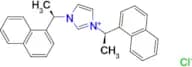
CAS:Formula:C13H14BrFN2Purity:98%Molecular weight:297.1711,3-Bis((R)-1-(naphthalen-1-yl)ethyl)-1H-imidazol-3-ium chloride
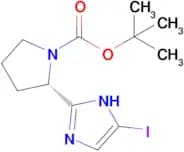
CAS:Purity:95%Molecular weight:412.9599915Tert-butyl (S)-2-(5-iodo-1H-imidazol-2-yl)pyrrolidine-1-carboxylate
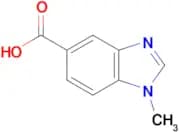
CAS:Purity:98%Molecular weight:363.19900511-Methyl-1H-benzimidazole-5-carboxylic acid
CAS:Formula:C9H8N2O2Purity:98%Color and Shape:SolidMolecular weight:176.1751-hexyl-3-methylimidazolium iodide
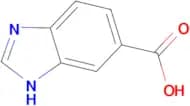
CAS:Formula:C10H19IN2Purity:97%Color and Shape:LiquidMolecular weight:294.181H-Benzimadazole-5-carboxylic acid
CAS:Formula:C8H6N2O2Purity:95%Color and Shape:SolidMolecular weight:162.1484-Bromo-1-methyl-1H-benzo[d]imidazole
CAS:Formula:C8H7BrN2Purity:98%Color and Shape:SolidMolecular weight:211.062Boc-D-His(Tos)-OH
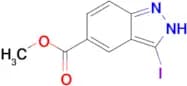
CAS:<p>M06184 - BOC-D-HIS(TOS)-OH</p>Formula:C18H23N3O6SPurity:98%Color and Shape:SolidMolecular weight:409.131Methyl 3-iodo-1H-indazole-5-carboxylate
CAS:Formula:C9H7IN2O2Purity:97%Color and Shape:SolidMolecular weight:302.0712-Bromo-5-nitro-1H-imidazole
CAS:Formula:C3H2BrN3O2Purity:97%Color and Shape:SolidMolecular weight:191.972Ethyl 5-bromo-1H-benzo[d]imidazole-2-carboxylate
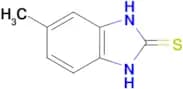
CAS:Formula:C10H9BrN2O2Purity:98%Molecular weight:269.0985-methyl-1H-benzimidazole-2-thiol
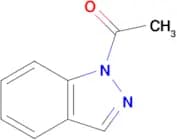
CAS:Formula:C8H8N2SPurity:98%Color and Shape:SolidMolecular weight:164.231-(1H-Indazol-1-yl)ethanone
CAS:Formula:C9H8N2OPurity:98%Color and Shape:SolidMolecular weight:160.1761-decyl-3-methylimidazolium hexafluorophosphate
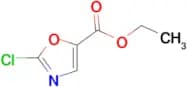
CAS:Formula:C14H27F6N2PPurity:98%Molecular weight:368.348Ethyl 2-chlorooxazole-5-carboxylate
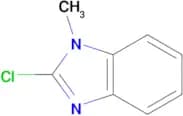
CAS:Formula:C6H6ClNO3Purity:95%Color and Shape:LiquidMolecular weight:175.572-Chloro-1-methyl-1H-benzoimidazole
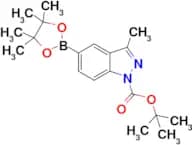
CAS:Formula:C8H7ClN2Purity:95%Color and Shape:SolidMolecular weight:166.61tert-Butyl 3-methyl-5-(4,4,5,5-tetramethyl-1,3,2-dioxaborolan-2-yl)-1H-indazole-1-carboxylate
CAS:Purity:97%Molecular weight:358.252-Amino-5-bromobenzimidazole
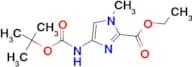
CAS:Formula:C7H6BrN3Purity:95%Color and Shape:SolidMolecular weight:212.05Ethyl 4-((tert-butoxycarbonyl)amino)-1-methyl-1H-imidazole-2-carboxylate
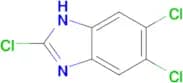
CAS:Formula:C12H19N3O4Purity:98%Molecular weight:269.3012,5,6-Trichloro-1H-benzimidazole
CAS:Formula:C7H3Cl3N2Purity:98%Color and Shape:SolidMolecular weight:221.471,3-Dimethyl-5-nitro-1,3-dihydro-2H-benzo[d]imidazol-2-one
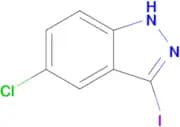
CAS:Purity:97%Molecular weight:207.18899545-Chloro-3-iodo-1H-indazole
CAS:Formula:C7H4ClIN2Purity:96%Color and Shape:SolidMolecular weight:277.9112-(3-Oxazolidine)ethanol
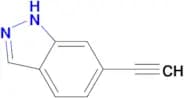
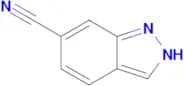
CAS:Formula:C5H11NO2Purity:98%Color and Shape:LiquidMolecular weight:117.1481H-Indazole-6-carbonitrile
CAS:Formula:C8H5N3Purity:97%Color and Shape:No data available.Molecular weight:143.149(R)-methyl 5-(6-(hydroxymethyl)-1H-benzo[d]imidazol-1-yl)-3-(1-(2-(trifluoromethyl)phenyl)ethoxy)thiophene-2-carboxylate
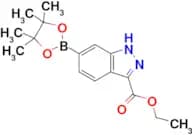
CAS:Purity:95%Molecular weight:476.4700012Ethyl 6-(4,4,5,5-tetramethyl-1,3,2-dioxaborolan-2-yl)-1H-indazole-3-carboxylate
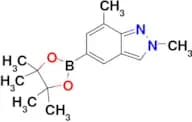
CAS:Formula:C16H21BN2O4Purity:97%Color and Shape:SolidMolecular weight:316.1592,7-Dimethyl-5-(4,4,5,5-tetramethyl-1,3,2-dioxaborolan-2-yl)-2H-indazole
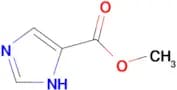
CAS:Purity:98%Color and Shape:SolidMolecular weight:272.1600037Methyl 1H-imidazole-5-carboxylate
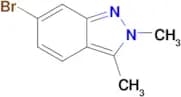
CAS:Formula:C5H6N2O2Purity:95%Color and Shape:SolidMolecular weight:126.1156-BROMO-2,3-DIMETHYL-2H-INDAZOLE
CAS:Formula:C9H9BrN2Purity:98%Color and Shape:SolidMolecular weight:225.0892-Imidazol-1-yl-phenylamine
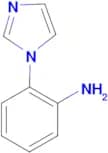
CAS:Formula:C9H9N3Purity:98%Color and Shape:SolidMolecular weight:159.192(S)-3-Boc-2,2-Dimethyl-oxazolidine-4-carboxylic acid methyl ester
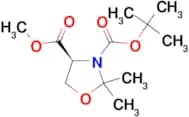
CAS:Formula:C12H21NO5Purity:98%Color and Shape:LiquidMolecular weight:259.302(5-Bromo-1H-benzoimidazol-2-yl)-methanol
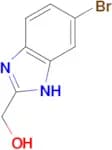
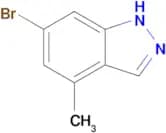
CAS:Formula:C8H7BrN2OPurity:97%Color and Shape:SolidMolecular weight:227.0616-Bromo-4-methyl-1H-indazole
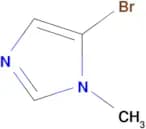
CAS:Formula:C8H7BrN2Purity:97%Color and Shape:SolidMolecular weight:211.0625-Bromo-1-methyl-1H-imidazole
CAS:Formula:C4H5BrN2Purity:97%Color and Shape:Solid, CrystallineMolecular weight:161.0021-methyl-1,3-dihydro-2H-imidazol-2-one
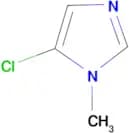
CAS:Formula:C4H6N2OPurity:97%Color and Shape:Solid, Sand-coloured powderMolecular weight:98.1055-Chloro-1-methylimidazole
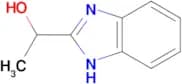
CAS:Formula:C4H5ClN2Purity:98%Color and Shape:LiquidMolecular weight:116.552-(1-Hydroxyethyl)benzimidazole
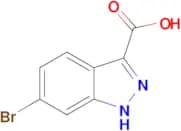
CAS:Formula:C9H10N2OPurity:98%Color and Shape:White to slightly pale yellow powderMolecular weight:162.1926-BROMO-1H-INDAZOLE-3-CARBOXYLIC ACID
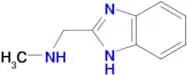
CAS:Purity:95%Color and Shape:SolidMolecular weight:241.0440063(1H-Benzoimidazol-2-ylmethyl)-methyl-amine
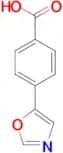
CAS:Formula:C9H11N3Purity:98%Color and Shape:SolidMolecular weight:161.2084-(1,3-Oxazol-5-yl)benzoic acid
CAS:Formula:C10H7NO3Purity:98%Color and Shape:SolidMolecular weight:189.175-Amino-1H-benzo[d]imidazol-2-(3H)-one
CAS:Formula:C7H7N3OPurity:98%Color and Shape:SolidMolecular weight:149.153
![2-[[[(4-Methoxypropoxy)-3-methyl-2-pyridinyl]methyl]sulfonyl]-1H-benzimidazole](/_next/image/?url=https%3A%2Fstatic.cymitquimica.com%2Fproducts%2F3D%2Fthumb-webp%2FIM57866.webp&w=3840&q=75)




![5-Methoxy-2-[[(4-methoxy-3,5-dimethyl-2-pyridinyl)methyl]sulfinyl]-1H-benzimidazole N-oxide](/_next/image/?url=https%3A%2Fstatic.cymitquimica.com%2Fproducts%2F3D%2Fthumb-webp%2FIM57921.webp&w=3840&q=75)


![2-[[[3-Methyl-4-(methylthio)-2-pyridinyl]methyl]sulfinyl]-1H-benzimidazole](/_next/image/?url=https%3A%2Fstatic.cymitquimica.com%2Fproducts%2F3D%2Fthumb-webp%2FIM21229.webp&w=3840&q=75)



![5-Methoxy-2-[[(4-methoxy-3,5-dimethyl-2-pyridinyl)methyl]thio]-1H-benzimidazole](/_next/image/?url=https%3A%2Fstatic.cymitquimica.com%2Fproducts%2F3D%2Fthumb-webp%2FIM57923.webp&w=3840&q=75)


![6-BROMO-1-CYCLOPENTYL-4-FLUORO-2-METHYL-1H-BENZO[D]IMIDAZOLE](/_next/image/?url=https%3A%2Fstatic.cymitquimica.com%2Fproducts%2F10%2Fthumb-webp%2FF532934.webp&w=3840&q=75)



![4-Bromo-1-methyl-1H-benzo[d]imidazole](/_next/image/?url=https%3A%2Fstatic.cymitquimica.com%2Fproducts%2F10%2Fthumb-webp%2FF457747.webp&w=3840&q=75)


![Ethyl 5-bromo-1H-benzo[d]imidazole-2-carboxylate](/_next/image/?url=https%3A%2Fstatic.cymitquimica.com%2Fproducts%2F10%2Fthumb-webp%2FF329190.webp&w=3840&q=75)



![1,3-Dimethyl-5-nitro-1,3-dihydro-2H-benzo[d]imidazol-2-one](/_next/image/?url=https%3A%2Fstatic.cymitquimica.com%2Fproducts%2F10%2Fthumb-webp%2FF692433.webp&w=3840&q=75)

![(R)-methyl 5-(6-(hydroxymethyl)-1H-benzo[d]imidazol-1-yl)-3-(1-(2-(trifluoromethyl)phenyl)ethoxy)t…](/_next/image/?url=https%3A%2Fstatic.cymitquimica.com%2Fproducts%2F10%2Fthumb-webp%2FF788713.webp&w=3840&q=75)




![5-Amino-1H-benzo[d]imidazol-2-(3H)-one](/_next/image/?url=https%3A%2Fstatic.cymitquimica.com%2Fproducts%2F10%2Fthumb-webp%2FF306844.webp&w=3840&q=75)